![Real Doctors Note For Work and School [Get in 5 Minutes]](https://realdoctorsnotes.com/wordpress/wp-content/webp-express/webp-images/uploads/2025/11/2.png.webp)


Doctors Note for Stress may be recommended when severe or ongoing stress begins to affect your physical health, emotional well-being, work performance, or daily activities. While occasional stress is a normal part of life, a healthcare provider may advise taking temporary leave from work or school to support your recovery.
Many people are unsure whether stress is considered a valid medical reason for leave or what information a doctor’s note should include. This guide explains everything you need to know, including when a stress-related doctor’s note is issued, how to get one, what it contains, how employers typically use it, and answers to common questions.
What Is a Doctor’s Note for Stress?
A doctor’s note for stress is an official medical document provided by a licensed healthcare professional stating that a patient has been evaluated and requires time off from work, school, or other responsibilities due to a stress-related medical condition.
The note confirms that a medical assessment has been completed but generally does not reveal private medical details unless the patient authorizes it.
Stress may be linked to conditions such as:
- Acute stress disorder
- Chronic stress
- Burnout
- Anxiety caused by workplace stress
- Emotional exhaustion
- Adjustment disorder
- Panic attacks
- Sleep disorders related to stress
- Depression associated with prolonged stress
The purpose of the note is to support recovery while protecting the patient’s privacy.
Can You Get a Doctor’s Note for Stress?
Yes. If stress is affecting your ability to safely perform your job, attend school, or complete daily responsibilities, a licensed healthcare provider may issue a doctor’s note.
Doctors evaluate factors such as:
- Severity of symptoms
- Mental and emotional health
- Physical symptoms caused by stress
- Ability to perform work duties
- Sleep quality
- Medical history
- Risk of worsening symptoms
If medically necessary, they may recommend:
- Short-term leave
- Reduced work hours
- Temporary work restrictions
- Remote work (if appropriate)
- Referral to a mental health professional
- Counseling or therapy
Common Symptoms That May Require Medical Leave
Stress affects both the mind and body. Your doctor will consider your symptoms before recommending leave.
Emotional Symptoms
- Feeling overwhelmed
- Constant worry
- Anxiety
- Irritability
- Mood swings
- Lack of motivation
- Difficulty concentrating
- Feeling emotionally exhausted
Physical Symptoms
- Frequent headaches
- Muscle tension
- Fatigue
- Chest tightness
- Rapid heartbeat
- Digestive issues
- High blood pressure
- Sleep disturbances
Behavioral Symptoms
- Reduced productivity
- Poor decision-making
- Increased mistakes at work
- Social withdrawal
- Changes in appetite
- Difficulty completing routine tasks
When Might You Need a Doctor’s Note for Stress?
A stress-related doctor’s note may be needed in many situations.
For Work
Employees may require leave because stress is affecting their ability to perform safely and effectively.
- Workplace burnout
- High workload
- Emotional exhaustion
- Panic attacks
- Long working hours
- Stress-related insomnia
- Workplace harassment
- Anxiety affecting job performance
For School or College
Students experiencing severe stress may require documentation for:
- Missing classes
- Assignment extensions
- Exam postponements
- Academic accommodations
For Mental Health Recovery
Sometimes stress reaches a level where professional treatment and rest become medically necessary.
Doctors may recommend:
- Therapy
- Counseling
- Medication (when appropriate)
- Lifestyle changes
- Temporary leave
How to Get a Doctor’s Note for Stress
Obtaining a doctor’s note is generally straightforward.
Step 1: Schedule an Appointment
Visit a:
- Primary care physician
- Family doctor
- Psychiatrist
- Psychologist (depending on local regulations)
- Mental health clinic
- Telehealth provider
Step 2: Discuss Your Symptoms Honestly
Tell your provider about:
- How long you’ve been stressed
- Sleep problems
- Anxiety
- Panic attacks
- Work-related issues
- Emotional exhaustion
- Physical symptoms
- Daily functioning
Being honest helps your provider determine the most appropriate treatment plan.
Step 3: Medical Evaluation
The healthcare provider may:
- Ask about your medical history
- Review mental health symptoms
- Assess physical symptoms
- Evaluate work-related concerns
- Discuss lifestyle factors
Step 4: Receive Your Doctor’s Note
If medically appropriate, your provider may issue documentation recommending:
- Time off
- Modified duties
- Reduced hours
- Follow-up appointments
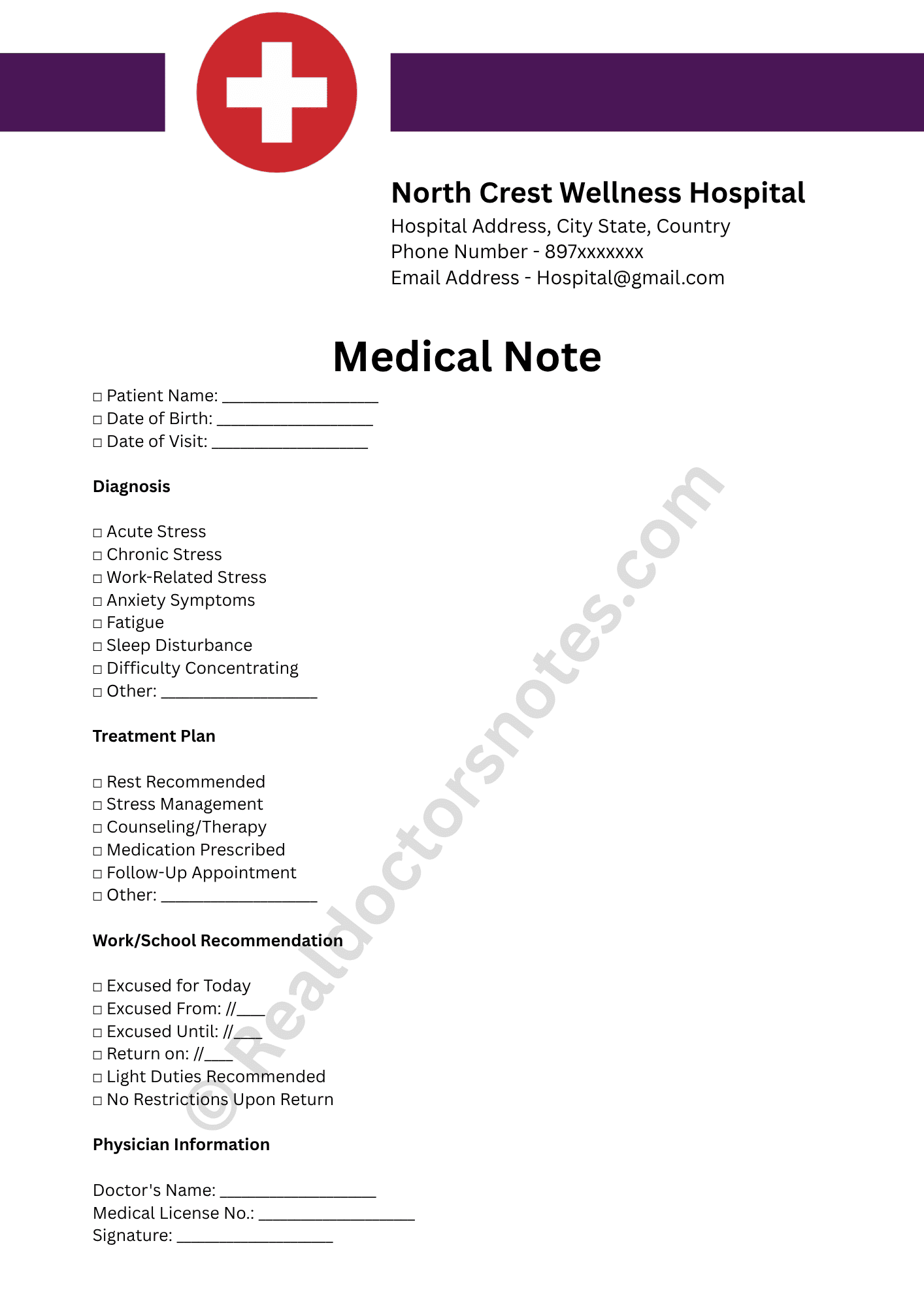
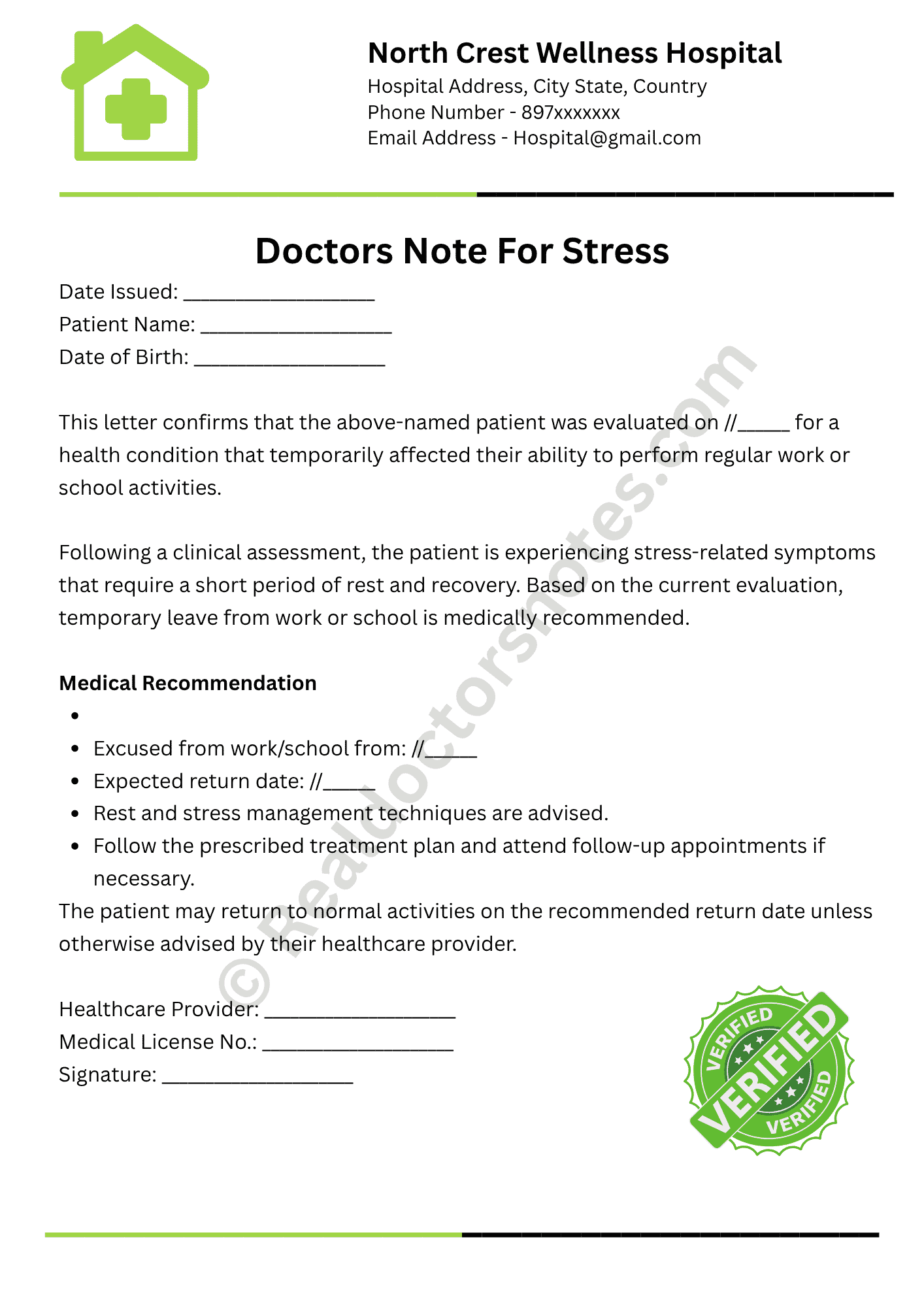
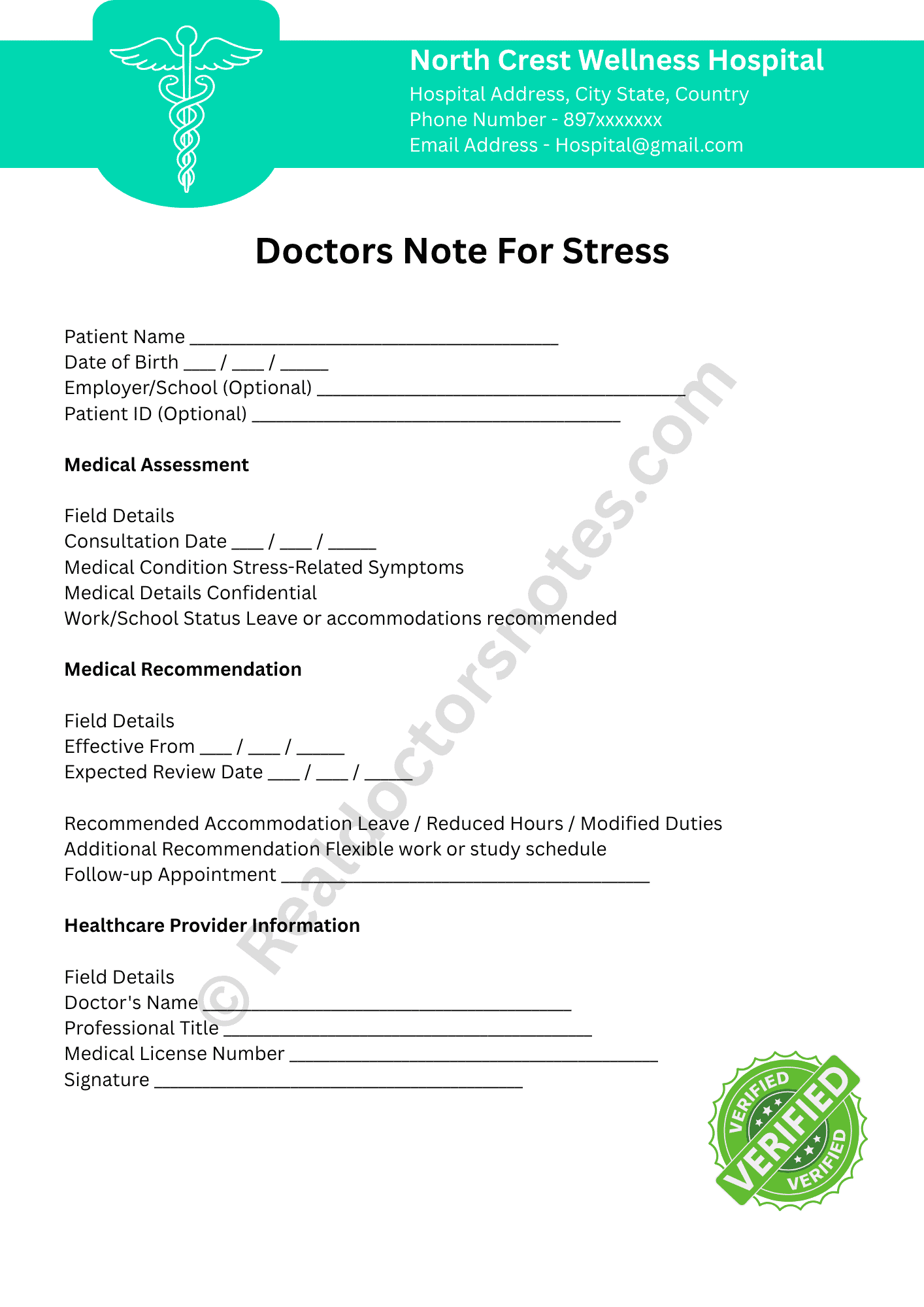
What Information Is Included in a Doctor’s Note for Stress?
A legitimate doctor’s note usually contains:
- Doctor’s name
- Clinic or hospital name
- Contact information
- Date of examination
- Date the note was issued
- Confirmation that the patient was evaluated
- Recommended leave period
- Return-to-work date (if known)
- Work restrictions (if needed)
- Doctor’s signature
- Medical license information (where applicable)
Most notes do not disclose the exact diagnosis unless the patient chooses to share it.
How Long Can a Doctor Excuse You From Work for Stress?
The duration depends on your condition.
Typical recommendations include:
| Stress Severity | Typical Time Off |
|---|---|
| Mild stress | 1–3 days |
| Moderate stress | 3–7 days |
| Severe stress | 1–4 weeks |
| Burnout or anxiety disorder | Several weeks or longer if medically necessary |
Only your healthcare provider can determine the appropriate recovery period.
Does Your Employer Have to Know the Reason?
In many cases, no.
Medical privacy laws often protect your health information. Employers usually only need confirmation that:
- You were medically evaluated.
- Leave is medically recommended.
- You may return on a specified date or after follow-up.
Your specific diagnosis is generally not required unless local laws or workplace policies state otherwise.
Can Stress Qualify for Medical Leave?
Yes, if it significantly impacts your health or ability to work.
Depending on your country and employer policies, stress-related conditions may qualify for:
- Sick leave
- Medical leave
- Mental health leave
- Workplace accommodations
- Disability benefits (in certain cases)
Eligibility depends on local laws and your employer’s policies.
Can You Get a Doctor’s Note Online for Stress?
Yes. Many licensed telehealth providers can evaluate stress-related symptoms through a virtual consultation.
An online provider may:
- Review your symptoms
- Assess your condition
- Recommend treatment
- Provide a doctor’s note if medically appropriate
However, not every consultation results in a doctor’s note. The decision is based on the provider’s professional medical judgment.
Treatment Options Your Doctor May Recommend
A doctor’s note is only one part of recovery. Your healthcare provider may also recommend:
Therapy
Talking with a licensed therapist can help identify stress triggers and develop healthy coping strategies.
Lifestyle Changes
These may include:
- Better sleep habits
- Regular exercise
- Healthy diet
- Mindfulness
- Meditation
- Limiting caffeine and alcohol
Medication
Some patients may benefit from medication for anxiety, depression, or sleep issues if clinically appropriate.
Stress Management Techniques
Doctors often recommend:
- Deep breathing exercises
- Yoga
- Journaling
- Time management strategies
- Work-life balance improvements
Returning to Work After Stress Leave
Recovery does not always happen overnight.
Some employees return with temporary accommodations such as:
- Reduced workload
- Flexible schedule
- Remote work
- Additional breaks
- Gradual return-to-work plan
Following your doctor’s recommendations can help reduce the risk of relapse.
Tips for Managing Stress During Medical Leave
While taking leave, focus on recovery rather than work obligations.
Helpful practices include:
- Maintain a consistent sleep schedule.
- Eat nutritious meals.
- Stay physically active.
- Spend time outdoors.
- Limit screen time when possible.
- Practice relaxation techniques.
- Attend counseling sessions.
- Avoid overcommitting yourself.
- Stay connected with supportive friends or family.
- Follow your healthcare provider’s treatment plan.
FAQs
Q. Is stress a valid reason for a doctor’s note?
Yes. If stress significantly affects your physical or mental health or prevents you from performing your responsibilities safely, a healthcare provider may issue a doctor’s note recommending time off.
Q. Can a doctor refuse to give a stress note?
Yes. A doctor will only provide a note if, after evaluating your condition, they determine that medical leave is appropriate.
Q. Will my employer know I have stress?
Usually not. Most doctor’s notes confirm that you were medically evaluated and require leave without specifying your diagnosis, helping protect your privacy.
Q. Can stress cause physical illness?
Yes. Chronic stress can contribute to headaches, fatigue, digestive problems, muscle tension, sleep disturbances, high blood pressure, and weakened immunity.
Q. Can I get a stress doctor’s note through telehealth?
Yes. Many licensed telehealth providers can assess stress-related symptoms and issue a doctor’s note if it is medically justified.


Reviews
There are no reviews yet.