![Real Doctors Note For Work and School [Get in 5 Minutes]](https://realdoctorsnotes.com/wordpress/wp-content/uploads/2025/11/2.png)
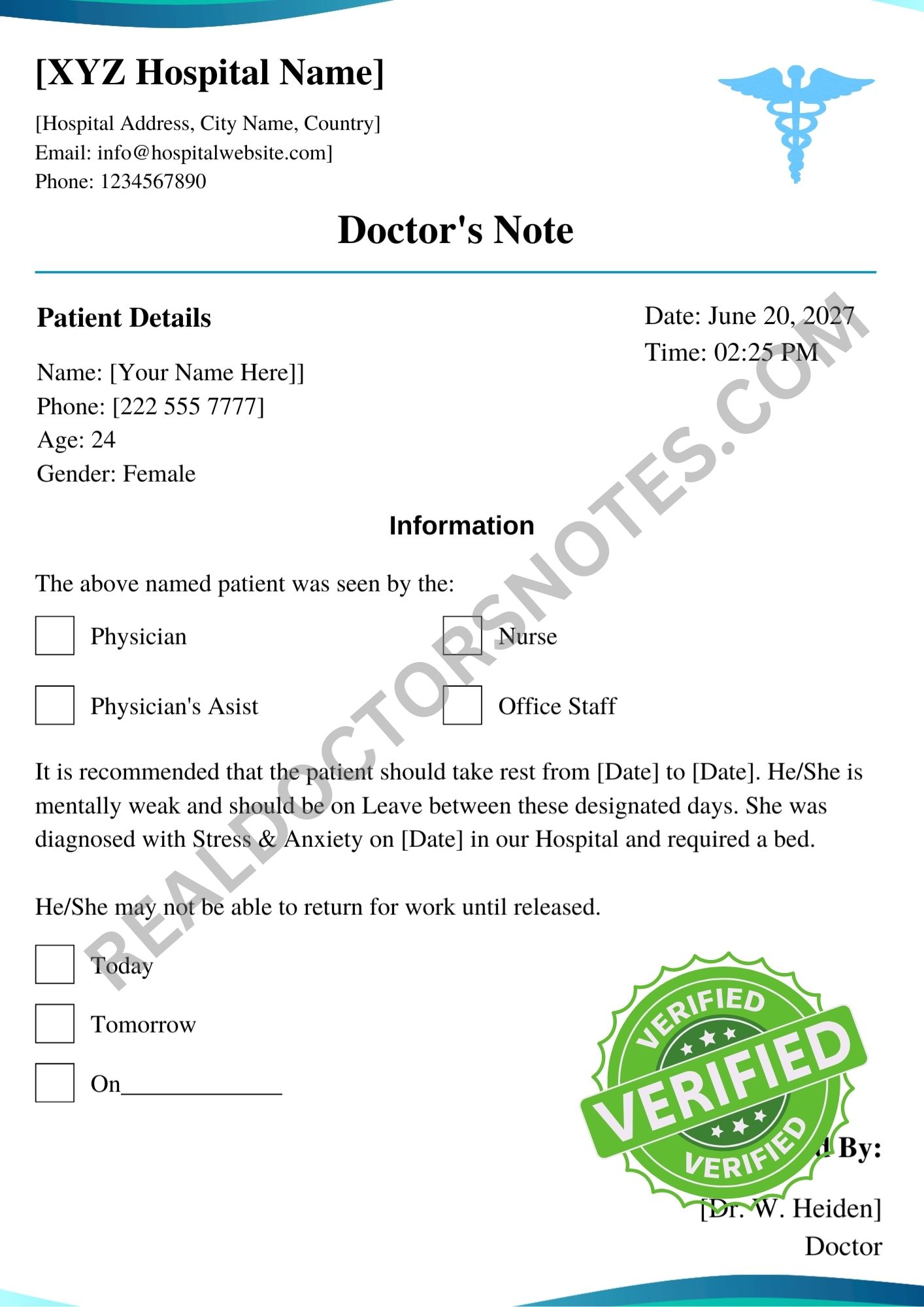

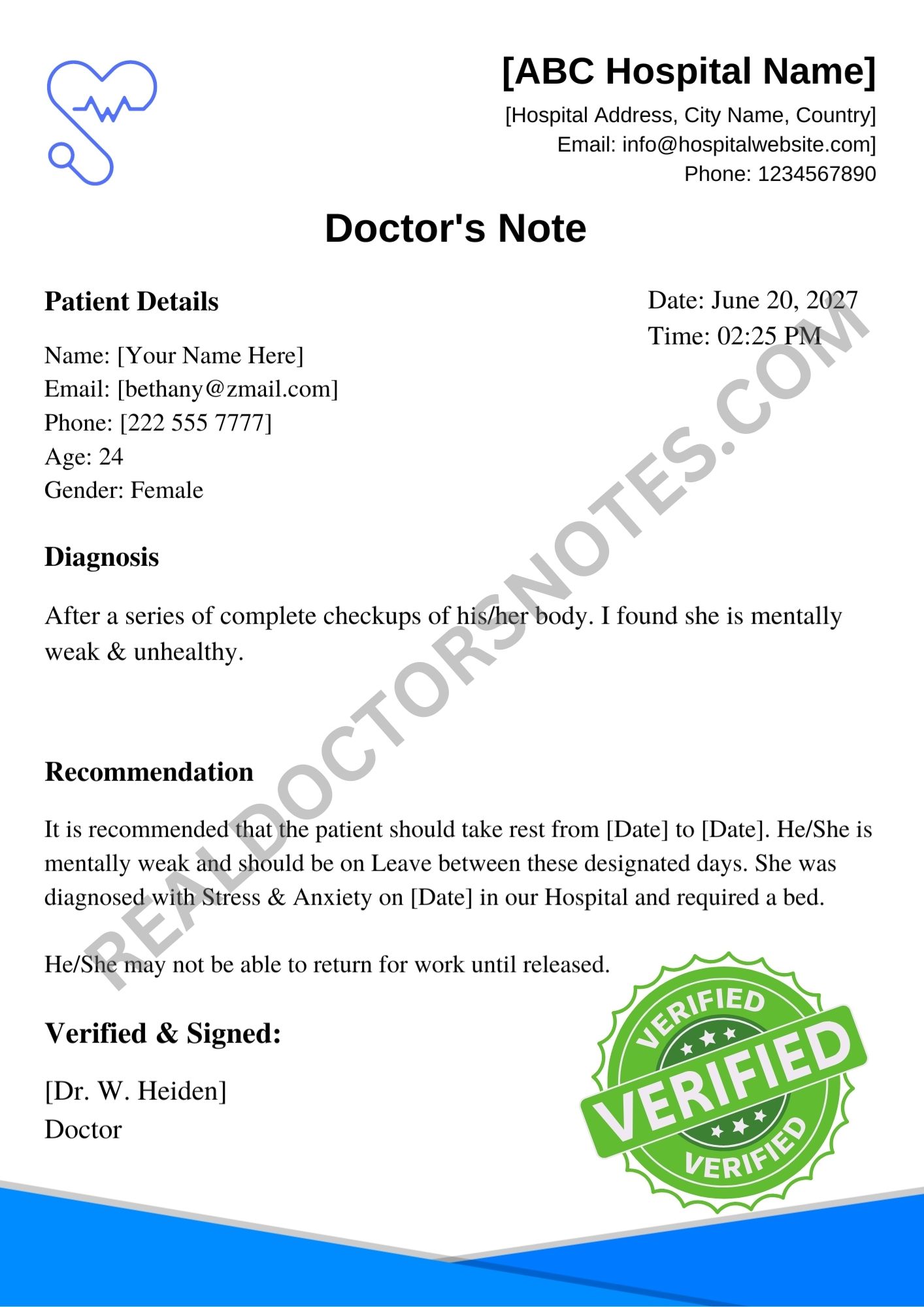
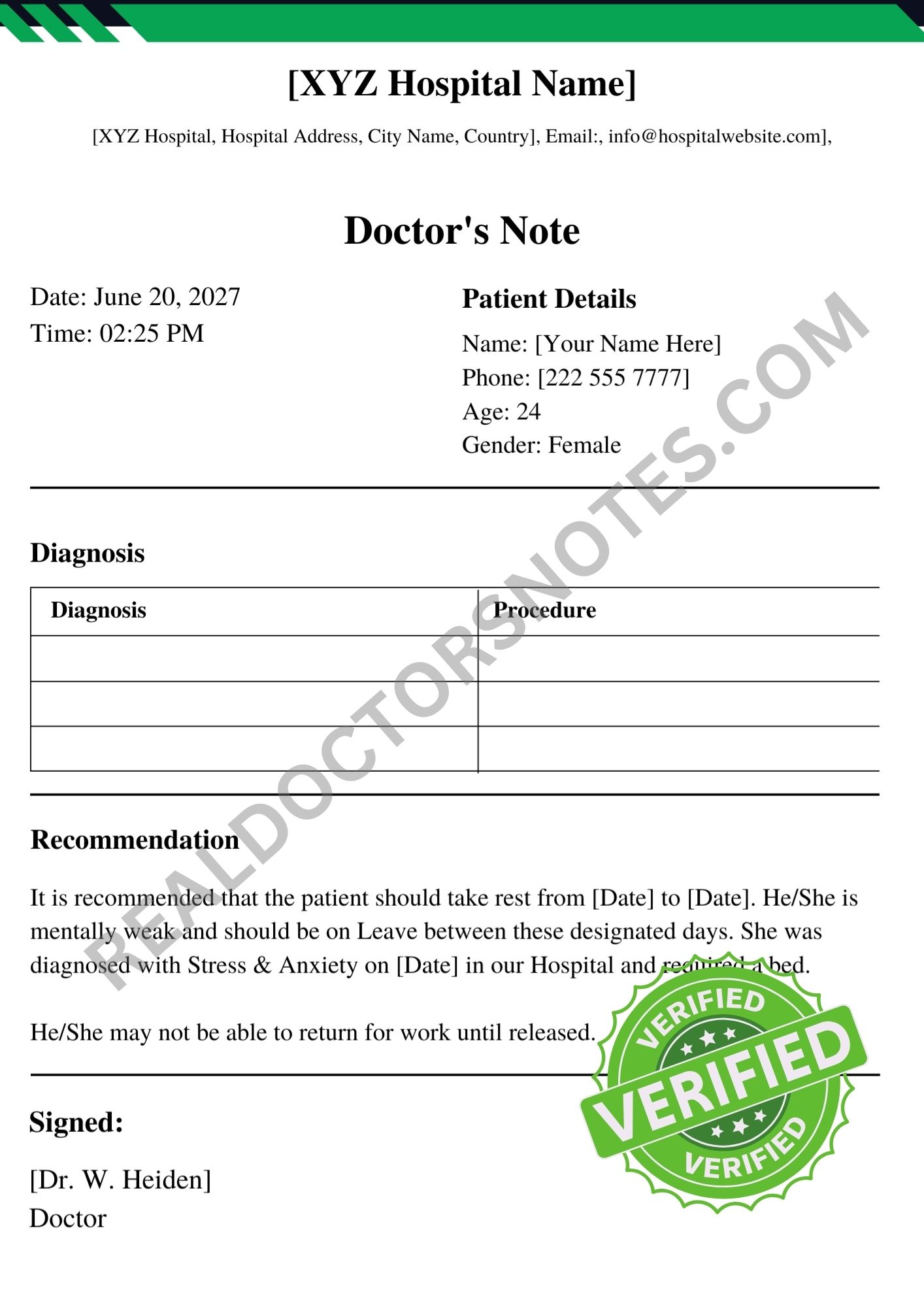

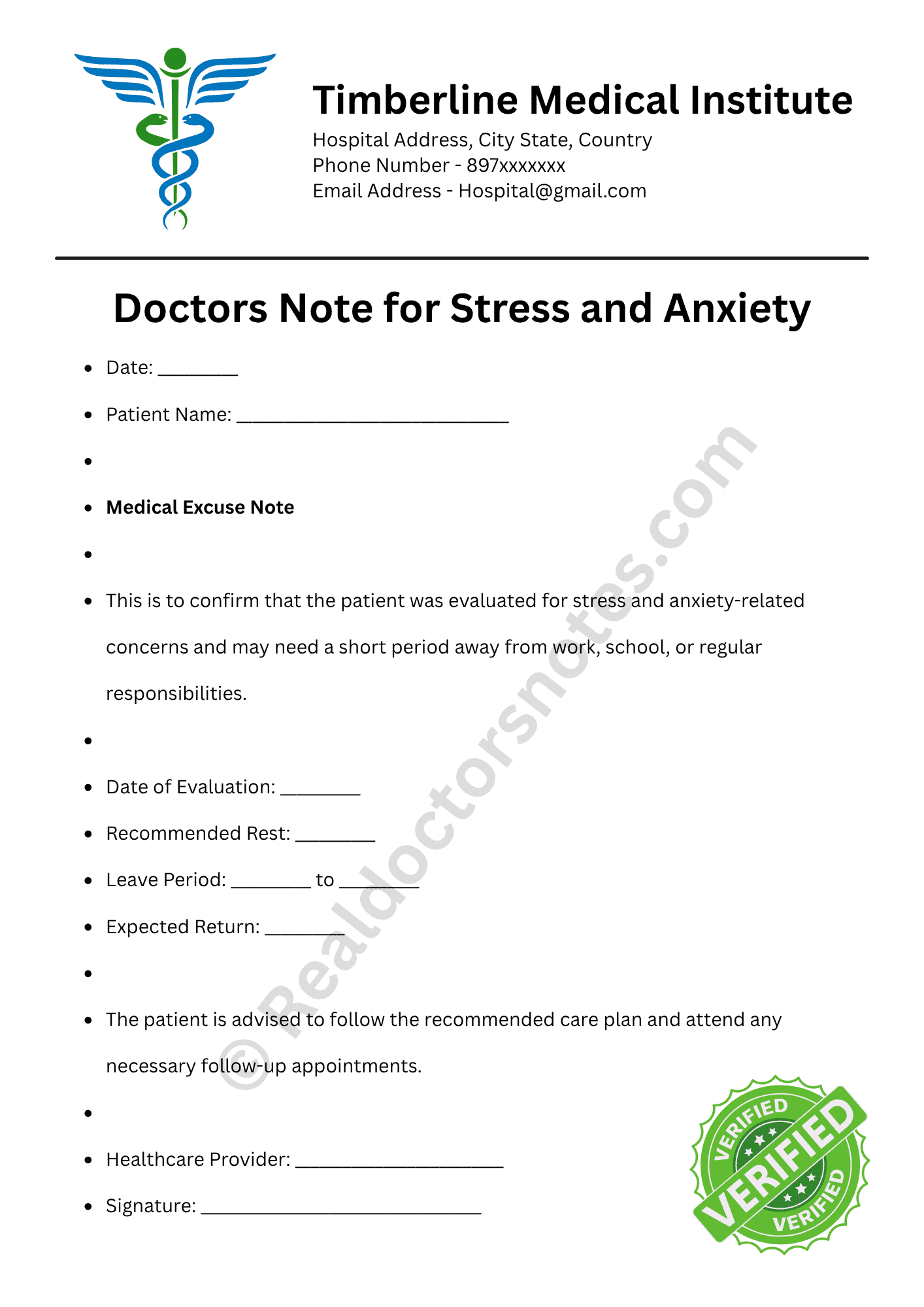

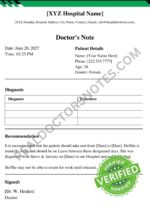
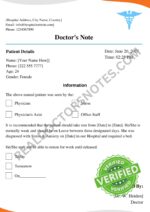
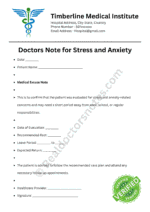
Doctors Note for Stress and Anxiety is a medical document issued by a licensed healthcare provider to confirm that a patient’s stress, anxiety, or related mental health condition requires time away from work or school, or temporary accommodations to support recovery. The note may recommend taking time off to rest, recover, and manage symptoms effectively based on the provider’s clinical assessment.
Depending on the individual’s condition, the doctor’s note may also outline recommended treatment options such as counseling, therapy, stress-management techniques, relaxation exercises, lifestyle adjustments, or prescribed medication. In some cases, it can include workplace or school accommodations, such as a reduced workload, flexible scheduling, remote work or learning, additional breaks, or environmental modifications to help minimize stress triggers.
A legitimate doctor’s note for stress and anxiety recognizes the patient’s mental health needs while providing appropriate medical guidance to support their well-being and recovery in professional or academic settings.
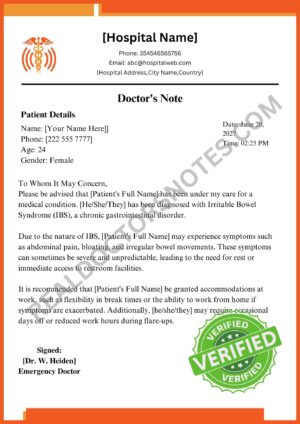
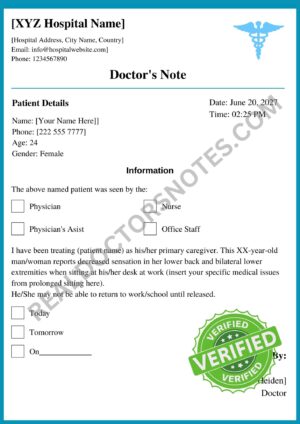
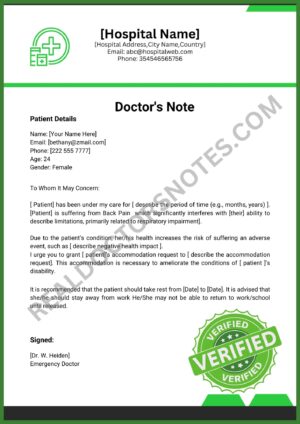
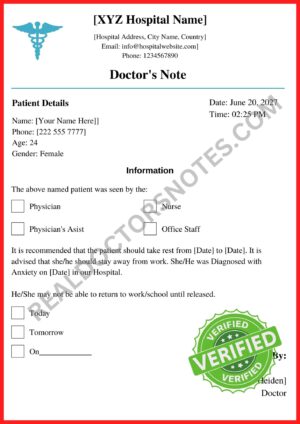
Printable Doctors Note for Stress and Anxiety Template
Proof of Mental Health Sick Time: A stress and anxiety doctor note is a legal affirmation of a mental health condition, providing proof of the need for a break from work or school.
Enables the Patient to Take Time Off: An authorization note grants the patient time away to address their mental health through treatment or therapy or rest, without fear of losing their job or place at school.
A dedicated documentation raises the red flag over mental health issues and works towards reducing stigma and ensuring understanding in workplaces or establishments.
Provides Support In Creating Treatment Plans: It may offer suggestions for treatment or coping mechanisms to assist the patient as well as the employer in understanding how to support that individual through their journey of healing.
Encourages Transparency: The note can help facilitate a discussion around what accommodations or modifications (i.e., a flexible start time or reduced workload) may enable the person to more successfully cope with his or her stress and anxiety with his or her employer or school.
Less Pressure to Perform: Patients with documentation in hand might spend less time stressing about whether or not they will be able to juggle work or school while managing their mental health, as they can prioritize recovery.
Gives Legal Protection: It can protect the rights of the very badly affected people by validating their mental state and make sure that the employment laws and guidelines for mental health are followed.
Provides Access to Resources: Patients can use it to access additional resources, like Employee Assistance Programs (EAP) or counseling services, that can be critical to addressing their stress and anxiety.
Helps to Clarify Limitations (cont’d): This note provides insight into what sorts of bad limitations the patient may need to work under so that their necessary requirements are both communicated and understood (if necessary) in a workplace or school environments.
Documents progress: Over time, notes from the doctor can document the patient’s progress covering their stress and anxiety, which can guide changes to treatment plans if needed.
Common Symptoms of Stress and Anxiety
Symptoms vary from person to person and may range from mild to severe.
Emotional Symptoms
- Constant worrying
- Feeling overwhelmed
- Irritability
- Mood swings
- Restlessness
- Feeling hopeless
- Difficulty relaxing
- Panic attacks
Physical Symptoms
- Rapid heartbeat
- Chest tightness
- Shortness of breath
- Sweating
- Headaches
- Muscle tension
- Fatigue
- Digestive problems
- Dizziness
Cognitive Symptoms
- Difficulty concentrating
- Poor memory
- Racing thoughts
- Confusion
- Trouble making decisions
Sleep Problems
- Difficulty falling asleep
- Waking frequently
- Nightmares
- Poor-quality sleep
- Oversleeping due to exhaustion
When Do You Need a Doctors Note for Stress and Anxiety?
A medical note may be appropriate when symptoms significantly interfere with daily functioning.
Common situations include:
- Missing work due to severe stress
- Anxiety attacks during working hours
- Mental exhaustion
- Burnout
- Medication side effects
- Therapy appointments
- Hospital observation
- Sleep deprivation affecting performance
- Workplace accommodations
- Returning to work after recovery
Seeking medical care early may prevent symptoms from becoming more severe.
Can You Get a Doctors Note for Stress and Anxiety Online?
Yes. Many healthcare providers now offer secure online consultations.
During a telehealth appointment, the provider evaluates your symptoms, medical history, current medications, and overall condition.
If the provider determines that medical leave or temporary restrictions are appropriate, they may issue a doctor’s note according to professional standards and applicable regulations.
Online consultations may be appropriate for:
- Mild to moderate anxiety
- Stress-related symptoms
- Follow-up appointments
- Medication reviews
- Mental health evaluations
- Work excuse documentation
Emergency mental health situations require immediate in-person medical attention or emergency services.
What Information Is Included in a Doctors Note?
A legitimate medical note commonly includes:
- Patient’s name
- Appointment date
- Dates of recommended leave
- Work or activity restrictions
- Return-to-work recommendations (if applicable)
- Healthcare provider information
- Practice information
- Signature or electronic authentication
The document should be clear, professional, and suitable for the intended purpose.
How Long Can a Doctor Excuse You From Work?
There is no standard duration for stress or anxiety leave.
The length depends on factors such as:
- Severity of symptoms
- Medical history
- Response to treatment
- Type of job
- Workplace safety requirements
- Follow-up evaluations
Some individuals may need only a few days of rest, while others require additional recovery time based on medical recommendations.
Healthcare providers may also recommend follow-up appointments before extending leave.
Can Employers Verify a Doctors Note?
In many situations, employers may verify whether a doctor’s note is authentic.
Verification generally focuses on confirming that the documentation was legitimately issued rather than requesting confidential medical details.
Healthcare providers typically protect patient privacy and only disclose information that is legally permitted or authorized by the patient.
Employees should submit documentation according to workplace policies while maintaining the confidentiality of their personal health information.
Will My Employer Know My Diagnosis?
Not necessarily.
Many doctor’s notes simply confirm that the employee was medically evaluated and may require temporary leave or work restrictions.
The exact diagnosis is often not included unless:
- The patient chooses to disclose it.
- It is required under applicable laws or workplace policies.
- The patient provides written authorization.
Protecting patient privacy is an important part of medical practice.
Is an Online Doctors Note Legitimate?
A doctor’s note obtained through telehealth can be legitimate when it is issued by a licensed healthcare provider after an appropriate medical evaluation.
Legitimate documentation generally includes:
- Licensed provider information
- Date of evaluation
- Professional recommendation
- Appropriate authentication
- Compliance with applicable healthcare regulations
Acceptance ultimately depends on the policies of the employer, school, insurance provider, or other organization requesting the documentation.
Can Schools and Colleges Accept a Doctors Note for Stress and Anxiety?
Mental health can affect a student’s ability to attend classes, complete assignments, or participate in academic activities. When stress or anxiety becomes severe, a licensed healthcare provider may recommend temporary academic accommodations or short-term leave.
Many schools, colleges, and universities accept medical documentation issued by a licensed healthcare professional. However, acceptance depends on each institution’s attendance policies and documentation requirements.
A Doctors Note for Stress and Anxiety may be used for:
- Excused absences
- Missed examinations
- Assignment deadline extensions
- Reduced academic workload
- Temporary leave of absence
- Return-to-school documentation
Students should submit documentation promptly and communicate with the appropriate academic office if additional accommodations are needed.
Can Anxiety Qualify for Medical Leave?
Yes, anxiety may qualify for medical leave when a healthcare provider determines that symptoms significantly affect a person’s ability to safely or effectively perform their job.
Eligibility for protected leave, paid leave, or disability benefits depends on factors such as:
- Local laws
- Employer policies
- Employment status
- Medical documentation
- Healthcare provider recommendations
Every situation is different, so leave decisions are made on an individual basis rather than through a fixed rule.
Workplace Accommodations for Stress and Anxiety
Not everyone with stress or anxiety needs time away from work. In some cases, workplace adjustments may help employees continue working while managing their condition.
Examples include:
- Flexible working hours
- Remote work options
- Reduced workload
- Additional rest breaks
- Quiet workspaces
- Modified schedules
- Temporary job duty adjustments
- Gradual return-to-work plans
A healthcare provider may recommend appropriate accommodations based on the individual’s condition and job responsibilities.
Stress Leave vs. Sick Leave
Although the terms are often used interchangeably, they are not always the same.
| Stress Leave | Sick Leave |
|---|---|
| Related to stress, anxiety, burnout, or mental health | Covers physical illnesses and injuries as well as many mental health conditions |
| May require mental health evaluation | May require any medical evaluation |
| Often focuses on recovery and emotional well-being | Covers a broad range of medical conditions |
| Duration depends on provider assessment | Duration depends on medical condition |
Both types of leave should be supported by appropriate medical documentation when required.
Treatment Options for Stress and Anxiety
Treatment varies depending on the severity of symptoms and individual needs.
Healthcare providers may recommend one or more of the following:
Counseling or Psychotherapy
Talking with a licensed mental health professional can help individuals understand triggers, develop coping strategies, and improve emotional well-being.
Medication
Some patients may benefit from prescription medication to help manage anxiety symptoms. Medication decisions should always be made by a qualified healthcare provider.
Lifestyle Changes
Healthy daily habits often play an important role in recovery, including:
- Regular exercise
- Balanced nutrition
- Consistent sleep schedule
- Limiting alcohol
- Reducing caffeine intake
- Staying hydrated
Stress Management Techniques
Providers may recommend:
- Deep breathing exercises
- Meditation
- Mindfulness
- Yoga
- Journaling
- Relaxation techniques
Tips for Managing Stress and Anxiety During Recovery
Recovery involves more than taking time off work or school. Building healthy habits can improve long-term emotional well-being.
Helpful strategies include:
- Get 7–9 hours of quality sleep each night.
- Maintain a regular daily routine.
- Spend time outdoors when possible.
- Stay physically active.
- Practice breathing exercises.
- Avoid excessive screen time before bed.
- Connect with supportive family and friends.
- Set realistic daily goals.
- Take breaks throughout the day.
- Seek professional help if symptoms worsen.
Small, consistent changes often have a greater long-term impact than trying to change everything at once.
When Should You Return to Work?
Returning too early may delay recovery, while waiting too long may create unnecessary challenges.
A return to work should ideally occur when:
- Symptoms are improving.
- Sleep has become more consistent.
- Concentration has improved.
- Daily tasks feel manageable.
- The healthcare provider believes it is appropriate.
Some individuals benefit from a gradual return with modified duties before resuming their full workload.
Benefits of Getting a Doctors Note Through Telehealth
Telehealth has made healthcare more accessible for many people.
Potential benefits include:
- Convenient online appointments
- Reduced travel time
- Increased privacy
- Faster access to healthcare providers
- Secure electronic documentation
- Follow-up visits from home
- Easier scheduling
- Time-saving consultations
Telehealth may be especially helpful for individuals whose anxiety makes attending in-person appointments more difficult.
Why Many Patients Choose Online Medical Consultations
People choose virtual healthcare for many reasons.
Common advantages include:
- Flexible appointment availability
- Comfortable home environment
- Reduced waiting times
- Secure communication
- Digital medical records
- Easier follow-up appointments
- Convenient access for busy professionals
- Support for people living in remote areas
The decision between online and in-person care should be based on the individual’s medical needs.
Common Mistakes to Avoid
When requesting or using a Doctors Note for Stress and Anxiety, avoid these common mistakes:
- Ignoring symptoms until they become severe.
- Waiting too long to seek medical care.
- Providing incomplete medical history.
- Missing follow-up appointments.
- Returning to work before recovery.
- Sharing confidential medical information unnecessarily.
- Assuming every employer has the same documentation requirements.
- Not reviewing workplace attendance policies.
- Failing to communicate with supervisors or school administrators.
- Using documentation that is incomplete or unclear.
Proper communication and timely medical evaluation can help prevent unnecessary complications.
Self-Care Strategies for Long-Term Mental Wellness
Even after symptoms improve, maintaining healthy habits is important.
Consider incorporating:
- Daily walking or exercise
- Healthy eating habits
- Mindfulness practice
- Regular sleep schedule
- Time management
- Limiting excessive overtime
- Taking vacations when needed
- Building supportive relationships
- Practicing gratitude
- Seeking counseling when stress becomes overwhelming
Mental wellness is an ongoing process that benefits from consistent self-care.
Why Early Treatment Matters
Many people delay seeking help because they believe stress will simply go away. While mild stress often improves on its own, persistent anxiety or emotional exhaustion can worsen over time if left untreated.
Early evaluation can help:
- Identify underlying causes
- Prevent worsening symptoms
- Improve work performance
- Reduce absenteeism
- Support healthier relationships
- Improve sleep quality
- Increase overall quality of life
Seeking professional guidance early often leads to better outcomes.
Related Conditions That May Require a Doctors Note
Stress and anxiety may occur alongside other health conditions, including:
- Depression
- Panic disorder
- Insomnia
- Migraine headaches
- Chronic fatigue
- Adjustment disorder
- Post-traumatic stress disorder (PTSD)
- Social anxiety disorder
- Generalized anxiety disorder (GAD)
- Burnout syndrome
A healthcare provider will evaluate the complete clinical picture before recommending treatment or issuing documentation.
Why Accurate Medical Documentation Matters
Medical documentation serves several important purposes beyond excusing an absence.
It can help:
- Confirm that a medical evaluation occurred.
- Support requests for leave or accommodations.
- Assist with return-to-work planning.
- Provide employers or schools with appropriate documentation.
- Encourage continuity of medical care through follow-up appointments.
Well-prepared documentation helps ensure clear communication while respecting patient privacy.
Related Post
Doctors Note for Panic Attacks
FAQs
1. What is a Doctors Note for Stress and Anxiety?
A Doctors Note for Stress and Anxiety is a medical document issued by a licensed healthcare provider after evaluating your symptoms. It may recommend time away from work or school, temporary restrictions, or workplace accommodations when medically appropriate.
2. Can I get a doctor’s note for stress and anxiety online?
Yes. Many licensed healthcare providers offer telehealth consultations. If the provider determines that medical leave or restrictions are appropriate after evaluating your condition, they may issue a doctor’s note.
3. Is an online doctor’s note legitimate?
A doctor’s note obtained through a legitimate telehealth consultation can be valid when it is issued by a licensed healthcare provider following an appropriate medical assessment. Acceptance depends on the policies of the employer, school, or organization requesting the documentation.
4. Can stress and anxiety make me miss work?
Yes. Severe stress or anxiety may affect concentration, decision-making, sleep, and overall job performance. A healthcare provider can determine whether temporary leave is medically appropriate.
5. How long can a doctor excuse me from work?
There is no fixed timeframe. The recommended leave depends on your symptoms, medical history, response to treatment, and the provider’s clinical judgment.



Reviews
There are no reviews yet.