![Real Doctors Note For Work and School [Get in 5 Minutes]](https://realdoctorsnotes.com/wordpress/wp-content/webp-express/webp-images/uploads/2025/11/2.png.webp)
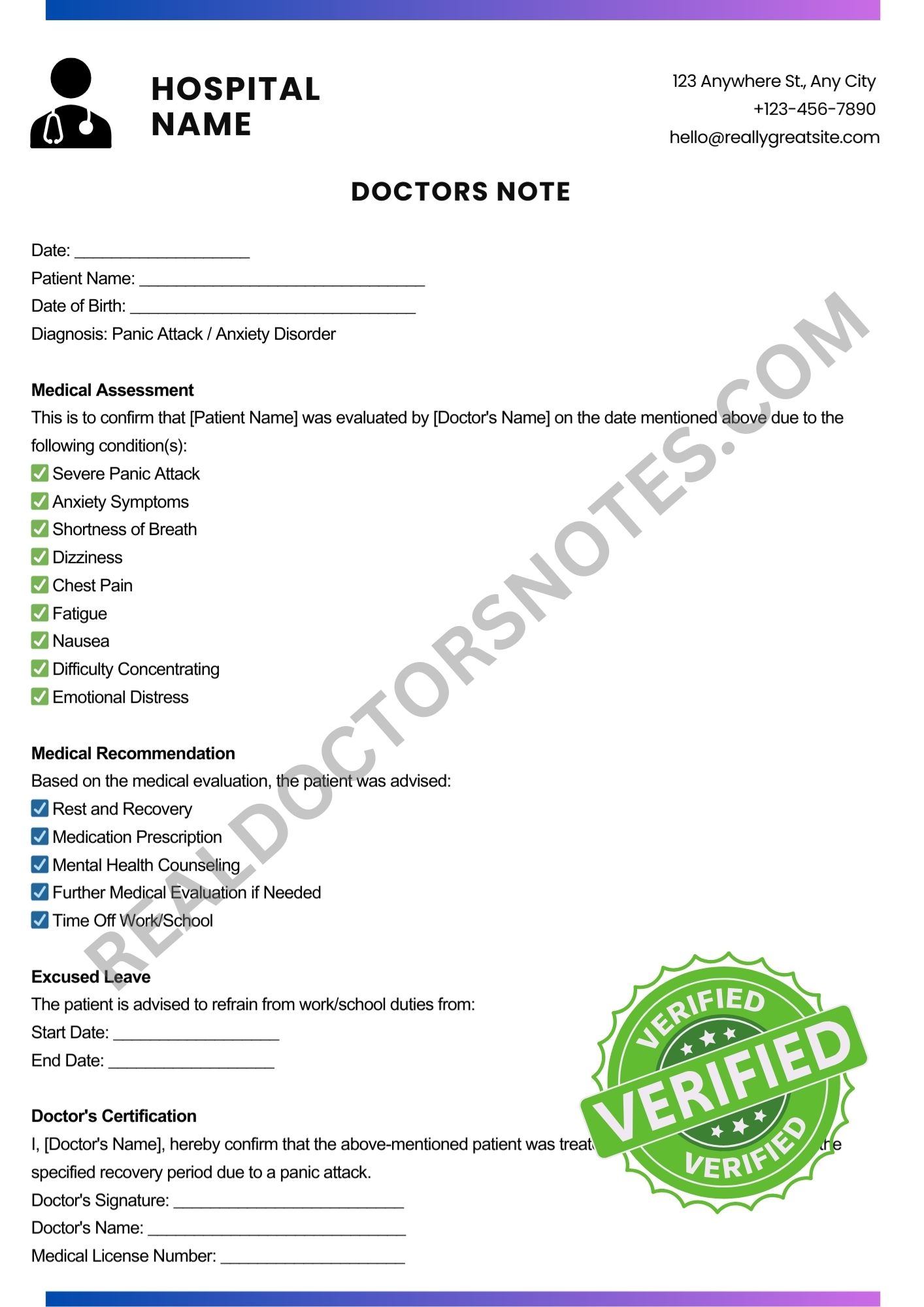
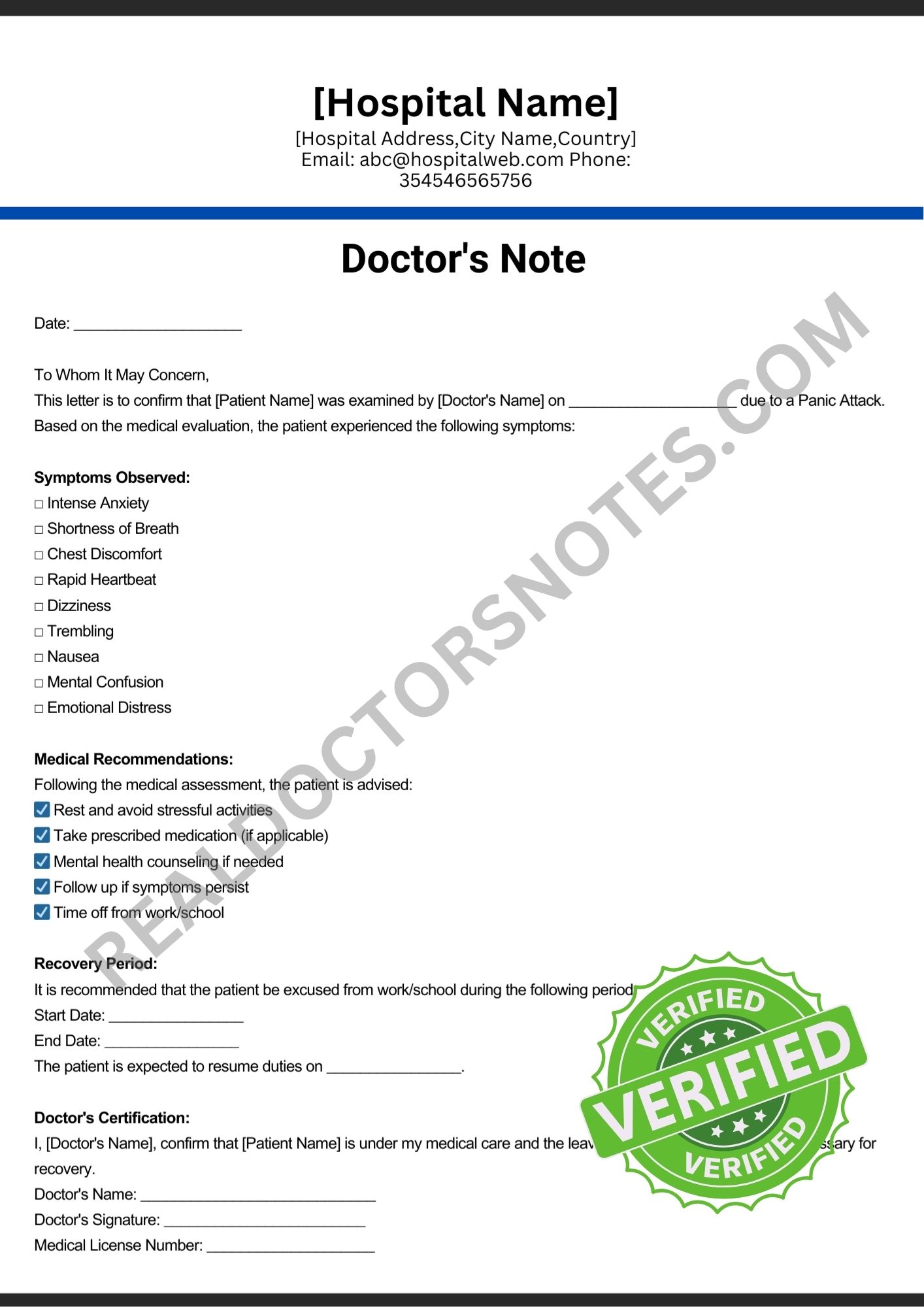
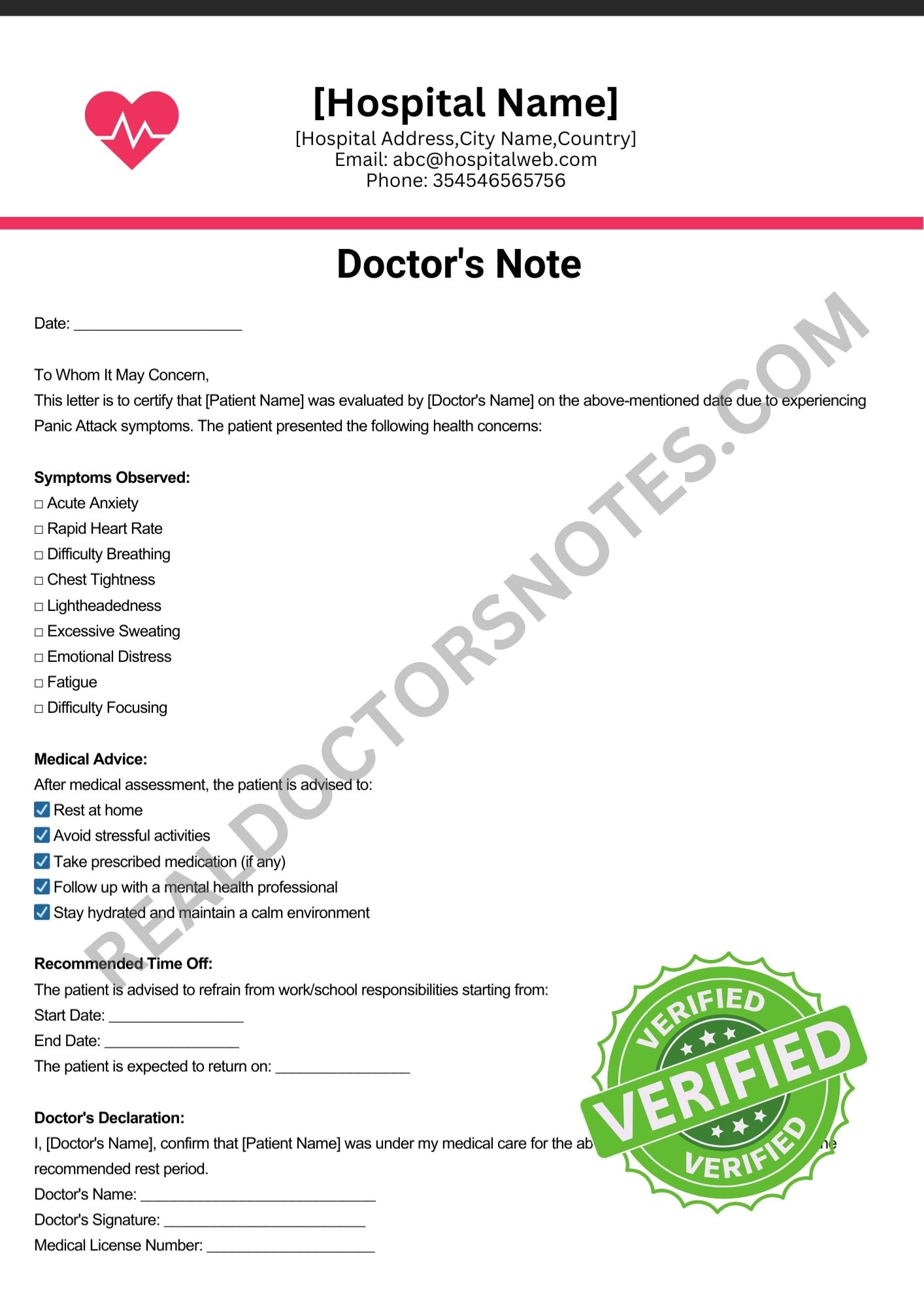
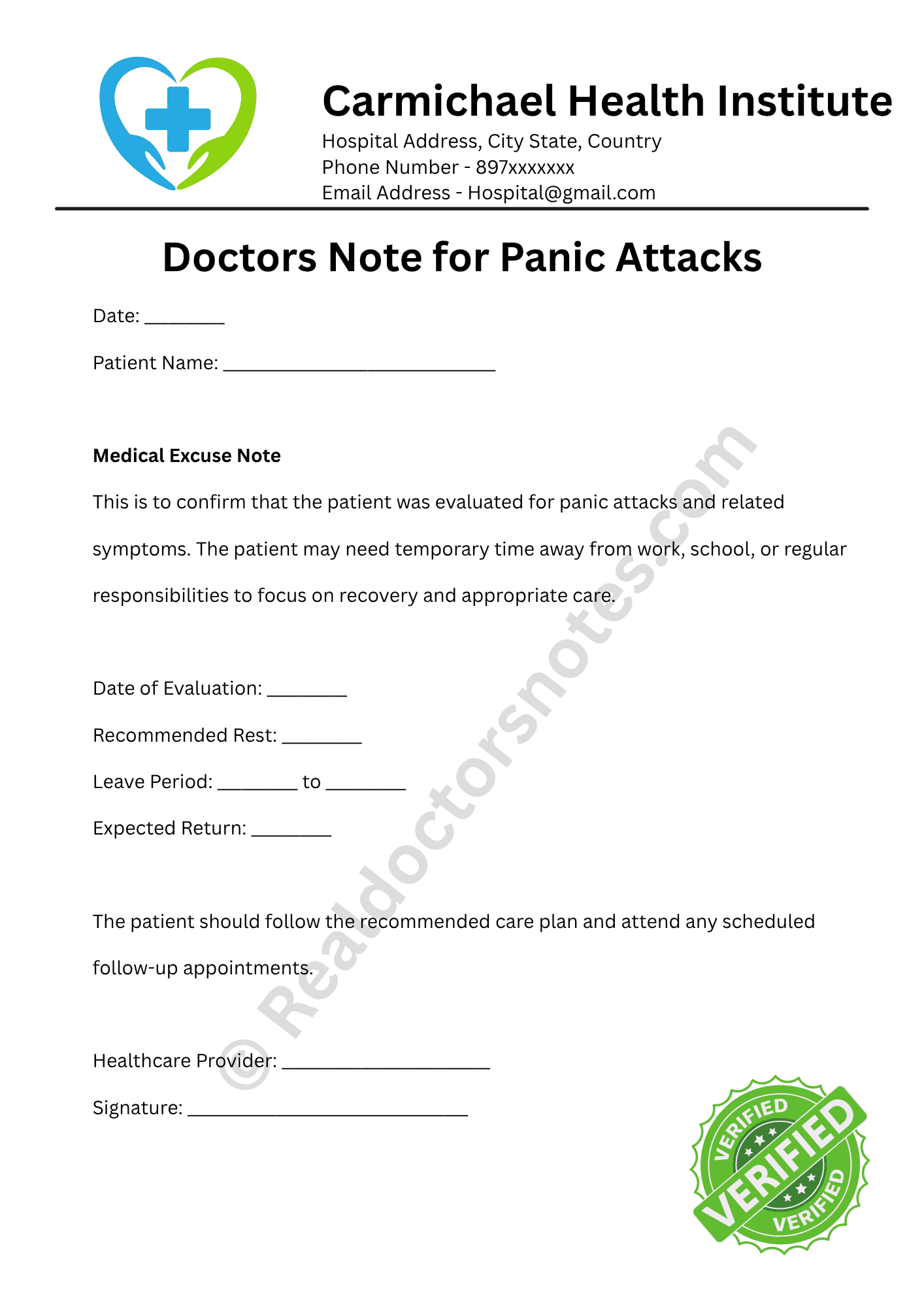

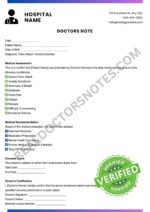


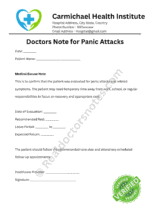


Doctors Note for Panic Attacks can provide official medical documentation when panic attack symptoms make it difficult to attend work, school, or other important responsibilities. Panic attacks may occur unexpectedly and cause intense fear, chest discomfort, rapid heartbeat, dizziness, shortness of breath, or difficulty concentrating. Because symptoms can temporarily affect daily functioning, a healthcare provider may recommend time off, modified duties, or a gradual return to normal activities based on your condition. Having appropriate medical documentation helps explain your absence while supporting your recovery and overall well-being.
Panic Attacks Symptoms That May Affect Daily Activities
The symptoms of panic attacks can appear suddenly and vary from person to person. Physical symptoms often develop alongside emotional distress, making it difficult to continue normal activities.
Common symptoms include:
- Rapid heartbeat
- Chest pain or chest tightness
- Shortness of breath
- Sweating
- Shaking or trembling
- Dizziness or lightheadedness
- Nausea
- Tingling sensations
- Feeling detached from reality
- Fear of losing control
- Fear of dying
- Chills or hot flashes
Although these symptoms can feel frightening, they are not always caused by a life-threatening medical condition. However, anyone experiencing chest pain or severe symptoms for the first time should seek prompt medical evaluation to rule out other serious conditions.
Panic Attacks Triggers You Should Know
Not every panic attack has an obvious trigger, but certain situations or lifestyle factors may increase the likelihood of an episode.
Common triggers include:
- High levels of stress
- Workplace pressure
- Financial concerns
- Public speaking
- Crowded environments
- Driving or traveling
- Lack of sleep
- Excessive caffeine intake
- Alcohol or substance use
- Previous traumatic experiences
- Major life changes
Learning to recognize personal triggers may help individuals and healthcare providers develop strategies to better manage symptoms.
Panic Attacks vs. Anxiety Attacks
Although the terms are sometimes used interchangeably, panic attacks and anxiety attacks are not exactly the same.
| Feature | Panic Attacks | Anxiety Attacks |
|---|---|---|
| Onset | Sudden | Gradual |
| Intensity | Very intense | Mild to severe |
| Duration | Usually peaks within minutes | May continue for a longer period |
| Cause | May occur unexpectedly | Often related to ongoing stress or worry |
| Physical Symptoms | Usually more severe | Can vary depending on anxiety levels |
Understanding these differences helps healthcare providers recommend the most appropriate treatment plan.
Panic Attacks Diagnosis and Medical Evaluation
Healthcare providers diagnose panic attacks by reviewing symptoms, medical history, and possible contributing factors. Because panic attack symptoms may resemble heart, lung, or neurological conditions, additional evaluation may sometimes be necessary.
A medical assessment may include:
- Review of medical history
- Physical examination
- Discussion of emotional symptoms
- Mental health screening
- Blood tests when appropriate
- Heart evaluation if symptoms suggest another condition
- Follow-up assessments
The goal is to rule out other medical conditions while identifying the most effective treatment approach.
Panic Attacks Treatment Options
Treatment depends on symptom severity, frequency of attacks, and individual health needs. Many people benefit from a combination of therapy, lifestyle changes, and medical care.
Treatment options may include:
- Cognitive Behavioral Therapy (CBT)
- Counseling or psychotherapy
- Relaxation techniques
- Deep breathing exercises
- Stress management strategies
- Regular physical activity
- Prescription medications when recommended
- Ongoing follow-up with a healthcare provider
Early treatment may help reduce the impact of panic attacks on daily life.
Panic Attacks Coping Strategies at Home
Many people find that healthy daily habits help reduce stress and improve emotional well-being.
Helpful coping strategies include:
- Practice slow, deep breathing
- Use grounding techniques during episodes
- Maintain a regular sleep schedule
- Limit caffeine and energy drinks
- Stay hydrated
- Exercise regularly
- Practice mindfulness or meditation
- Follow treatment recommendations
- Stay connected with supportive family members or friends
These strategies may complement professional treatment but should not replace medical care when symptoms are severe.
Panic Attacks and Workplace Challenges
Recurring panic attacks may affect concentration, productivity, and confidence in the workplace. Some individuals experience difficulty completing tasks, attending meetings, or interacting with coworkers during periods of heightened anxiety.
Depending on the situation, workplace accommodations may include:
- Flexible work schedules
- Quiet workspaces
- Additional breaks
- Temporary reduced workload
- Remote work arrangements when appropriate
- Time for medical appointments
Healthcare providers evaluate each person’s symptoms before recommending workplace adjustments.
Recovery is different for every individual. Some people notice improvement after learning coping strategies, while others require ongoing therapy or medical treatment.
Healthcare providers may consider several factors before recommending a full return to normal activities, including:
- Better symptom control
- Improved sleep quality
- Reduced frequency of panic attacks
- Ability to manage stress effectively
- Progress with therapy or treatment
- Overall emotional well-being
Gradual improvement is common, and regular follow-up appointments help monitor recovery.
Panic Attacks Prevention Tips
Although panic attacks cannot always be prevented, healthy lifestyle habits may help reduce their frequency.
Helpful prevention strategies include:
- Get enough sleep each night
- Exercise regularly
- Practice relaxation techniques
- Reduce caffeine intake
- Avoid excessive alcohol or recreational drugs
- Eat balanced meals
- Manage stress through healthy coping skills
- Attend scheduled healthcare appointments
- Continue recommended treatment plans
Developing consistent routines may improve long-term emotional health.
Panic Attacks and Mental Wellness
Mental wellness plays an important role in managing panic attacks. Building healthy coping habits and seeking support early may improve long-term outcomes.
Helpful approaches include:
- Speaking with a mental health professional
- Participating in counseling sessions
- Joining support groups
- Learning stress management techniques
- Practicing mindfulness
- Maintaining healthy relationships
- Setting realistic daily goals
- Recognizing early warning signs
Taking care of emotional well-being is an important part of overall health and recovery.
Panic Attacks Compared With Other Conditions
| Condition | Main Difference |
|---|---|
| Panic Attacks | Sudden episodes of intense fear with physical symptoms |
| Generalized Anxiety Disorder | Persistent worry lasting for months |
| Heart Attack | Medical emergency caused by reduced blood flow to the heart |
| Asthma Attack | Breathing difficulty caused by airway narrowing |
| Low Blood Sugar | Symptoms improve after blood glucose is corrected |
Because several medical conditions can produce similar symptoms, professional evaluation is important.
FAQs
Q. Can panic attacks happen without warning?
Yes. Some panic attacks occur unexpectedly, while others are triggered by specific situations.
Q. How long does a panic attack usually last?
Most panic attacks reach their peak within several minutes, although some symptoms may take longer to completely resolve.
Q. Can panic attacks come back?
Yes. Some individuals experience recurring panic attacks, while others have only one episode.
Q. Are panic attacks dangerous?
Although panic attacks themselves are not usually life-threatening, their symptoms can resemble serious medical conditions, making proper evaluation important.
Q. Can panic attacks affect work performance?
Yes. Difficulty concentrating, fatigue, and fear of future attacks may temporarily interfere with workplace performance.
Q. Can exercise help reduce panic attacks?
Regular physical activity may help reduce stress and improve overall emotional health for many individuals.
Q. Should I avoid caffeine?
Some people notice that caffeine worsens symptoms, so reducing intake may be helpful if recommended by a healthcare provider.
Q. Can children and teenagers experience panic attacks?
Yes. Panic attacks can occur at any age and should be evaluated if they interfere with normal activities.
Q. Can panic attacks happen during sleep?
Yes. Some individuals experience nighttime panic attacks that wake them suddenly from sleep.
Q. When should I seek emergency medical care?
Seek immediate medical attention if you experience new chest pain, severe breathing difficulty, loss of consciousness, or symptoms that could indicate a medical emergency rather than a panic attack.



Reviews
There are no reviews yet.