![Real Doctors Note For Work and School [Get in 5 Minutes]](https://realdoctorsnotes.com/wordpress/wp-content/webp-express/webp-images/uploads/2025/11/2.png.webp)
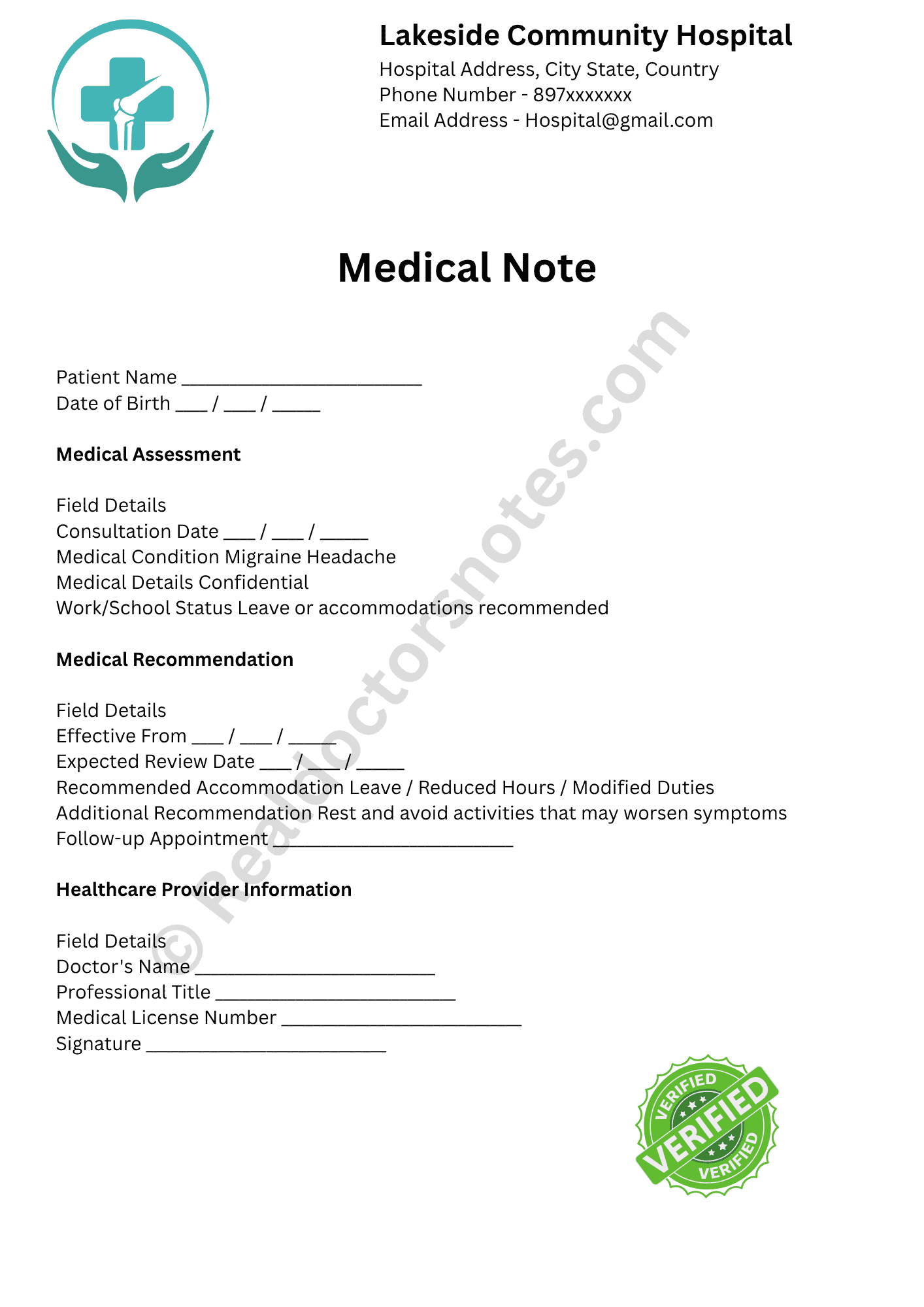
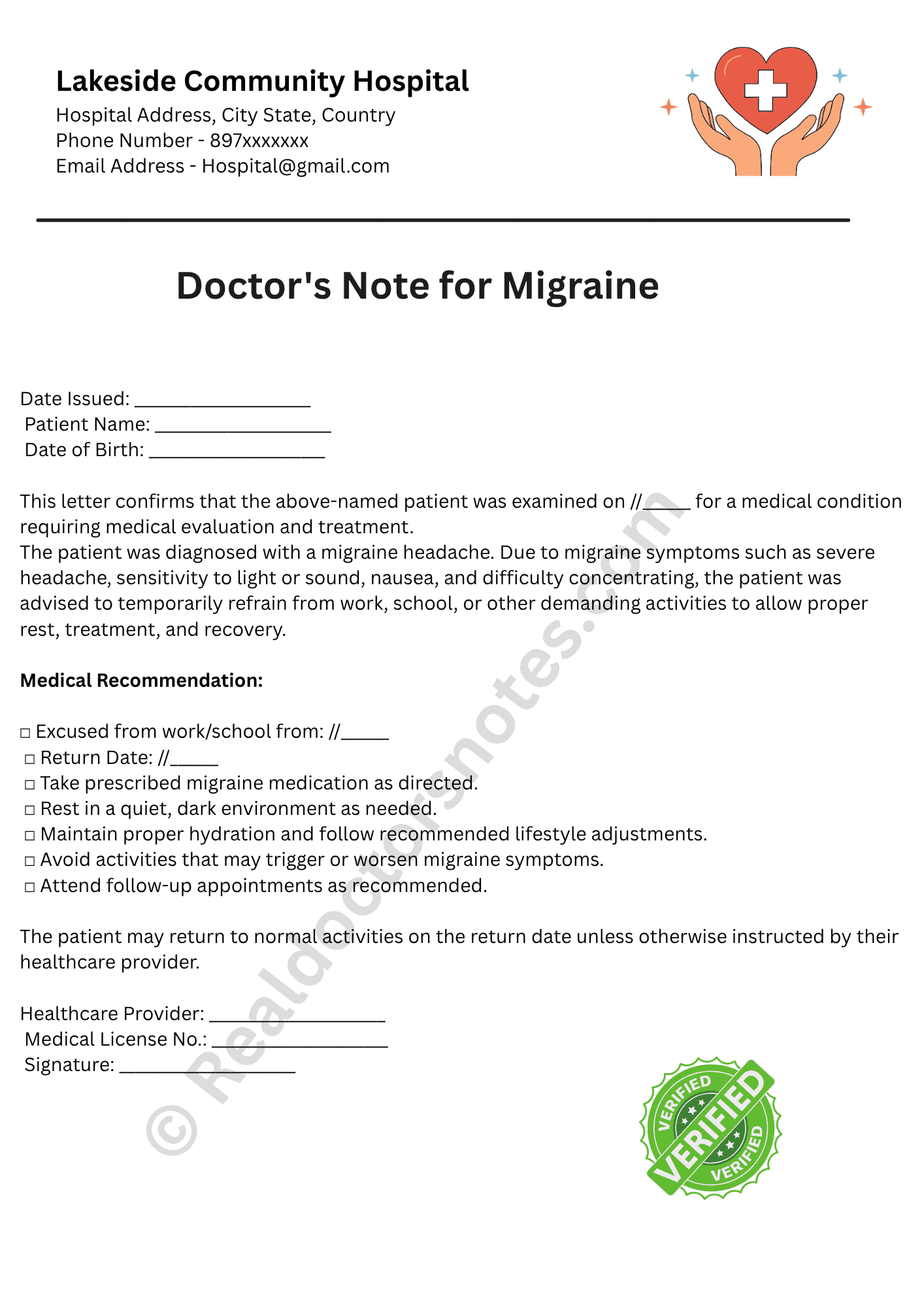
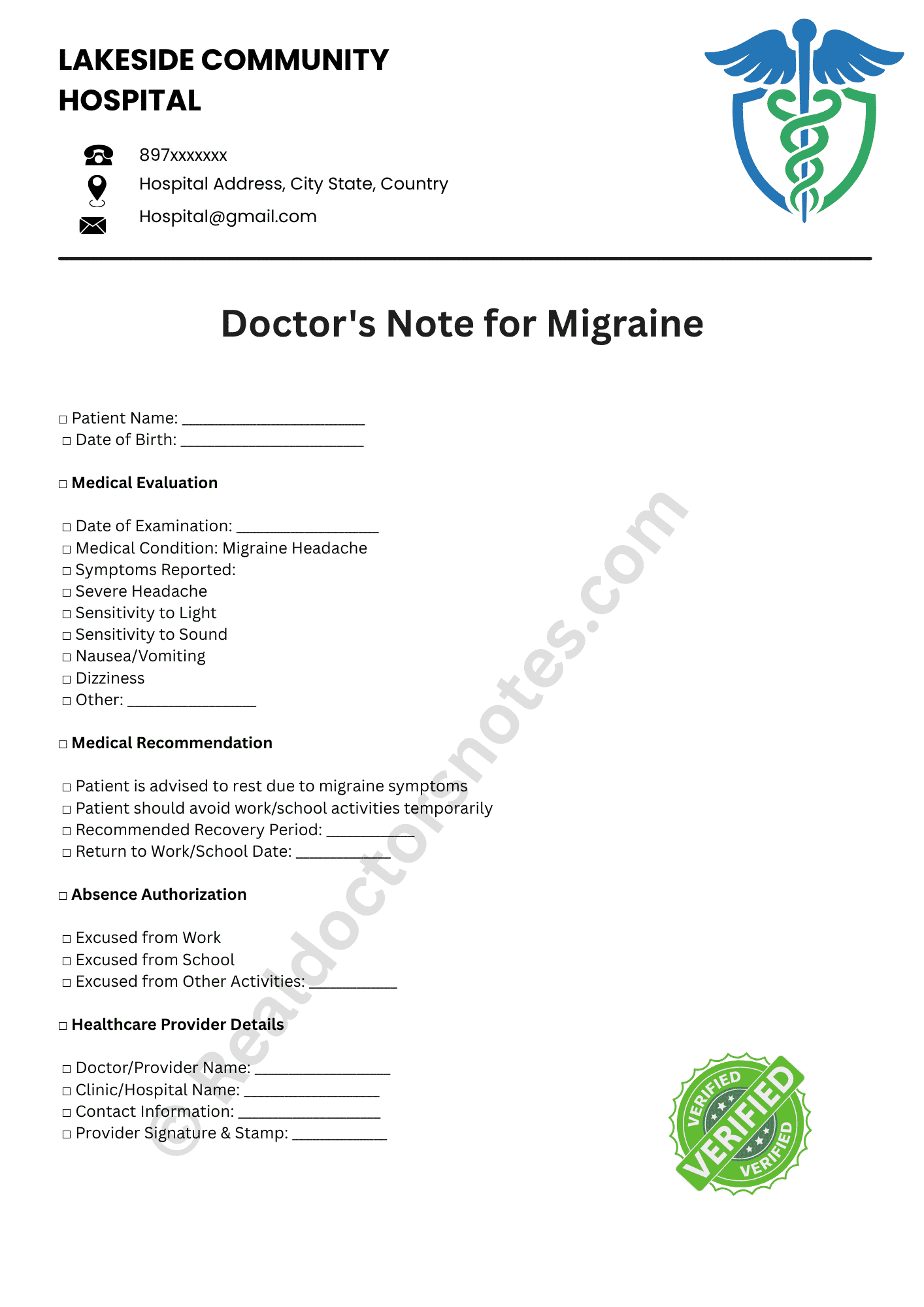





A Doctor’s Note for Migraine is an official medical document provided by a licensed healthcare provider after evaluating your symptoms. If you’ve ever experienced a migraine, you know it’s much more than a typical headache. Migraines can cause intense throbbing pain, nausea, vomiting, dizziness, blurred vision, and extreme sensitivity to light or sound, making it difficult—or even impossible—to work, attend school, or carry out daily activities.
When a migraine prevents you from meeting your responsibilities, your employer, school, or organization may ask for medical documentation to verify your absence. A doctor’s note helps confirm that your condition required medical attention and that taking time off was medically appropriate.
In this guide, you’ll learn everything you need to know about getting a Doctor’s Note for Migraine, including when you may need one, how doctors decide whether to issue it, what information it typically contains, whether online doctor’s notes are available, and how employers and schools usually handle migraine-related absences. We’ll also cover common questions about medical leave, workplace policies, telehealth consultations, and practical tips for managing migraines effectively.
Whether you’re dealing with an occasional migraine or chronic migraine attacks, this comprehensive guide will help you understand your options and make informed decisions about your health and responsibilities.
Related Post:
What Is a Migraine?
A migraine is a neurological condition that causes recurring episodes of moderate to severe head pain, often accompanied by other symptoms that affect the nervous system. Unlike an ordinary headache, a migraine can interfere with your ability to think clearly, concentrate, work, drive, or participate in everyday activities.
Migraine attacks vary from person to person. Some people experience migraines only a few times a year, while others may have them several times each month. The intensity, duration, and symptoms can differ significantly.
Migraines commonly affect one side of the head, although they can occur on both sides. The pain is often described as throbbing or pulsating and may worsen with physical activity.
Migraine vs. a Regular Headache
Many people confuse migraines with headaches, but they are not the same condition.
| Regular Headache | Migraine |
|---|---|
| Mild to moderate pain | Moderate to severe pain |
| Usually affects both sides | Often affects one side |
| Rarely causes nausea | Frequently causes nausea and vomiting |
| Little sensitivity to light | High sensitivity to light and sound |
| Usually resolves quickly | Can last from several hours to several days |
| Doesn’t significantly limit activities | Can make normal activities impossible |
Because migraines can be debilitating, healthcare providers recognize them as legitimate medical conditions that may require treatment and temporary rest.
The Four Stages of a Migraine
Not everyone experiences every stage, but many migraine sufferers notice a predictable pattern.
1. Prodrome
The prodrome phase can begin one or two days before the headache starts.
Common signs include:
- Fatigue
- Mood changes
- Neck stiffness
- Food cravings
- Increased thirst
- Frequent yawning
- Difficulty concentrating
Recognizing these early signs may help some people begin treatment sooner.
2. Aura
About one-third of migraine sufferers experience an aura before the headache begins.
Aura symptoms may include:
- Flashing lights
- Blind spots
- Zigzag lines
- Tingling sensations
- Temporary numbness
- Difficulty speaking
- Temporary vision changes
Aura usually lasts between 5 and 60 minutes.
3. Migraine Attack
This is the main phase of the migraine.
Symptoms often include:
- Severe throbbing head pain
- Pain on one side of the head
- Nausea
- Vomiting
- Dizziness
- Light sensitivity
- Sound sensitivity
- Difficulty concentrating
- Blurred vision
Without treatment, a migraine attack may last anywhere from 4 to 72 hours.
4. Postdrome
After the migraine ends, many people continue to feel unwell.
Common postdrome symptoms include:
- Fatigue
- Brain fog
- Weakness
- Trouble focusing
- Mild lingering headache
- Sensitivity to movement
This recovery phase can last for several hours or even a full day.
Common Migraine Symptoms
Migraine symptoms can vary widely, but many people experience several of the following:
Severe Head Pain
The pain is often described as throbbing or pulsating and may affect one or both sides of the head. It can become worse with physical activity.
Sensitivity to Light (Photophobia)
Bright lights, computer screens, and sunlight can significantly increase discomfort during a migraine attack.
Sensitivity to Sound (Phonophobia)
Normal household sounds, conversations, or loud environments may become difficult to tolerate.
Nausea and Vomiting
Digestive symptoms are common during migraines and can make it difficult to eat, drink, or take medications.
Visual Disturbances
Some individuals experience blurred vision, flashing lights, blind spots, or temporary visual changes before or during a migraine.
Dizziness
Migraines may cause balance problems, dizziness, or a sensation that the room is spinning.
Difficulty Concentrating
Many people report “brain fog,” making it difficult to complete work tasks, attend meetings, or study effectively.
Fatigue
Extreme tiredness may occur before, during, or after a migraine attack.
Neck Pain
Neck stiffness or pain is another common symptom that may appear before the headache begins.
Can You Get a Doctor’s Note for a Migraine?
Yes. A licensed healthcare provider may issue a Doctor’s Note for Migraine if, after evaluating your condition, they determine that your symptoms are significant enough to justify missing work, school, or other responsibilities.
However, it’s important to understand that not every migraine automatically qualifies for a doctor’s note. A healthcare provider will consider your symptoms, medical history, the severity of the attack, and how the migraine affects your ability to function before deciding whether medical documentation is appropriate.
The purpose of a doctor’s note is to document that a legitimate medical evaluation took place and that the provider believes rest, treatment, or temporary absence is medically appropriate based on your condition.
A doctor may recommend time away from work or school if your migraine causes:
- Severe head pain that limits daily activities
- Persistent nausea or vomiting
- Sensitivity to light or sound that prevents you from working
- Vision disturbances that make driving or screen use unsafe
- Dizziness or balance problems
- Difficulty concentrating or thinking clearly
- Medication side effects that impair functioning
The duration of the recommended leave varies depending on the severity of the migraine, your response to treatment, and your overall health.
When Do Employers Require a Doctor’s Note for a Migraine?
Whether you need a doctor’s note depends on your employer’s attendance policy, the length of your absence, and applicable employment laws. Some workplaces accept a self-reported sick day, while others require medical documentation after a certain number of missed days or for repeated absences.
A doctor’s note can help verify that your migraine-related absence was medically justified and may support requests for sick leave or accommodations when appropriate.
Can You Get an Online Doctor’s Note for a Migraine?
Yes. In many cases, you may be able to receive an Online Doctor’s Note for Migraine through a licensed telehealth provider after a legitimate medical consultation.
Telehealth has made healthcare more accessible, allowing patients to consult a licensed medical professional from home using a phone, tablet, or computer. During the consultation, the provider will discuss your symptoms, review your medical history, and determine whether a doctor’s note is medically appropriate.
Benefits of an online consultation include:
- No travel while experiencing severe migraine symptoms.
- Same-day or next-day appointments with many providers.
- Convenient access from home.
- Electronic delivery of medical documentation.
- Reduced exposure to crowded waiting rooms.
However, an online consultation does not guarantee a doctor’s note. The healthcare provider must determine that your symptoms justify medical documentation based on their professional evaluation.
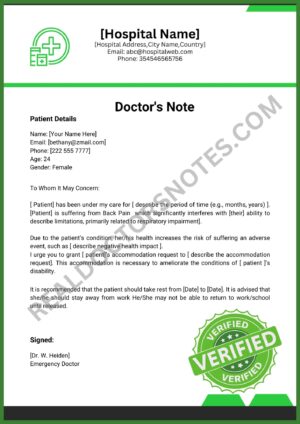
What Information Is Included in a Doctor’s Note for Migraine?
A legitimate doctor’s note is designed to confirm that you were evaluated by a healthcare provider. It generally includes only the information necessary for your employer or school and respects your medical privacy.
A migraine doctor’s note may include:
| Information | Usually Included |
|---|---|
| Patient’s name | ✔ Yes |
| Date of medical evaluation | ✔ Yes |
| Date the note was issued | ✔ Yes |
| Recommended time away from work or school | ✔ Yes |
| Expected return date | ✔ Yes |
| Healthcare provider’s name | ✔ Yes |
| Provider’s signature | ✔ Yes |
| Clinic or practice information | ✔ Yes |
| Diagnosis details | Sometimes, if appropriate or required |
How Long Can a Doctor Excuse You From Work for a Migraine?
There is no standard number of days because every migraine is different. The amount of time recommended depends on factors such as:
- Severity of symptoms.
- Frequency of migraine attacks.
- Response to treatment.
- Nature of your job.
- Overall health.
Mild Migraine
If symptoms improve quickly with medication and rest, a provider may recommend returning to work once you’re able to perform your duties safely.
Moderate Migraine
When symptoms interfere with concentration, screen use, or normal activities, a longer recovery period may be appropriate before returning to work or school.
Chronic Migraine
People who experience migraines frequently may require ongoing treatment and, in some cases, additional workplace accommodations or medical leave depending on their circumstances.
Complicated Migraine
If a migraine is accompanied by unusual neurological symptoms or requires further medical evaluation, the provider may recommend additional recovery time and follow-up care.
Only your treating healthcare provider can determine how long you should remain away from work or school.
Doctor’s Note for School Because of a Migraine
Migraines can also interfere with learning and academic performance. Students may struggle to attend classes, complete assignments, or take exams during a migraine attack.
A doctor’s note can help explain the absence and support requests such as:
- Excused absences.
- Makeup assignments.
- Rescheduled exams.
- Attendance documentation.
- Temporary academic accommodations, when appropriate.
Each school, college, or university has its own attendance and documentation policies, so students should check with their institution regarding specific requirements.
Can an Employer Verify a Doctor’s Note?
Yes. Employers may verify that a doctor’s note is legitimate, but there are important limits to what they can ask.
In many cases, verification focuses on confirming that:
- The healthcare provider or clinic issued the note.
- The note is authentic.
- The dates are accurate.
Healthcare privacy laws may limit the disclosure of detailed medical information without your permission. Your employer generally does not need access to your complete medical record to verify an absence.
If you’re unsure about what information your employer can request, consult your HR department or review the applicable workplace policies and local laws.
Can You Get Paid Sick Leave for a Migraine?
Whether a migraine-related absence is paid depends on several factors, including:
- Your employer’s sick leave policy.
- Available paid time off (PTO).
- Employment contract.
- Local or state employment laws.
- Whether you qualify for protected medical leave.
Some employers provide paid sick leave that can be used for migraine-related absences, while others require employees to use PTO or unpaid leave if no paid sick leave is available.
A doctor’s note may be required if you’re requesting extended leave or if company policy requires medical documentation.
FAQs
1. Can I get a doctor’s note for one missed day of work due to a migraine?
Yes, if you are evaluated by a licensed healthcare provider and they determine that medical documentation is appropriate. Whether you need a note for a single missed day depends on your employer’s attendance policy.
2. Can I get a doctor’s note without seeing a doctor?
Generally, no. A legitimate doctor’s note should be based on an evaluation by a licensed healthcare provider, either in person or through an appropriate telehealth consultation.
3. How quickly can I receive a migraine doctor’s note?
The timing varies by provider. Some clinics and telehealth services may provide documentation the same day after completing your medical evaluation.
4. Is a migraine considered a valid reason to miss work?
Yes. A migraine can significantly impair your ability to perform your job safely and effectively. If medically evaluated, it may be a valid reason for an excused absence.
5. Can I receive a doctor’s note for chronic migraines?
Yes. If you have chronic migraines, your healthcare provider may issue documentation for individual episodes, ongoing treatment, or certain leave requests when medically appropriate.




Reviews
There are no reviews yet.