![Real Doctors Note For Work and School [Get in 5 Minutes]](https://realdoctorsnotes.com/wordpress/wp-content/uploads/2025/11/2.png)



Gastroenteritis can cause sudden diarrhea, vomiting, nausea, stomach cramps, fever, weakness, and dehydration. Because these symptoms can make it difficult to work, attend school, travel, or perform normal daily activities, a healthcare provider may recommend staying home while you recover.
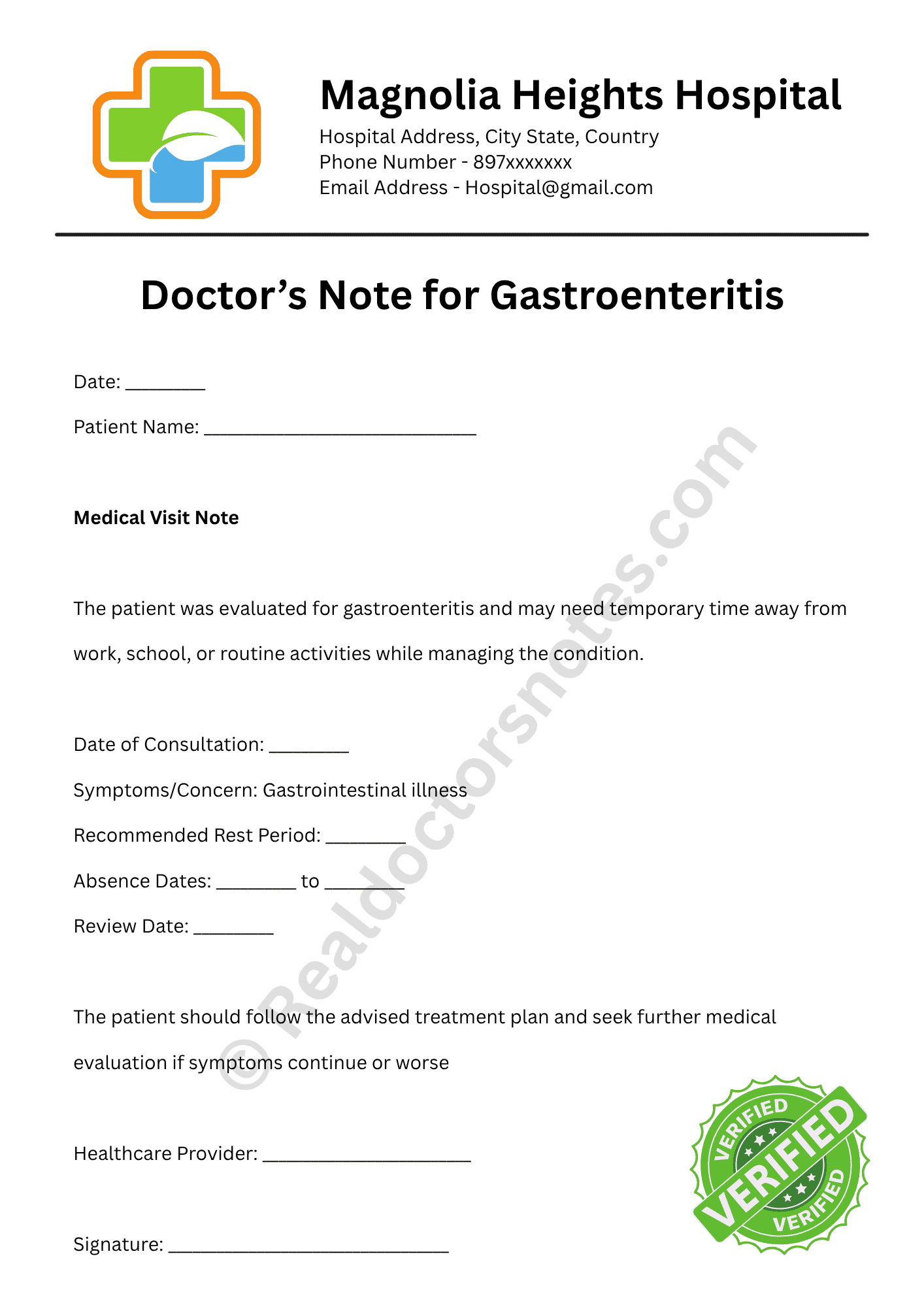
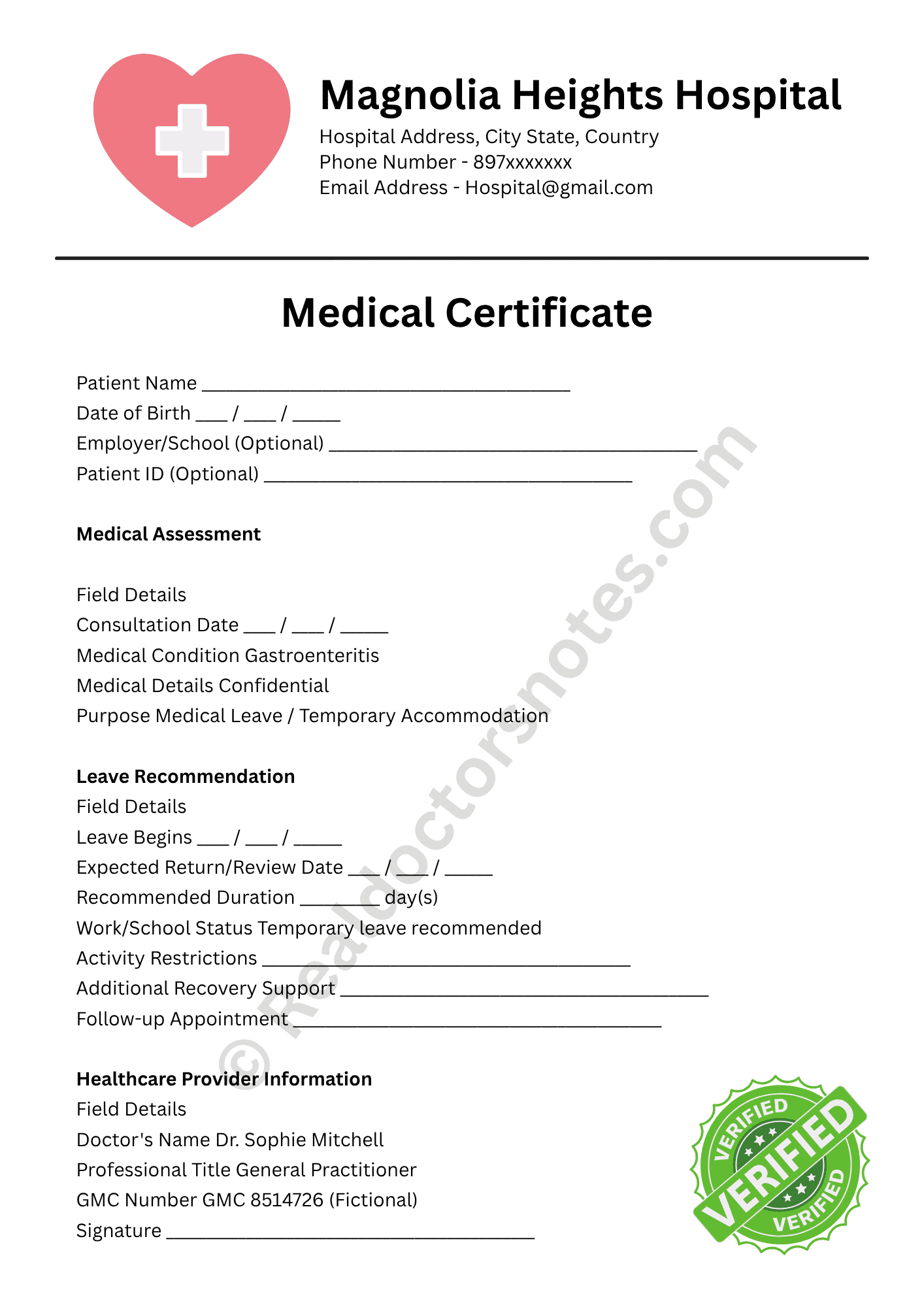
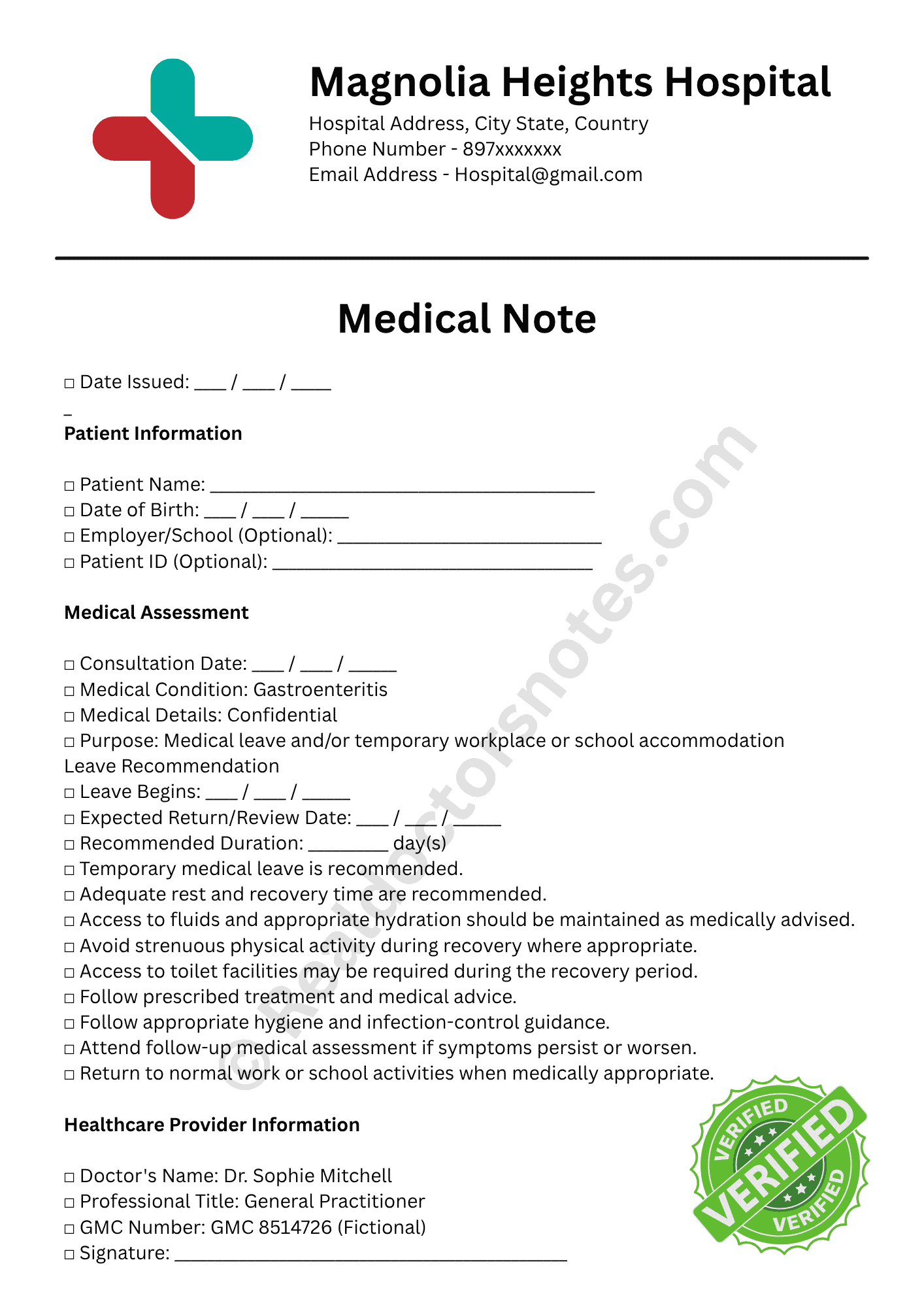
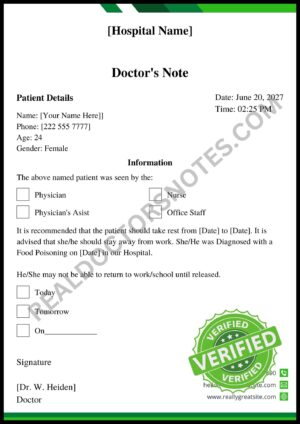
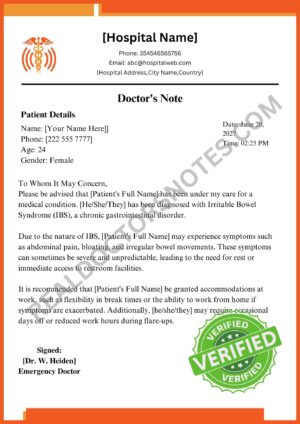
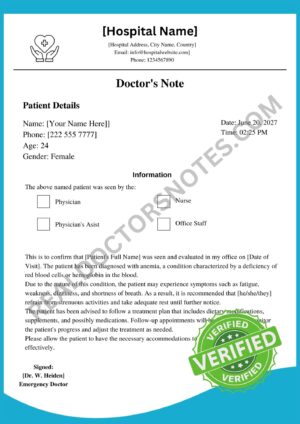
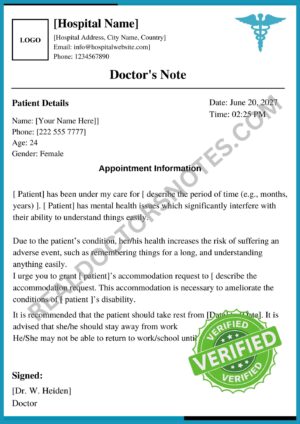
A Doctor’s Note for Gastroenteritis can document that you were evaluated for a gastrointestinal illness and may need time away from work, school, or other responsibilities. Depending on the situation, the note may include the date of evaluation, recommended absence period, general medical restriction, and the date you may return to normal activities.
Related Post:
- Doctors Note for Food Poisoning
- Doctors Note for Diarrhea
- Doctors Note for vomiting
- Doctors Note Stomach Virus
What Is Gastroenteritis?
Gastroenteritis refers to inflammation involving the gastrointestinal tract. Viruses, bacteria, parasites, contaminated food or water, and certain other irritants can cause it.
Viral gastroenteritis is one of the most common forms. Norovirus is a frequent cause, while other viruses can also produce gastrointestinal symptoms. Gastroenteritis may spread through contaminated food or water or through contact with infected vomit or stool.
Common symptoms include:
- Diarrhea
- Nausea
- Vomiting
- Abdominal pain or cramping
- Fever
- Weakness and fatigue
- Loss of appetite
- Dehydration
- Headache or body aches in some cases
The severity and duration can vary depending on the cause and the individual’s health.
When Do You Need a Doctor’s Note for Gastroenteritis?
Whether you need a doctor’s note depends on the policies of your employer, school, college, or other organization.
An employer may request medical documentation when an employee misses work because of an illness. A school may also require an absence note after a certain number of missed days or when symptoms involve a potentially contagious illness.
A doctor’s note may be particularly useful when:
- Gastroenteritis prevents you from working
- You need to miss multiple workdays
- Your employer requires medical documentation
- You need an excuse for a school absence
- You need temporary workplace restrictions
- You need documentation for an extended recovery period
- You need confirmation of a recommended return-to-work date
Always check the specific documentation requirements of your workplace or school because policies differ.
What Can a Doctor’s Note for Gastroenteritis Include?
A legitimate medical note should contain information appropriate to the situation and should be issued following an actual healthcare evaluation.
Depending on the provider and purpose, a gastroenteritis doctor’s note may include:
- Patient’s name
- Date of medical evaluation
- General statement confirming evaluation
- Relevant work or school restriction
- Recommended period of absence
- Expected return-to-work or return-to-school date
- Activity restrictions, when medically appropriate
- Healthcare provider’s name and credentials
- Provider or clinic contact information
- Signature or other appropriate authentication
The amount of medical information included can vary. Employers and schools generally do not need a complete medical history simply to confirm that an absence was medically necessary.
Doctor’s Note for Gastroenteritis for Work
Gastroenteritis can make regular work difficult, especially when diarrhea, vomiting, abdominal cramps, weakness, or dehydration are present.
A healthcare provider may recommend staying home when symptoms interfere with normal activities or when there is concern about spreading an infectious illness.
A gastroenteritis doctor’s note for work may document that the employee was evaluated and should remain away from work for a specified period.
Depending on the person’s condition and job responsibilities, a healthcare provider may also recommend temporary restrictions.
For example, someone whose work involves food preparation may have different return-to-work considerations than someone working remotely.
Employers should follow applicable workplace health policies and local requirements when determining when an employee can return.
Doctor’s Note for Gastroenteritis for School
Students with vomiting, diarrhea, fever, weakness, or other significant symptoms may need to stay home from school until they are well enough to participate safely.
A doctor’s note for gastroenteritis for school can provide documentation of a medically related absence when the school requires it.
The note may state:
The student was evaluated for an illness and was advised to remain home from school for a specified period.
Schools may have their own rules regarding how many days can be missed without documentation, so parents or students should check the school’s attendance policy.
For children, dehydration can develop quickly, particularly in infants and young children. NIDDK recommends contacting a healthcare professional promptly when children have significant diarrhea, frequent vomiting, dehydration symptoms, or other concerning symptoms.
How Long Should You Stay Home With Gastroenteritis?
There is no single recovery period that applies to everyone.
The appropriate time away from work or school depends on:
- The underlying cause
- Severity of symptoms
- Frequency of vomiting or diarrhea
- Presence of fever
- Hydration status
- Type of work or school activity
- Risk of exposing other people
- Individual medical circumstances
Some viral gastroenteritis infections can improve within a few days, although certain infections can last longer. For example, NIDDK notes that norovirus symptoms commonly begin 12–48 hours after exposure and often last about 1–3 days.
Do not use a generic recovery timeline as a substitute for medical advice. If symptoms are severe, persistent, or worsening, consult a healthcare professional.
Can Gastroenteritis Cause Dehydration?
Yes. Dehydration is one of the most important complications of gastroenteritis, particularly when vomiting and diarrhea cause substantial fluid loss.
Signs of dehydration can include:
- Excessive thirst
- Dry mouth
- Dark-colored urine
- Urinating less frequently
- Fatigue
- Dizziness or lightheadedness
- Fainting
- Sunken eyes or cheeks
Severe dehydration may require medical treatment, including intravenous fluids in some circumstances.
People at higher risk of complications include young children, older adults, pregnant people, and individuals with weakened immune systems or certain underlying health conditions.
What Should You Do While Recovering From Gastroenteritis?
The primary focus of treatment for many cases of viral gastroenteritis is replacing fluids and electrolytes lost through vomiting and diarrhea.
NIDDK recommends drinking plenty of liquids. If vomiting makes drinking difficult, taking small amounts frequently may be easier to tolerate. Depending on the situation, healthcare professionals may recommend oral rehydration solutions, particularly for people with severe diarrhea or dehydration risk.
Other supportive measures may include:
- Getting adequate rest
- Drinking fluids regularly
- Replacing electrolytes when appropriate
- Eating when your appetite returns
- Gradually returning to normal activities
- Practicing careful hand hygiene
- Cleaning contaminated surfaces appropriately
Most people with viral gastroenteritis can return to their usual diet as their appetite returns; prolonged fasting or an unnecessarily restrictive diet is generally not recommended.
Can You Get a Doctor’s Note for Gastroenteritis Online?
Telehealth may be appropriate for some gastrointestinal illnesses, particularly when symptoms are mild and a physical examination is not considered necessary.
A licensed healthcare professional may assess symptoms, ask about their severity and duration, discuss hydration, determine whether additional evaluation is needed, and provide documentation when medically appropriate.
However, an online consultation does not automatically guarantee a doctor’s note. A healthcare provider must determine that documentation is appropriate based on the clinical assessment.
If symptoms suggest dehydration, significant abdominal pain, blood in the stool, persistent vomiting, or another potentially serious condition, an in-person evaluation may be more appropriate.
What Information Should You Provide During a Medical Consultation?
If you are seeking medical evaluation for gastroenteritis, be prepared to explain:
- When symptoms started
- How frequently you have diarrhea
- How often you have vomited
- Whether you have a fever
- Whether you have abdominal pain
- Whether there is blood or mucus in your stool
- How much fluid you can drink
- How frequently you are urinating
- Whether you recently traveled
- Whether you ate potentially contaminated food
- Whether other people around you are sick
- Any relevant medications or medical conditions
Accurate information helps a healthcare professional determine whether your symptoms are consistent with gastroenteritis or whether another condition should be considered.
When Should You See a Doctor for Gastroenteritis?
Mild gastroenteritis often improves without extensive medical treatment, but certain symptoms require prompt medical attention.
Adults should seek medical advice when they experience symptoms such as:
- Diarrhea lasting more than two days
- Frequent vomiting
- Six or more loose stools in one day
- High fever
- Severe abdominal or rectal pain
- Blood, pus, or black/tarry stool
- Symptoms of dehydration
- Inability to drink enough fluids or oral rehydration solution
- Significant weakness or changes in mental state
These warning signs are identified by NIDDK as reasons adults with suspected viral gastroenteritis should seek medical care.
Children, infants, older adults, pregnant people, and people with weakened immune systems may require earlier medical assessment because dehydration and complications can become more serious.
Gastroenteritis vs. Food Poisoning
Gastroenteritis and food poisoning can produce similar symptoms, but they are not always the same thing.
Viral gastroenteritis is caused by viruses that infect the gastrointestinal system. Food poisoning occurs after consuming food or drinks contaminated with viruses, bacteria, parasites, or certain chemicals.
Both conditions may cause:
- Diarrhea
- Vomiting
- Abdominal pain
- Nausea
- Fever
- Dehydration
Because the symptoms overlap, a healthcare professional may need to evaluate the circumstances and symptoms to determine the likely cause.
Is Gastroenteritis Contagious?
Some forms of gastroenteritis are highly contagious.
Viral gastroenteritis can spread through contact with infected stool or vomit. Norovirus, in particular, spreads easily between people and can cause outbreaks.
To reduce transmission:
- Wash your hands thoroughly with soap and water
- Avoid preparing food for others while sick
- Clean contaminated surfaces
- Wash contaminated clothing and linens appropriately
- Avoid close contact when experiencing active symptoms
- Follow workplace, school, and healthcare guidance regarding returning to shared environments
Good hygiene is especially important because people can spread gastrointestinal infections to others.
What Is a Return-to-Work Note for Gastroenteritis?
A return-to-work note is documentation indicating that an employee has been medically evaluated and may return to work, potentially with restrictions if necessary.
For gastroenteritis, a healthcare provider may determine whether the individual is medically ready to resume normal activities based on symptoms, recovery, hydration, and the nature of the person’s job.
A return-to-work document may include:
- Employee’s name
- Evaluation date
- Return date
- Work restrictions, if applicable
- Provider identification
- Appropriate authentication
Whether a return-to-work note is required depends on the employer’s policy.
How to Get a Legitimate Doctor’s Note for Gastroenteritis
The safest approach is to obtain medical documentation from a qualified healthcare professional after a genuine evaluation.
Depending on the circumstances, you may:
- Schedule an appointment with your primary care provider.
- Visit an urgent care clinic.
- Use an appropriate telehealth service.
- Seek emergency medical care if severe symptoms are present.
- Explain your symptoms and the reason documentation is needed.
- Follow the healthcare provider’s recommendations.
- Request appropriate documentation if medically justified.
A medical note should accurately reflect the healthcare encounter and should not contain false information.
FAQs
Q. Can a doctor give you a note for gastroenteritis?
Yes. If a healthcare professional evaluates you and determines that your illness affects your ability to work, attend school, or perform certain activities, they may provide appropriate medical documentation.
Q. Can I get a doctor’s note for diarrhea and vomiting?
Potentially. Diarrhea and vomiting can be symptoms of gastroenteritis and other illnesses. A healthcare professional can evaluate the symptoms and determine whether documentation is medically appropriate.
Q. How many days can a doctor excuse you for gastroenteritis?
There is no universal number of days. The recommended absence period depends on the severity of symptoms, recovery, medical assessment, and the requirements of your workplace or school.
Q. Do I need a doctor’s note for missing work because of gastroenteritis?
It depends on your employer’s sick-leave and documentation policy. Some employers require documentation after a particular number of missed days, while others may not.
Q. Can I get a gastroenteritis doctor’s note online?
A telehealth provider may issue medical documentation after evaluating you, when clinically appropriate. However, documentation is not guaranteed simply because you request it.




Reviews
There are no reviews yet.