![Real Doctors Note For Work and School [Get in 5 Minutes]](https://realdoctorsnotes.com/wordpress/wp-content/uploads/2025/11/2.png)

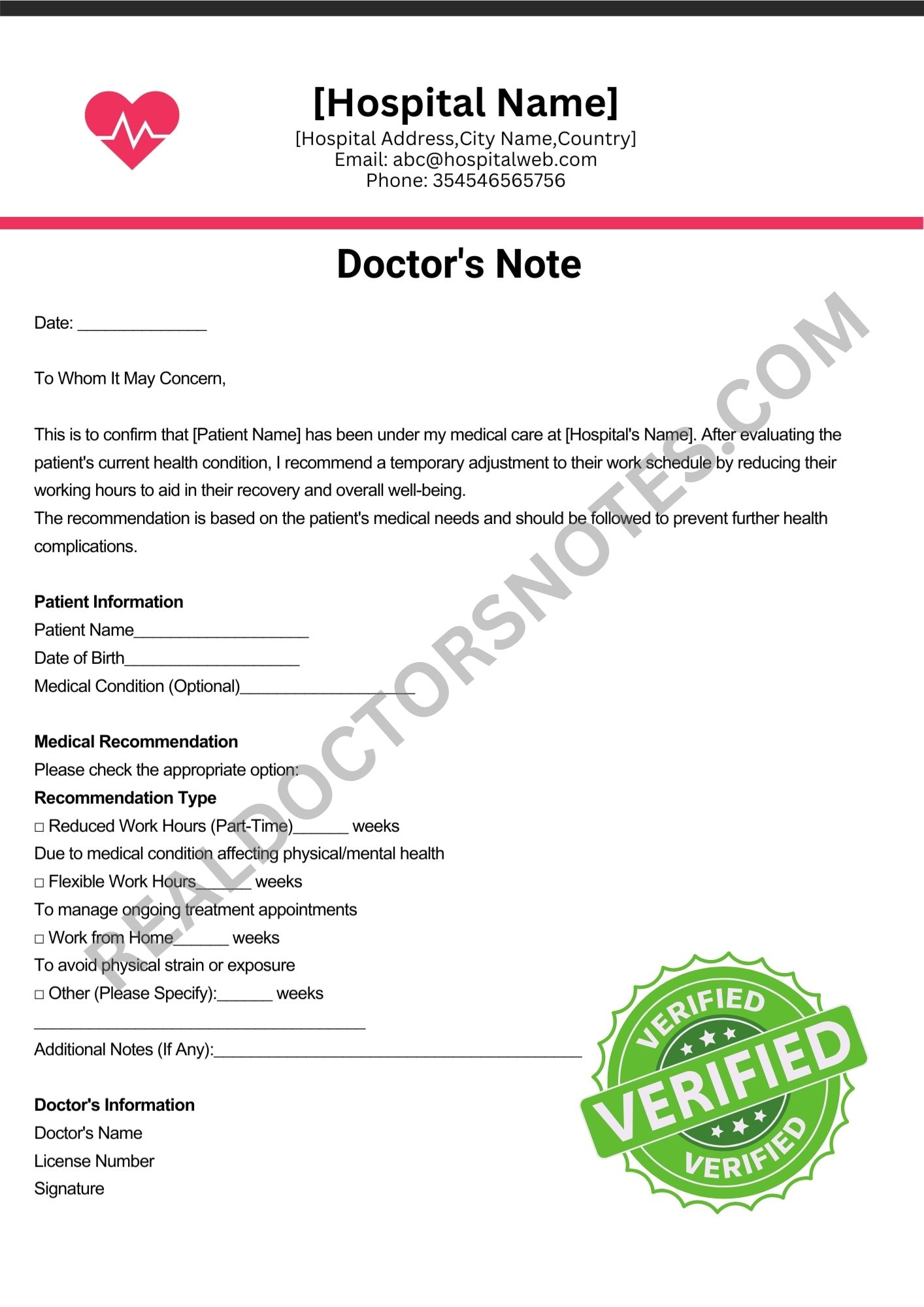
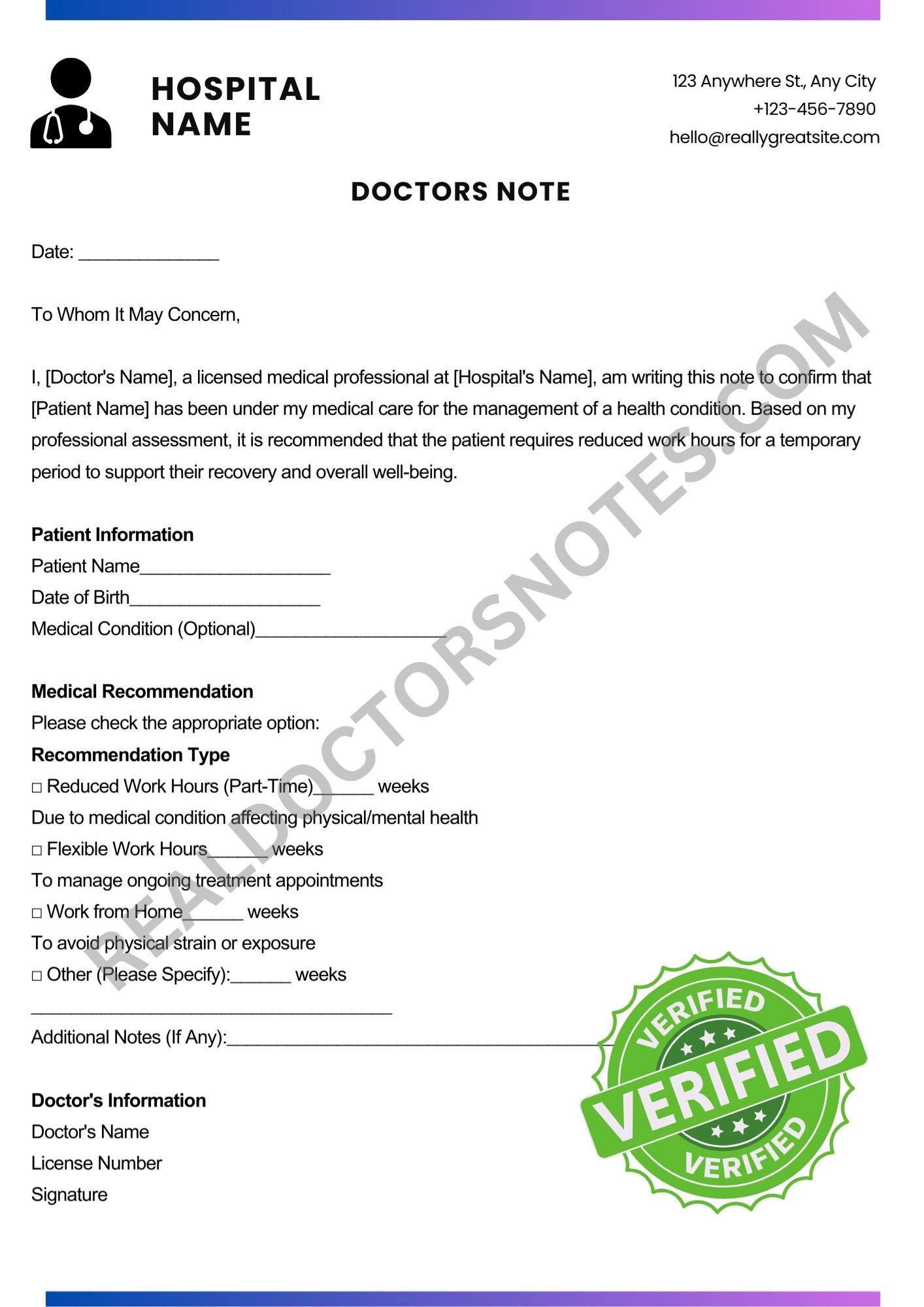
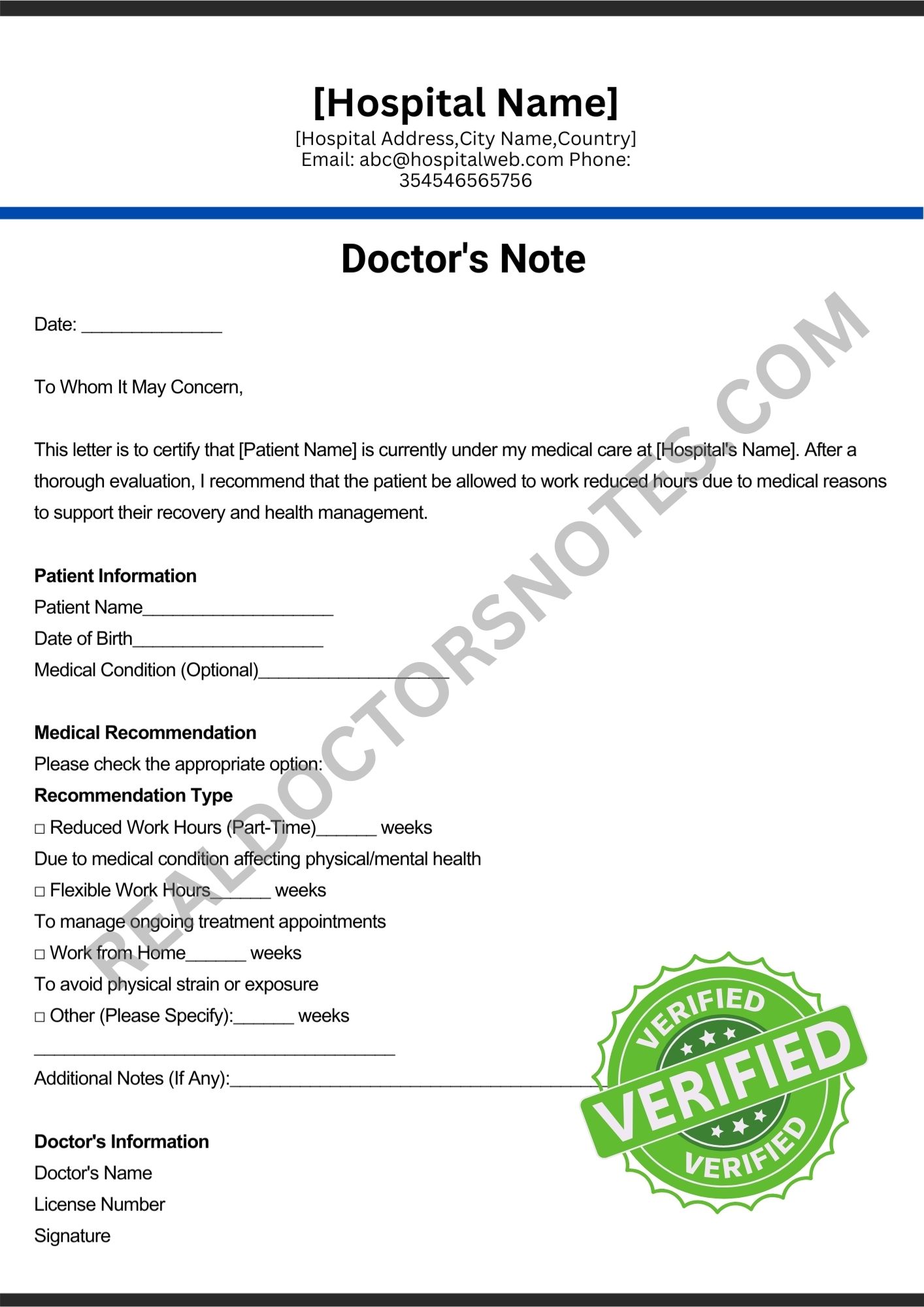
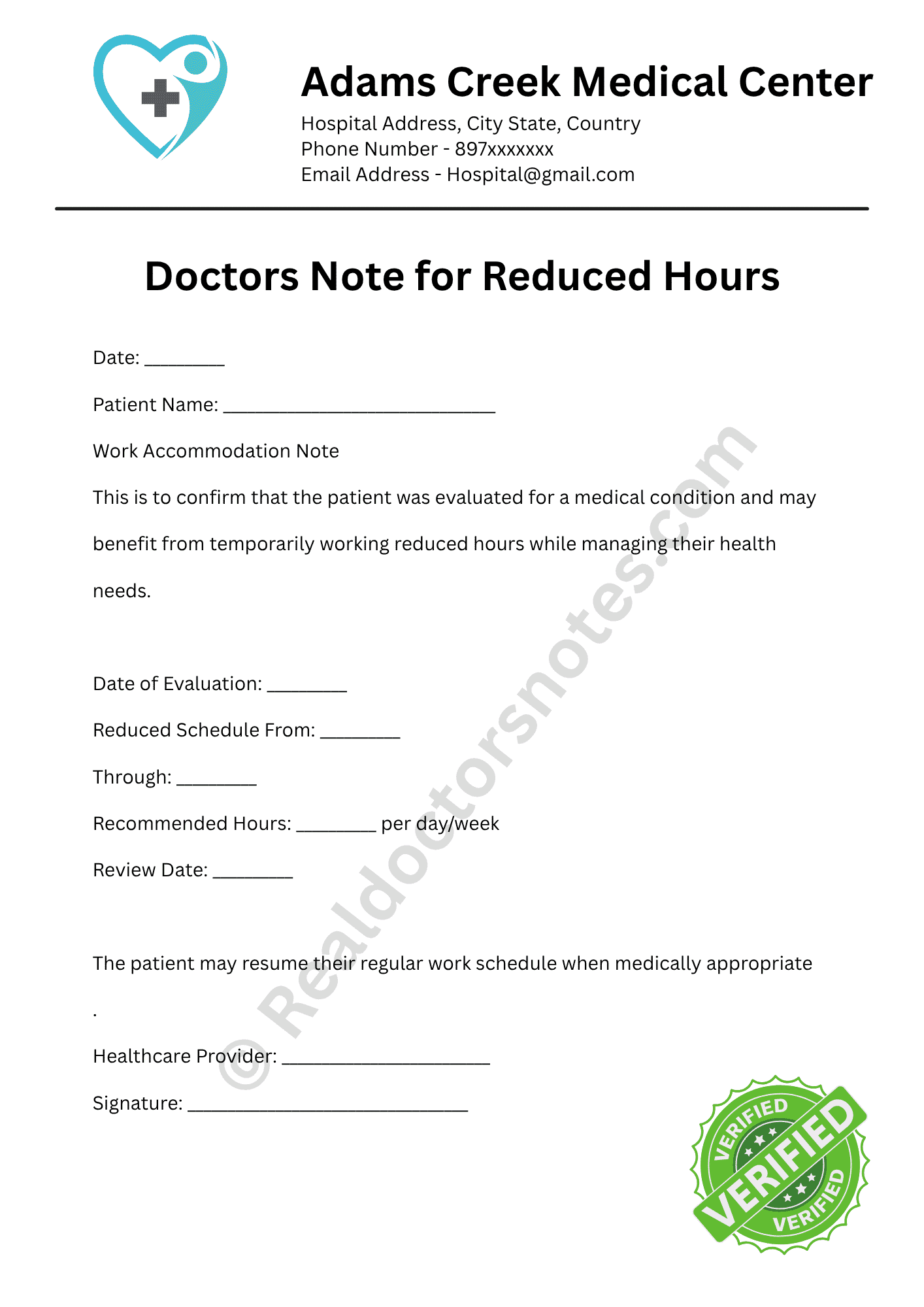

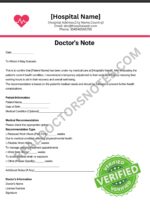
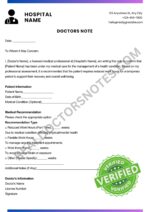

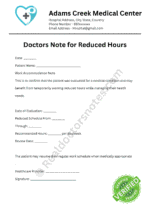

A doctors note for reduced hours is a medical document that explains a healthcare provider’s recommendation for an employee to work fewer hours than their regular schedule due to a health condition, recovery process, or temporary medical limitation. Unlike a standard sick note that recommends complete time away from work, a reduced-hours note allows an individual to continue working while limiting the amount of time spent on job duties.
Depending on the medical evaluation, a healthcare provider may recommend reduced hours to support recovery, improve symptom management, reduce fatigue, or help an employee gradually return to a normal work schedule. The recommendation is based on the individual’s medical condition, treatment plan, and ability to safely perform work responsibilities.
Related Post:
- Return to Work Doctors Note
- Doctors Note for Short Term Disability
- Doctors Note for Work Absence
- Doctors Note for Extended Sick Leave
When Might Reduced Work Hours Be Recommended?
Reduced work hours may be appropriate in many medical situations where continuing some work is possible, but a full-time schedule could delay recovery or worsen symptoms.
Examples include:
- Recovery after surgery
- Chronic pain conditions
- Pregnancy-related limitations
- Cancer treatment or recovery
- Physical rehabilitation
- Mental health recovery
- Fatigue-related medical conditions
- Recovery after an injury
- Autoimmune disorders
- Medication side effects
- Heart or respiratory conditions under medical supervision
- Neurological conditions affecting stamina
The decision depends on the healthcare provider’s clinical assessment and the individual’s functional abilities.
Reduced Hours vs. Light Duty vs. Medical Leave
Although these workplace accommodations are similar, they serve different purposes.
Reduced Hours
The employee continues working but follows a shorter daily or weekly schedule to support recovery while remaining productive.
Light Duty
The employee continues working regular hours but performs modified job tasks that place less physical or mental strain on the body.
Medical Leave
Medical leave involves taking temporary time away from work because the individual is unable to safely perform job duties until recovery improves.
A healthcare provider determines which option best fits the individual’s medical needs.
Temporary vs. Long-Term Reduced Hours
Reduced work schedules may be temporary or ongoing depending on the medical condition.
Temporary Reduced Hours
Temporary schedule changes are commonly recommended after surgery, illness, injury, or medical treatment while recovery progresses. As health improves, normal work hours may gradually resume.
Long-Term Reduced Hours
Some chronic medical conditions may require ongoing workplace accommodations. In these situations, a healthcare provider may periodically review the individual’s condition and determine whether continued reduced hours remain medically appropriate.
What Information May Be Included in a Doctor’s Note?
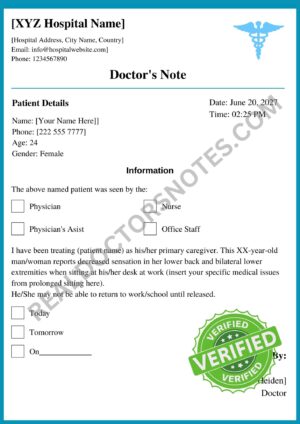
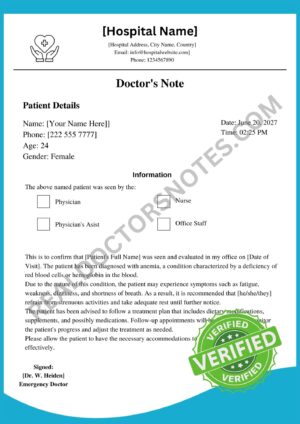
The contents of a doctor’s note vary depending on the medical evaluation and workplace requirements. A healthcare provider may include information such as:
- Date of medical evaluation
- Recommended work-hour limitations
- Temporary activity restrictions
- Follow-up appointment recommendations
- Expected review or reassessment date
- Guidance regarding a gradual return to full-time work when appropriate
Medical documentation is generally limited to information necessary to support workplace accommodations while respecting patient privacy.
Workplace Accommodations That May Support Reduced Hours
Reduced hours are sometimes combined with other workplace adjustments to help employees continue working safely during recovery.
Possible accommodations may include:
- Flexible start and finish times
- Additional rest breaks
- Remote or hybrid work arrangements when appropriate
- Reduced lifting requirements
- Seated workstations
- Modified job duties
- Gradual increase in workload
- Temporary schedule adjustments
- Ergonomic workstations
These accommodations depend on the employee’s medical needs and the employer’s policies.
Gradual Return-to-Work Programs
Many individuals do not return immediately to a full-time schedule after recovering from surgery, illness, or injury. Instead, healthcare providers may recommend a gradual return-to-work plan.
An example may include:
Week One – Working approximately four hours each day while monitoring symptoms.
Week Two – Increasing to six-hour workdays if recovery continues as expected.
Week Three – Returning to a regular work schedule if medically appropriate.
The timeline varies for every individual and depends on treatment progress and workplace demands.
Occupations That May Benefit from Reduced Hours
Certain professions involve long shifts, physical labor, or high levels of concentration, making reduced work hours beneficial during recovery.
Examples include:
- Nurses
- Teachers
- Retail employees
- Warehouse workers
- Office professionals
- Construction workers
- Delivery drivers
- Healthcare staff
- Manufacturing employees
- Hospitality workers
Healthcare providers consider both the medical condition and the physical or mental demands of the job when recommending workplace restrictions.
Communicating With Your Employer
Open communication with your employer can help ensure workplace accommodations are implemented effectively.
Helpful steps include:
- Inform your employer about your medical situation when appropriate.
- Provide medical documentation if requested.
- Discuss temporary scheduling adjustments.
- Attend follow-up medical appointments.
- Notify your employer if symptoms improve or change.
- Review accommodations periodically with your healthcare provider.
Employers may have different procedures for requesting workplace accommodations, so following company policies is important.
Monitoring Your Recovery While Working Reduced Hours
Continuing to monitor your health during recovery helps determine whether workplace adjustments remain appropriate.
Healthcare providers may evaluate:
- Energy levels
- Pain management
- Fatigue
- Sleep quality
- Physical endurance
- Medication effectiveness
- Ability to perform job duties safely
- Overall recovery progress
Regular follow-up appointments allow treatment plans and work recommendations to be adjusted when necessary.
Returning to Full-Time Work
Returning to a regular work schedule should occur when a healthcare provider determines that recovery has progressed sufficiently.
Factors that may be considered include:
- Improved physical or mental health
- Better endurance throughout the workday
- Successful completion of rehabilitation
- Ability to perform essential job responsibilities
- Reduced symptoms
- Positive follow-up examination findings
Some individuals transition directly back to full-time work, while others require additional time or gradual increases in work hours.
FAQs
Q. What is a doctor’s note for reduced hours?
It is medical documentation recommending a shorter work schedule because of a health condition or recovery needs.
Q. Can reduced work hours be temporary?
Yes. Many reduced-hour recommendations are temporary and reviewed as recovery progresses.
Q. Can employers request medical documentation?
Some employers may request medical documentation to support workplace accommodations, depending on company policies and applicable laws.
Q. How long can reduced hours last?
The duration depends on the individual’s condition, treatment progress, and healthcare provider’s recommendations.
Q. Can I return to full-time work earlier than expected?
Your healthcare provider can evaluate your recovery and determine whether returning earlier is medically appropriate.
Q. Are reduced hours the same as medical leave?
No. Reduced hours allow continued employment with a shorter schedule, while medical leave generally involves temporary absence from work.
Q. Can reduced hours be recommended after surgery?
Yes. Reduced schedules are commonly used during post-surgical recovery when a gradual return to work is appropriate.
Q. Can a doctor’s note include workplace restrictions?
Yes. A healthcare provider may include temporary work restrictions or activity limitations when medically necessary.
Q. Can remote work be recommended?
Depending on the medical condition and job duties, remote or hybrid work arrangements may be considered as part of workplace accommodations.
Q. How often should reduced hours be reviewed?
Follow-up evaluations allow healthcare providers to assess recovery and determine whether work-hour recommendations should continue, change, or end.





Reviews
There are no reviews yet.