![Real Doctors Note For Work and School [Get in 5 Minutes]](https://realdoctorsnotes.com/wordpress/wp-content/uploads/2025/11/2.png)
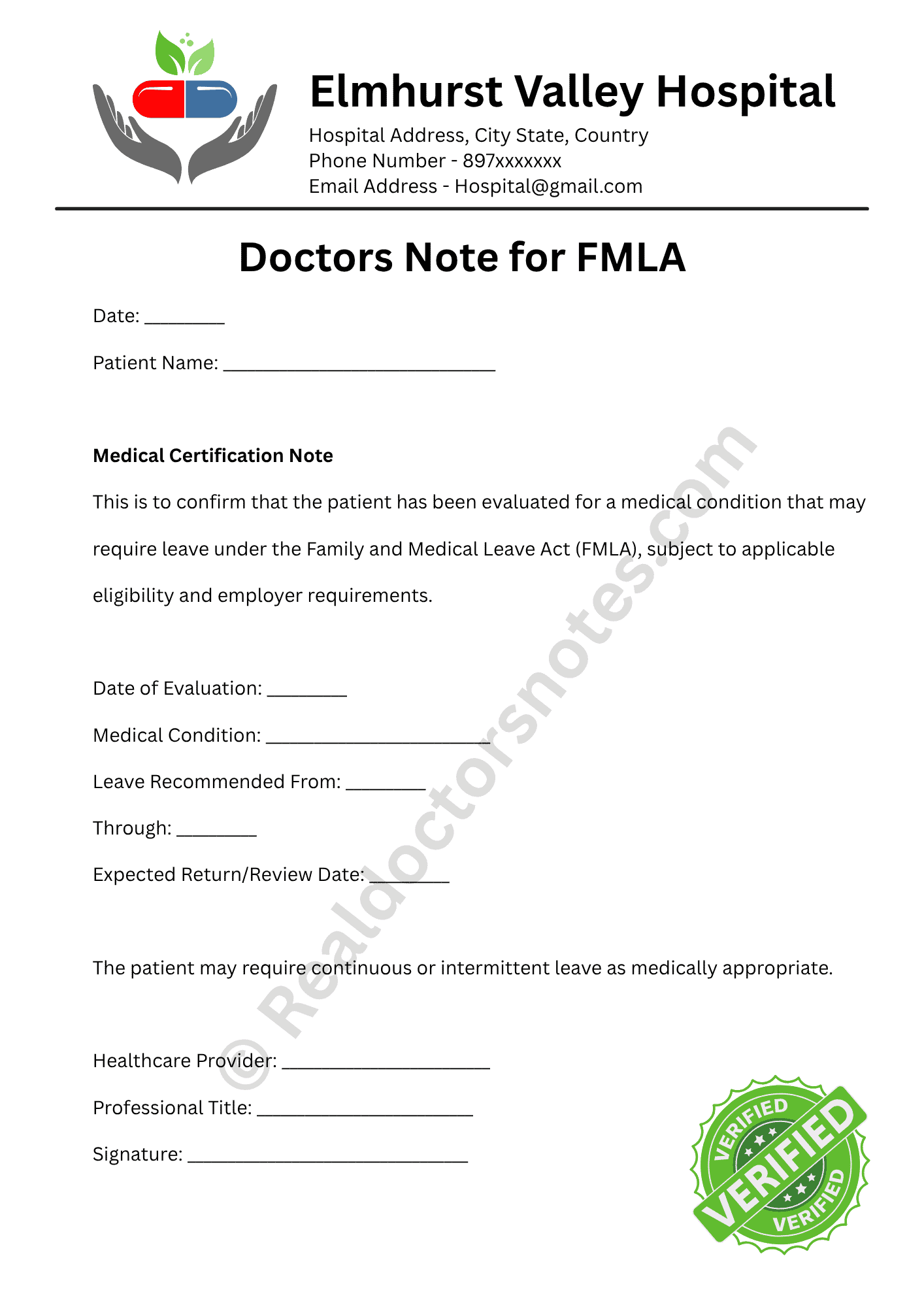
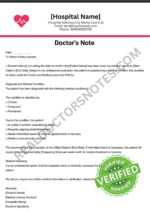
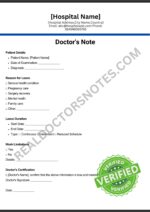
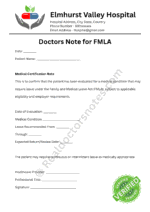


The Family and Medical Leave Act (FMLA) is a U.S. federal law that allows eligible employees to take job-protected leave for certain family and medical reasons. Depending on the situation, FMLA leave may be used for an employee’s own serious health condition, to care for an eligible family member, following the birth or adoption of a child, or for certain military-related family needs. While FMLA generally provides unpaid leave, it helps eligible employees maintain job protection and certain benefits during a qualifying leave period. Medical certification may be required when leave is requested because of a serious health condition.
Related Post:
- Doctors Note for Work Absence
- Doctors Note for Extended Sick Leave
- Doctors Note for Disability
- Return to Work Doctors Note
- Verifiable doctors note
FMLA Eligibility Requirements
Not every employee automatically qualifies for FMLA leave. Eligibility is determined by federal requirements and the employee’s work history.
An employee generally must:
- Work for a covered employer.
- Have worked for the employer for at least 12 months (not necessarily consecutive).
- Have completed at least 1,250 hours of work during the previous 12 months.
- Work at a location where the employer meets FMLA coverage requirements.
Meeting these requirements does not automatically guarantee leave, but it is an important part of determining eligibility.
FMLA Qualifying Reasons for Leave
FMLA leave may be available for several qualifying situations.
Common reasons include:
- A serious health condition affecting the employee.
- Caring for a spouse, child, or parent with a serious health condition.
- Pregnancy, childbirth, and recovery.
- Bonding with a newborn child.
- Adoption or foster care placement.
- Certain military family leave situations.
- Caring for a covered service member with a serious injury or illness.
Each request is evaluated according to applicable legal requirements and medical documentation when necessary.
FMLA Medical Certification Process
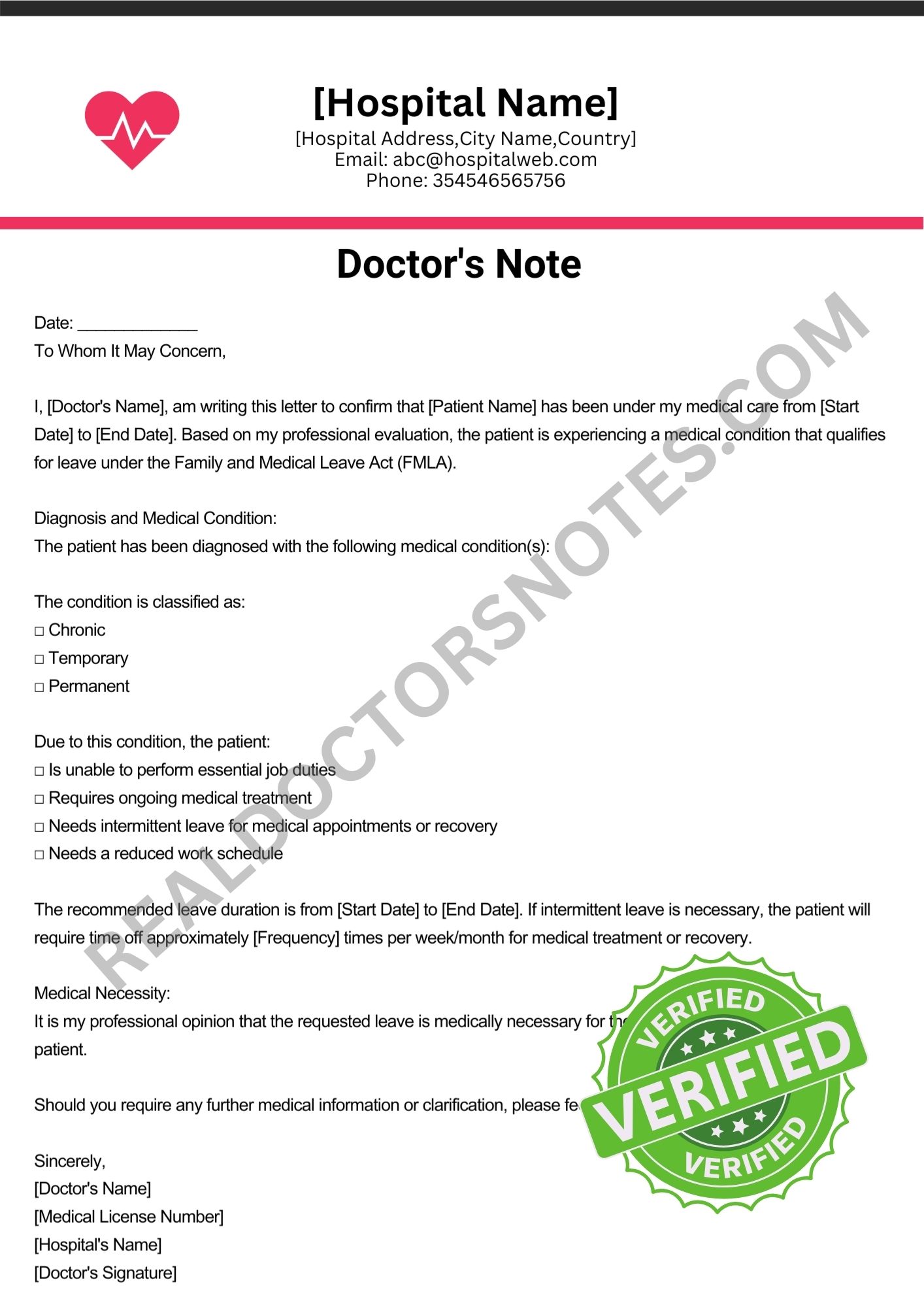
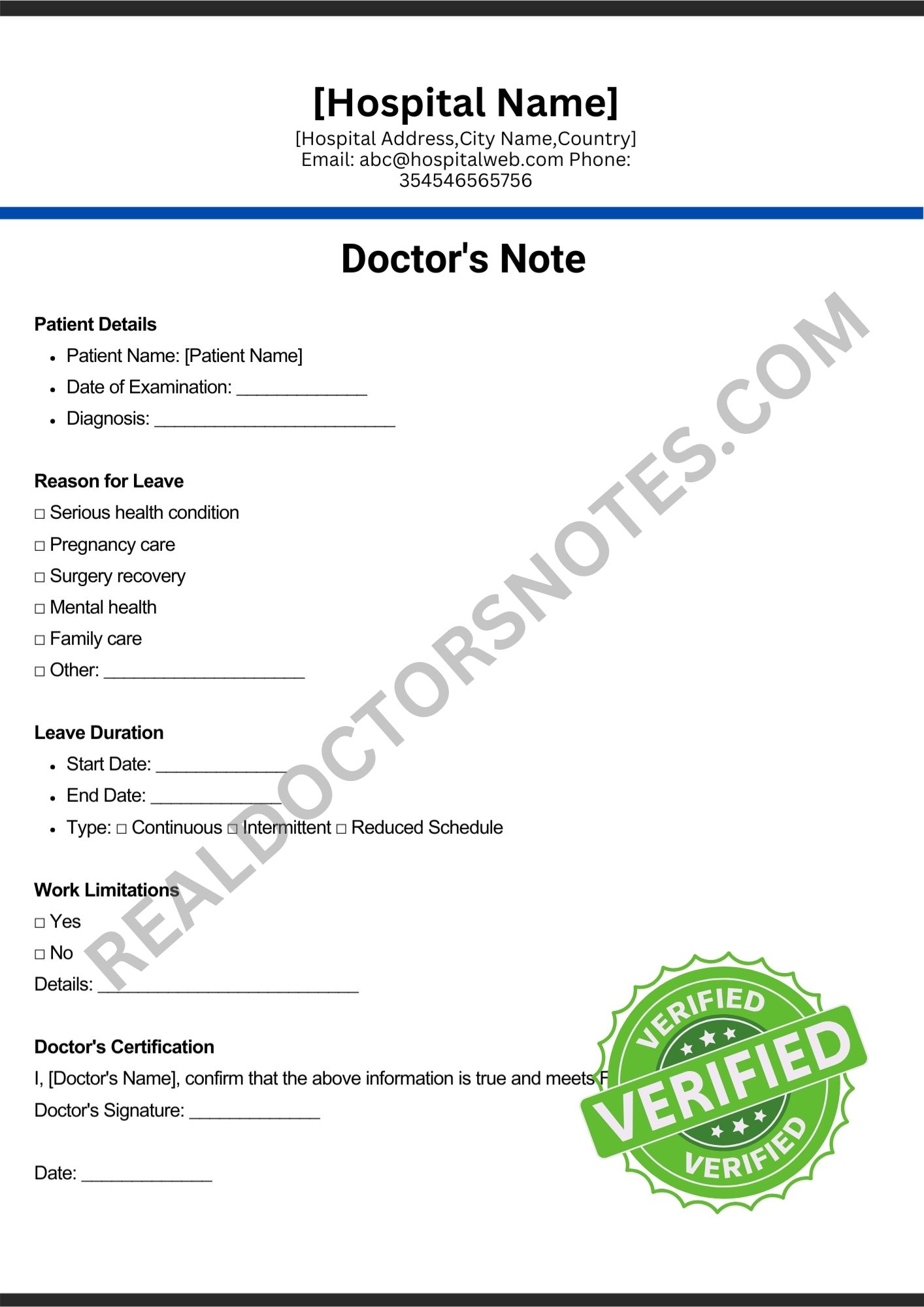
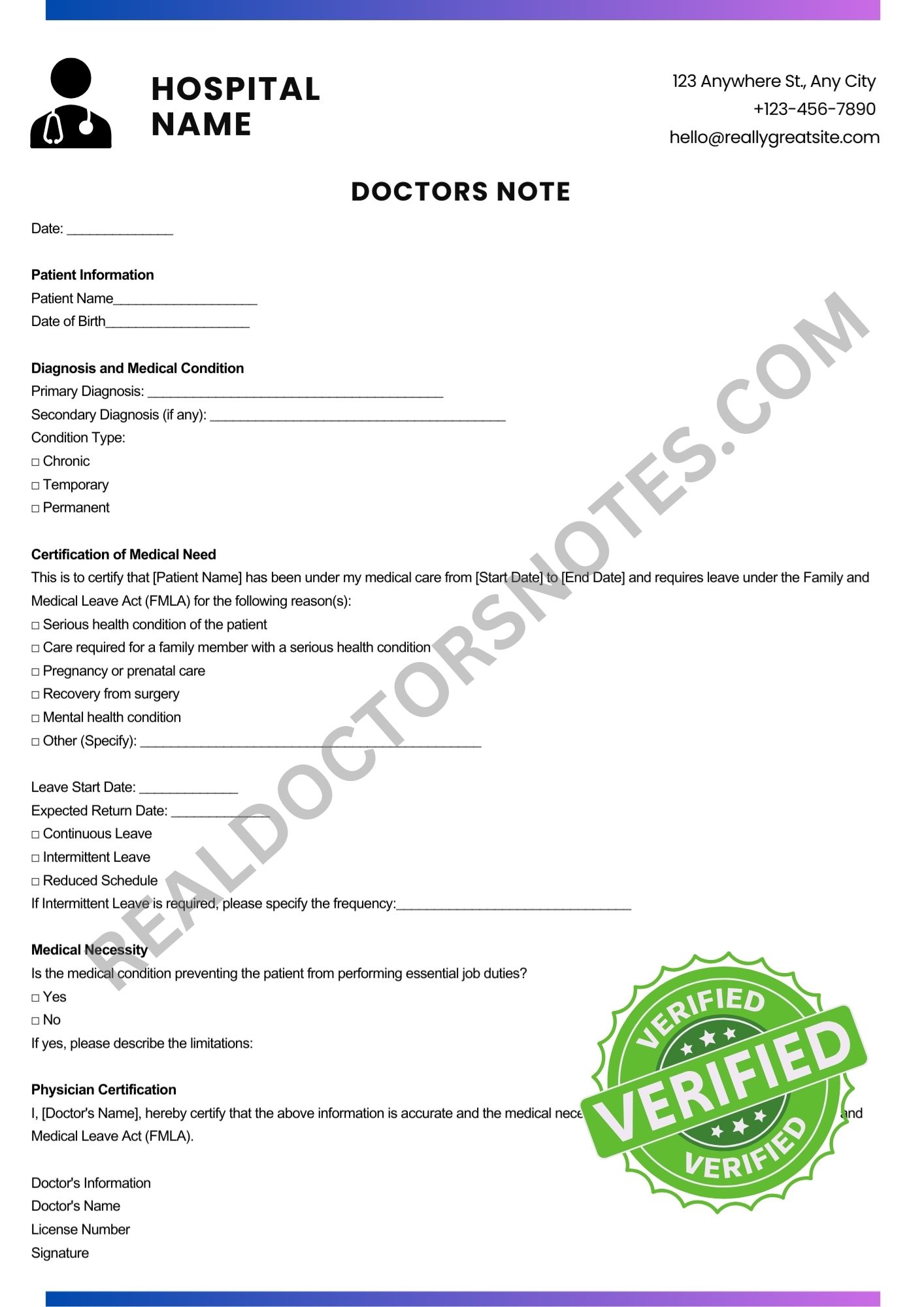
When leave is requested because of a serious health condition, an employer may ask the employee to provide medical certification completed by a healthcare provider.
The process typically includes:
- The employee requests FMLA leave.
- The employer provides the appropriate certification forms.
- A licensed healthcare provider completes the medical certification when clinically appropriate.
- The employee returns the completed documentation to the employer.
- The employer reviews the certification and determines whether the leave qualifies under FMLA.
In some situations, additional clarification or recertification may be requested.
FMLA Intermittent Leave
FMLA leave does not always have to be taken all at once. Some qualifying medical conditions may require intermittent leave, allowing employees to take leave in separate blocks of time.
Examples include:
- Ongoing medical treatments.
- Flare-ups of chronic conditions.
- Recovery days after treatment.
- Follow-up medical appointments.
- Periodic symptom management.
Intermittent leave is generally permitted only when medically necessary and supported by appropriate certification.
FMLA Reduced Schedule Leave
Some individuals may not need complete time away from work but instead require a temporary reduction in working hours.
Examples of reduced schedule leave include:
- Working fewer hours each day.
- Working fewer days each week.
- Temporary part-time schedules.
- Gradual return-to-work plans after illness or surgery.
Healthcare providers determine whether reduced schedule leave is medically appropriate based on the individual’s condition and recovery.
FMLA Medical Certification May Include
The information included in FMLA medical certification depends on the healthcare provider’s evaluation and the specific leave request.
Certification may include:
- Date the medical condition began.
- Estimated duration of the condition.
- Medical facts supporting the need for leave.
- Whether intermittent leave is medically necessary.
- Whether a reduced work schedule is recommended.
- Whether the employee is unable to perform essential job functions.
Medical documentation is generally limited to information necessary to support the leave request while respecting patient privacy.
FMLA Employee Responsibilities
Employees requesting FMLA leave also have important responsibilities throughout the process.
These may include:
- Notifying the employer as soon as practical.
- Completing required paperwork accurately.
- Providing requested medical certification within applicable deadlines.
- Attending follow-up medical appointments.
- Informing the employer of any changes to the expected leave period.
- Following the employer’s leave procedures.
Maintaining communication helps avoid unnecessary delays in processing leave requests.
FMLA Employer Responsibilities
Covered employers also have responsibilities under FMLA.
These responsibilities may include:
- Informing employees about FMLA rights.
- Reviewing submitted medical certification.
- Maintaining the confidentiality of medical information.
- Notifying employees if additional information is needed.
- Allowing employees an opportunity to correct incomplete certification.
- Restoring eligible employees to the same or an equivalent position after qualifying leave.
Employers must follow applicable federal regulations when administering FMLA leave.
FMLA Renewal and Recertification
Some medical conditions require ongoing treatment or extended leave. In these cases, employers may request updated medical certification or recertification under circumstances permitted by FMLA regulations.
Recertification may be appropriate when:
- The approved leave period has ended.
- Medical circumstances change.
- Additional leave is requested.
- There is new information regarding the medical condition.
- Continued intermittent leave is needed.
The healthcare provider evaluates the individual’s condition before completing updated documentation.
FMLA Return-to-Work Considerations
Before returning to work, some employees may need additional medical evaluation.
Return-to-work planning may include:
- Follow-up appointments.
- Assessment of recovery progress.
- Temporary work restrictions.
- Reduced schedule recommendations.
- Fitness-for-duty certification when required by the employer.
- Gradual transition back to regular job duties.
These decisions are based on the individual’s medical condition and the physical or mental demands of the job.
FAQs
Q. Who is eligible for FMLA leave?
Eligibility depends on federal requirements related to employment duration, hours worked, employer coverage, and the reason for leave.
Does FMLA provide paid leave?
FMLA generally provides unpaid, job-protected leave. However, employees may be able to use available paid leave according to employer policies.
Q. Can FMLA be used for mental health conditions?
Yes. Certain mental health conditions may qualify if they meet the definition of a serious health condition under FMLA.
Q. Can I use FMLA to care for a family member?
Yes. Eligible employees may use FMLA leave to care for a qualifying family member with a serious health condition.
Q. Can FMLA leave be taken intermittently?
Yes. Intermittent leave may be available when medically necessary and supported by appropriate certification.
Q. Is medical certification always required?
Employers may request medical certification for leave related to a serious health condition, but requirements depend on the specific situation.
Q. Can my employer request additional information?
In some situations, employers may request clarification or recertification consistent with FMLA regulations.
Q. Can I return to work before my leave ends?
If your healthcare provider determines that you are medically able to return, you may discuss an earlier return with your employer.
Q. How long is FMLA medical certification valid?
The duration depends on the healthcare provider’s assessment, the nature of the medical condition, and applicable FMLA requirements. Some situations may require updated certification or recertification.
Q. Can FMLA be combined with a reduced work schedule?
Yes. A reduced work schedule may be appropriate when medically necessary and supported by a healthcare provider.


Reviews
There are no reviews yet.