![Real Doctors Note For Work and School [Get in 5 Minutes]](https://realdoctorsnotes.com/wordpress/wp-content/uploads/2025/11/2.png)
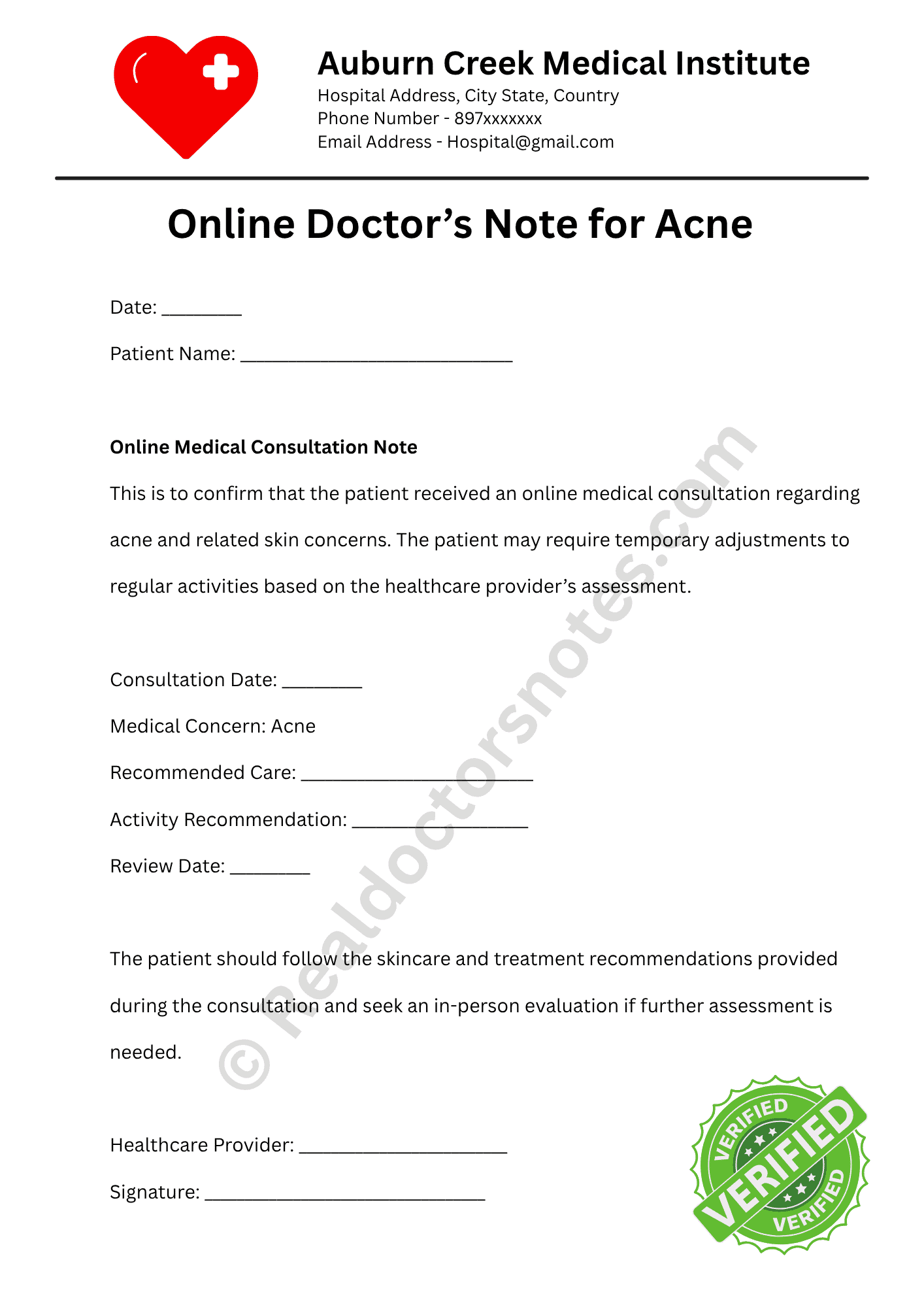
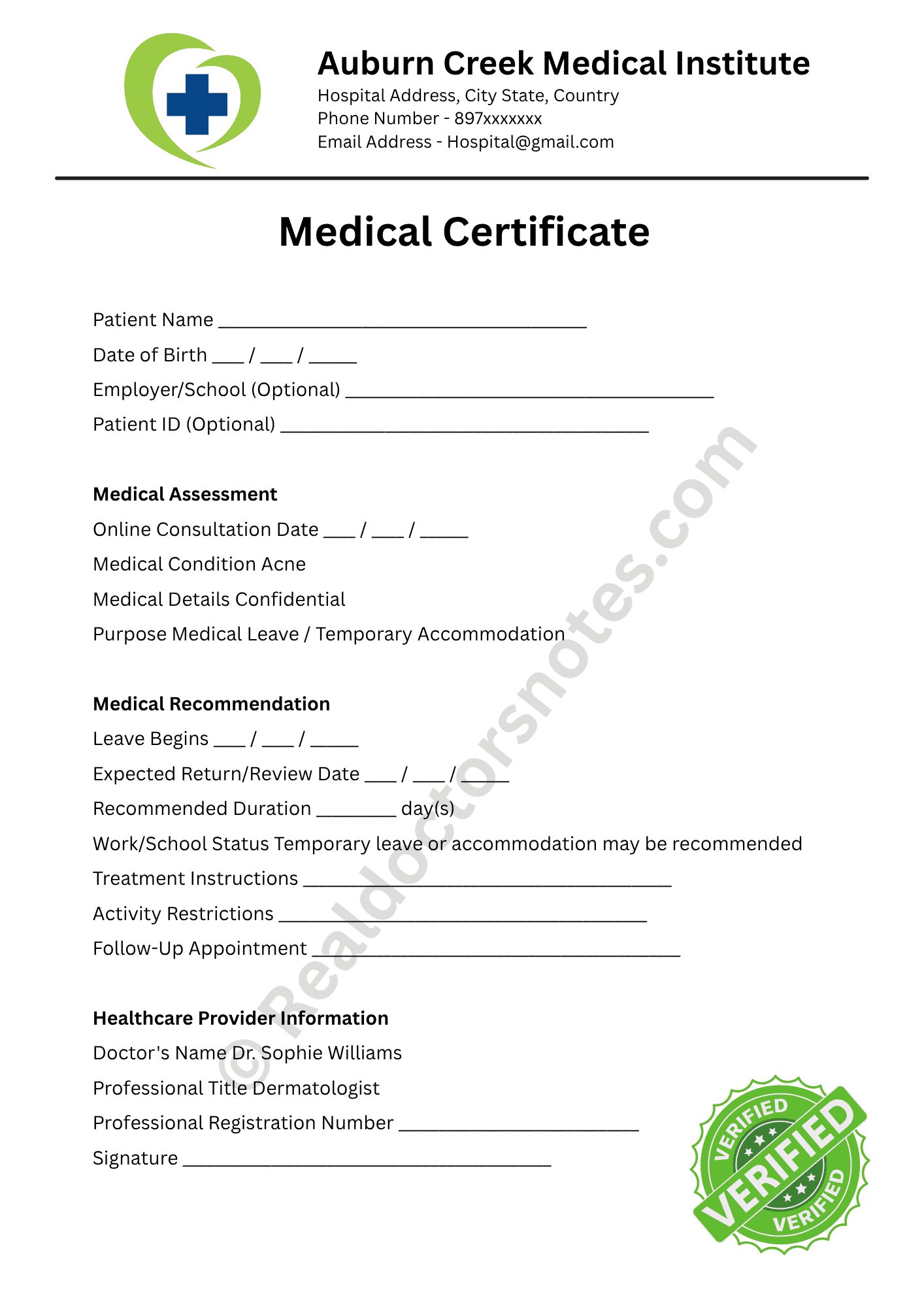
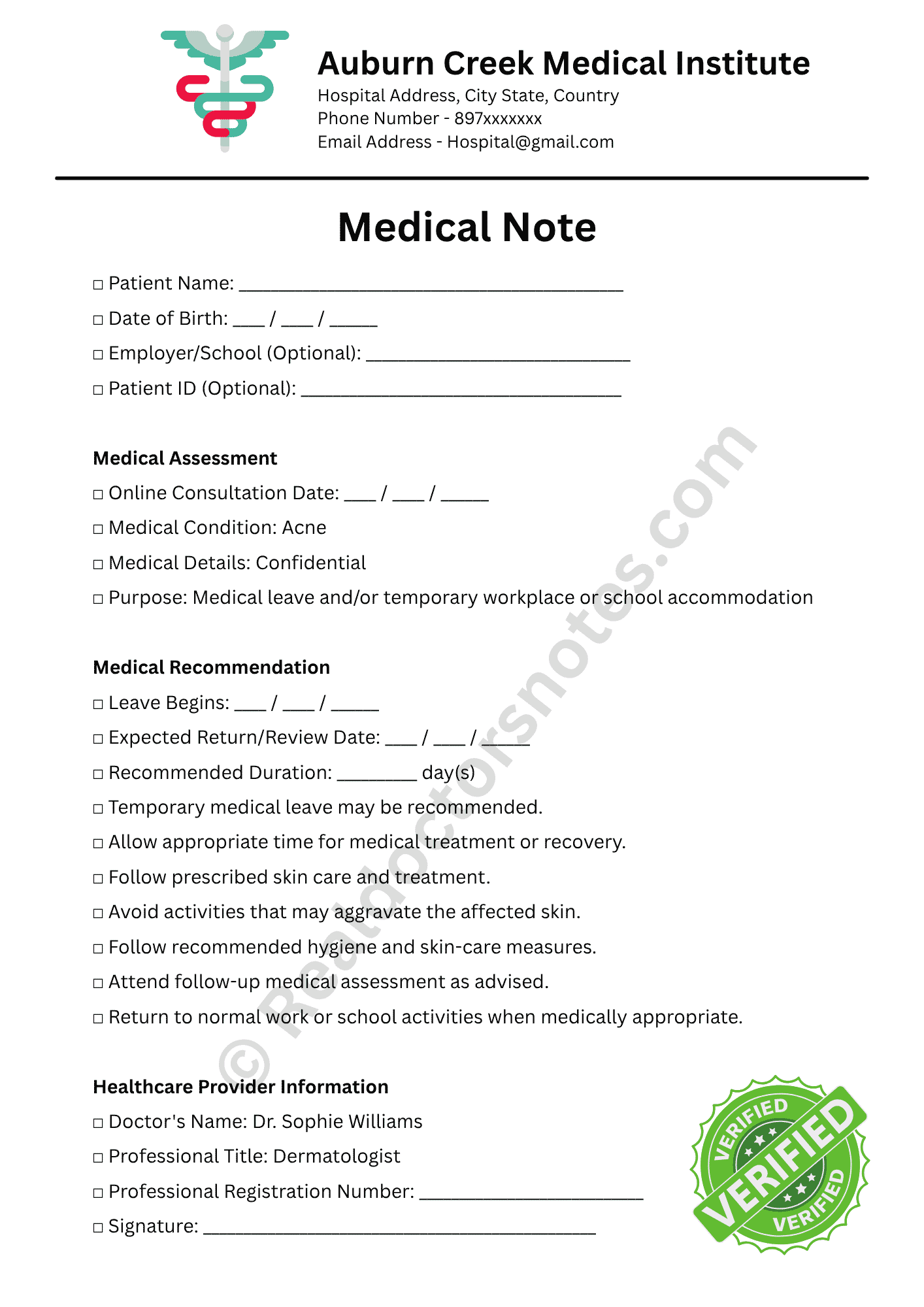
Acne is one of the most common skin conditions and can range from occasional pimples and blackheads to painful, inflamed, or cystic breakouts. Although mild acne may not interfere with everyday activities, severe or persistent acne can cause discomfort, skin irritation, difficulty concentrating, or the need for medical appointments and treatment. In such situations, an Online Doctor’s Note for Acne may provide appropriate medical documentation when a healthcare professional determines that it is necessary.
An online consultation allows a qualified clinician to review your symptoms, medical history, current treatments, and, when appropriate, images of the affected skin. Based on the assessment, the provider can determine whether your condition requires treatment, follow-up care, or documentation for work or school. However, an online doctor’s note should always be based on a genuine medical evaluation rather than simply a request for paperwork. Understanding when an acne doctor’s note may be appropriate, what information a clinician may require, and when in-person dermatology care is necessary can help you make informed decisions about your skin health.
Related Post
- Online Doctor for Skin Problems
- Online Doctors Note for Rash
- Online Doctors Note for Eczema
- Online Doctors Note for Dermatitis
What Is an Online Doctor’s Note for Acne?
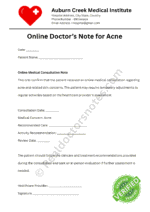
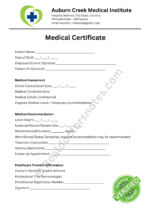
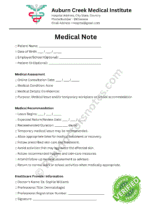
An online doctor’s note for acne is medical documentation issued after an appropriate healthcare evaluation. Depending on the clinician’s assessment and the policies of the workplace, school, or organization requesting documentation, it may explain that acne or a related skin condition is affecting your ability to attend or perform certain activities.
A legitimate medical note should be based on an actual clinical evaluation. An online consultation may involve questions about your symptoms, duration, previous treatments, medications, and the appearance or severity of your breakouts. In some cases, a clinician may request photographs or recommend an in-person dermatology evaluation.
When Might You Need a Doctor’s Note for Acne?
Most mild acne does not require medical documentation. However, a doctor’s note may be considered when symptoms are severe or are interfering with normal responsibilities.
Situations can include:
- Painful or deep acne that makes daily activities uncomfortable
- Severe inflammatory acne affecting the face, chest, or back
- Acne treatment causing temporary irritation or other side effects
- A dermatology appointment requiring time away from work or school
- Acne-related treatment or procedures requiring recovery time
- Significant symptoms that interfere with concentration or participation
- A workplace or school specifically requiring medical documentation for an absence
Whether a note is accepted depends on the individual institution’s policies.
Can an Online Doctor Diagnose Acne?
Acne can often be recognized clinically by examining the type and location of skin lesions. Common forms include blackheads, whiteheads, pimples, pustules, nodules, and cysts.
However, not every breakout is acne. Conditions such as rosacea, folliculitis, perioral dermatitis, and other skin disorders can produce acne-like symptoms. A healthcare professional may therefore need to evaluate the skin carefully before deciding on an appropriate treatment or documentation.
If an online assessment is insufficient to determine the diagnosis, the clinician may recommend an in-person appointment with a dermatologist.
What Information May a Doctor Ask About?
During an online acne consultation, a clinician may ask about:
- When the acne started
- Where the breakouts occur
- Whether lesions are painful, itchy, swollen, or draining
- Whether you have blackheads, whiteheads, pimples, nodules, or cysts
- Previous acne treatments
- Current prescription and over-the-counter products
- Allergies and relevant medical history
- Whether acne is interfering with work, school, sleep, or daily activities
- Whether you have developed dark spots or scarring
Providing accurate information helps the clinician determine whether online care is appropriate.
Common Acne Treatments
Acne treatment depends on the type and severity of the condition. There is no single treatment that works for everyone.
Common options include benzoyl peroxide, topical retinoids, salicylic acid, azelaic acid, topical antibiotics, and certain prescription medicines. For moderate-to-severe acne, a clinician may consider oral medication or other treatment approaches.
For example, benzoyl peroxide can help reduce acne-causing bacteria and inflammation, while topical retinoids help prevent pores from becoming clogged. Salicylic acid can help unclog pores, and azelaic acid can address acne as well as some dark marks left after breakouts.
Severe or persistent acne may require dermatology care. Isotretinoin, for example, is reserved for certain severe cases and requires specialist supervision because of its potential risks.
How Long Does Acne Treatment Take?
Acne treatment generally does not produce instant results. The American Academy of Dermatology notes that people often need to follow an acne treatment consistently for 6 to 8 weeks before seeing improvement.
Some treatments may take several months to produce their full effect. Stopping products too quickly because results are not immediate can make it harder to determine whether a treatment is working.
A clinician can help establish realistic expectations based on the severity and type of acne.
Can Acne Justify Time Off Work or School?
Acne alone does not automatically qualify someone for sick leave or an excused absence. The decision depends on the severity of symptoms, the clinician’s assessment, and the organization’s attendance policy.
For example, someone undergoing treatment for severe painful acne may need time away for a dermatology appointment or procedure. In other circumstances, mild acne may not prevent normal work or school attendance.
A medical professional should determine whether documentation is medically appropriate rather than issuing a note solely because it has been requested.
How to Care for Acne-Prone Skin
A simple, consistent skincare routine can complement medical treatment.
Cleanse Gently
Wash the affected skin gently rather than scrubbing aggressively. Dermatologists recommend avoiding harsh or abrasive cleansing because irritation can worsen breakouts.
Choose Non-Comedogenic Products
Look for products labeled oil-free or non-comedogenic. These are less likely to contribute to clogged pores.
Avoid Picking or Squeezing
Picking pimples can increase inflammation and may contribute to acne scars. Treating the underlying acne is generally preferable to repeatedly squeezing lesions.
Protect Your Skin From the Sun
Some acne treatments can increase sensitivity to sunlight. A broad-spectrum, non-comedogenic sunscreen can help protect exposed skin.
When Should You See a Dermatologist?
Consider professional dermatology care if you have:
- Deep or painful nodules or cysts
- Significant acne scarring
- Acne that continues despite appropriate treatment
- Widespread acne on the face, chest, or back
- Breakouts that are becoming progressively worse
- Acne that is significantly affecting your emotional well-being
Severe acne is more difficult to manage with store-bought products alone and may require prescription treatment.
Can an Online Doctor Prescribe Acne Medication?
Depending on local laws, the healthcare provider’s qualifications, the medication involved, and the results of the consultation, an online clinician may be able to prescribe certain acne medications.
However, prescription treatment should follow an appropriate medical evaluation. Antibiotics, hormonal treatments, retinoids, and other prescription therapies are not suitable for everyone.
For example, topical retinoids should not be used during pregnancy because of potential fetal risks, while certain oral treatments require additional medical monitoring.
What Makes a Doctor’s Note Legitimate?
A legitimate acne doctor’s note should come from a qualified healthcare professional who has actually evaluated the patient. It should accurately reflect the clinical assessment and contain only information that is medically appropriate to disclose.
A medical note should not be fabricated, altered, backdated, or obtained without a genuine healthcare evaluation.
Before submitting documentation, check whether your employer, school, insurer, or other organization has specific requirements for medical notes.
FAQs
Q. Can I get an online doctor’s note for acne?
You may be able to receive medical documentation after an appropriate online healthcare evaluation if the clinician determines that a note is medically justified.
Q. Can acne be considered a medical condition?
Yes. Acne is a common skin condition involving clogged pores, inflammation, and different types of skin lesions, including blackheads, whiteheads, pimples, nodules, and cysts.
Q. Can severe acne require time off work?
Severe acne does not automatically require time off. However, painful symptoms, treatment procedures, or medical appointments may sometimes interfere with work. A clinician can assess whether time away is medically appropriate.
Q. Can acne cause scarring?
Yes. Picking or squeezing acne can increase the risk of scarring, and deeper forms of acne can also leave scars. Early and appropriate treatment can help reduce the risk.
Q. How long does acne treatment take to work?
Many acne treatments require several weeks before improvement becomes noticeable. The AAD recommends giving a treatment approximately 6 to 8 weeks to assess improvement unless a clinician advises otherwise.


Reviews
There are no reviews yet.