![Real Doctors Note For Work and School [Get in 5 Minutes]](https://realdoctorsnotes.com/wordpress/wp-content/uploads/2025/11/2.png)

If eczema symptoms are making it difficult to work, attend school, participate in daily activities, or safely perform your usual duties, an Online Doctor’s Note for Eczema may be appropriate after a licensed healthcare professional evaluates your condition. Eczema, including atopic dermatitis, can cause intense itching, dryness, inflammation, cracking, and irritated skin. Symptoms can fluctuate and may interfere with sleep, concentration, movement, or work involving frequent contact with water or irritants.
Telemedicine can be useful for visible skin conditions such as eczema. During an online consultation, a clinician may review your symptoms, medical history, affected areas, photographs, and how the condition is affecting your daily responsibilities. The clinician can then determine whether further treatment, an in-person examination, or documentation such as a doctor’s note is appropriate.
What Is an Online Doctor’s Note for Eczema?
An online doctor’s note for eczema is medical documentation provided after an appropriate healthcare evaluation. Depending on the clinician’s assessment and the requirements of your employer or school, the documentation may confirm that you were evaluated for eczema-related symptoms and may recommend time away from certain activities when medically justified.
The note should reflect the healthcare professional’s actual assessment. It should not be used to misrepresent an illness or create documentation without a legitimate medical evaluation.
A doctor may consider factors such as:
- Severity of itching or skin irritation
- Location and extent of the affected skin
- Pain, swelling, cracking, or oozing
- Whether symptoms interfere with sleep
- Whether work activities aggravate the condition
- Exposure to chemicals, soaps, water, heat, or other irritants
- Whether the condition appears infected
- Whether temporary rest or workplace adjustments may be medically appropriate
Can Eczema Make You Miss Work or School?
Yes. Although eczema is not contagious, a significant flare-up can interfere with normal activities. Severe itching may disturb sleep and leave someone fatigued, while cracked or inflamed skin can make certain physical tasks uncomfortable.
For example, someone whose job involves frequent handwashing, cleaning chemicals, prolonged water exposure, or other irritants may experience worsening symptoms. The American Academy of Dermatology notes that “wet work” can be particularly challenging for people with eczema affecting their hands.
For students, eczema can also affect concentration, sleep, comfort, and participation in school activities.
Whether you actually need time away from work or school depends on the severity of your symptoms and the policies of the organization involved.
Common Eczema Symptoms
Eczema symptoms can vary considerably between people and may change over time. Common symptoms include:
- Intense itching
- Dry or scaly skin
- Red or discolored patches
- Rough or thickened skin
- Skin inflammation
- Cracking
- Scratch marks
- Raw or irritated skin
- Small bumps
- Fluid-filled areas or oozing
- Crusting
- Swelling or warmth
Eczema often follows a pattern of flare-ups and periods of improvement. Repeated scratching can further damage the skin and may increase the risk of infection.
When Should You Consider an Online Dermatology Consultation?
An online consultation may be useful when your symptoms are visible and a healthcare professional can reasonably evaluate them remotely. Telemedicine is commonly used for skin conditions, including eczema, because patients can provide photographs and discuss their symptoms without immediately traveling to a clinic.
Consider speaking with a healthcare professional if:
- Your eczema suddenly becomes much worse
- Itching is interfering with sleep
- You have painful or cracked skin
- Symptoms are interfering with work or school
- A recurring flare is becoming difficult to manage
- You are unsure whether the rash is actually eczema
- Your current treatment is no longer controlling your symptoms
An in-person appointment may still be necessary when the diagnosis is uncertain, symptoms are severe, or the clinician needs to examine the skin more closely.
How Does an Online Eczema Doctor’s Note Work?
The process generally begins with a remote medical consultation.
1. Describe Your Symptoms
Explain when the eczema started, where it appears, how severe it is, and whether the symptoms are affecting your normal responsibilities.
2. Provide Relevant Information
The clinician may ask about previous eczema episodes, known triggers, medications, allergies, skin-care products, and treatments you have already tried.
3. Share Skin Photos if Requested
Clear photographs can help a clinician evaluate visible skin changes during a telemedicine consultation. Make sure the images are well lit and show the affected area clearly.
4. Receive a Medical Assessment
The healthcare professional determines whether the symptoms are consistent with eczema and whether additional evaluation is required.
5. Documentation May Be Provided When Appropriate
If the clinician determines that medical documentation is justified, they may provide a doctor’s note according to their professional judgment and applicable requirements.
What Can Trigger an Eczema Flare-Up?
Triggers differ from person to person. Common triggers can include:
- Fragrances
- Harsh soaps
- Detergents
- Dry air
- Heat
- Sweat
- Certain fabrics
- Dust
- Pollen
- Skin-care ingredients
- Frequent water exposure
- Workplace irritants
The American Academy of Dermatology recommends identifying individual triggers and choosing fragrance-free products. Moisturizing regularly can also help maintain the skin barrier.
If your eczema repeatedly worsens at work, tell the healthcare professional about your job duties and the substances or conditions you encounter. Workplace exposure can sometimes contribute to contact dermatitis, which may resemble other forms of eczema.
How Is Eczema Treated?
Treatment depends on the type and severity of eczema. There is currently no universal cure for atopic dermatitis, but appropriate treatment can control symptoms and reduce flare-ups.
A treatment plan may include:
Moisturizers
Regular use of a suitable cream or ointment helps reduce dryness and supports the skin barrier. Dermatologists generally recommend moisturizing for people with atopic dermatitis.
Gentle Skin Care
Short, lukewarm baths or showers and fragrance-free products may help reduce irritation. Applying moisturizer while the skin is still slightly damp can help retain moisture.
Prescription Treatments
Depending on the diagnosis, a clinician may recommend topical corticosteroids or other prescription treatments. Some patients with persistent or more severe disease may require additional therapies, including phototherapy or systemic medication.
Do not start, stop, or change prescription treatment without appropriate medical advice.
Can Eczema Be Infected?
Yes. Damaged skin can be more vulnerable to infection. Signs such as increasing tenderness, significant oozing, crusting, swelling, warmth, or rapidly worsening symptoms warrant medical attention.
If you suspect an infection, an online consultation may not always be sufficient. A clinician may recommend an in-person assessment depending on the symptoms.
Is Eczema Contagious?
No. Eczema itself is not contagious. It cannot be spread from one person to another through ordinary contact.
However, because eczema can produce visible rashes, people sometimes mistake it for an infectious skin condition. If your employer or school has questions about your condition, appropriate medical documentation can help communicate the healthcare professional’s assessment.
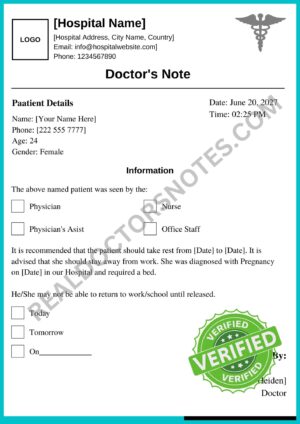
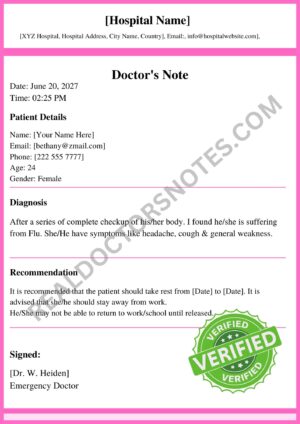
What Should an Eczema Doctor’s Note Include?
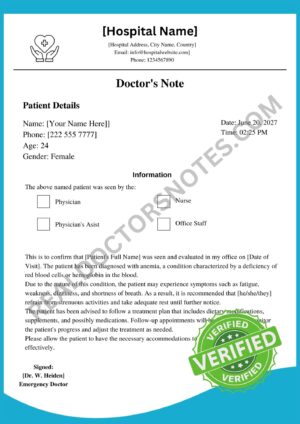
The exact format varies depending on the healthcare provider and the organization requesting documentation. A legitimate medical note may include information such as:
- Patient identification
- Date of medical evaluation
- General medical reason for the visit
- Recommended absence or activity restriction, when medically appropriate
- Expected return date or follow-up instructions, when applicable
- Healthcare professional’s name and credentials
- Practice or clinic information
- Appropriate signature or verification
A doctor’s note should contain only information that is appropriate and supported by the medical evaluation.
When Should You Seek In-Person Medical Care?
Online healthcare is convenient, but it does not replace in-person assessment in every situation. You may need an in-person appointment if:
- The diagnosis is uncertain
- The rash is rapidly spreading
- You have significant pain or swelling
- You suspect a skin infection
- The skin is extensively damaged
- Symptoms are not responding to treatment
- The clinician needs a physical examination or testing
The American Academy of Dermatology specifically notes that telemedicine cannot always replace an in-person dermatology appointment.
Tips for Managing Eczema While Working or Studying
Managing triggers can make everyday activities more comfortable. Consider:
- Keeping moisturizer available throughout the day
- Using fragrance-free skin-care products
- Avoiding known irritants
- Wearing comfortable clothing that does not aggravate the skin
- Following the treatment plan provided by your healthcare professional
- Keeping fingernails short to minimize damage from scratching
- Taking breaks when repetitive activities worsen symptoms
- Discussing reasonable workplace adjustments with your employer when appropriate
If your hands are affected and your work involves frequent water or chemical exposure, tell your healthcare provider. Such exposure can be particularly problematic for eczema-prone skin.
FAQs
Q. Can I get an Online Doctor’s Note for Eczema?
You may be able to receive medical documentation after an online consultation if a licensed healthcare professional determines that it is medically appropriate. The provider decides whether a note can be issued based on the evaluation.
Q. Can eczema be a valid reason for sick leave?
A severe eczema flare can interfere with work, sleep, concentration, or physical activities. Whether it qualifies for sick leave depends on your symptoms, the healthcare professional’s assessment, and your employer’s policies.
Q. Can an online doctor diagnose eczema?
Some visible skin conditions, including eczema, can be evaluated through telemedicine. A clinician may review photographs and discuss your symptoms remotely. However, an in-person examination may be necessary if the diagnosis is uncertain.
Q. Can eczema prevent me from working?
Most people with eczema can continue working, but severe symptoms or exposure to workplace irritants may make certain duties difficult. Your healthcare professional can assess whether temporary restrictions or time away from work may be appropriate.
Q. Is an eczema doctor’s note the same as a prescription?
No. A doctor’s note is documentation regarding a medical evaluation or recommended absence/restriction. A prescription is an authorization for medication or treatment. They serve different purposes.


Reviews
There are no reviews yet.