![Real Doctors Note For Work and School [Get in 5 Minutes]](https://realdoctorsnotes.com/wordpress/wp-content/webp-express/webp-images/uploads/2025/11/2.png.webp)







A Urinary Tract Infection (UTI) is a common bacterial infection that affects one or more parts of the urinary system, including the bladder, urethra, ureters, or kidneys. Most UTIs involve the bladder and urethra, but if left untreated, the infection can spread to the kidneys and become more serious.
UTIs can affect people of all ages, although they are more common in women. Symptoms such as frequent urination, pain during urination, and pelvic discomfort may interfere with work, school, travel, and daily activities. Early diagnosis and appropriate treatment can help relieve symptoms, reduce the risk of complications, and support a quicker recovery. When symptoms temporarily prevent someone from performing their normal responsibilities, a healthcare provider may provide medical documentation after an appropriate evaluation.
UTI Symptoms That May Affect Daily Activities
The symptoms of a UTI depend on which part of the urinary tract is affected and how severe the infection is. Some individuals experience mild discomfort, while others develop more significant symptoms that interfere with everyday life.
Common symptoms include:
- Burning sensation while urinating
- Frequent urge to urinate
- Passing only small amounts of urine
- Pain or discomfort during urination
- Cloudy urine
- Strong-smelling urine
- Blood in the urine
- Lower abdominal or pelvic pain
- Fatigue
- Mild fever or chills in some cases
If the infection spreads to the kidneys, symptoms may include high fever, back pain, nausea, or vomiting, requiring immediate medical attention.
UTI Causes and Risk Factors
Most UTIs occur when bacteria enter the urinary tract and multiply. The most common cause is Escherichia coli (E. coli), a bacterium normally found in the digestive tract.
Factors that may increase the risk of developing a UTI include:
- Female anatomy
- Sexual activity
- Pregnancy
- Diabetes
- Urinary catheters
- Kidney stones
- Enlarged prostate in men
- Incomplete bladder emptying
- Previous urinary tract infections
- Weakened immune system
Understanding individual risk factors may help reduce the likelihood of future infections.
UTI Diagnosis and Medical Evaluation
Healthcare providers diagnose UTIs by reviewing symptoms and performing appropriate medical tests. Early diagnosis helps ensure prompt treatment and reduces the risk of complications.
A medical evaluation may include:
- Review of medical history
- Physical examination
- Urinalysis
- Urine culture to identify bacteria
- Imaging studies if recurrent or complicated infections are suspected
- Additional evaluation for kidney involvement when necessary
The results help determine the most appropriate treatment plan.
UTI Treatment Options
Treatment depends on the severity of the infection, the individual’s overall health, and the type of bacteria causing the infection.
Treatment may include:
- Prescription antibiotics
- Pain-relieving medications when appropriate
- Drinking plenty of water
- Completing the full course of prescribed antibiotics
- Follow-up evaluation if symptoms do not improve
- Hospital treatment for severe kidney infections when medically necessary
Following the treatment plan exactly as prescribed helps reduce the risk of recurrent infections.
UTI Recovery and Returning to Daily Activities
Most uncomplicated UTIs begin to improve within a few days after starting appropriate antibiotic treatment. However, recovery time varies depending on the severity of the infection and whether the kidneys are involved.
Recovery may depend on:
- Early diagnosis
- Prompt treatment
- Response to antibiotics
- Overall health
- Adequate hydration
- Follow-up medical care
Individuals should follow their healthcare provider’s recommendations before returning to physically demanding activities if symptoms persist.
UTI Prevention Tips
Healthy habits may help lower the risk of future urinary tract infections.
Helpful prevention tips include:
- Drink plenty of water throughout the day.
- Avoid holding urine for long periods.
- Empty the bladder completely when urinating.
- Urinate after sexual activity.
- Wipe from front to back after using the toilet.
- Wear breathable cotton underwear.
- Avoid irritating personal hygiene products.
- Follow your healthcare provider’s recommendations if you experience recurrent UTIs.
Although prevention cannot eliminate all UTIs, these habits may reduce the risk for many individuals.
UTI and Workplace Challenges
A UTI may temporarily affect productivity and comfort at work because symptoms often require frequent restroom visits and can make sitting or concentrating difficult.
Common workplace challenges include:
- Frequent bathroom breaks
- Difficulty sitting for long periods
- Lower abdominal discomfort
- Reduced concentration
- Fatigue
- Time away for medical appointments
- Temporary work restrictions during severe infections
Depending on the individual’s condition, a healthcare provider may recommend temporary accommodations during recovery.
UTI Complications If Left Untreated
Prompt treatment is important because untreated UTIs may lead to more serious health problems.
Possible complications include:
- Kidney infection (pyelonephritis)
- Recurrent urinary tract infections
- Kidney damage in severe cases
- Bloodstream infection (rare)
- Pregnancy-related complications
- Long-term urinary tract problems
Seeking medical care early helps reduce the likelihood of these complications.
UTI Medical Documentation
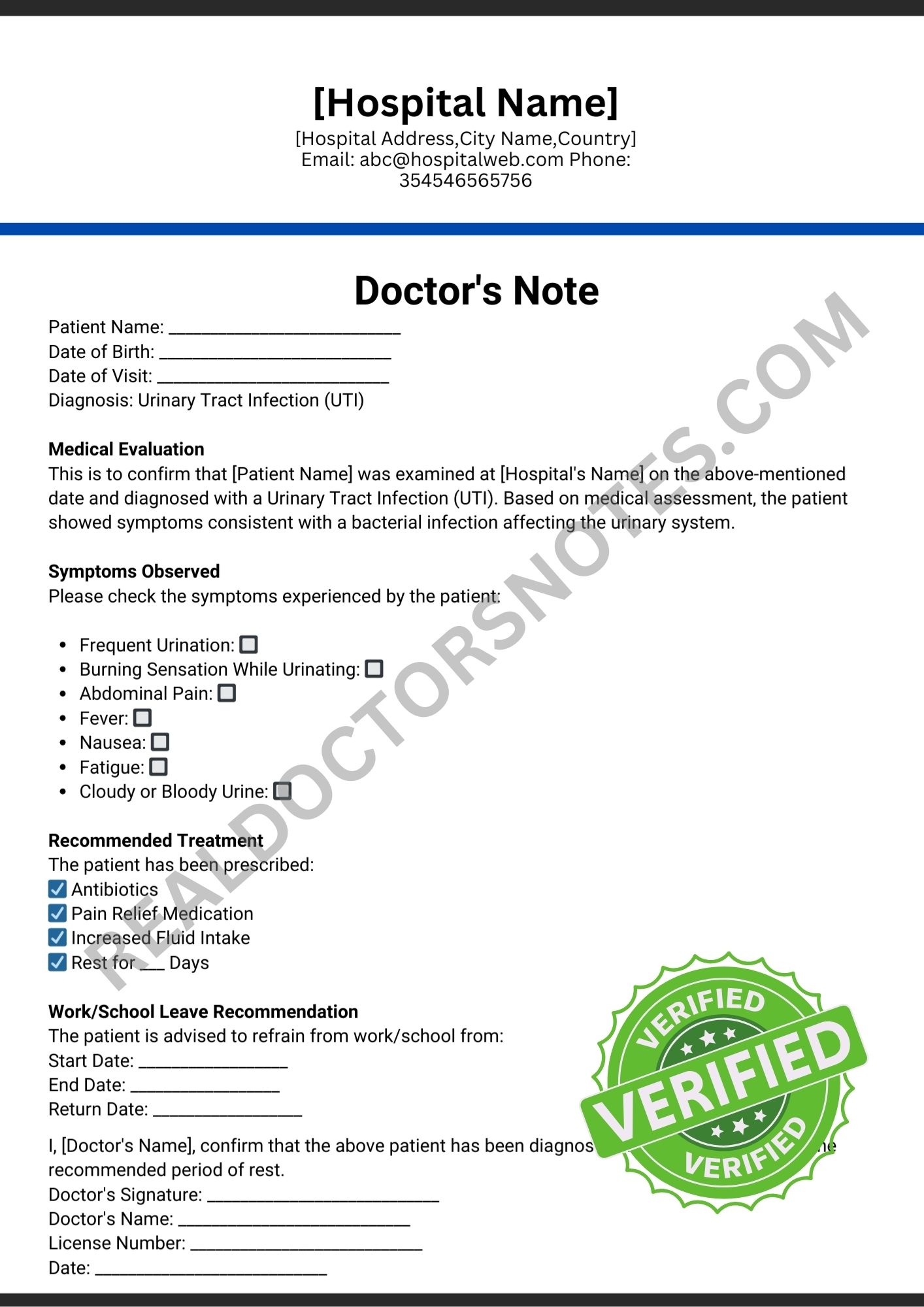
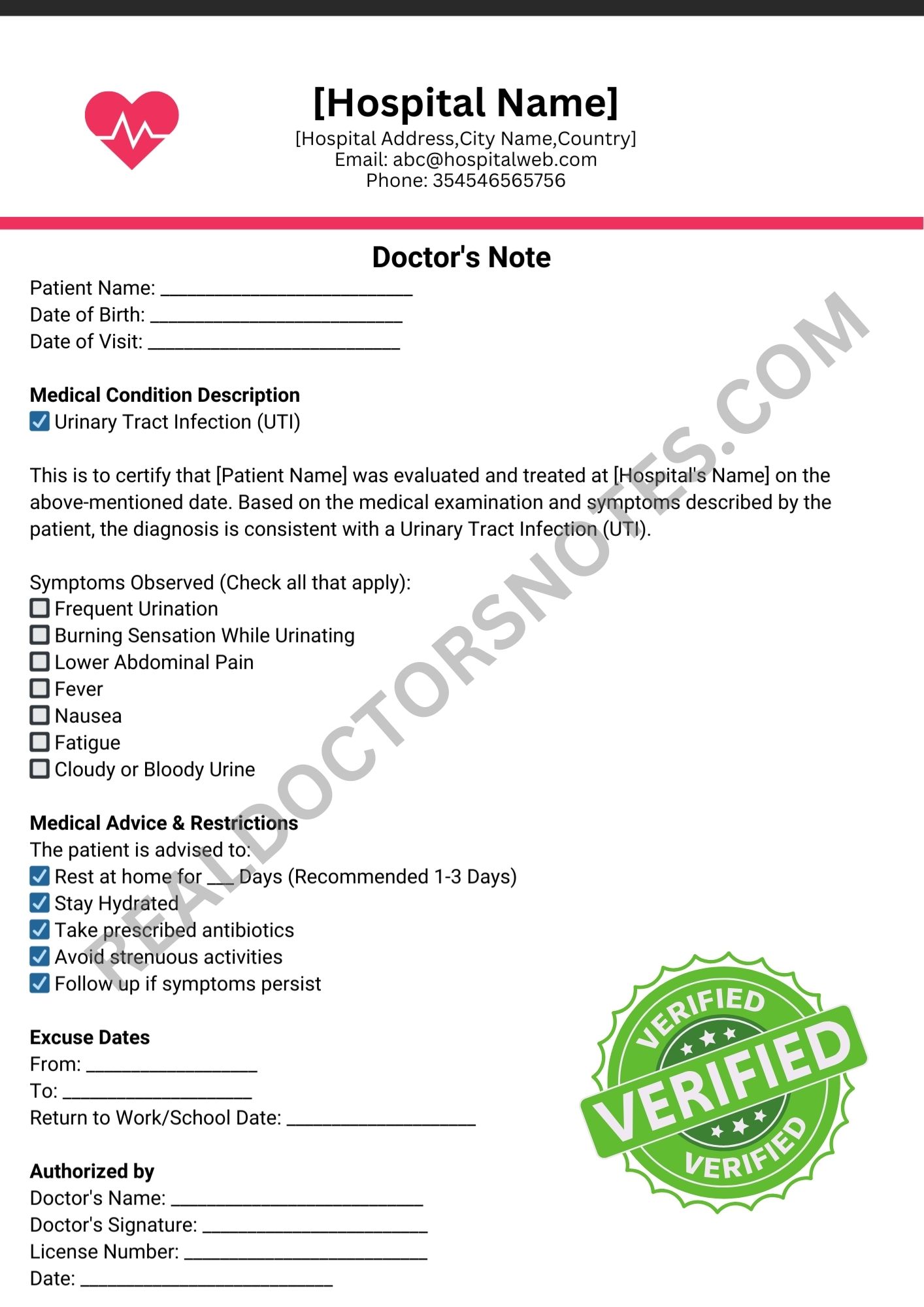
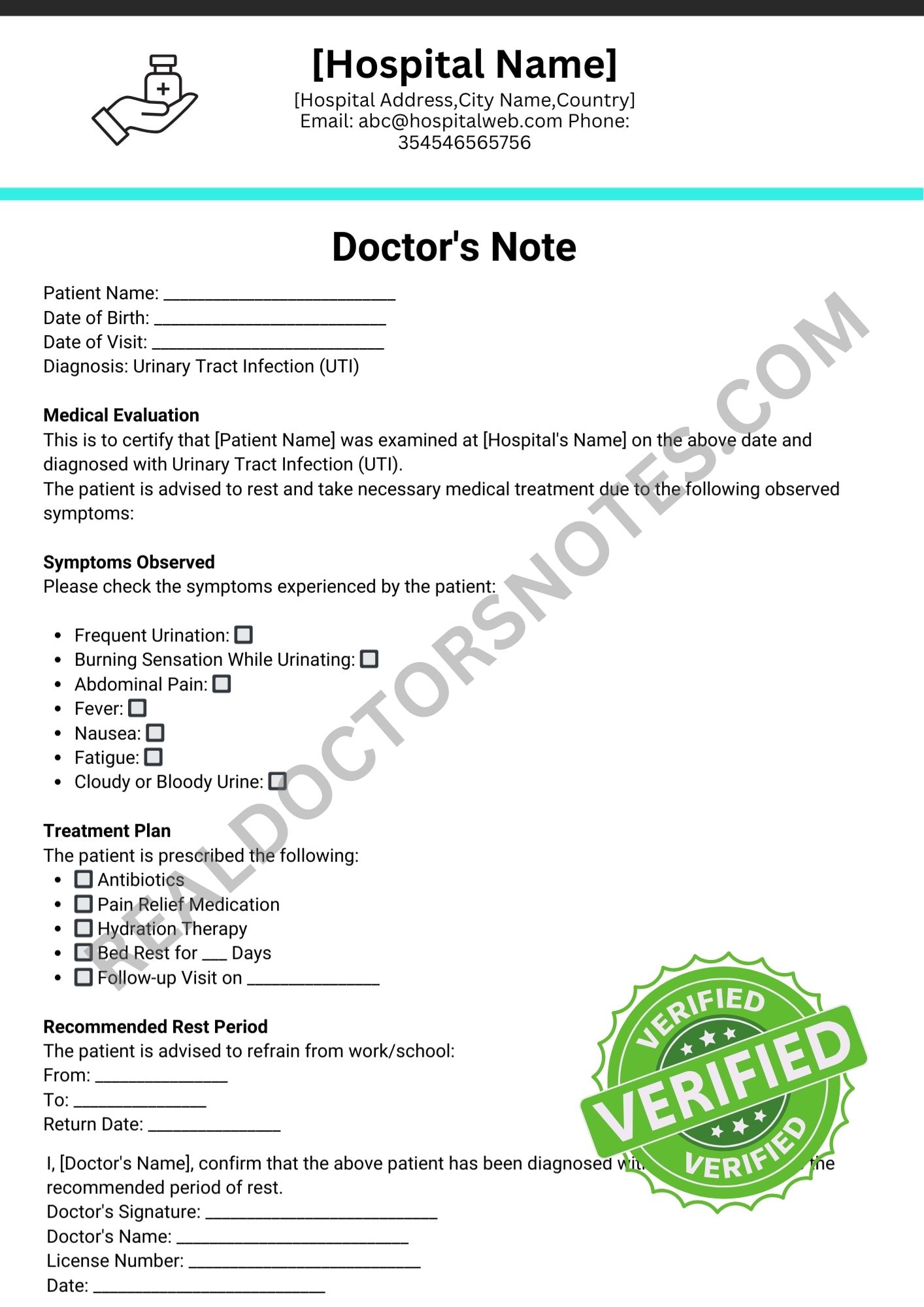
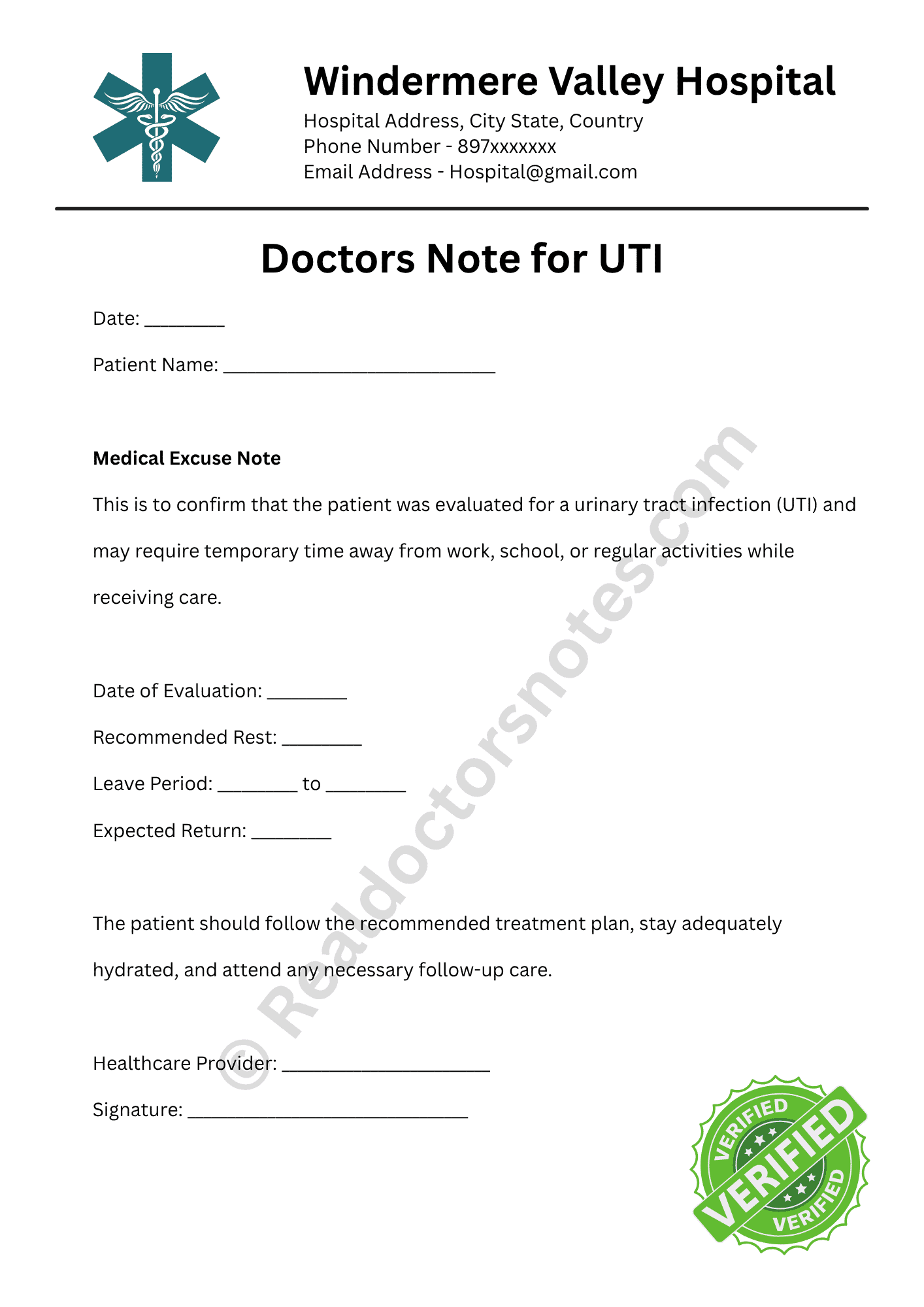
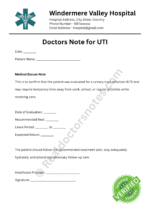
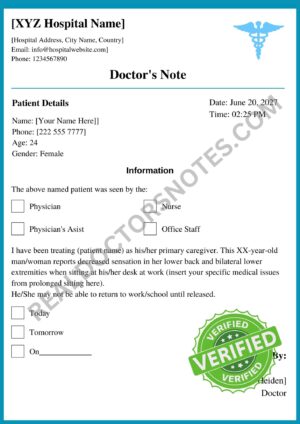
When a UTI causes symptoms that temporarily interfere with work, school, or daily activities, a licensed healthcare provider may provide medical documentation after an appropriate evaluation. Depending on the individual’s condition, the documentation may describe temporary activity limitations, expected recovery time, follow-up care recommendations, or workplace accommodations. The information included is based on the healthcare provider’s clinical findings while maintaining patient confidentiality.
UTI Documentation Validity
There is no universal validity period for medical documentation related to a UTI. The duration depends on the individual’s symptoms, treatment response, healthcare provider recommendations, and the purpose of the documentation.
Factors that may affect validity include:
- Severity of the infection
- Recovery progress
- Response to antibiotics
- Follow-up medical evaluations
- Employer or school documentation requirements
- Temporary activity restrictions
If symptoms continue beyond the expected recovery period, a follow-up evaluation may be needed to determine whether updated documentation is appropriate.
UTI Compared With Other Urinary Conditions
| Condition | Key Difference |
|---|---|
| UTI | Bacterial infection affecting the urinary tract |
| Kidney Infection | A more serious infection that affects the kidneys |
| Kidney Stones | Hard mineral deposits that cause pain but are not infections |
| Overactive Bladder | Causes urinary urgency without a bacterial infection |
Understanding these differences helps ensure accurate diagnosis and appropriate treatment.
FAQs
Q. What causes a UTI?
Most UTIs are caused by bacteria entering the urinary tract, with E. coli being the most common cause.
Q. How is a UTI diagnosed?
Diagnosis usually includes reviewing symptoms, performing a urinalysis, and, in some cases, a urine culture or additional imaging studies.
Q. How long does a UTI usually last?
Many uncomplicated UTIs improve within a few days after appropriate treatment, although recovery varies depending on the individual.
Q. Can a UTI go away without treatment?
Some mild infections may improve, but untreated UTIs can worsen or spread to the kidneys. Medical evaluation is recommended if symptoms develop.
Q. Can men develop UTIs?
Yes. Although UTIs are more common in women, men can also develop urinary tract infections.
Q. Can children get UTIs?
Yes. UTIs can occur in children and should be evaluated by a healthcare provider.
Q. Can UTIs come back?
Yes. Some individuals experience recurrent UTIs, especially if certain risk factors are present.
Q. When should I seek emergency medical care?
Seek immediate medical attention if you develop high fever, severe back pain, persistent vomiting, confusion, or symptoms suggesting a kidney infection.
Q. How long is UTI medical documentation valid?
The validity depends on the healthcare provider’s recommendations, the individual’s recovery, and the documentation requirements of the employer or school.




Reviews
There are no reviews yet.