![Real Doctors Note For Work and School [Get in 5 Minutes]](https://realdoctorsnotes.com/wordpress/wp-content/webp-express/webp-images/uploads/2025/11/2.png.webp)

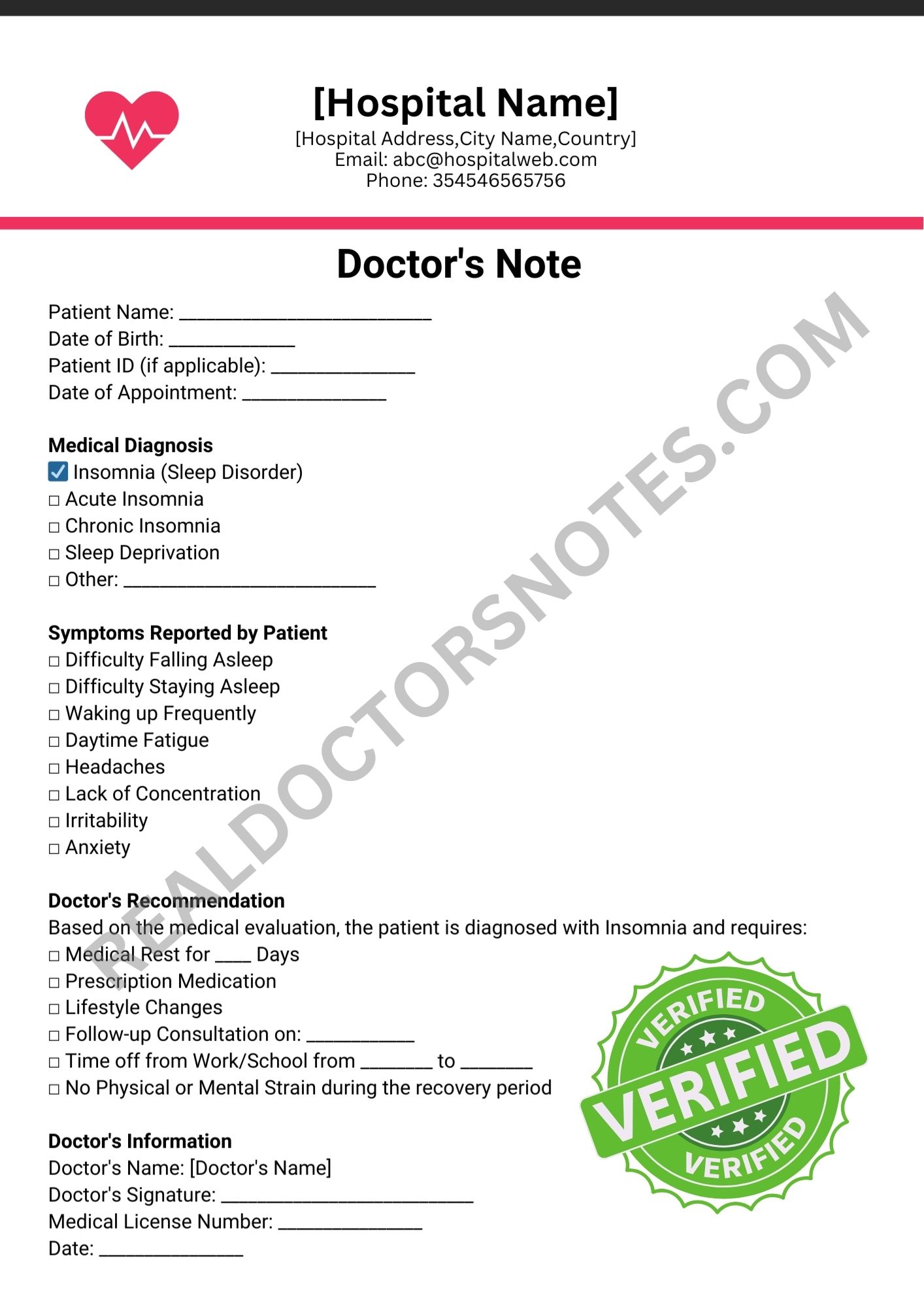
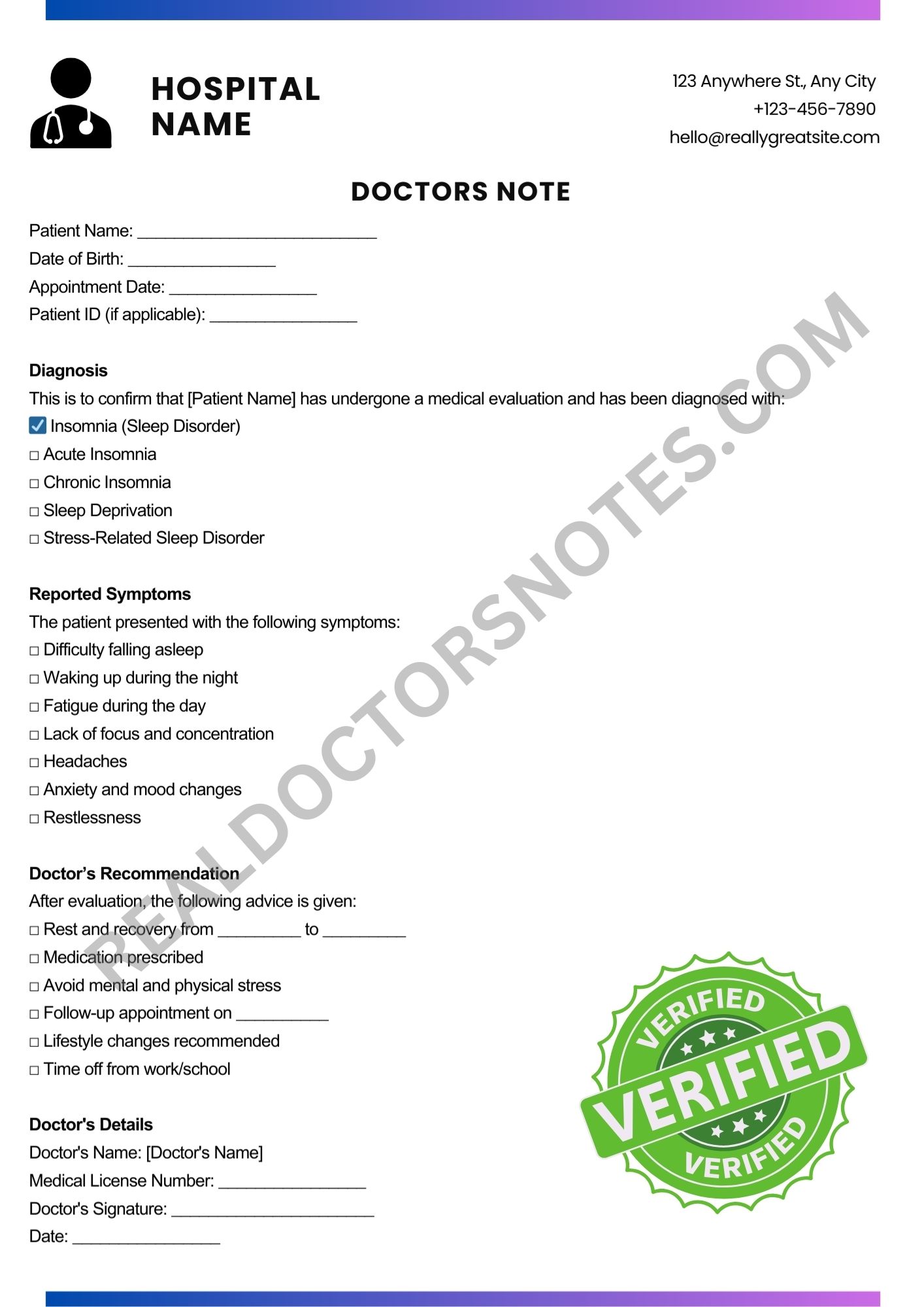
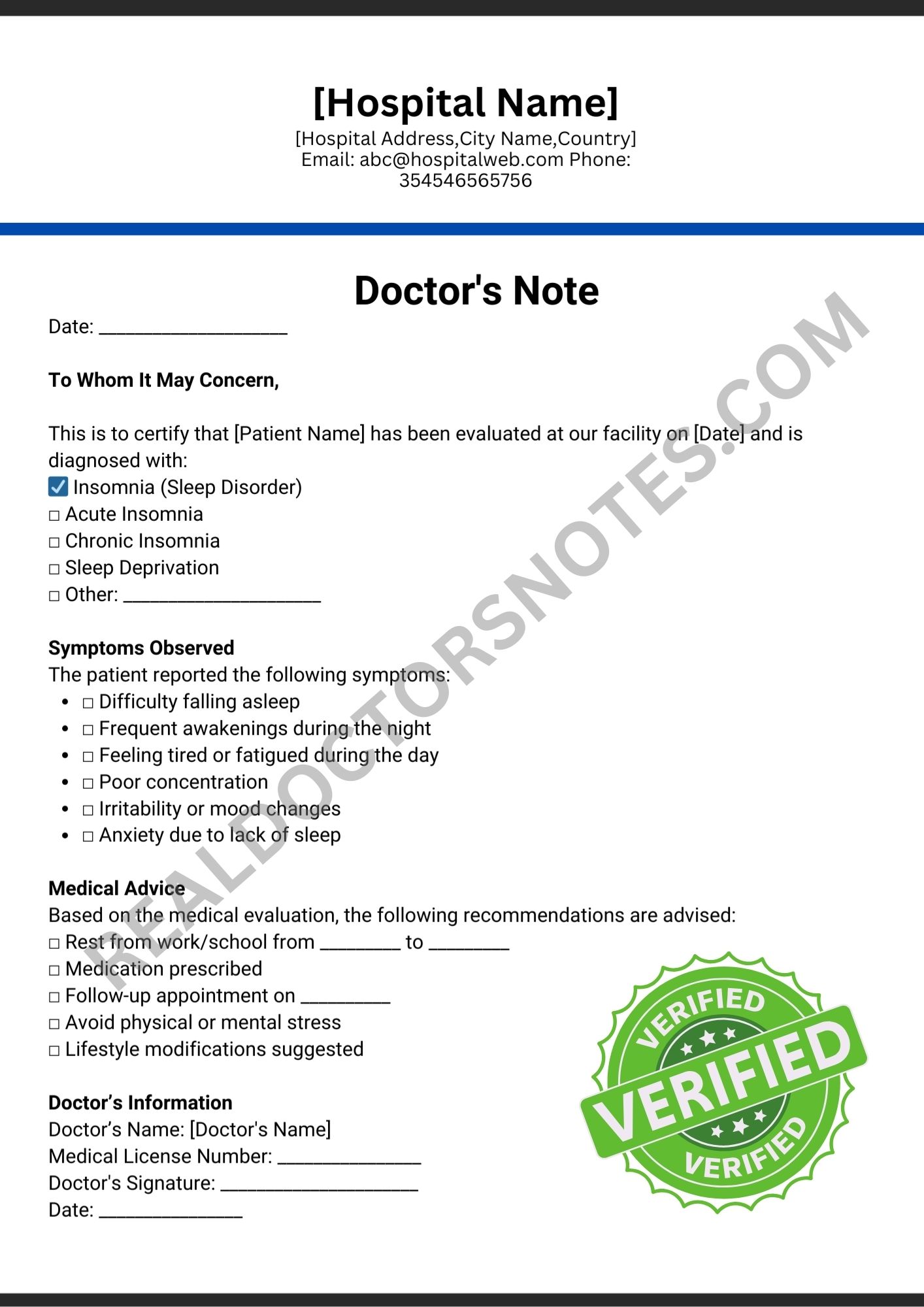


A doctor’s note for insomnia is a medical document issued after an evaluation by a licensed healthcare provider. It confirms that an individual has been assessed for sleep-related concerns that may affect daily responsibilities, work attendance, academic performance, or other activities. Depending on the circumstances, the note may recommend rest, temporary activity limitations, follow-up care, or a return-to-work date. Insomnia can impact concentration, energy levels, and overall productivity, making medical documentation important when absences or schedule adjustments are necessary.
Common Symptoms of Insomnia
Individuals experiencing insomnia may report:
- Difficulty falling asleep at night
- Frequent waking during sleep
- Waking too early in the morning
- Daytime fatigue or tiredness
- Difficulty concentrating
- Reduced productivity
- Irritability or mood changes
- Trouble remembering information
- Headaches related to poor sleep
- Lack of energy throughout the day
When Can a Doctor Provide an Insomnia Note?
A healthcare provider may issue documentation when insomnia affects a person’s ability to meet work, school, or daily obligations. Situations may include:
- Missing work due to severe sleep difficulties
- School or college absences
- Medical leave requests
- Follow-up appointments with healthcare providers
- Temporary work restrictions
- Recovery periods after treatment adjustments
- Verification of a medical evaluation
Who May Need an Insomnia Doctor’s Note?
Medical documentation for insomnia may be useful for:
- Employees
- College students
- University students
- Shift workers
- Remote workers
- Healthcare professionals
- Government employees
- Individuals requesting medical leave
- People returning to work after treatment
How Is Insomnia Evaluated?
Healthcare providers typically assess insomnia through a comprehensive review of symptoms and sleep habits. The evaluation may include:
- Medical history review
- Sleep pattern assessment
- Medication review
- Lifestyle and stress evaluation
- Physical examination
- Discussion of underlying health concerns
- Referral to a sleep specialist when necessary
The goal is to determine factors that may be contributing to sleep difficulties and recommend appropriate care.
Common Causes of Insomnia
Insomnia can develop for many reasons, including:
- Stress and anxiety
- Irregular sleep schedules
- Shift work
- Excessive caffeine intake
- Chronic pain
- Mental health conditions
- Certain medications
- Poor sleep habits
- Travel and jet lag
- Medical conditions affecting sleep
Treatment Options for Insomnia
Treatment recommendations vary based on individual circumstances. Common approaches may include:
- Improving sleep hygiene habits
- Cognitive Behavioral Therapy for Insomnia (CBT-I)
- Stress management techniques
- Relaxation exercises
- Lifestyle modifications
- Sleep schedule adjustments
- Medical treatment when appropriate
- Follow-up care with healthcare providers
How Long Can Insomnia Last?
| Type of Insomnia | Typical Duration |
|---|---|
| Acute Insomnia | A few days to several weeks |
| Chronic Insomnia | Three months or longer |
| Intermittent Insomnia | Occurs periodically over time |
| Transient Insomnia | Usually lasts less than one week |
Why Employers Request Medical Documentation
Employers may request medical documentation to:
- Verify a health-related absence
- Support sick leave requests
- Confirm work restrictions
- Document return-to-work recommendations
- Maintain attendance records
- Comply with workplace policies
A doctor’s note helps provide appropriate documentation while protecting patient privacy.
Can Students Use an Insomnia Doctor’s Note?
Students experiencing sleep-related difficulties may need documentation for:
- Class absences
- Missed exams
- Assignment extensions
- Academic accommodations
- Attendance verification
- Medical leave requests
Educational institutions may require supporting documentation depending on their policies.
What Information Is Usually Included?
A doctor’s note for insomnia may contain:
- Date of medical evaluation
- Healthcare provider information
- Confirmation of medical assessment
- Recommended recovery period
- Activity limitations if applicable
- Follow-up recommendations
- Return-to-work or return-to-school date
- Provider signature
Specific details vary according to individual circumstances and provider discretion.
Insomnia vs. Sleep Deprivation
| Insomnia | Sleep Deprivation |
|---|---|
| Sleep disorder that affects the ability to sleep | Often caused by lifestyle or external factors |
| May require medical evaluation | May improve with adequate rest |
| Can affect long-term health | Usually temporary |
| May require documentation | Documentation is less commonly needed |
| May require treatment | Often resolves with schedule adjustments |
When to Seek Medical Attention
Consider seeking medical evaluation if sleep difficulties:
- Continue for several weeks
- Affect work performance
- Interfere with school activities
- Cause excessive daytime sleepiness
- Impact concentration or memory
- Affect overall quality of life
- Occur alongside anxiety or depression symptoms
FAQs
Q. Can a doctor write a note for insomnia?
Yes. A healthcare provider may issue documentation after evaluating sleep-related symptoms and determining that medical documentation is appropriate.
Q. Can insomnia cause missed work?
Insomnia may affect concentration, alertness, and productivity, which can contribute to difficulty performing workplace duties.
Q. Is chronic insomnia considered a medical condition?
Chronic insomnia is generally recognized as a sleep disorder when symptoms persist for an extended period.
Q. Can students get documentation for insomnia?
Educational institutions may accept medical documentation for absences, missed exams, or academic accommodations.
Q. Does a doctor’s note include a diagnosis?
The information included depends on provider practices, privacy considerations, and the purpose of the documentation.
Q. Can employers verify a doctor’s note?
Employers may verify documentation according to workplace policies and applicable privacy regulations.
Q. How long is an insomnia doctor’s note valid?
Validity depends on the healthcare provider’s recommendations and the purpose of the documentation.
Q. Can insomnia qualify for medical leave?
Eligibility for leave depends on individual circumstances, workplace requirements, and healthcare provider recommendations.
Q. Can insomnia affect daily functioning?
Yes. Sleep difficulties may impact concentration, memory, mood, and overall performance.
Q. When should I see a healthcare provider for insomnia?
Medical evaluation may be helpful when symptoms are persistent, worsening, or interfering with daily life.


Reviews
There are no reviews yet.