![Real Doctors Note For Work and School [Get in 5 Minutes]](https://realdoctorsnotes.com/wordpress/wp-content/uploads/2025/11/2.png)


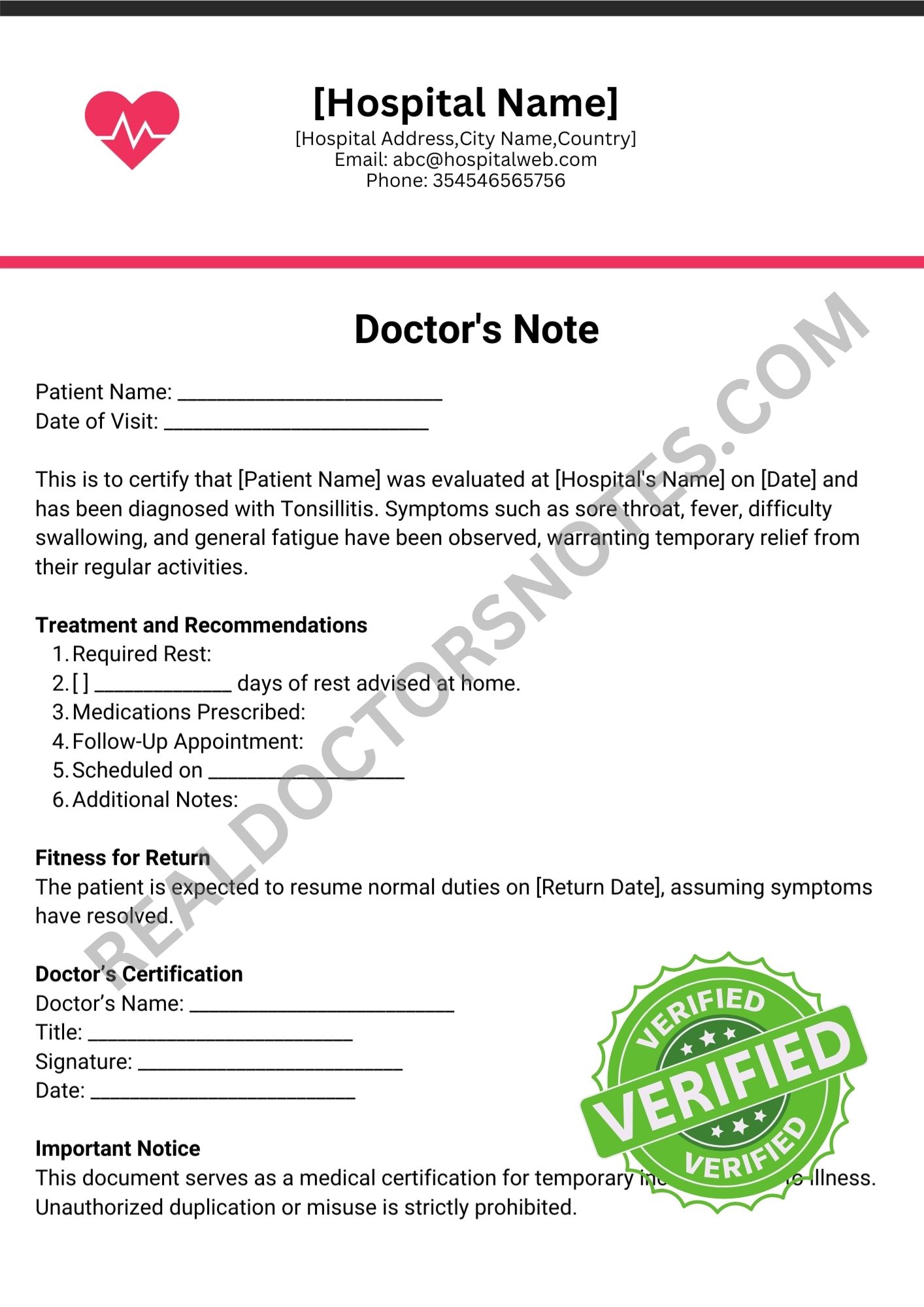
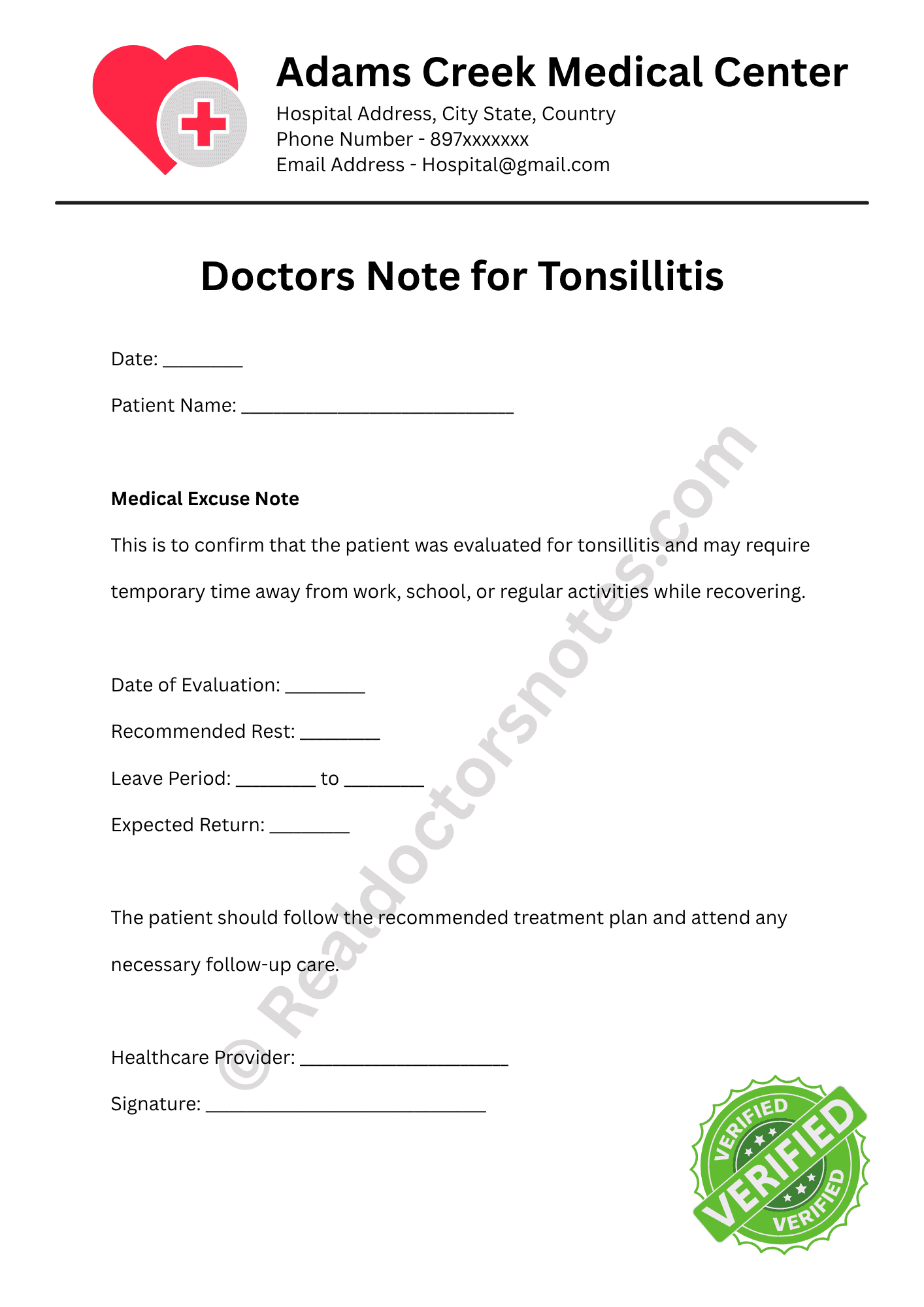




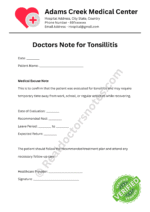


Doctors Note for Tonsillitis may be required when a tonsil infection causes symptoms that prevent you from attending work, school, or other daily responsibilities. The tonsils are an important part of the body’s immune system. They help trap bacteria, viruses, and other microorganisms that enter through the mouth and nose. During childhood, the tonsils play a larger role in helping the immune system recognize and respond to infections.
Although the tonsils help protect the body, they can also become infected themselves. When this happens, inflammation may cause pain, swelling, and difficulty swallowing. Most cases improve with appropriate medical care, but repeated infections may require further evaluation by an ear, nose, and throat (ENT) specialist.
Related Post:
- Doctors Note for Sore Throat
- Doctors Note for Strep
- Return to Work Doctors Note
- Doctors Note for Work Absence
- Doctors Note for Extended Sick Leave
Viral vs. Bacterial Tonsillitis
Understanding the cause of tonsillitis helps determine the most appropriate treatment.
Viral Tonsillitis
Viral tonsillitis is the most common form and is usually caused by cold or flu viruses.
Common features include:
- Sore throat
- Runny nose
- Mild fever
- Cough
- Hoarse voice
- Fatigue
Treatment usually focuses on relieving symptoms while the body recovers naturally.
Bacterial Tonsillitis
Bacterial tonsillitis is often caused by Group A Streptococcus bacteria.
Common features include:
- Severe sore throat
- Fever
- White patches on the tonsils
- Swollen lymph nodes
- Pain when swallowing
- Bad breath
A healthcare provider may recommend antibiotics if a bacterial infection is confirmed.
Acute, Recurrent, and Chronic Tonsillitis
- Acute Tonsillitis – Acute tonsillitis develops suddenly and usually lasts for a short period with appropriate treatment.
- Recurrent Tonsillitis – Recurrent tonsillitis involves repeated infections throughout the year. Frequent episodes may interfere with work, school attendance, or daily life.
- Chronic Tonsillitis – Chronic tonsillitis refers to long-lasting inflammation that may cause persistent throat discomfort, enlarged tonsils, bad breath, or repeated infections.
How Tonsillitis Is Diagnosed
Healthcare providers evaluate symptoms and perform examinations to determine the cause of tonsillitis.
Diagnosis may include:
- Medical history review
- Physical examination
- Examination of the throat
- Checking swollen lymph nodes
- Looking for white patches on the tonsils
- Rapid strep test
- Throat swab
- Laboratory testing when appropriate
The results help determine whether supportive care, antibiotics, or additional evaluation is needed.
When Is a Tonsillectomy Considered?
Most people recover without surgery. However, a healthcare provider may recommend evaluation for tonsil removal (tonsillectomy) in certain situations.
Possible reasons include:
- Frequent episodes of tonsillitis
- Chronic throat infections
- Difficulty breathing due to enlarged tonsils
- Sleep-disordered breathing
- Repeated absences from work or school
- Difficulty swallowing caused by enlarged tonsils
The decision is based on medical history, symptom severity, and specialist evaluation.
Foods That May Be Easier to Eat During Tonsillitis
Soft foods and adequate hydration may help reduce throat discomfort during recovery.
Examples include:
- Warm soup
- Yogurt
- Applesauce
- Mashed potatoes
- Oatmeal
- Smoothies
- Soft pasta
- Scrambled eggs
- Ice pops
- Warm herbal tea
Foods that may increase throat irritation include:
- Spicy foods
- Crunchy snacks
- Acidic fruits
- Alcohol
- Very hot beverages
Voice Care During Recovery
The throat and vocal cords may become irritated during tonsillitis.
Helpful voice-care tips include:
- Speak only when necessary
- Avoid shouting
- Drink plenty of fluids
- Use a humidifier if recommended
- Avoid smoking and secondhand smoke
- Rest the voice until symptoms improve
Preventing Recurrent Tonsillitis
Although infections cannot always be prevented, healthy habits may reduce the risk of future episodes.
Suggestions include:
- Wash hands frequently
- Avoid sharing drinks or utensils
- Replace your toothbrush after a bacterial throat infection if advised
- Stay hydrated
- Get enough sleep
- Avoid tobacco smoke
- Manage seasonal allergies
- Seek prompt treatment for throat infections
Recovery Expectations by Age
Recovery may vary depending on age and overall health.
Children
Children often recover within several days to about one week, although follow-up may be needed for severe or recurrent infections.
Teenagers
Teenagers generally recover well but should avoid strenuous sports until they feel better and have medical clearance if necessary.
Adults
Adults may recover more slowly, particularly if symptoms are severe or bacterial infection requires antibiotic treatment.
Returning to Work, School, or Sports
Returning to normal activities depends on symptom improvement and healthcare provider recommendations.
A healthcare provider may consider:
- Fever has resolved
- Swallowing has improved
- Energy levels have returned
- Medications are working effectively
- Risk of spreading infection has decreased
- Physical activity can be performed comfortably
Possible Complications of Untreated Tonsillitis
Most people recover without complications, but untreated infections may occasionally lead to more serious problems.
Possible complications include:
- Peritonsillar abscess
- Difficulty swallowing
- Dehydration
- Spread of bacterial infection
- Breathing difficulty due to severe swelling
- Ear infections in some individuals
Seeking timely medical evaluation can help reduce these risks.
ENT Specialist Evaluation
Some individuals may benefit from evaluation by an ear, nose, and throat (ENT) specialist.
Referral may be considered when:
- Tonsillitis keeps returning
- Symptoms do not improve with treatment
- Enlarged tonsils affect breathing
- Sleep is disturbed by airway blockage
- Surgery may be appropriate
FAQs
1. Can adults get tonsillitis?
Yes. Although common in children, adults can also develop tonsillitis.
2. How long does tonsillitis usually last?
Recovery depends on the cause and individual health. Viral infections often improve within several days, while bacterial infections may require prescribed treatment.
3. Is tonsillitis contagious?
Some viral and bacterial infections that cause tonsillitis can spread to others through respiratory droplets or close contact.
4. Can viral tonsillitis become bacterial?
A viral infection does not automatically become bacterial, but a healthcare provider can evaluate symptoms if they change or worsen.
5. What foods should I avoid during tonsillitis?
Very spicy, crunchy, acidic, or extremely hot foods may increase throat discomfort.
6. Can I go to work with tonsillitis?
If symptoms are significant or the infection is contagious, a healthcare provider may recommend staying home until it is safe to return.
7. When should I replace my toothbrush?
If you have a confirmed bacterial throat infection, your healthcare provider may advise replacing your toothbrush after treatment begins.
8. Can tonsillitis return?
Yes. Some individuals experience recurrent episodes that may require further medical evaluation.
9. Will I always need antibiotics?
No. Antibiotics are only effective for bacterial infections and are not used to treat viral tonsillitis.
10. When is surgery considered?
Tonsillectomy may be discussed if infections are frequent, persistent, or cause significant complications.




Reviews
There are no reviews yet.