![Real Doctors Note For Work and School [Get in 5 Minutes]](https://realdoctorsnotes.com/wordpress/wp-content/uploads/2025/11/2.png)




When you have a small cut, bruise, sprain, minor burn, or other everyday injury, a Doctor for Minor Injuries can help determine how serious it is and whether you need medical treatment. Even injuries that seem minor may sometimes require proper cleaning, wound care, pain management, or follow-up. A healthcare professional can examine the affected area and explain what to do next.
What Is a Minor Injury?
A minor injury is usually an injury that does not appear to be life-threatening or require emergency surgery. Common examples include:
- Small cuts and scrapes
- Minor burns
- Bruises
- Mild sprains and strains
- Small puncture wounds
- Minor bumps or falls
- Muscle soreness after an injury
- Mild swelling or tenderness
- Minor sports injuries
The appropriate treatment depends on the type of injury, where it occurred, and how severe the symptoms are.
When Should You See a Doctor for a Minor Injury?
You may want to contact a doctor when an injury is not improving or you are unsure whether it needs professional care. A medical evaluation can be especially useful when you have persistent pain, swelling, limited movement, bleeding, or signs of infection.
Consider seeking medical advice if:
- The wound is deep or difficult to clean.
- Bleeding does not stop after applying pressure.
- You cannot move the injured area normally.
- Pain continues or becomes worse.
- Swelling increases significantly.
- The area becomes red, warm, or increasingly painful.
- You notice pus or other signs of infection.
- You develop a fever after an injury.
- You injured your head, neck, or spine.
- The injury happened during sports or physical activity and symptoms persist.
What Can a Doctor Do for Minor Injuries?
A doctor can examine the injury and determine whether home care is appropriate or whether additional treatment is needed. Depending on the injury, they may clean a wound, recommend dressings, provide pain-management advice, assess a sprain, or recommend imaging when necessary.
For example, a doctor may check whether an apparently simple ankle injury could involve a more serious ligament or bone problem.
Common Minor Injuries Doctors Treat
Cuts and Scrapes
Small cuts and abrasions may usually be managed with cleaning, protection, and appropriate wound care. However, deeper cuts may require professional evaluation.
Sprains and Strains
A sprain affects a ligament, while a strain involves a muscle or tendon. Rest, activity modification, ice or cold therapy, compression, and elevation may sometimes be recommended depending on the injury.
Bruises
Bruises commonly occur when small blood vessels under the skin are damaged. Most gradually improve, but unexplained, unusually large, or persistent bruising should be discussed with a healthcare professional.
Minor Burns
Small, superficial burns may require cooling and protection of the affected skin. Larger, deeper, chemical, electrical, or facial burns require prompt medical assessment.
Sports Injuries
Minor sports injuries can include muscle strains, sprained joints, bruises, and overuse injuries. A doctor can help determine when it is safe to return to normal activity.
Can You Get a Doctor’s Note for a Minor Injury?
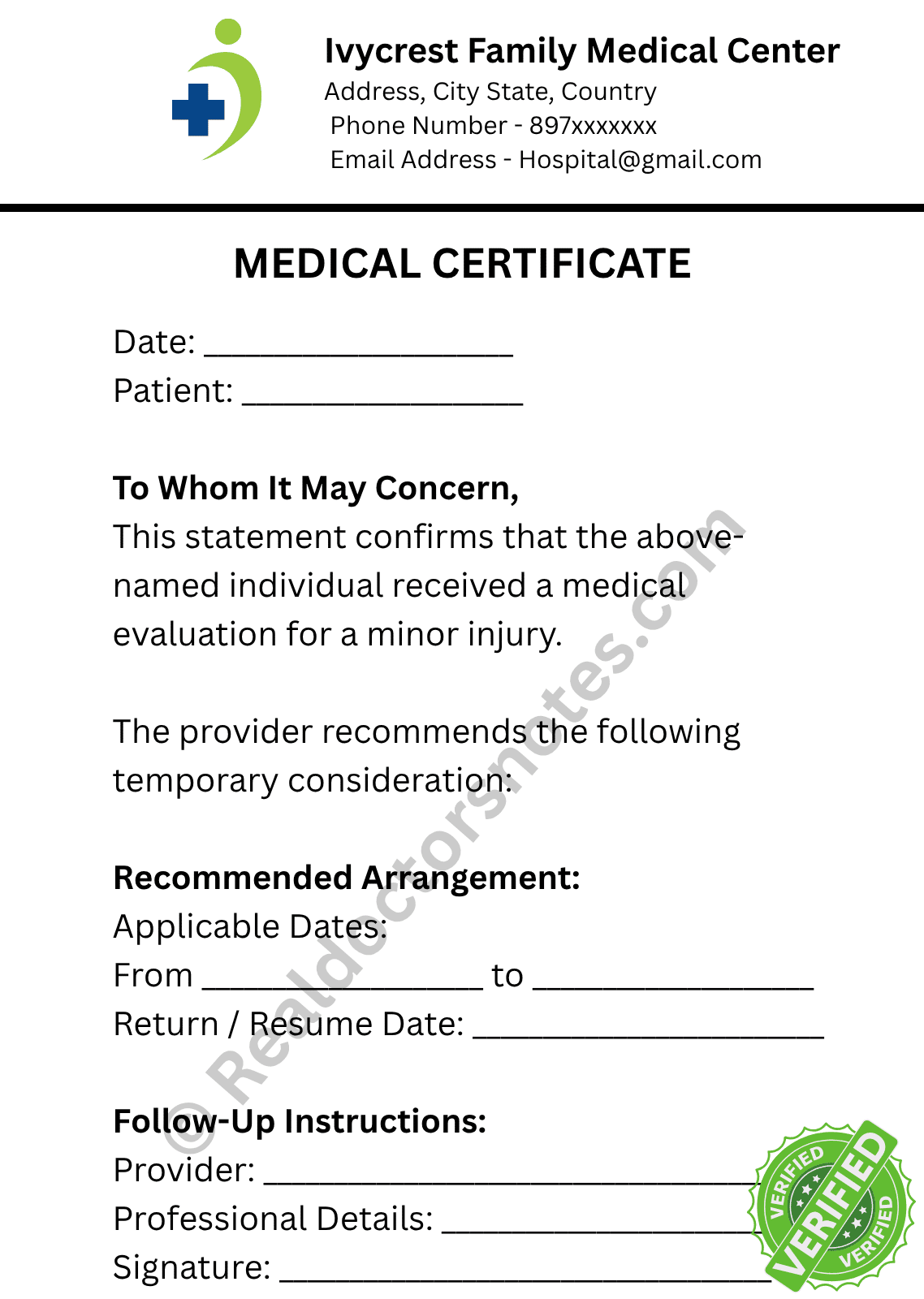
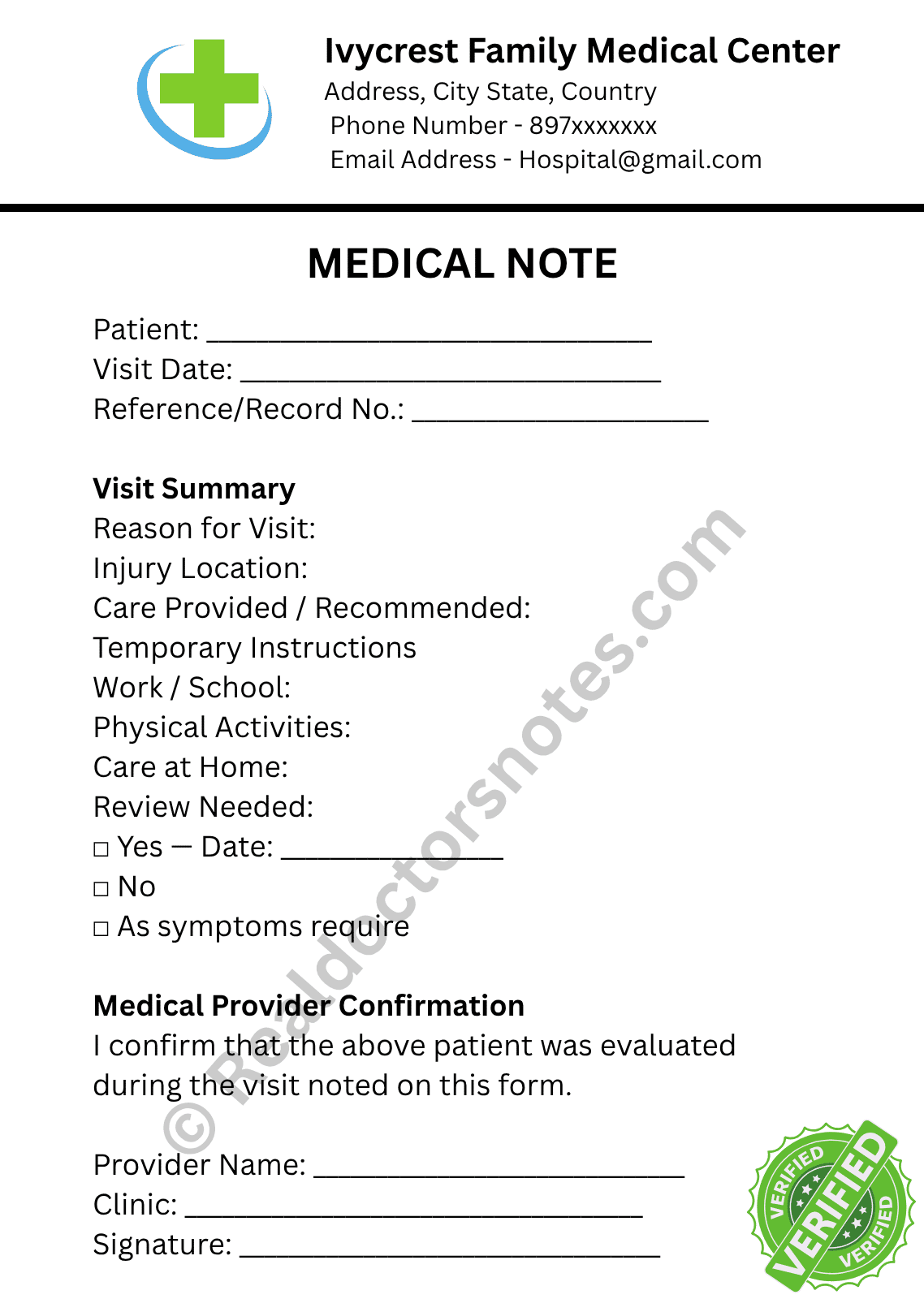
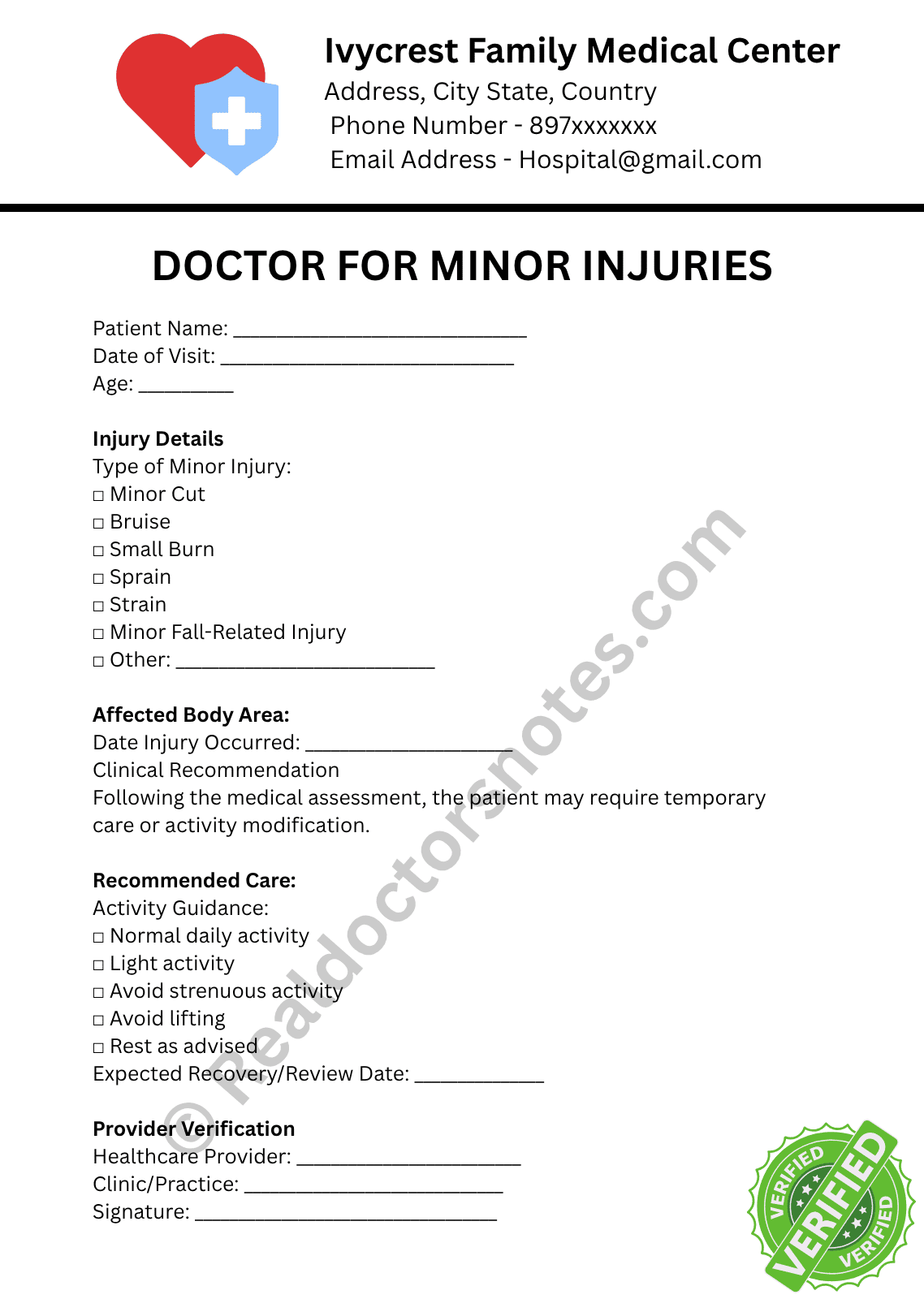
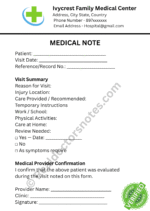
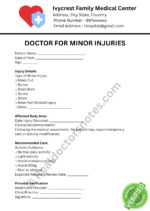
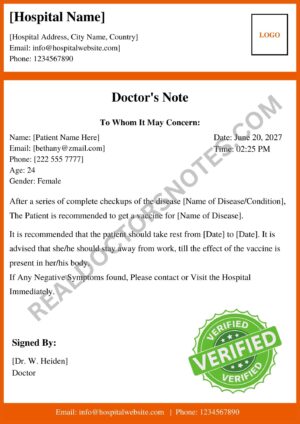
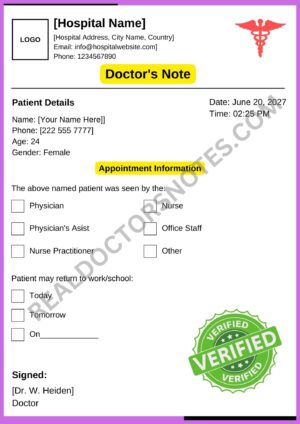
In some situations, a healthcare professional may provide documentation after evaluating an injury. Whether a doctor’s note for a minor injury is appropriate depends on the person’s condition, the healthcare provider’s assessment, and the requirements of the employer, school, or organization requesting the documentation.
A medical note may describe relevant restrictions, recommended rest, or the period during which certain activities should be avoided when medically appropriate.
Doctor for Minor Injuries vs. Emergency Care
Not every injury requires an emergency room visit. A minor injury that is stable and does not involve serious symptoms may be suitable for a primary care provider, urgent care clinic, or another appropriate healthcare service.
However, emergency medical attention may be necessary for symptoms such as:
- Severe or uncontrolled bleeding
- Loss of consciousness
- Difficulty breathing
- Severe head injury symptoms
- Suspected broken bones with significant deformity
- Severe burns
- Serious eye injuries
- Sudden loss of movement or sensation
When an injury appears potentially life-threatening, seek emergency medical care rather than waiting for a routine appointment.
Can Minor Injuries Be Treated Online?
Some minor injuries can be discussed through telehealth, particularly when the doctor can reasonably assess the symptoms from the patient’s description, photographs, or video. Online consultations may be useful for questions about wound care, mild rashes around an injury, pain, or recovery instructions.
However, an online consultation cannot replace an in-person examination when the injury requires physical assessment, imaging, wound closure, or another hands-on procedure.
How Long Does a Minor Injury Take to Heal?
Healing time varies considerably. A small scrape may improve within a few days, while a sprain or muscle injury can take considerably longer. The location and severity of the injury, your overall health, and how well you follow care instructions can all affect recovery.
If symptoms are not improving as expected or are getting worse, contact a healthcare professional for further evaluation.
FAQs
Q. What doctor should I see for a minor injury?
For many minor injuries, a primary care doctor or urgent care provider can evaluate the problem. The appropriate service depends on the injury and its symptoms.
Q. Can a doctor treat a small cut?
Yes. A doctor can assess a cut, clean it when necessary, determine whether additional treatment is needed, and provide wound-care instructions.
Q. Can I see a doctor for a sprain?
Yes. A doctor can evaluate a sprain and determine whether additional examination or imaging may be needed.
Q. Can a minor injury require medical documentation?
It can. After evaluating the injury, a healthcare provider may provide appropriate documentation when medically justified and when it meets the requirements of the requesting organization.
Q. Should I go to urgent care for a minor injury?
Urgent care may be appropriate when an injury needs prompt medical evaluation but does not appear to be a life-threatening emergency.




Reviews
There are no reviews yet.