![Real Doctors Note For Work and School [Get in 5 Minutes]](https://realdoctorsnotes.com/wordpress/wp-content/uploads/2025/11/2.png)

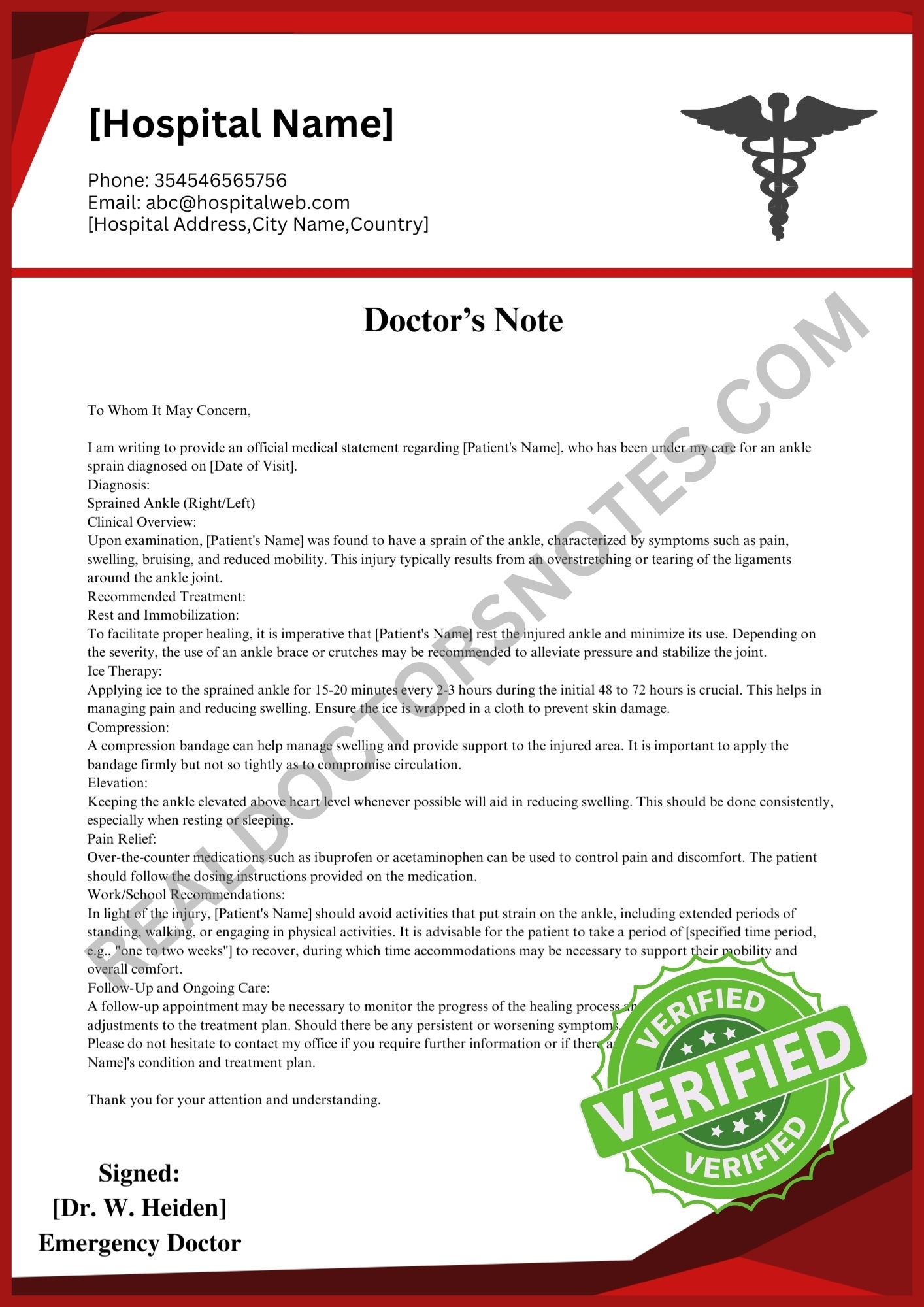
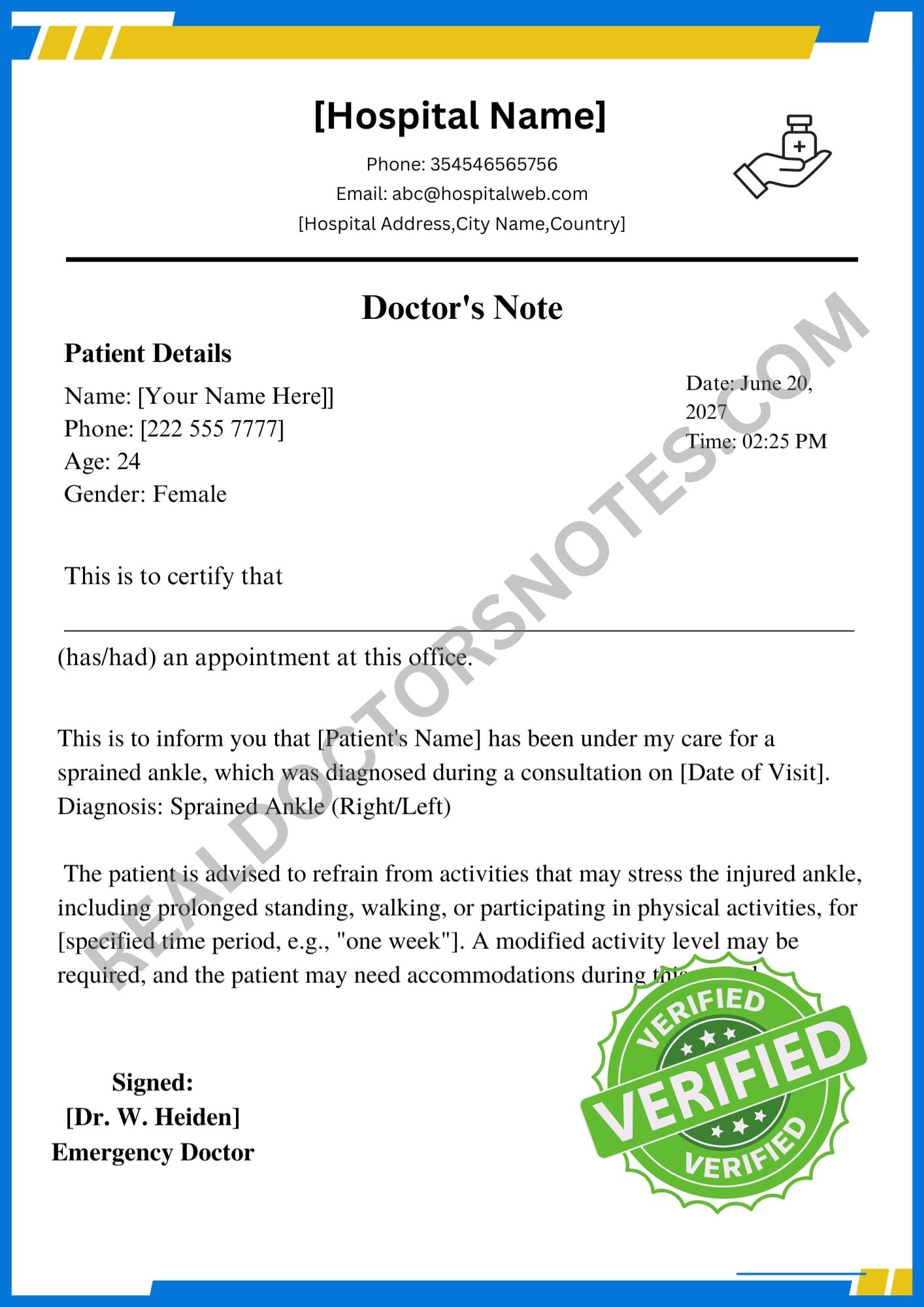
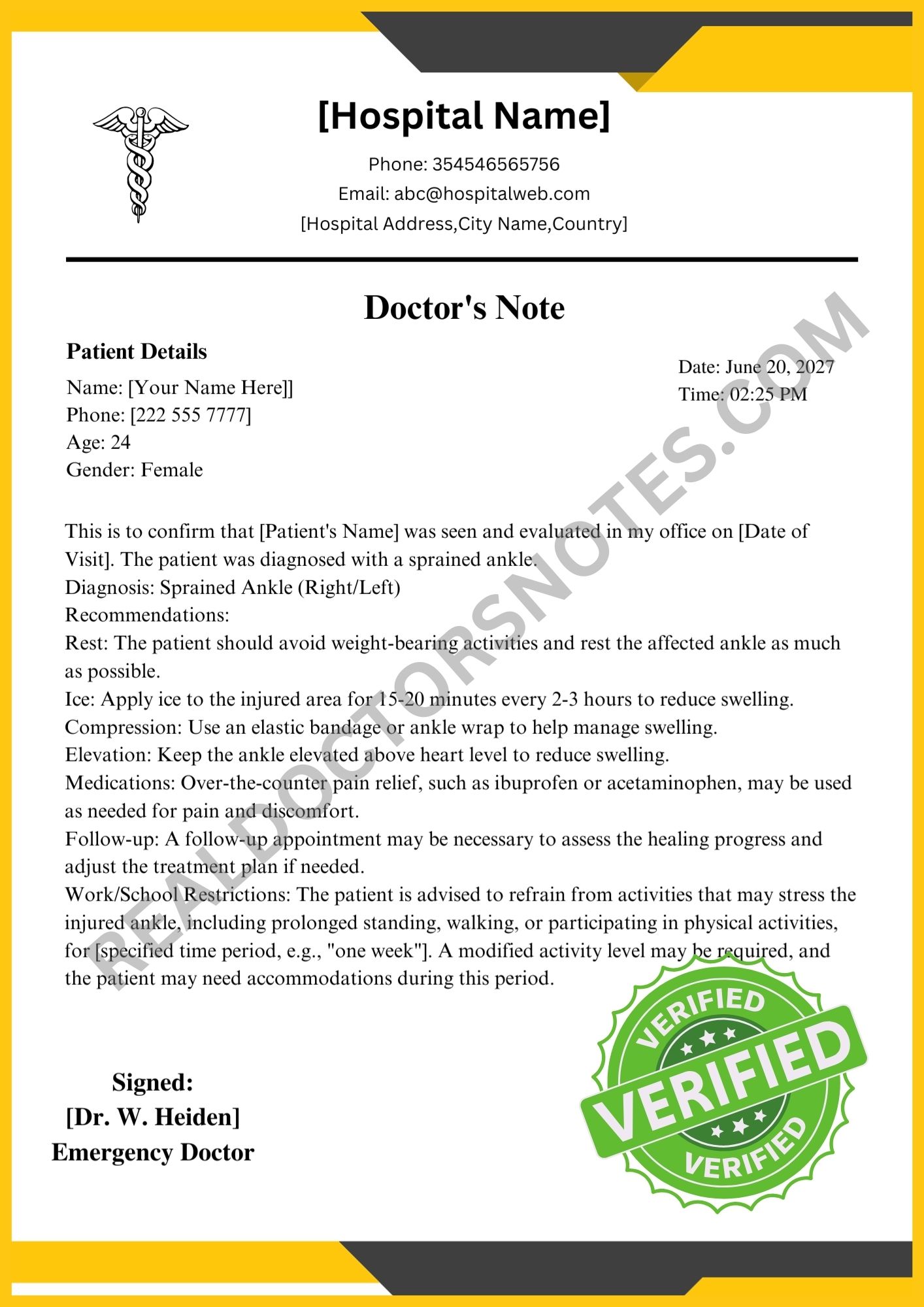
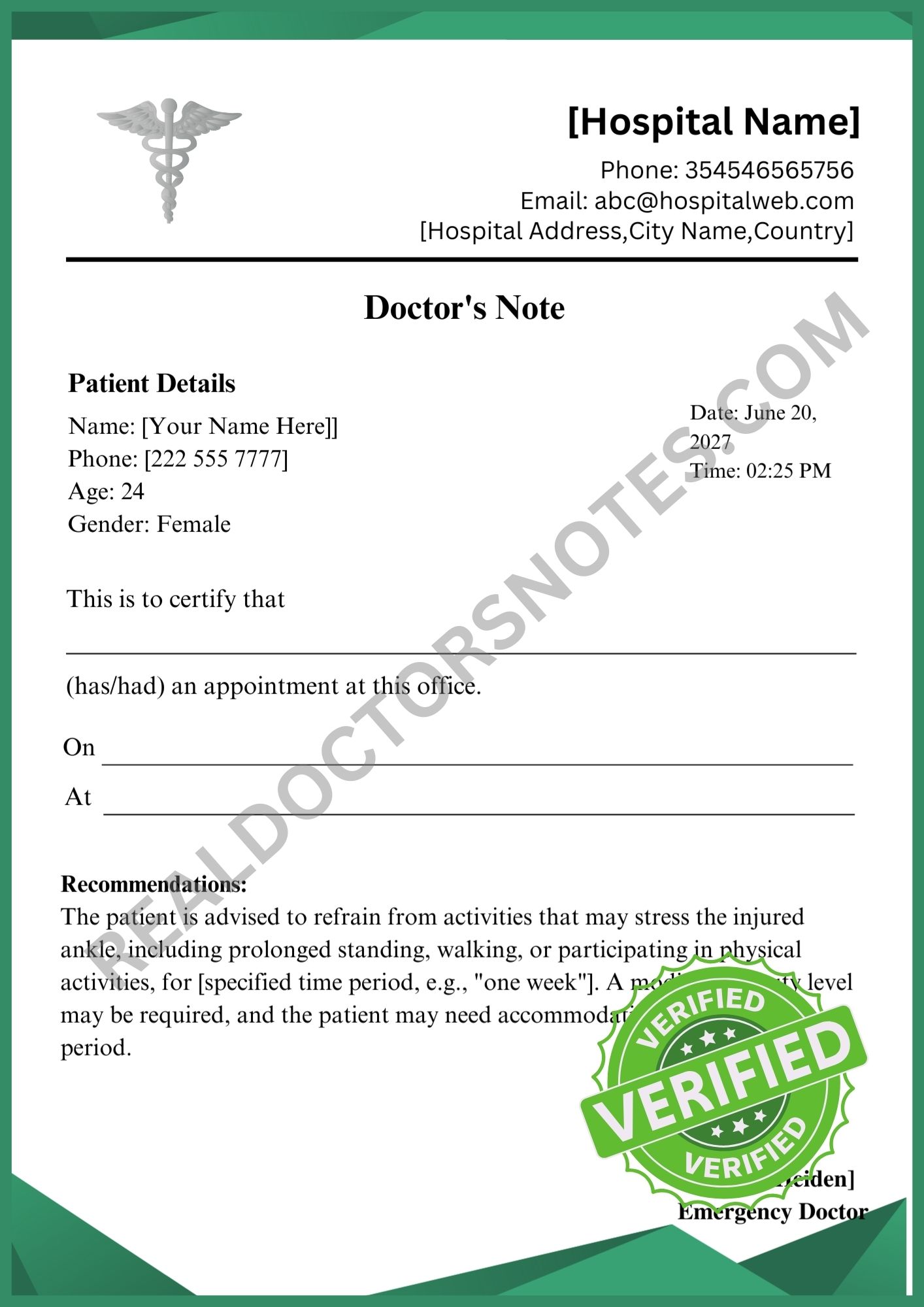
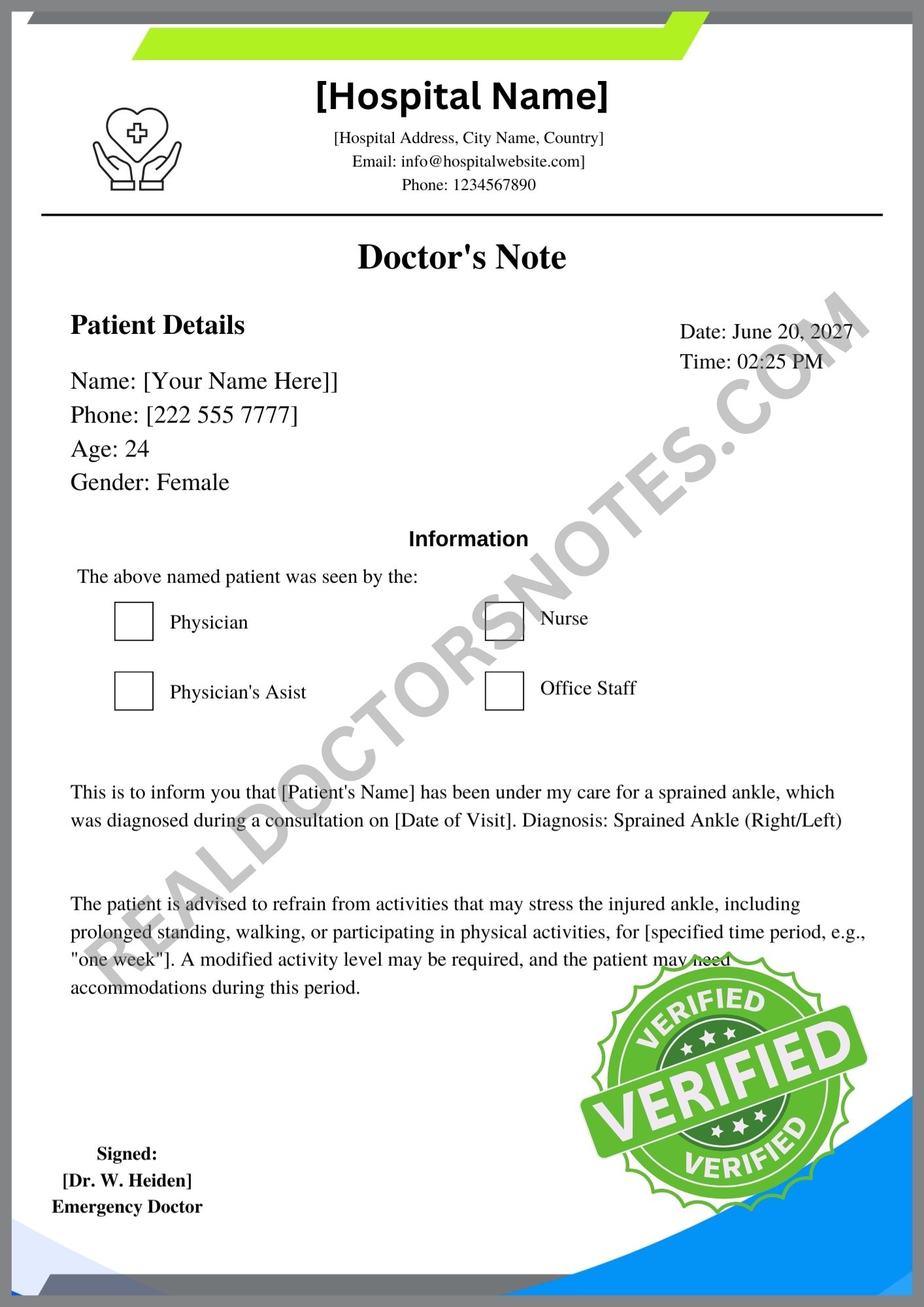
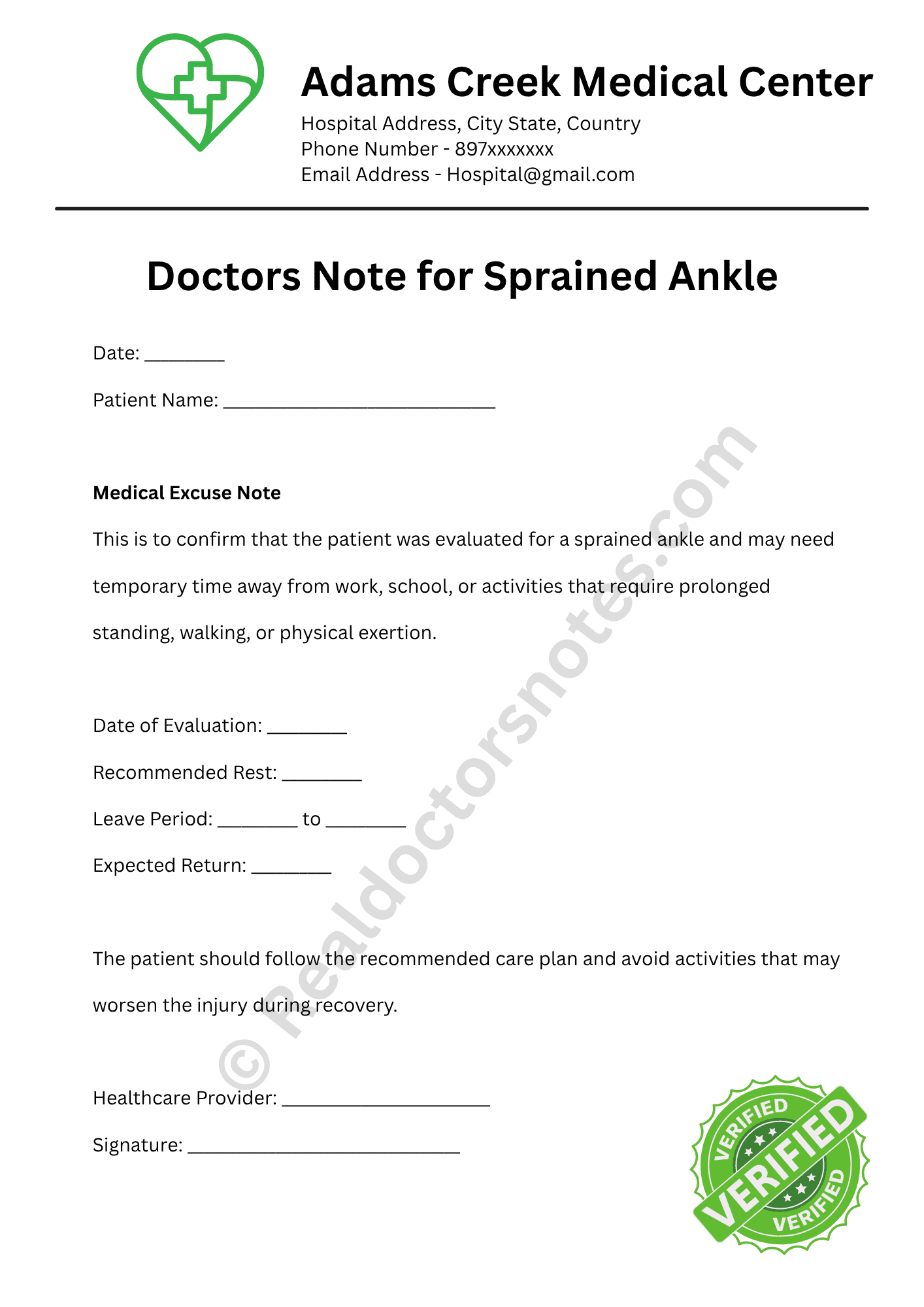








A sprained ankle is one of the most common musculoskeletal injuries, occurring when the ligaments supporting the ankle are stretched or torn. Ligaments are strong bands of connective tissue that stabilize the ankle joint and help maintain proper movement during walking, running, and other daily activities. A sprain often happens when the foot suddenly twists, rolls inward or outward, or lands awkwardly during sports, exercise, or everyday movement.
Depending on the severity of the injury, a sprained ankle can cause pain, swelling, bruising, stiffness, and difficulty bearing weight. Some people recover within a few weeks, while others require a longer rehabilitation period. When the injury affects mobility or prevents someone from performing work, school, or physical activities, a healthcare provider may recommend temporary restrictions and, when medically appropriate, provide a doctor’s note.
Related Post:
- Online Doctors Note for Muscle Strain
- Online Doctors Note for Muscle Pain
- Online Doctors Note for Joint Pain
- Doctors Sick Note
Understanding the Ligaments of the Ankle
The ankle joint is supported by several important ligaments that help keep it stable during movement.
The anterior talofibular ligament (ATFL) is the ligament most commonly injured during an ankle sprain. It helps prevent excessive forward movement of the foot and is often damaged when the ankle rolls inward.
The Calcaneofibular Ligament (CFL) provides additional stability to the outside of the ankle and may also be injured during moderate or severe sprains.
The Posterior Talofibular Ligament (PTFL) is stronger and less commonly injured but may be affected in more serious ankle injuries.
On the inside of the ankle, the Deltoid Ligament provides stability against outward twisting. Injuries to this ligament are less common but may occur after significant trauma.
Understanding which ligament is affected helps healthcare providers determine the severity of the injury and recommend appropriate treatment.
Grades of Sprained Ankles
Healthcare providers often classify ankle sprains into three grades based on the extent of ligament damage.
Grade 1 Sprain
A Grade 1 sprain involves mild stretching of the ligament without significant tearing.
Symptoms may include:
- Mild pain
- Slight swelling
- Minor tenderness
- Little or no difficulty walking
Most Grade 1 sprains improve with conservative treatment and gradual return to activity.
Grade 2 Sprain
A Grade 2 sprain involves a partial tear of one or more ligaments.
Symptoms may include:
- Moderate pain
- Noticeable swelling
- Bruising
- Difficulty walking
- Reduced ankle stability
Recovery may require an ankle brace, temporary activity modification, and rehabilitation exercises.
Grade 3 Sprain
A Grade 3 sprain involves a complete tear of a ligament.
Symptoms may include:
- Severe swelling
- Significant bruising
- Inability to bear weight
- Joint instability
- Severe pain immediately after injury
These injuries often require more extensive treatment, prolonged rehabilitation, and sometimes specialist evaluation.
Common Causes of a Sprained Ankle
A sprained ankle can occur during many everyday activities as well as sports and recreational events.
Common causes include:
- Twisting the ankle while walking
- Running on uneven surfaces
- Slipping on wet floors
- Missing a step on stairs
- Jumping and landing awkwardly
- Sports such as basketball, soccer, football, or tennis
- Wearing shoes with poor ankle support
- Workplace accidents involving uneven ground or sudden movements
Recognizing these situations can help reduce the risk of future injuries.
Signs That Medical Evaluation May Be Needed
Although some mild sprains improve with home care, certain symptoms should be evaluated by a healthcare provider.
Medical assessment may be appropriate if you experience:
- Severe swelling
- Significant bruising
- Inability to walk
- Difficulty bearing weight
- Persistent pain
- Limited ankle movement
- Joint instability
- A popping sensation during the injury
- Pain that worsens over time
Prompt evaluation helps determine whether the injury involves ligament damage, a fracture, or another condition requiring treatment.
How a Sprained Ankle Is Diagnosed
A healthcare provider begins by reviewing the circumstances of the injury and asking about current symptoms.
Diagnosis may include:
- Physical examination of the ankle
- Assessment of swelling and bruising
- Evaluation of ankle stability
- Range-of-motion testing
- Weight-bearing assessment
- X-rays to rule out fractures
- MRI or ultrasound in selected cases when ligament damage requires further evaluation
These examinations help determine the severity of the injury and guide treatment recommendations.
Treatment and Rehabilitation
Treatment depends on the severity of the sprain and the individual’s overall health.
Many sprained ankles improve with the RICE method:
- Rest
- Ice
- Compression
- Elevation
Additional treatments may include:
- Ankle braces
- Walking boots
- Crutches for temporary support
- Anti-inflammatory medications when recommended
- Physical therapy
- Balance and strengthening exercises
- Gradual return to normal activities
Following the recommended rehabilitation plan may help restore ankle strength and reduce the risk of reinjury.
Mobility Limitations During Recovery
A sprained ankle can temporarily affect many daily activities.
People recovering from an ankle injury may experience difficulty with:
- Walking long distances
- Standing for extended periods
- Climbing stairs
- Driving
- Carrying heavy objects
- Running
- Jumping
- Participating in sports
- Performing physically demanding job duties
Recovery timelines vary depending on the severity of the injury and individual healing.
Returning to Work, School, or Sports
The appropriate time to resume normal activities depends on pain, mobility, and healthcare provider recommendations.
Before returning, healthcare providers may consider:
- Ability to walk comfortably
- Improved ankle stability
- Reduced swelling
- Restored range of motion
- Job or sport requirements
- Overall recovery progress
Individuals with physically demanding occupations or athletic activities may require additional rehabilitation before returning safely.
Preventing Future Ankle Sprains
Although ankle injuries cannot always be prevented, several habits may reduce the likelihood of another sprain.
Helpful prevention strategies include:
- Warm up before exercise
- Strengthen ankle muscles
- Practice balance exercises
- Wear supportive footwear
- Replace worn athletic shoes
- Avoid uneven walking surfaces when possible
- Increase activity levels gradually
- Use ankle braces if recommended after previous injuries
Maintaining ankle strength and stability may lower the risk of recurrent injuries.
When Should You See an Orthopedic Specialist?
Some ankle injuries require additional evaluation beyond the initial medical assessment.
Referral to an orthopedic specialist may be recommended if:
- Pain continues despite treatment
- The ankle repeatedly gives way
- Multiple sprains occur over time
- Severe ligament damage is suspected
- A fracture cannot be ruled out
- Recovery is slower than expected
- Surgery may need to be considered
Specialist evaluation helps determine whether advanced treatment or rehabilitation is appropriate.
FAQs
Q. Can I walk with a sprained ankle?
Some mild sprains allow limited walking, but severe injuries may require avoiding weight-bearing until evaluated by a healthcare provider.
Q. How long does recovery take?
Recovery depends on the severity of the sprain. Mild injuries may improve within a few weeks, while severe ligament injuries may require a longer rehabilitation period.
Q. Do all sprained ankles require an X-ray?
Not always. X-rays are generally used when a fracture is suspected or when specific medical guidelines indicate imaging is appropriate.
Q. Can I drive with a sprained ankle?
Driving depends on which ankle is injured, pain levels, mobility, and healthcare provider recommendations.
Q. Is physical therapy necessary?
Physical therapy may be recommended for moderate or severe sprains to restore strength, balance, and ankle stability.
Q. Should I wear an ankle brace?
Some people benefit from wearing an ankle brace during recovery or when returning to sports, depending on the injury and healthcare provider’s advice.
Q. What’s the difference between a sprain and a fracture?
A sprain involves damage to ligaments, while a fracture involves a broken bone. Medical evaluation helps distinguish between the two.
Q. Can children get sprained ankles?
Yes. Children and teenagers can also experience ankle sprains during sports, playground activities, or accidental falls.
Q. Will I need surgery?
Most ankle sprains heal without surgery, but severe ligament injuries or persistent instability may require specialist evaluation.
cannot do while healing.
Q. Can a doctor’s note be provided for a sprained ankle?
If the injury affects your ability to work, attend school, or participate in normal activities, a healthcare provider may provide medical documentation when appropriate.






Reviews
There are no reviews yet.