![Real Doctors Note For Work and School [Get in 5 Minutes]](https://realdoctorsnotes.com/wordpress/wp-content/uploads/2025/11/2.png)


Doctor’s Note for Period Cramps, medically known as dysmenorrhea, are one of the most common reasons women and people who menstruate miss work, school, or daily activities. While mild menstrual cramps are a normal part of the menstrual cycle for many individuals, severe cramps can cause intense pelvic pain, lower back pain, nausea, vomiting, fatigue, dizziness, and difficulty concentrating. In some cases, the pain becomes so debilitating that attending work, school, or college is not possible.
If period cramps significantly interfere with your ability to perform everyday responsibilities, a healthcare provider may evaluate your symptoms and determine whether a doctor’s note for period cramps is medically appropriate. A doctor’s note serves as official documentation confirming that your absence is related to a medical condition and that rest or treatment has been recommended.
This comprehensive guide explains everything you need to know about obtaining a doctor’s note for period cramps, including when you may need one, what healthcare providers consider during an evaluation, common causes of severe menstrual pain, treatment options, and when to seek medical attention. Whether you need documentation for work, school, college, or another official purpose, this guide will help you understand the process and answer the most common questions about menstrual pain and medical leave.
What Are Period Cramps?
Period cramps are painful muscle contractions that occur in the uterus during menstruation. These contractions help the uterus shed its lining, resulting in menstrual bleeding. The body releases hormone-like chemicals called prostaglandins, which stimulate these contractions. Higher prostaglandin levels are often associated with stronger contractions and more severe pain.
For many individuals, menstrual cramps begin one or two days before a period starts or shortly after bleeding begins. The pain may last from several hours to three days, although some people experience discomfort for a longer period.
While mild cramps are common, severe menstrual pain that disrupts normal activities should not be ignored. Persistent or worsening pain may indicate an underlying medical condition that requires evaluation by a healthcare provider.
Understanding Dysmenorrhea
Healthcare providers classify menstrual cramps into two main types.
Primary Dysmenorrhea
Primary dysmenorrhea refers to menstrual pain that is not caused by another medical condition. It usually begins during adolescence, often within a few years after the first menstrual period.
Characteristics include:
- Pain beginning shortly before menstruation
- Cramping in the lower abdomen
- Pain lasting one to three days
- Symptoms improving with age or after childbirth in some individuals
- No structural abnormalities in the reproductive organs
Primary dysmenorrhea is the most common form of menstrual pain.
Secondary Dysmenorrhea
Secondary dysmenorrhea occurs when menstrual pain is caused by an underlying reproductive condition. Unlike primary dysmenorrhea, this type often develops later in life and may worsen over time.
Common causes include:
- Endometriosis
- Adenomyosis
- Uterine fibroids
- Pelvic inflammatory disease (PID)
- Ovarian cysts
- Cervical stenosis
- Congenital abnormalities of the uterus
Secondary dysmenorrhea often requires additional testing and targeted treatment to address the underlying cause.
Can Period Cramps Be Severe Enough to Miss Work or School?
Yes. Although many people experience manageable discomfort during their menstrual cycle, others experience pain severe enough to interfere with normal daily activities. Intense cramps can make it difficult to stand, walk, concentrate, or perform physical or mentally demanding tasks.
Healthcare providers recognize that severe menstrual pain may temporarily reduce a person’s ability to work, attend school, or participate in other responsibilities. Depending on the severity of symptoms and the healthcare provider’s assessment, a doctor may recommend rest and provide documentation supporting a temporary medical absence.
Examples of situations where severe cramps may affect daily activities include:
- Difficulty standing for extended periods
- Inability to lift heavy objects
- Reduced concentration at work
- Difficulty sitting through classes or examinations
- Severe nausea or vomiting
- Fatigue that limits productivity
- Pain that is not relieved by over-the-counter medication
Each situation is evaluated individually, and the need for medical leave depends on the overall clinical assessment.
When Might You Need a Doctor’s Note for Period Cramps?
A doctor’s note may be requested when menstrual pain prevents you from fulfilling important responsibilities and documentation is required by an employer, educational institution, or another organization.
Common situations include:
For Work
Many employers request medical documentation when an employee misses one or more workdays due to illness. A doctor’s note can verify that a healthcare provider evaluated your condition and recommended time away from work if appropriate.
You may need a doctor’s note if:
- Severe cramps prevent you from performing job duties
- Your employer has an attendance policy requiring documentation
- You miss multiple consecutive workdays
- Your job involves physical labor that cannot be safely performed while experiencing severe pain
For School
Students may require a doctor’s note if they miss:
- Classes
- Laboratory sessions
- Practical training
- Clinical rotations
- Mandatory attendance activities
Medical documentation may also be helpful when requesting accommodations for missed coursework.
For College or University
Colleges and universities often request medical documentation when students miss:
- Midterm examinations
- Final exams
- Presentations
- Clinical placements
- Internship requirements
Institutional policies vary, so students should review their school’s attendance guidelines.
For Sports and Athletic Activities
Athletes may need documentation if menstrual pain prevents participation in:
- Competitions
- Training sessions
- Physical education classes
- Team practices
For Travel
If severe menstrual symptoms interfere with planned travel, medical documentation may be useful when communicating with airlines, travel providers, or insurance companies, depending on their policies.
Can a Doctor Give You a Note for Period Cramps?
Yes. Healthcare providers may issue a doctor’s note when, after evaluating your symptoms and medical history, they determine that your condition temporarily limits your ability to attend work, school, or other responsibilities.
The decision is based on a medical assessment rather than the diagnosis alone. Factors that may be considered include:
- Severity of pain
- Impact on daily functioning
- Associated symptoms such as nausea or dizziness
- Response to previous treatments
- Physical examination findings, when appropriate
- Presence of underlying medical conditions
- Expected recovery time
A doctor’s note is not issued automatically. It is provided when the healthcare provider believes that medical leave is appropriate based on the individual’s condition.
What Happens During a Medical Evaluation?
When you visit a healthcare provider for severe period cramps, they will gather information to understand your symptoms and determine the most appropriate treatment plan.
The evaluation may include:
Medical History
Your healthcare provider may ask about:
- When your pain started
- How long your symptoms last
- Pain intensity
- Location of pain
- Previous menstrual history
- Family history of menstrual disorders
- Current medications
- Birth control use
- Pregnancy history, if applicable
Symptom Assessment
Your provider may ask whether you experience:
- Lower abdominal pain
- Pelvic pressure
- Lower back pain
- Pain radiating into the legs
- Heavy menstrual bleeding
- Blood clots
- Nausea
- Vomiting
- Diarrhea
- Constipation
- Headaches
- Fatigue
- Dizziness
- Fever
- Pain during intercourse
- Pain during bowel movements
These details help determine whether your symptoms are consistent with primary dysmenorrhea or suggest another condition.
What Does a Doctor’s Note for Period Cramps Include?
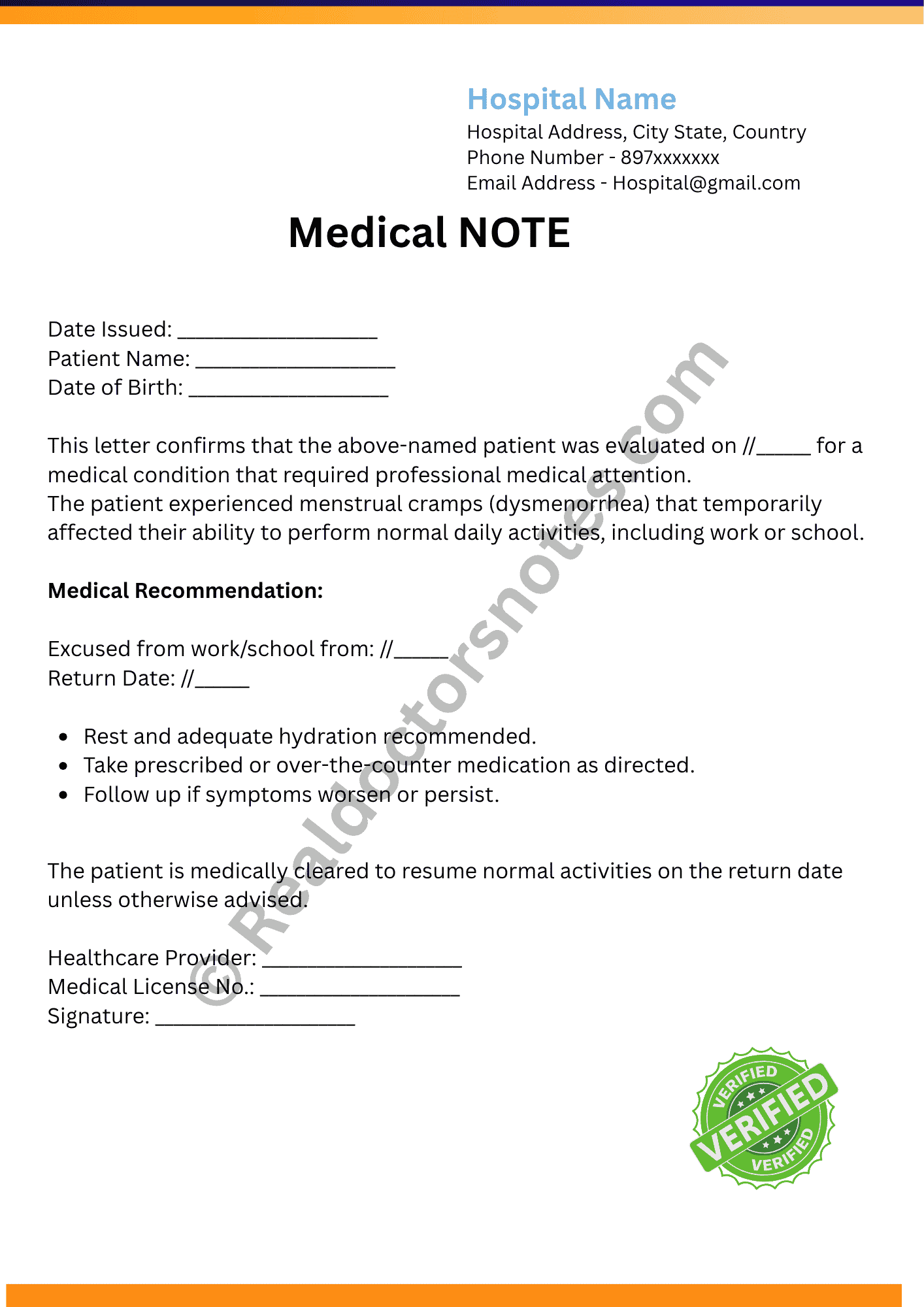
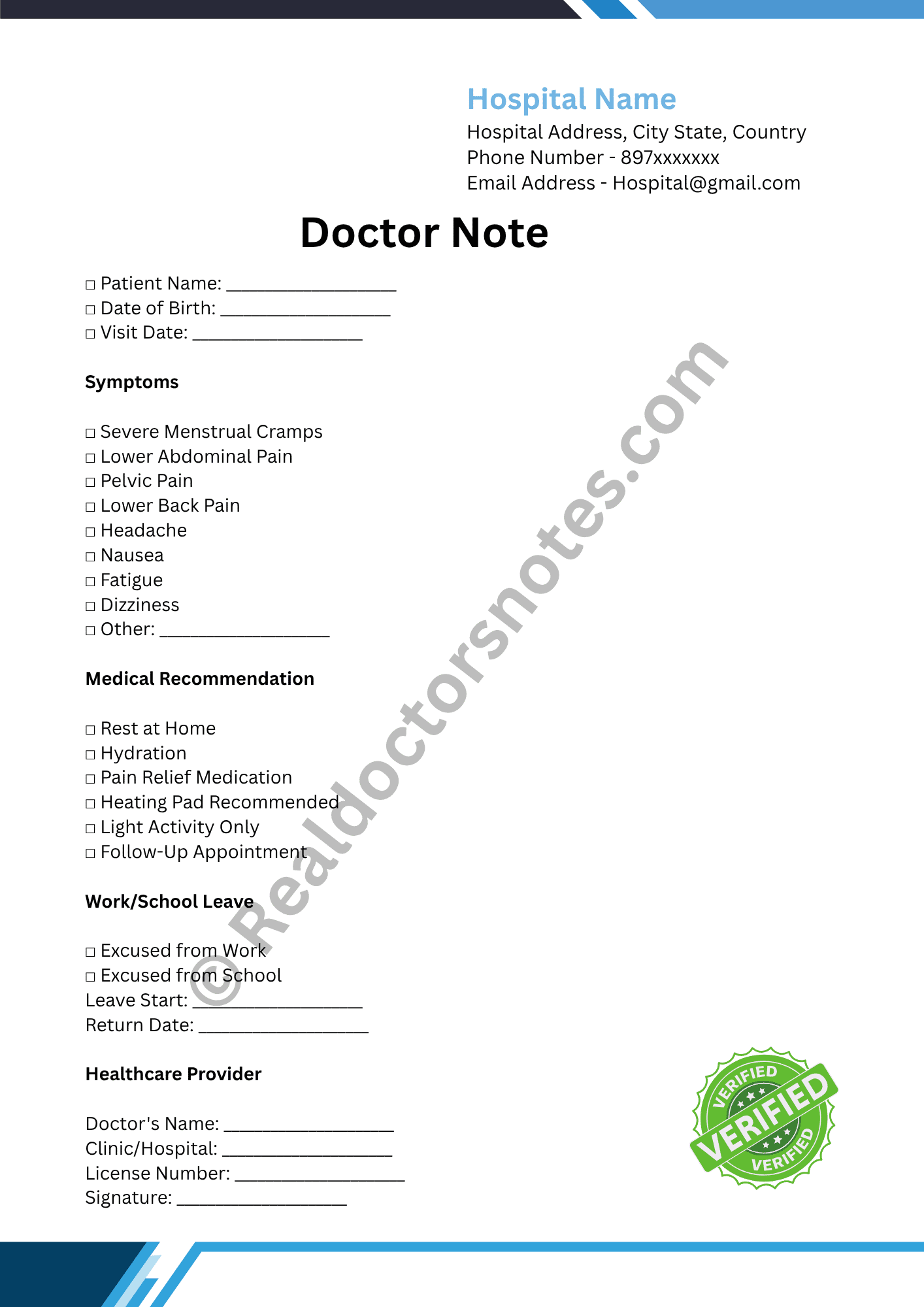
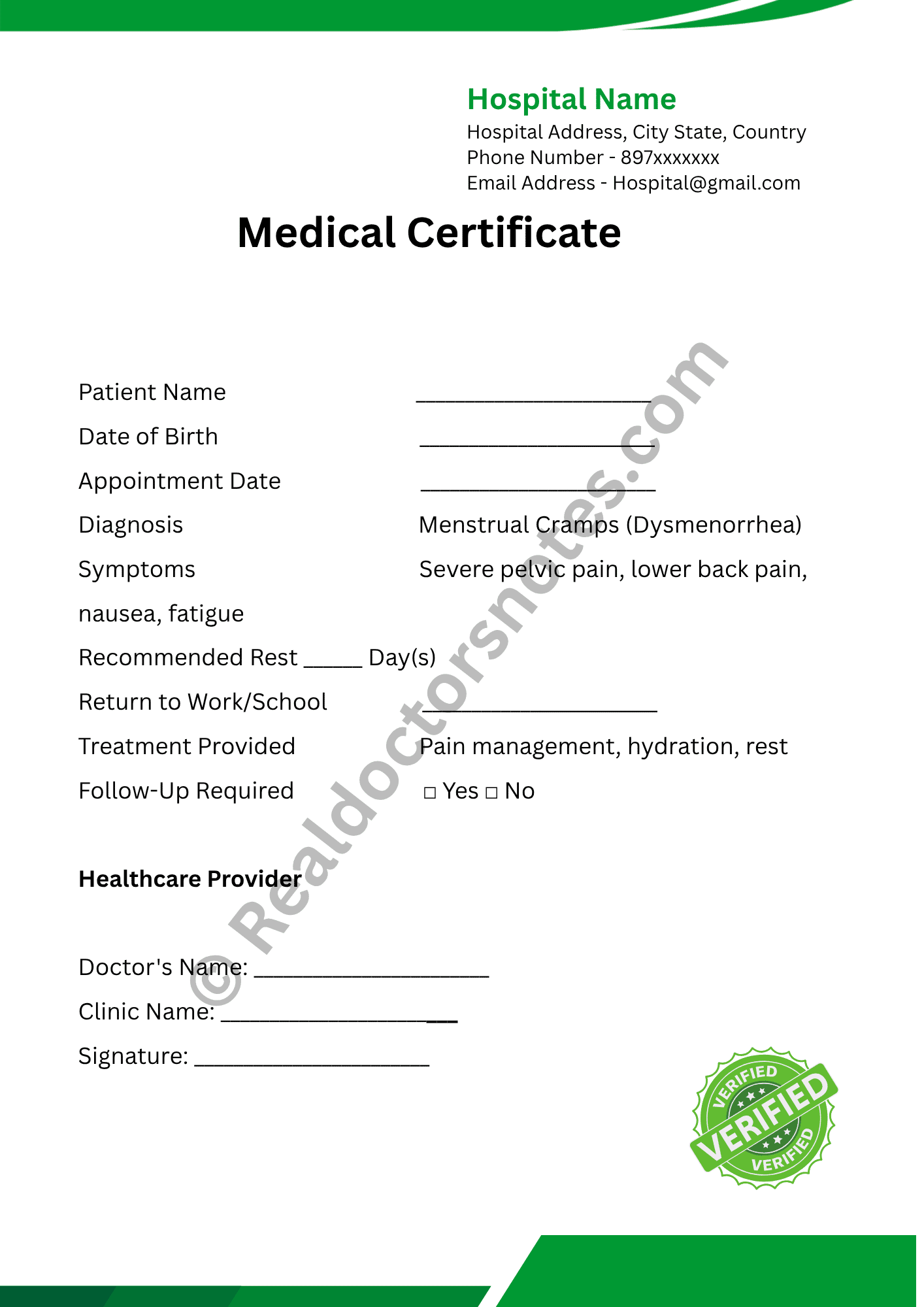
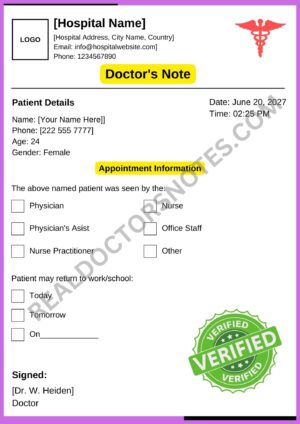
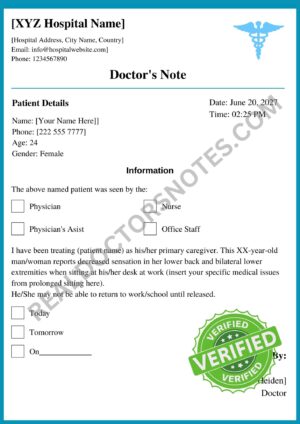
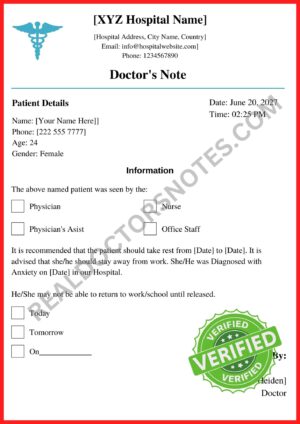
A doctor’s note is a professional medical document issued by a licensed healthcare provider after evaluating a patient’s condition. The note confirms that the individual was examined or consulted and, if medically appropriate, was advised to take time away from work, school, or other responsibilities due to menstrual pain or a related medical condition.
The exact format may vary between healthcare providers and clinics, but most doctor’s notes include the following information.
| Information | Description |
|---|---|
| Patient’s Name | Full legal name of the patient |
| Consultation Date | Date of the medical appointment |
| Medical Assessment | Confirmation that the patient was evaluated |
| Functional Limitation | Statement that symptoms may temporarily affect daily activities |
| Recommended Leave | Dates for approved absence, if medically appropriate |
| Return Date | Expected date to resume normal activities |
| Follow-Up Instructions | Additional care or follow-up if required |
| Healthcare Provider’s Name | Name and professional designation |
| Clinic Information | Clinic name, address, and contact details |
| Signature | Provider’s signature or authorized electronic signature |
Note: A legitimate doctor’s note does not usually include unnecessary personal medical details unless the patient authorizes their disclosure or the law requires it.
Can You Get a Doctor’s Note Online for Period Cramps?
Yes, in many cases, telehealth services allow patients to consult a licensed healthcare provider remotely.
During an online consultation, the provider may:
- Review your symptoms
- Ask about your medical history
- Discuss previous treatments
- Determine whether a doctor’s note is medically appropriate
- Recommend medications or follow-up care
However, if symptoms suggest a more serious condition, the provider may recommend an in-person examination or additional testing before making treatment decisions.
Availability of online medical notes depends on local regulations, healthcare providers, and the patient’s specific situation.
How Long Can a Doctor Excuse You from Work or School?
The duration of medical leave depends on the healthcare provider’s assessment.
Possible recommendations may include:
- One day for mild but disruptive symptoms
- Two to three days for more severe pain
- Longer leave if an underlying medical condition or complications require additional treatment
There is no standard duration for every patient. The decision is based on symptom severity, diagnosis, treatment plan, and expected recovery.
Doctor’s Note for Work Due to Period Cramps
Employees whose menstrual symptoms significantly interfere with job performance may need documentation for:
- Sick leave requests
- Attendance records
- Human resources requirements
- Workplace accommodations when appropriate
A doctor’s note confirms that the employee was medically evaluated and provides the recommended period of absence if needed.
Doctor’s Note for School Due to Period Cramps
Students may require medical documentation after missing:
- Classes
- Laboratory sessions
- Practical exams
- Clinical rotations
- Athletic activities
Schools and universities have different attendance policies, so students should review their institution’s requirements.
FAQs
1. Can I get a doctor’s note for period cramps?
Yes. If severe menstrual cramps prevent you from attending work, school, or other responsibilities, a healthcare provider may issue a doctor’s note after evaluating your condition.
2. Can urgent care provide a doctor’s note?
Many urgent care clinics can evaluate menstrual pain and provide medical documentation if appropriate.
3. Can I get a doctor’s note online for period cramps?
In many areas, licensed telehealth providers may evaluate your symptoms virtually and determine whether a doctor’s note is appropriate. Availability depends on local regulations and provider policies.
4. How many days can a doctor excuse me for period cramps?
The duration varies depending on symptom severity, diagnosis, and the healthcare provider’s assessment. Some patients may need one day of rest, while others may require additional time.
5. Can my employer reject a doctor’s note?
Employer policies vary by workplace and local laws. Employers may verify documentation or follow internal attendance procedures.





Reviews
There are no reviews yet.