![Real Doctors Note For Work and School [Get in 5 Minutes]](https://realdoctorsnotes.com/wordpress/wp-content/uploads/2025/11/2.png)
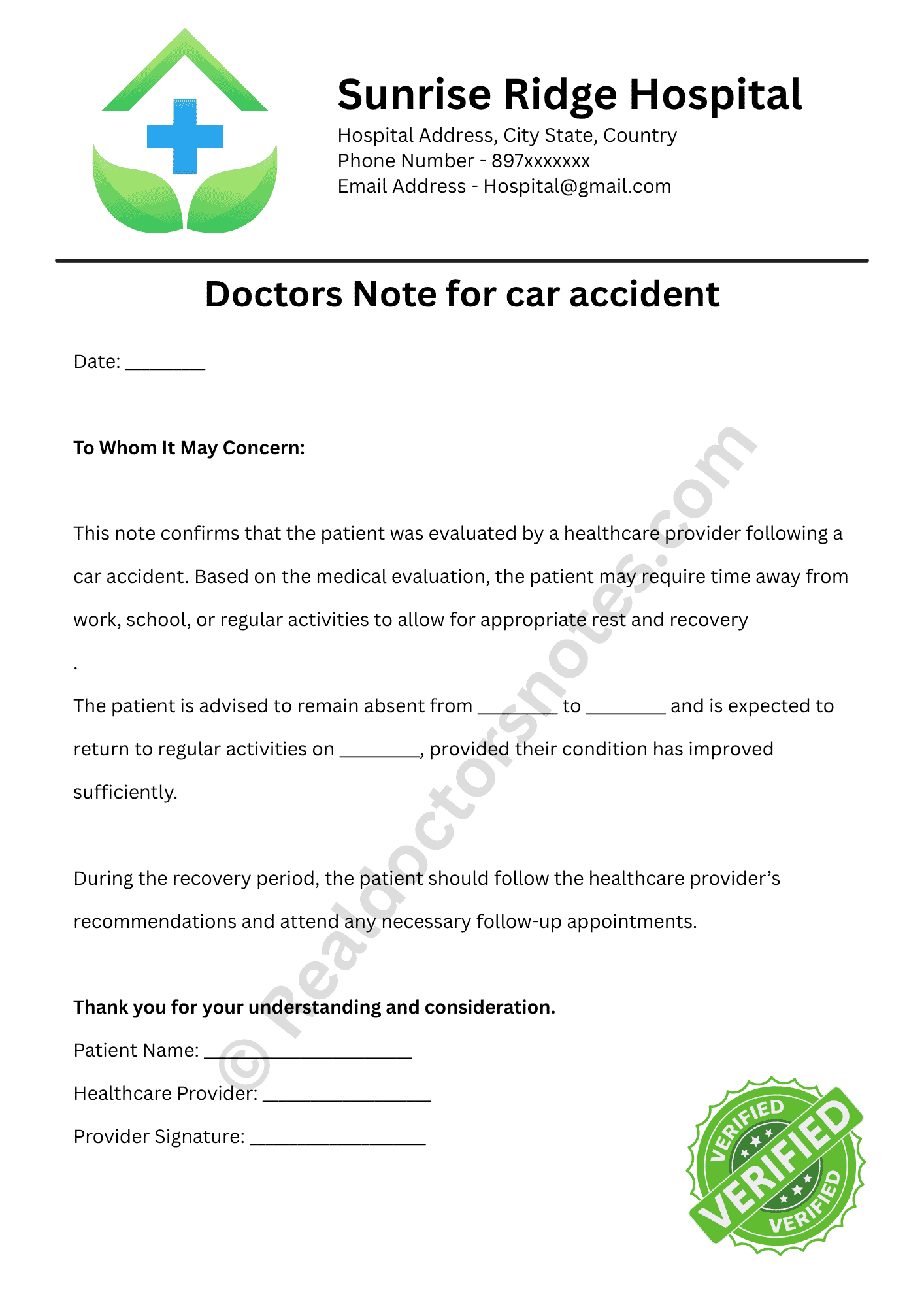
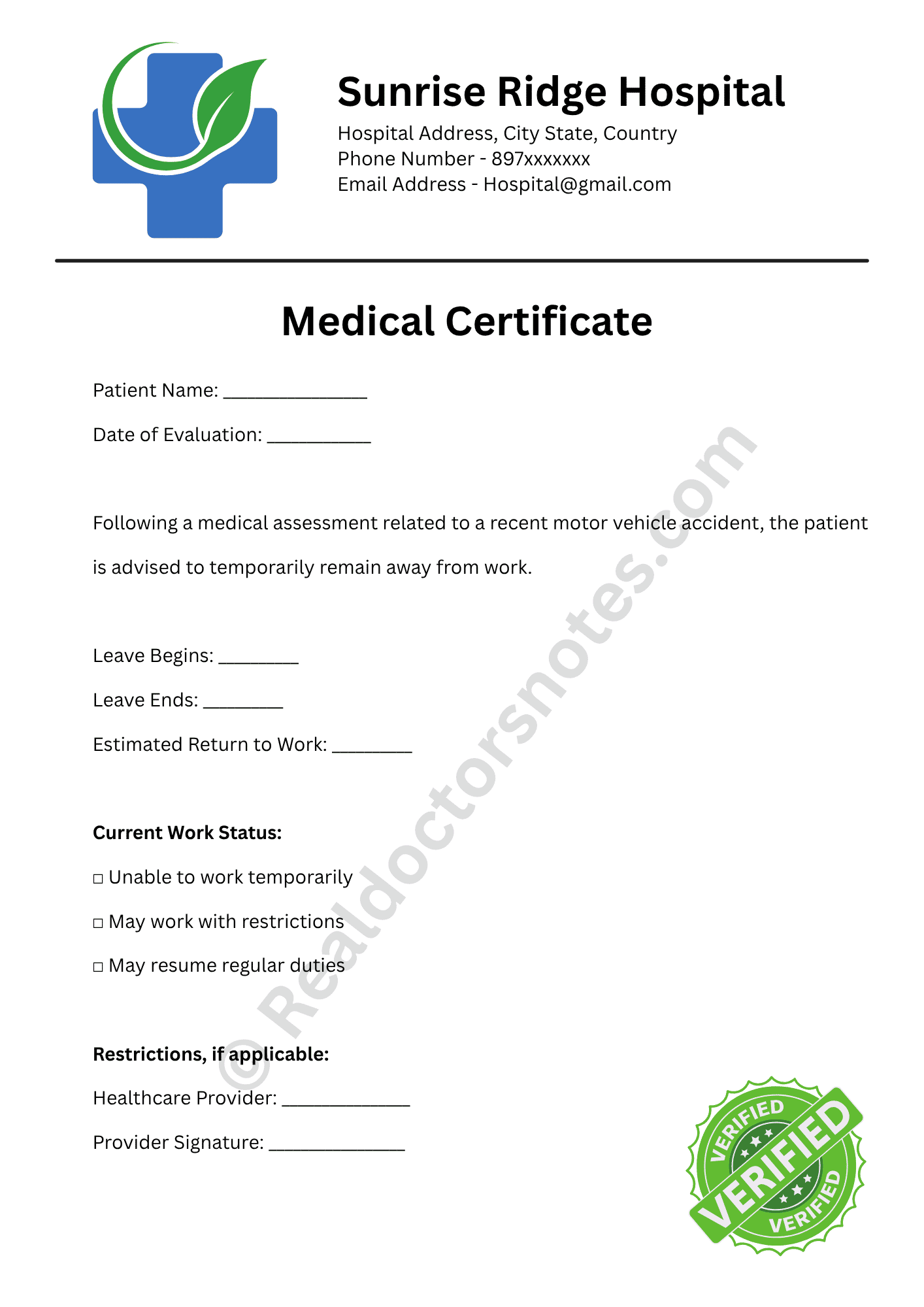
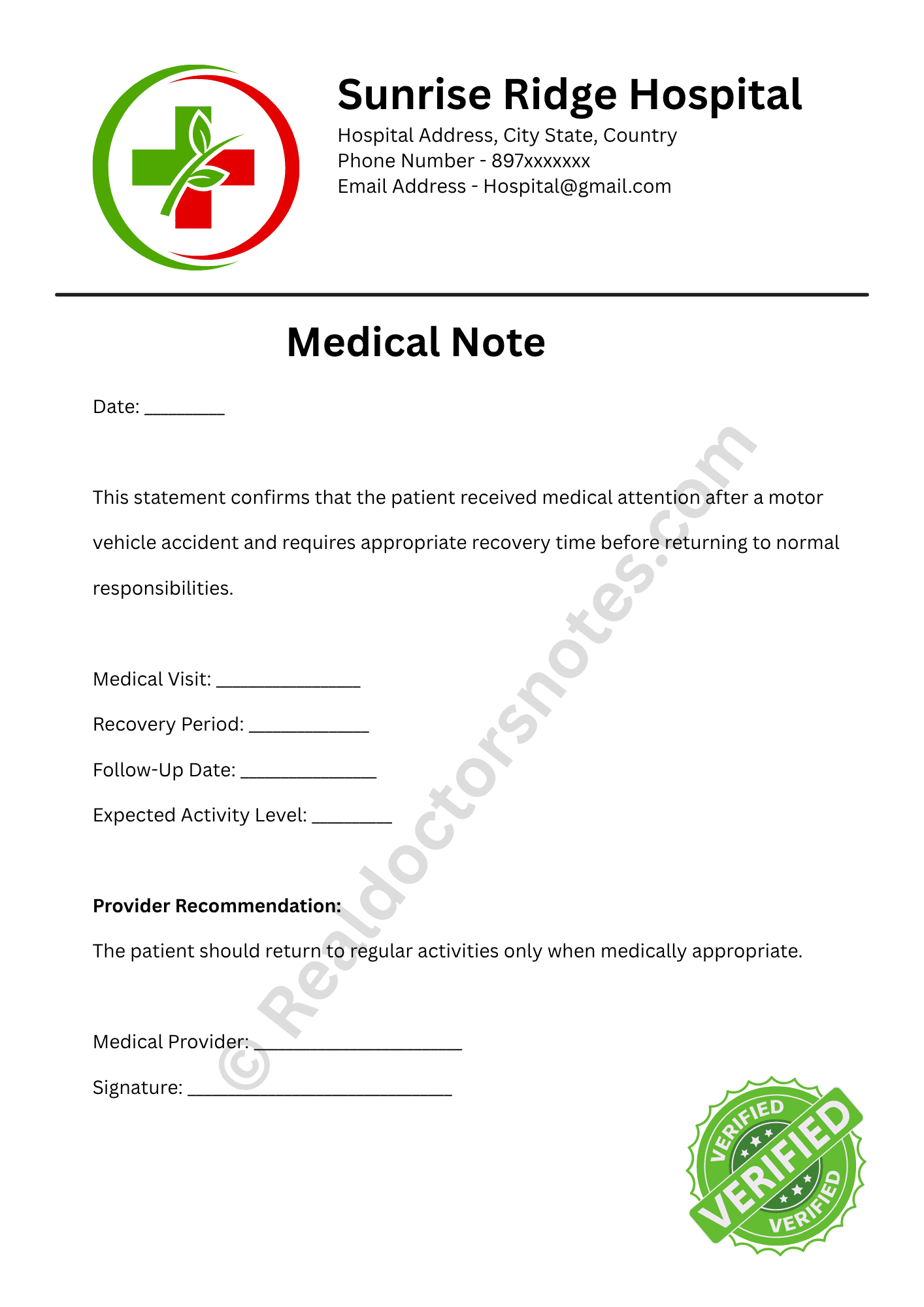
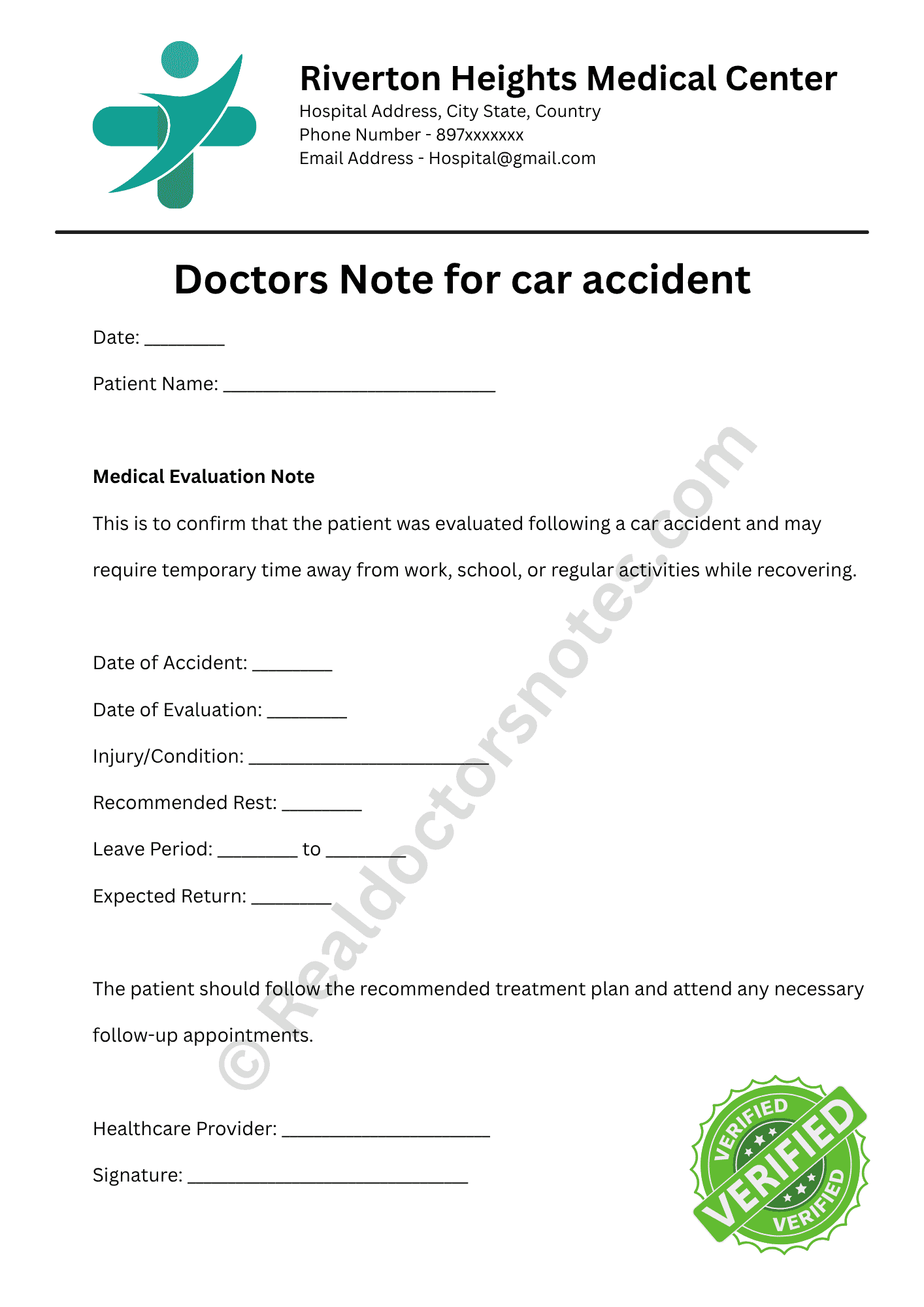
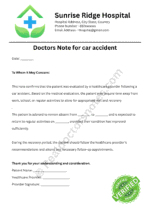
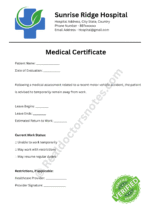
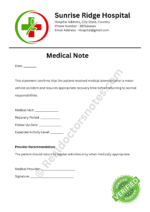
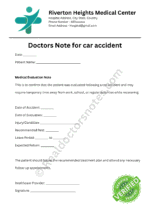


Doctors note for car accident is a medical document provided after a healthcare evaluation following a vehicle collision. It confirms that an individual received medical attention and may include information about injury assessment, treatment recommendations, activity limitations, and recovery guidance.
After a car accident, some injuries may not appear immediately. A healthcare provider may recommend rest, follow-up appointments, physical therapy, or temporary restrictions depending on the severity of injuries. Medical documentation may help support workplace absences, school accommodations, insurance communication, and personal health records.
Related Post:
- Doctors Note for neck pain
- Doctors Note for back pain
- Doctor note for head injury
- Emergency Room Real Doctors Note
- College absence doctor note
Why You May Need a Doctor’s Note After a Car Accident
A car accident can affect daily activities, work responsibilities, and physical abilities. A doctor’s note may be needed when medical recovery affects normal routines.
Common reasons include:
- Taking time away from work
- Recovering from accident-related injuries
- Attending medical appointments
- Completing physical therapy sessions
- Following activity restrictions
- Requesting workplace accommodations
- Documenting injuries for personal records
- Supporting insurance-related communication
- Managing recovery after emergency treatment
- Returning to work after healing
Common Injuries After a Car Accident
Car accidents can cause different types of injuries depending on the impact, body position, and severity of the collision.
Whiplash Injuries
Whiplash is one of the most common injuries after a vehicle accident. It happens when the neck moves suddenly backward and forward due to the force of impact.
Common symptoms include:
- Neck pain
- Neck stiffness
- Headaches
- Shoulder discomfort
- Reduced neck movement
- Muscle tenderness
- Fatigue
Some people experience symptoms immediately, while others may notice discomfort several days after the accident.
Back and Spinal Injuries
The force from a collision can affect the muscles, discs, and structures around the spine.
Possible symptoms include:
- Lower back pain
- Upper back discomfort
- Muscle spasms
- Limited movement
- Difficulty sitting or standing
- Nerve-related symptoms
Medical evaluation can help determine the appropriate treatment and recovery plan.
Head Injuries and Concussions
Head injuries may occur during a collision even without visible external damage.
Possible symptoms include:
- Headache
- Dizziness
- Confusion
- Memory difficulties
- Sensitivity to light
- Balance problems
- Fatigue
A healthcare provider can evaluate symptoms and recommend appropriate care.
Broken Bones and Fractures
The impact of a car accident may cause fractures in different areas of the body.
Common fracture locations include:
- Arms
- Legs
- Hands
- Ribs
- Shoulders
Recovery may involve immobilization, medication, physical therapy, or follow-up care.
Soft Tissue Injuries
Soft tissue injuries affect muscles, tendons, and ligaments.
Examples include:
- Muscle strains
- Sprains
- Bruising
- Swelling
- Joint stiffness
These injuries may require rest, rehabilitation, and gradual return to normal activities.
Knee and Joint Injuries
Sudden impact during a collision may affect joints such as:
- Knees
- Shoulders
- Hips
- Wrists
Symptoms may include:
- Pain
- Swelling
- Reduced movement
- Joint weakness
Symptoms That May Appear After a Car Accident
Some accident-related symptoms may appear hours or days later because inflammation and soft tissue damage can develop gradually.
Common symptoms include:
- Neck pain
- Back pain
- Headaches
- Muscle soreness
- Fatigue
- Bruising
- Swelling
- Tingling sensations
- Numbness
- Difficulty moving
- Dizziness
- Sleep problems
A healthcare provider can evaluate whether these symptoms require treatment or activity restrictions.
When Should You See a Doctor After a Car Accident?
Medical evaluation may be important after a collision, especially when symptoms appear or worsen.
Seek medical attention if you experience:
- Severe pain
- Difficulty breathing
- Loss of consciousness
- Severe headaches
- Confusion
- Numbness or weakness
- Persistent dizziness
- Worsening symptoms
- Limited movement
- Signs of serious injury
Early evaluation can help identify injuries and support proper recovery.
Types of Medical Documentation After a Car Accident
Different types of medical documents may be used depending on the situation.
Doctor’s Note
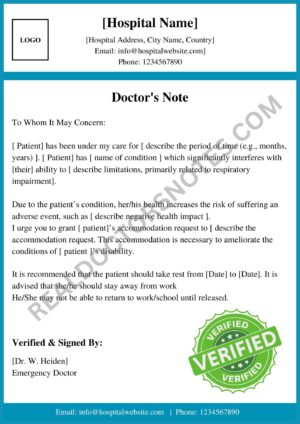
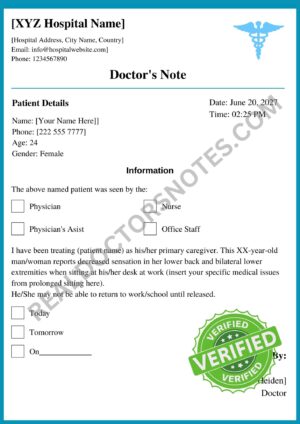
A doctor’s note may confirm medical evaluation and provide recommendations regarding rest, restrictions, or time away from responsibilities.
Medical Report
A medical report provides more detailed information about:
- Injury evaluation
- Diagnosis
- Treatment provided
- Follow-up recommendations
Work Restriction Letter
A healthcare provider may provide documentation describing temporary limitations, such as avoiding heavy lifting or certain physical activities.
Return-to-Work Note
A return-to-work note may confirm that an individual can resume job responsibilities after recovery or explain any required workplace adjustments.
Physical Therapy Documentation
Physical therapy records may document rehabilitation progress and treatment recommendations.
How a Doctor’s Note Can Help After a Car Accident
Medical documentation may help explain how an accident affects daily activities.
A doctor’s note may support:
- Workplace absence requests
- School attendance documentation
- Recovery restrictions
- Medical appointment verification
- Communication with employers
- Personal medical records
The requirements for documentation may vary depending on the employer, school, insurance company, or location.
Recovery Timeline After a Car Accident
Recovery depends on the type of injury, severity, treatment, and individual health.
First Few Days After the Accident
During this period:
- Pain or swelling may appear
- Medical evaluation may be recommended
- Initial treatment may begin
First Few Weeks
Many people begin:
- Following treatment plans
- Attending therapy sessions
- Improving mobility
- Managing pain symptoms
Several Months After the Accident
Some injuries may require:
- Continued rehabilitation
- Follow-up appointments
- Gradual return to activities
Every recovery timeline is different.
Returning to Work After a Car Accident
Returning to work depends on injury recovery and job requirements.
Factors considered include:
- Type of injury
- Physical demands of the job
- Pain levels
- Mobility
- Treatment progress
- Healthcare provider recommendations
Examples of jobs that may require additional recovery consideration:
- Construction workers
- Drivers
- Warehouse employees
- Healthcare workers
- Office employees
Car Accident Recovery and Physical Therapy
Physical therapy may be recommended for certain injuries to help restore movement and strength.
Benefits may include:
- Improving flexibility
- Reducing stiffness
- Strengthening muscles
- Improving balance
- Restoring normal movement
- Supporting long-term recovery
Following a recommended rehabilitation plan may help improve recovery outcomes.
Medical Documentation for Insurance Purposes
After a car accident, medical records may help provide information about accident-related injuries and treatment.
Documentation may include:
- Date of medical evaluation
- Injury assessment
- Treatment recommendations
- Recovery restrictions
- Follow-up care instructions
Insurance requirements vary, so individuals should follow the guidance provided by their insurance company and healthcare providers.
Emotional Effects After a Car Accident
A car accident can affect emotional well-being as well as physical health.
Some individuals may experience:
- Stress
- Anxiety
- Fear of driving
- Sleep difficulties
- Emotional distress
- Difficulty concentrating
Support from healthcare professionals, counselors, or trusted individuals may help during recovery.
Preventing Long-Term Problems After an Accident
Helpful recovery practices include:
- Attend follow-up appointments
- Follow treatment recommendations
- Complete physical therapy when advised
- Avoid activities that worsen symptoms
- Gradually return to normal activities
- Report new or worsening symptoms
- Maintain healthy habits
How Many Days Off Work Do You Need After a Car Accident?
The number of days you need off work after a car accident depends on the severity of your injuries, your symptoms, and the type of work you do. Someone with minor bruising or soreness may need only a short period of rest, while a person with whiplash, a fracture, a concussion, or injuries requiring surgery may need several days or weeks to recover. Jobs involving heavy lifting, driving, prolonged standing, or physical activity may require additional recovery time or temporary work restrictions.
A healthcare provider can assess your injuries and recommend an appropriate period of medical leave. If necessary, they may provide a doctor’s note explaining the recommended absence dates, work restrictions, and expected return-to-work timeline. For example, you may be advised to avoid heavy lifting, reduce working hours, or perform light duties while recovering. If your symptoms continue, your provider may reassess your condition and recommend additional time off.
Before returning to work, consider whether you can perform your duties safely and comfortably. Follow your healthcare provider’s advice and inform your employer about any necessary restrictions. Seek emergency medical attention for serious symptoms such as difficulty breathing, severe headache, confusion, weakness, or worsening pain after an accident.
FAQs
Q. Can I get a doctor’s note after a car accident?
Yes. A healthcare provider may provide medical documentation after evaluating accident-related injuries and recovery needs.
Q. How soon should I see a doctor after a car accident?
It is recommended to seek medical evaluation if you experience pain, discomfort, or concerning symptoms after an accident.
Q. Can a doctor’s note help with insurance?
Medical documentation may help provide information about injuries and treatment, although insurance decisions depend on individual policies and circumstances.
Q. Can I get work restrictions after a car accident?
Yes. A healthcare provider may recommend temporary restrictions if injuries affect your ability to perform certain job duties.
Q. What injuries are common after car accidents?
Common injuries include whiplash, back injuries, fractures, soft tissue injuries, and head injuries.
Q. Can pain appear days after a crash?
Yes. Some injuries, especially soft tissue injuries, may become noticeable after several hours or days.
Q. How long does whiplash recovery take?
Recovery varies depending on injury severity, treatment, and individual health.
Q. Can I return to work after a car accident?
Many people return to work after recovery, but timing depends on symptoms, job demands, and medical advice.
Q. Do I need physical therapy after an accident?
Physical therapy may be recommended for certain injuries to improve movement and strength.
Q. Can a car accident cause headaches?
Yes. Headaches may occur due to neck strain, head impact, stress, or other accident-related factors.




Reviews
There are no reviews yet.