![Real Doctors Note For Work and School [Get in 5 Minutes]](https://realdoctorsnotes.com/wordpress/wp-content/webp-express/webp-images/uploads/2025/11/2.png.webp)
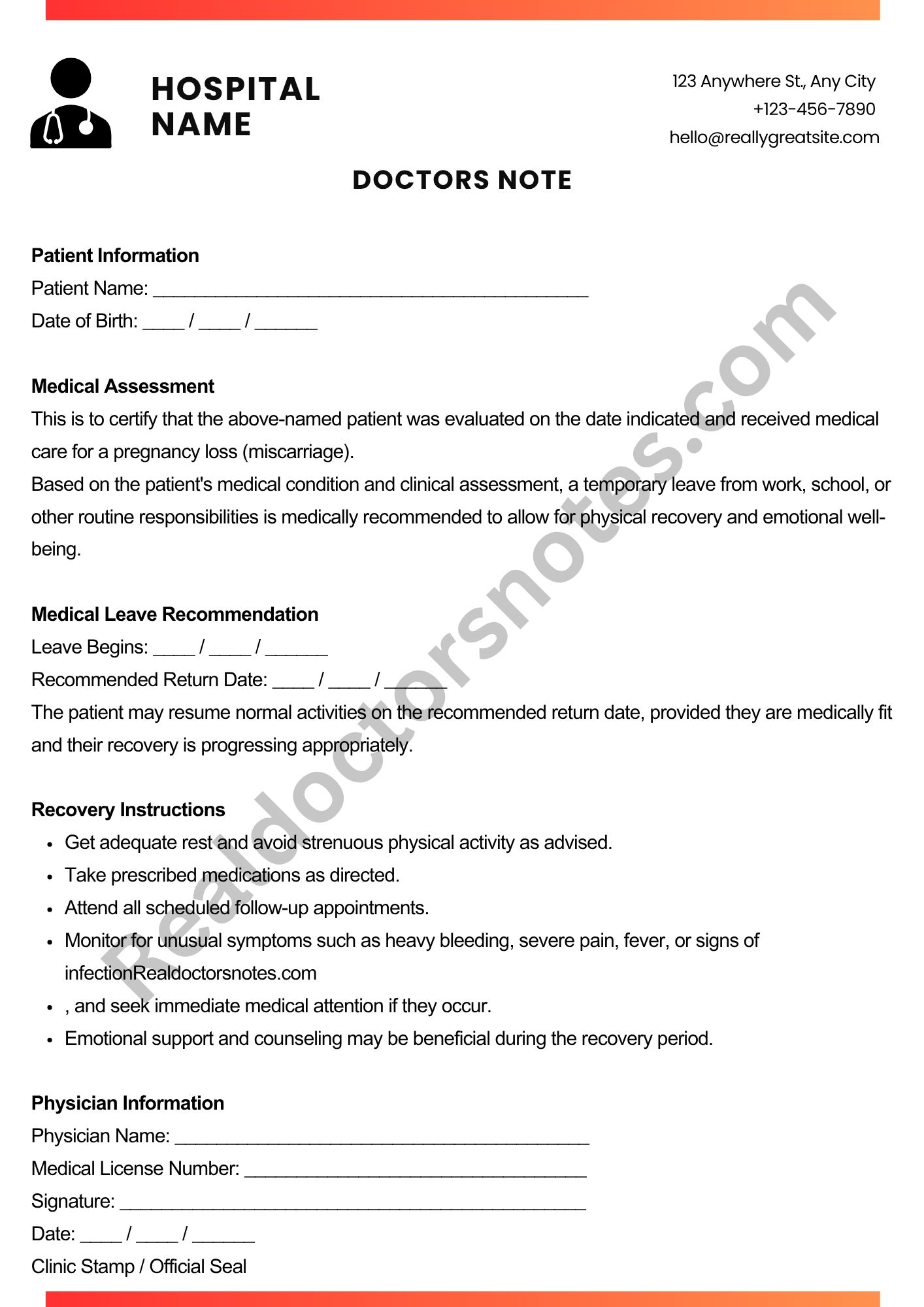
Doctors note for miscarriage may be provided when a healthcare provider recommends time for physical recovery, follow-up care, or emotional support after pregnancy loss. A miscarriage is the loss of a pregnancy before 20 weeks of pregnancy. It is a medical event that can involve both physical recovery and emotional healing. While many miscarriages happen due to factors outside a person’s control, the experience can still be physically and emotionally challenging.
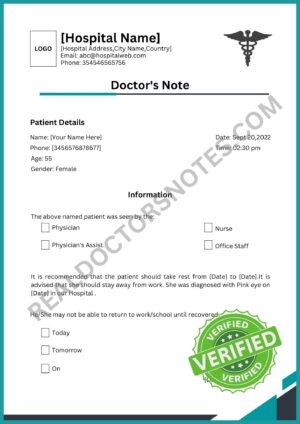
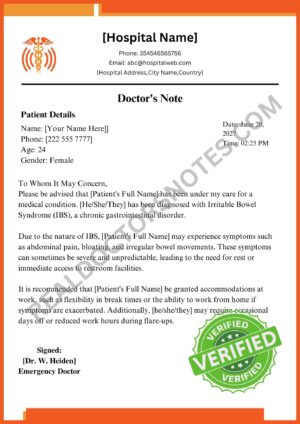
After a miscarriage, a healthcare provider may recommend time for recovery, follow-up appointments, monitoring, or emotional support. A doctor’s note for miscarriage may help document the need for temporary leave from work, school, or other responsibilities when medically appropriate.
Why Someone May Need a Doctor’s Note After a Miscarriage
Recovery after pregnancy loss can require time away from daily activities. A healthcare provider may recommend rest or medical leave depending on the individual’s physical condition and emotional well-being.
Common reasons for needing documentation include:
- Physical recovery after pregnancy loss
- Heavy bleeding or cramping
- Follow-up medical appointments
- Ultrasound examinations
- Blood tests to monitor recovery
- Medication treatment
- Surgical treatment such as dilation and curettage (D&C)
- Fatigue and weakness
- Emotional distress
- Need for counseling or mental health support
- Recovery before returning to normal activities
Different Types of Miscarriage
Threatened Miscarriage
A threatened miscarriage occurs when bleeding happens during pregnancy, but the pregnancy may still continue. Healthcare providers usually monitor symptoms and may recommend additional tests or follow-up care.
Common signs may include:
- Vaginal bleeding
- Mild abdominal cramps
- Pregnancy symptoms changing
Missed Miscarriage
A missed miscarriage occurs when pregnancy development has stopped, but the body does not immediately show signs of pregnancy loss. It is often discovered during an ultrasound examination.
Medical care may include:
- Monitoring
- Medication management
- A procedure if recommended by a healthcare provider
Complete Miscarriage
A complete miscarriage occurs when all pregnancy tissue has naturally passed from the uterus. Follow-up care may still be recommended to confirm recovery.
Possible symptoms include:
- Bleeding that gradually decreases
- Reduced pregnancy symptoms
- Cramping that improves over time
Incomplete Miscarriage
An incomplete miscarriage occurs when some pregnancy tissue remains in the uterus after pregnancy loss. Additional medical treatment may be needed to prevent complications.
Treatment options may include:
- Medication
- Monitoring
- A medical procedure when necessary
Inevitable Miscarriage
An inevitable miscarriage refers to a situation where pregnancy loss is expected due to certain medical findings, such as bleeding and changes in the cervix.
Healthcare providers may provide guidance regarding:
- Monitoring symptoms
- Treatment options
- Recovery care
Recurrent Miscarriage
Recurrent miscarriage refers to multiple pregnancy losses. Individuals experiencing recurrent miscarriages may require additional medical evaluation to identify possible contributing factors.
Evaluation may include:
- Medical history review
- Blood tests
- Imaging studies
- Specialized consultations
Physical Recovery After a Miscarriage
Physical recovery varies depending on the stage of pregnancy, treatment received, and individual health.
Common physical experiences may include:
- Vaginal bleeding
- Abdominal cramping
- Fatigue
- Hormonal changes
- Breast tenderness
- Reduced energy levels
- Need for follow-up appointments
A healthcare provider can provide guidance about when normal activities, exercise, and work responsibilities can safely resume.
Emotional Recovery After Pregnancy Loss
Miscarriage can affect emotional health in different ways. Some individuals experience grief, sadness, anxiety, frustration, or difficulty processing the loss.
Emotional recovery may involve:
- Talking with supportive family members
- Counseling or therapy
- Support groups
- Self-care activities
- Allowing time for personal healing
There is no single timeline for emotional recovery, and support from healthcare professionals may be helpful when needed.
When to Contact a Healthcare Provider After a Miscarriage
Medical attention may be needed if you experience:
- Heavy bleeding
- Severe abdominal or pelvic pain
- Fever
- Chills
- Foul-smelling vaginal discharge
- Dizziness or fainting
- Symptoms that suddenly worsen
Prompt medical evaluation can help identify and treat possible complications.
Follow-Up Medical Care After Miscarriage
Follow-up care helps ensure the body is recovering properly after pregnancy loss.
A healthcare provider may recommend:
- Physical examination
- Ultrasound
- Blood tests to monitor pregnancy hormone levels
- Review of symptoms
- Medication evaluation
- Discussion about future pregnancy planning
- Emotional health support
Returning to Work or School After Miscarriage
The time needed before returning to work or school depends on physical recovery, emotional readiness, and the type of activities involved.
Factors that may affect returning include:
- Current symptoms
- Treatment received
- Energy levels
- Physical demands of work
- Emotional well-being
- Healthcare provider’s recommendation
Some individuals may return quickly, while others may need additional recovery time.
Caring for Yourself During Miscarriage Recovery
Taking care of physical and emotional health is an important part of recovery.
Helpful steps may include:
- Getting enough rest
- Drinking adequate fluids
- Eating balanced meals
- Following medical instructions
- Taking prescribed medications
- Avoiding strenuous activities until advised
- Attending follow-up appointments
- Seeking emotional support when needed
Planning for a Future Pregnancy After Miscarriage
Many individuals go on to have healthy pregnancies after experiencing a miscarriage. The timing of another pregnancy depends on individual health, recovery, and healthcare provider recommendations.
Before planning another pregnancy, a healthcare provider may discuss:
- Physical recovery
- Medical history
- Previous pregnancy loss details
- Lifestyle factors
- Prenatal care planning
Can Miscarriage Affect Mental Health?
Pregnancy loss may affect emotional well-being. Some people experience:
- Grief
- Anxiety
- Mood changes
- Sleep difficulties
- Feelings of sadness
If emotional challenges become difficult to manage, speaking with a healthcare professional or counselor can provide additional support.
Workplace Considerations After Miscarriage
A miscarriage may require time away from work due to physical recovery, medical appointments, or emotional healing.
Workplace documentation may help explain:
- Medical absence
- Recovery requirements
- Follow-up appointments
- Temporary restrictions when applicable
Workplace policies regarding medical leave and documentation can vary.
FAQs
1. Can I get a doctor’s note after a miscarriage?
Yes. A healthcare provider may provide medical documentation when appropriate to support recovery time, appointments, or temporary leave needs.
2. How long does recovery after miscarriage take?
Recovery time varies depending on the individual’s health, pregnancy stage, treatment method, and emotional needs.
3. When can I return to work after miscarriage?
The timing depends on physical symptoms, emotional readiness, type of work, and healthcare provider guidance.
4. Is emotional recovery after miscarriage different for everyone?
Yes. Everyone experiences pregnancy loss differently, and emotional healing does not follow a fixed timeline.
5. Can I exercise after a miscarriage?
A healthcare provider can advise when it is safe to restart exercise based on recovery progress.
6. Will I need follow-up appointments after miscarriage?
Many individuals have follow-up care to confirm recovery and discuss any ongoing concerns.
7. Can miscarriage happen without heavy bleeding?
Yes. Some miscarriages may have limited symptoms and are discovered during medical evaluation.
8. Can stress cause a miscarriage?
Most miscarriages occur due to medical or biological factors. Everyday stress is generally not considered a common direct cause of miscarriage.
9. Do I need surgery after every miscarriage?
No. Treatment depends on the individual’s situation and healthcare provider’s recommendation.
10. Can I travel after a miscarriage?
Travel decisions depend on recovery, symptoms, treatment received, and healthcare advice.





Reviews
There are no reviews yet.