![Real Doctors Note For Work and School [Get in 5 Minutes]](https://realdoctorsnotes.com/wordpress/wp-content/uploads/2025/11/2.png)


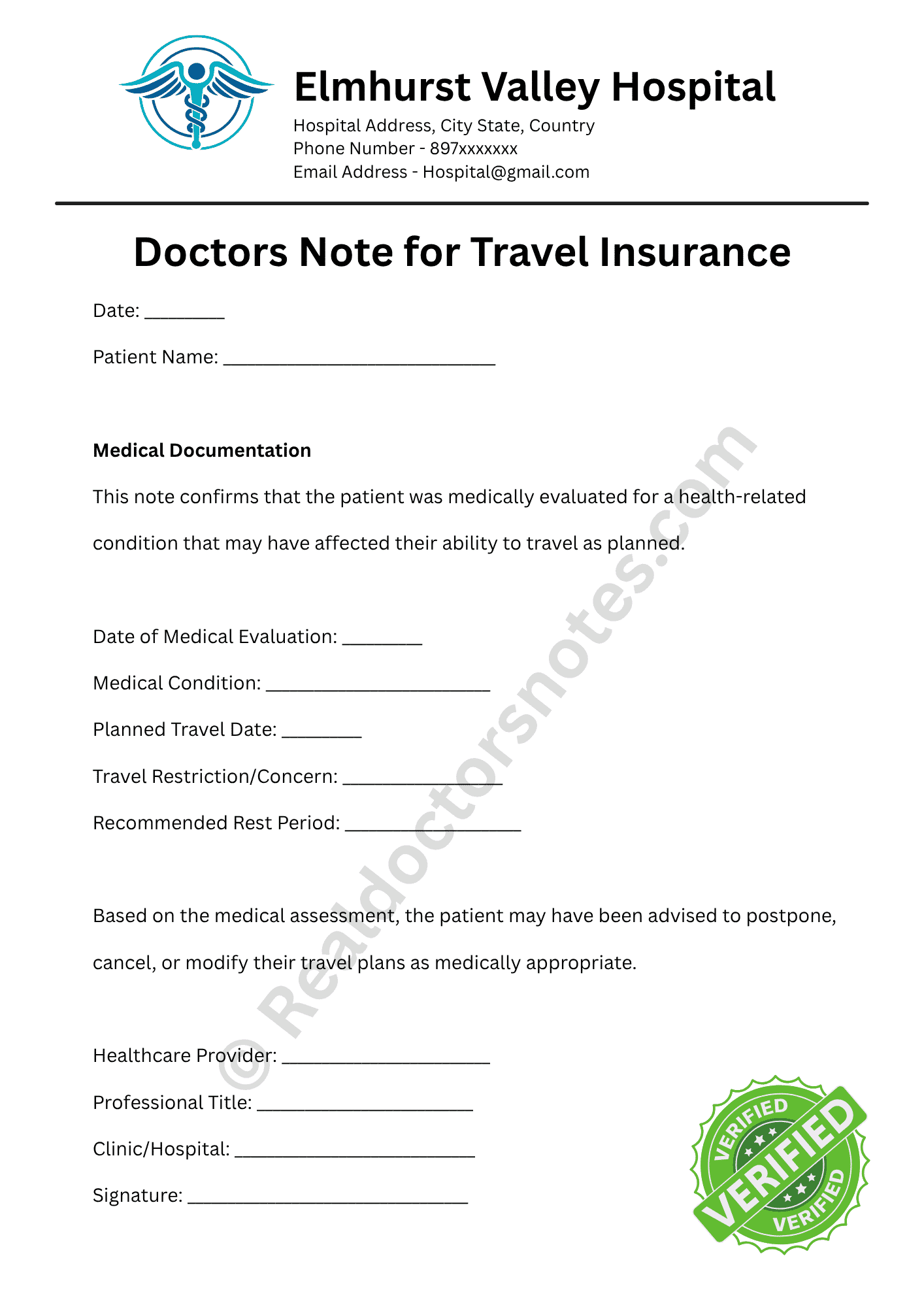

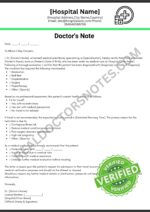

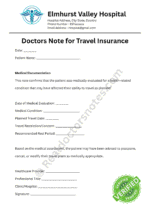

A doctor’s note for travel insurance is medical documentation that explains how an illness, injury, or medical condition affected a person’s ability to travel. Depending on the travel insurance policy, this documentation may support claims for trip cancellation, trip interruption, emergency medical treatment, or other covered travel disruptions. Insurance companies typically review medical records alongside policy terms before making a claim decision.
Situations where medical documentation may be requested include:
- Sudden illness before departure
- Injury before traveling
- Emergency hospitalization
- Physician recommendation not to travel
- Pregnancy-related medical complications
- Serious infectious illnesses
- Medical emergencies during a trip
- Recovery after surgery
- Unexpected worsening of a medical condition
- Emergency evacuation due to illness or injury
Related Post:
- Doctors Note for Airline Refund
- Emergency Excuses to Not Go to Work
- Verifiable doctors note
- Hospital Real Doctors Note
Common Travel Situations That May Require Medical Documentation
Unexpected health issues can disrupt travel plans. Medical documentation helps explain why travel was delayed, interrupted, or cancelled.
Illness Before Departure – A sudden illness may make it unsafe to begin a planned trip.
Injury Before Traveling – Fractures, sprains, or other injuries may limit mobility and prevent travel.
Emergency Hospitalization – Hospital admission before or during a trip may require medical records for insurance purposes.
Pregnancy-Related Complications – Certain pregnancy complications may require postponing or cancelling travel based on medical advice.
Infectious Diseases – Contagious illnesses may require isolation or physician-recommended travel restrictions.
Emergency Surgery – Surgical treatment before departure may delay travel until recovery is complete.
Serious Medical Emergency During Travel – Unexpected illness or injury while away from home may require emergency treatment and insurance documentation.
Medical Evacuation – Some medical emergencies require transportation to another healthcare facility for specialized treatment.
Physician-Advised Trip Cancellation – A healthcare provider may recommend postponing travel when it is medically unsafe.
Fit-to-Fly Restrictions – Certain health conditions may temporarily prevent safe air travel.
Types of Travel Insurance Claims That May Use Medical Documentation
Trip Cancellation Claims
Medical documentation may explain why a planned trip could not begin due to illness or injury.
Trip Interruption Claims
If travel begins but must end early because of a medical condition, documentation may support the interruption claim.
Emergency Medical Expense Claims
Healthcare records may document treatment received while traveling.
Medical Evacuation Claims
Medical reports may help explain why emergency transportation was medically necessary.
Travel Delay Claims
Some insurance policies may request medical documentation when illness causes significant travel delays.
What Information Insurance Companies Commonly Request
Travel insurance providers often ask for medical information that supports the reason for the claim.
Documentation may include:
- Date of medical evaluation
- Description of the illness or injury
- Date symptoms began
- Treatment provided
- Medical recommendation regarding travel
- Expected recovery period
- Healthcare provider information
- Signature and evaluation date
Documentation requirements vary between insurance companies and policy types.
How the Travel Insurance Claim Process Works
Understanding the claim process may help travelers prepare the required documents.
Step 1: Seek Medical Evaluation
Visit a licensed healthcare provider as soon as possible after becoming ill or injured.
Step 2: Obtain Medical Documentation
Request copies of any medical notes, reports, prescriptions, or treatment summaries.
Step 3: Notify Your Insurance Provider
Contact your travel insurance company according to your policy requirements.
Step 4: Submit Supporting Documents
Provide medical records along with receipts, travel confirmations, and claim forms.
Step 5: Respond to Additional Requests
Insurance providers may request additional medical information before making a claim decision.
Medical Conditions That May Affect Travel Plans
Certain medical conditions may temporarily make travel unsafe or impractical.
Examples include:
- Respiratory infections
- Heart conditions
- Recent surgery
- Broken bones
- Severe gastrointestinal illness
- Neurological disorders
- Pregnancy complications
- High fever
- Serious allergic reactions
- Infectious diseases requiring isolation
The impact on travel depends on the individual’s health and healthcare provider’s recommendation.
Traveling While Recovering From an Illness
Before traveling after an illness or injury, healthcare providers may consider several factors.
These include:
- Overall recovery progress
- Energy levels
- Ability to tolerate long flights
- Medication schedule
- Follow-up medical appointments
- Risk of worsening symptoms
- Risk of spreading infectious illness
- Availability of medical care at the destination
Travel decisions should always be based on individual medical advice.
Preparing Medical Documents Before International Travel
Keeping medical information organized before traveling may help if unexpected health issues arise.
Helpful documents include:
- Current prescription list
- Medication details
- Copies of medical records
- Vaccination records when required
- Emergency contact information
- Health insurance information
- Travel insurance policy documents
- Healthcare provider contact details
Digital copies can also be useful if printed documents are lost.
Common Reasons Travel Insurance Claims Are Delayed
Claims may take longer when required information is incomplete.
Common reasons include:
- Missing medical documentation
- Incomplete claim forms
- Missing travel receipts
- Delayed claim submission
- Missing physician signature
- Insufficient medical evidence
- Missing proof of travel cancellation
- Missing hospital records
Reviewing all documentation before submission may help avoid unnecessary delays.
Tips for a Smoother Travel Insurance Claim
Travelers can improve the claim process by keeping organized records.
Helpful tips include:
- Save all medical receipts.
- Keep copies of prescriptions.
- Store travel booking confirmations.
- Follow your insurer’s instructions carefully.
- Submit claims before policy deadlines.
- Keep copies of all submitted documents.
- Respond quickly if additional information is requested.
Travel Health Checklist Before Departure
Preparing before travel may reduce unexpected problems.
Checklist:
- Review your travel insurance policy.
- Carry enough prescription medication.
- Keep emergency contact numbers available.
- Pack a basic first-aid kit.
- Save digital copies of important documents.
- Check destination health requirements.
- Confirm vaccination requirements when applicable.
- Know the location of nearby healthcare facilities.
FAQs
Q. Can I get a doctor’s note before cancelling my trip?
Yes. If a healthcare provider determines that traveling is not medically advisable, they may provide appropriate documentation.
Q. Does every travel insurance claim require medical documentation?
No. Requirements depend on the type of claim and the insurance policy.
Q. Can telehealth providers issue travel-related medical documentation?
Some licensed healthcare providers may offer documentation after an appropriate telehealth consultation, depending on local regulations and the situation.
Q. What documents should I keep for a travel insurance claim?
Medical records, receipts, prescriptions, travel itineraries, and claim forms are commonly requested.
Q. Can I file a claim if I become sick while traveling?
Many travel insurance policies include coverage for eligible medical emergencies during a trip, subject to policy terms.
Q. Are pre-existing medical conditions covered?
Coverage for pre-existing conditions varies by insurer and policy. Review your policy carefully before traveling.
Q. Can I travel after surgery?
Travel timing depends on your recovery and your healthcare provider’s recommendation.
Q. What happens if my insurance claim is incomplete?
The insurance company may request additional information before processing the claim.
Q. Can airlines request medical documentation?
Yes. In some situations, airlines may ask for documentation such as a fit-to-fly certificate or medical clearance.
Q. What is a fit-to-fly certificate?
A fit-to-fly certificate is a document stating that a healthcare provider has evaluated a person’s medical condition and considers them medically able to travel by air.




Reviews
There are no reviews yet.