![Real Doctors Note For Work and School [Get in 5 Minutes]](https://realdoctorsnotes.com/wordpress/wp-content/webp-express/webp-images/uploads/2025/11/2.png.webp)
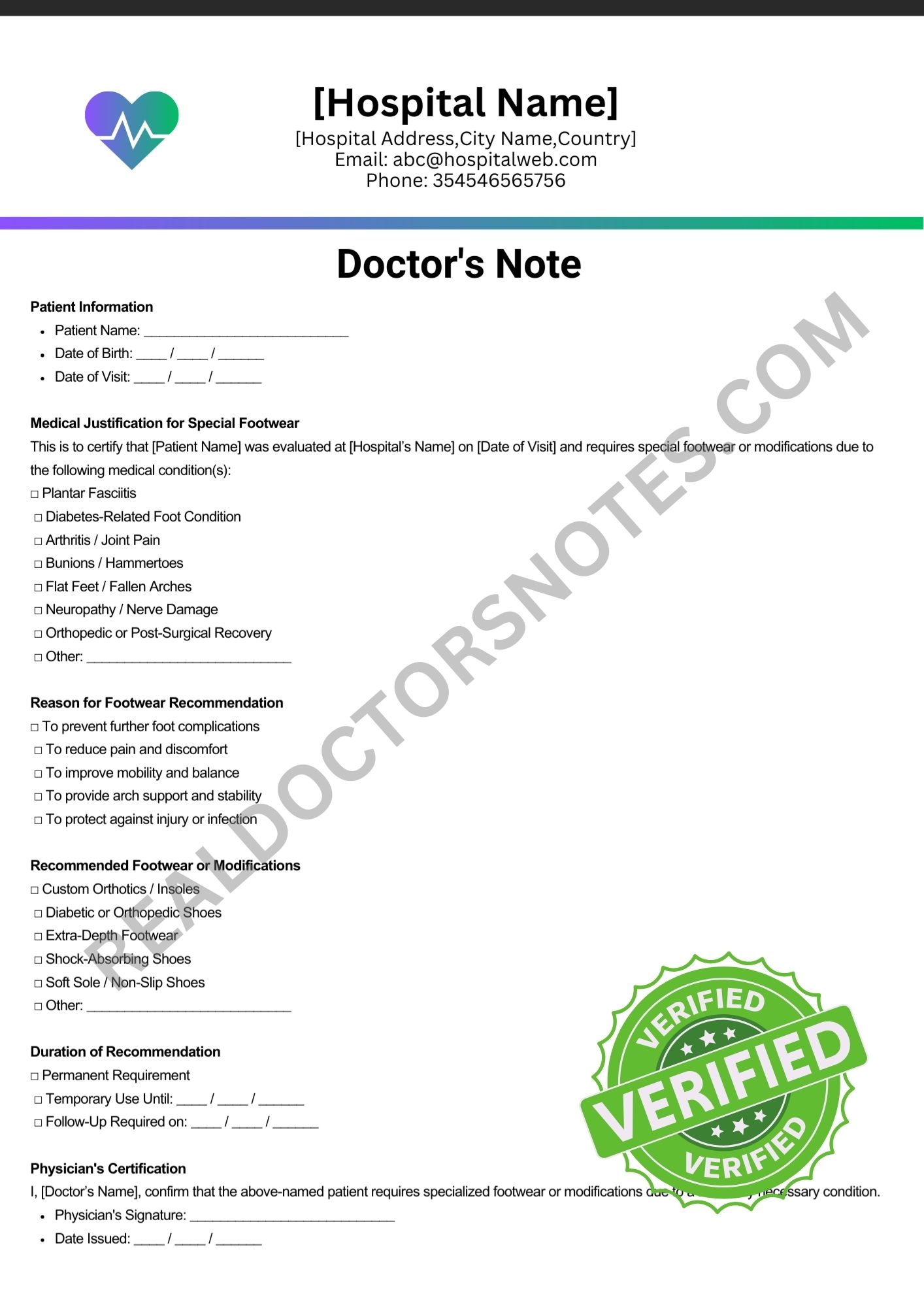
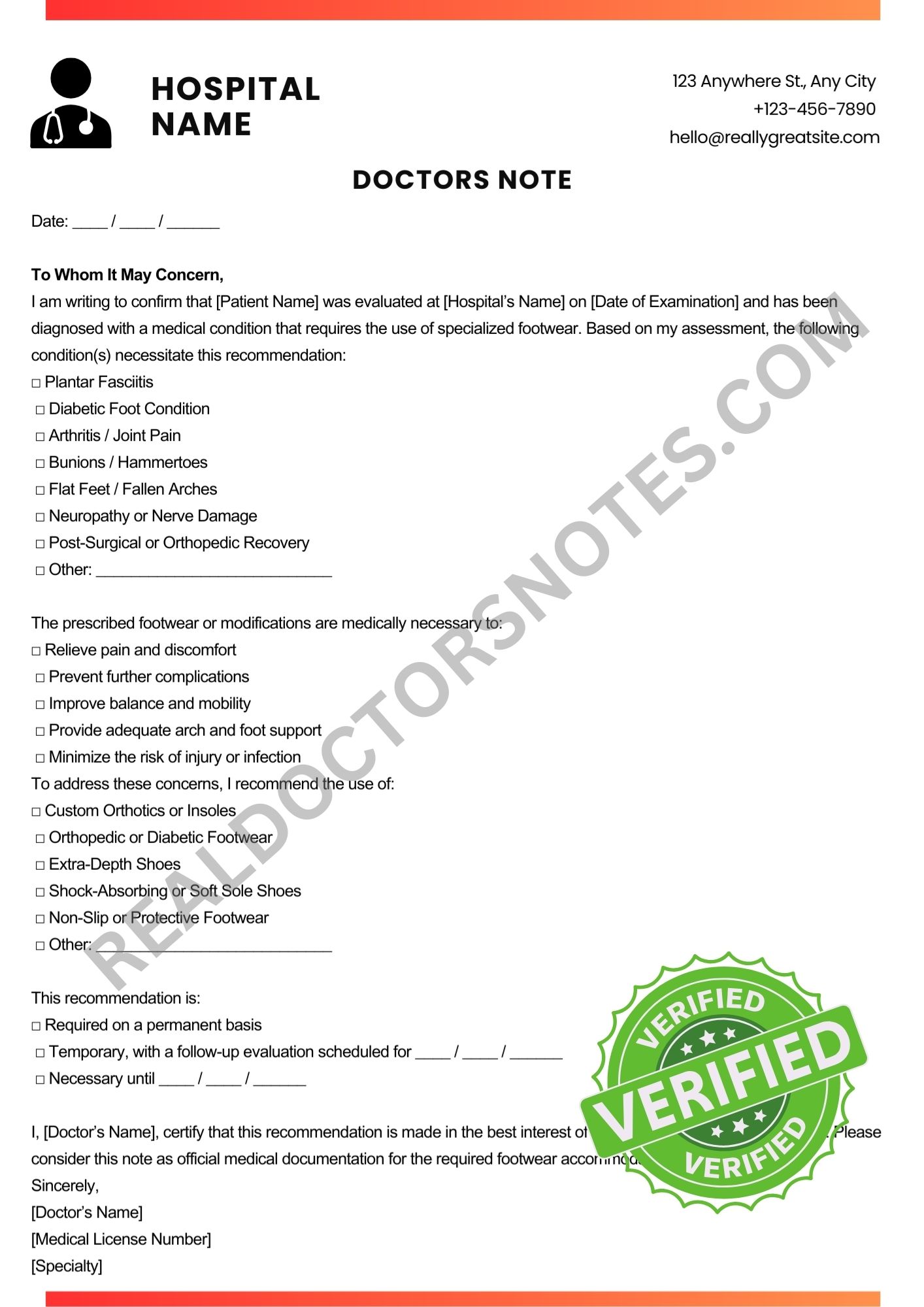
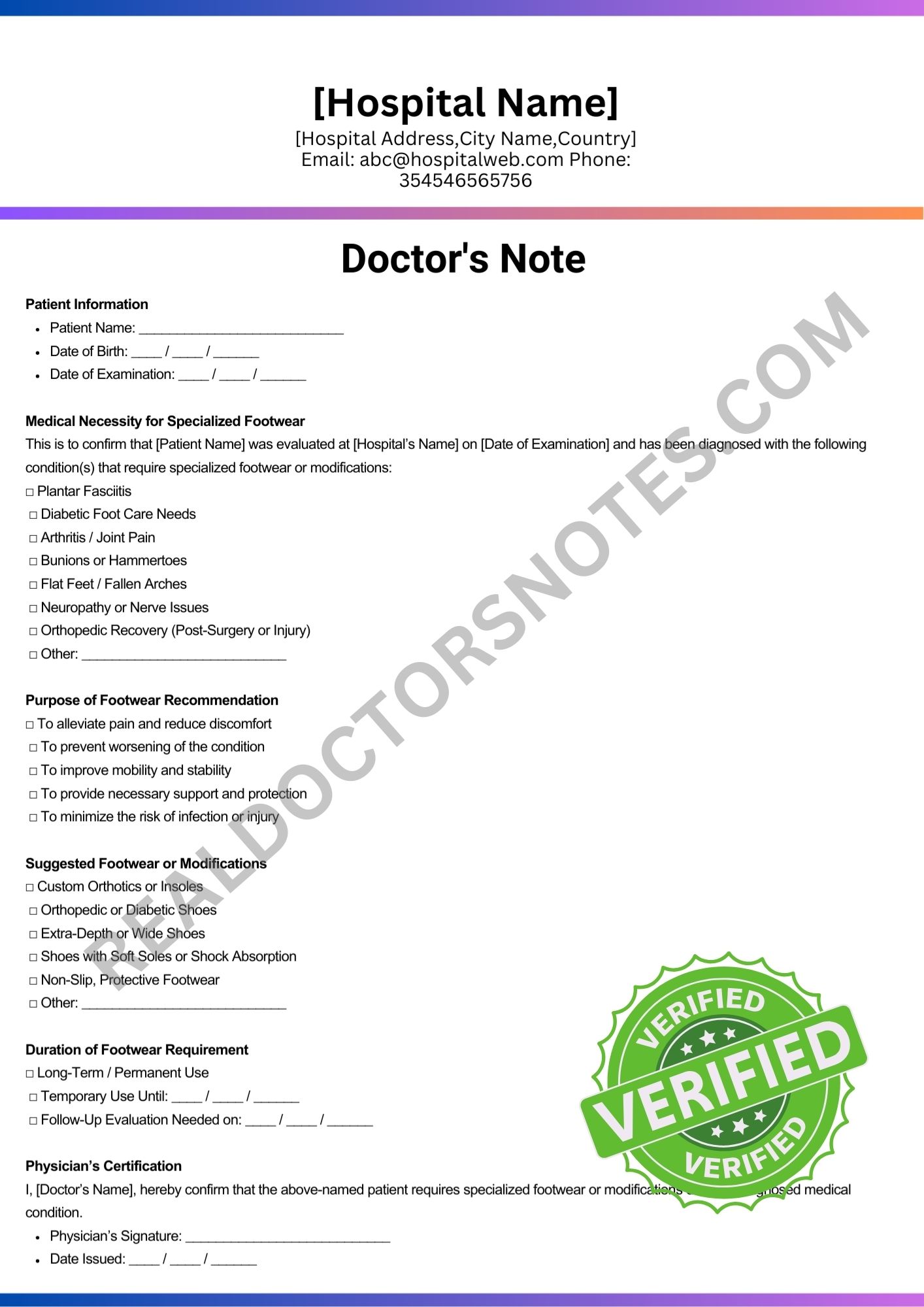
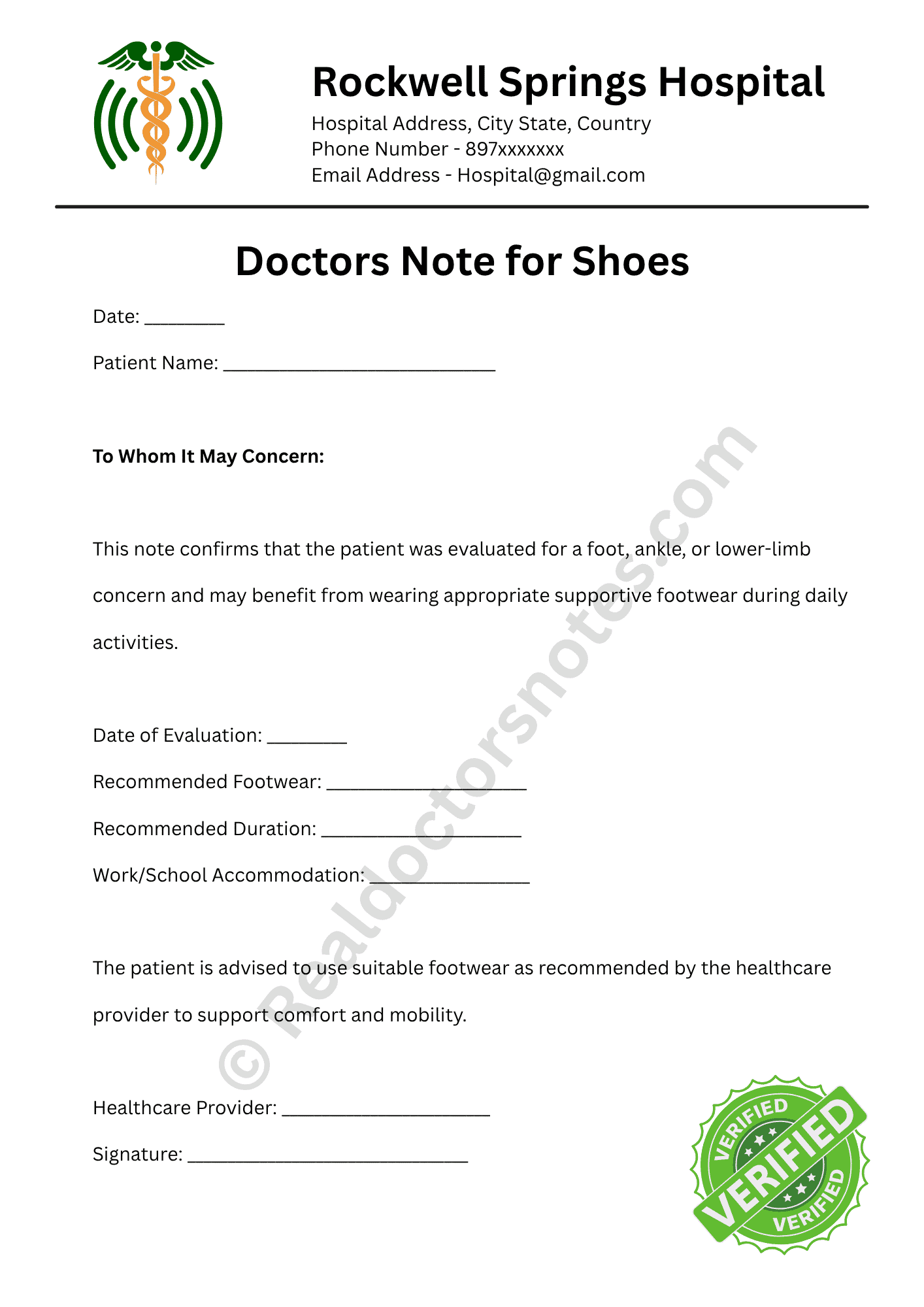


This note is typically issued when a person has a condition that affects their feet, posture, or overall mobility, such as plantar fasciitis, flat feet, diabetes, arthritis, or other musculoskeletal issues.
The Doctors Note for shoes outlines the need for specialized shoes, which may include orthotic footwear, cushioned insoles, or shoes designed to provide additional support or alleviate discomfort. A doctor’s note for shoes is often required for insurance purposes, workplace accommodations, or to support claims for medical devices or prescription footwear.
It helps ensure that the individual receives the appropriate footwear to manage their condition and prevent further health complications.
Printable Doctors Note for shoes Template
Validates Medical Need for Specific Footwear
- Provides official documentation that explains the need for specialized shoes due to a medical condition, helping individuals receive the necessary footwear for their health.
Supports Insurance Claims
- Facilitates insurance reimbursement or coverage for prescription shoes or orthotics by providing the required medical justification from a healthcare provider.
Ensures Workplace Accommodations
- Helps employees request accommodations, such as wearing prescribed footwear at work, particularly if their condition affects mobility or requires specific shoe types for comfort and support.
Prevents Further Health Complications
- Assists in preventing worsening of conditions like plantar fasciitis, arthritis, or diabetes-related foot issues by ensuring that the individual wears the appropriate footwear for support.
Improves Comfort and Mobility
- Ensures that the individual has access to shoes designed to alleviate pain or discomfort, promoting better mobility and overall physical well-being.
Reduces Stigma and Misunderstanding
- Provides clear, professional documentation for the need to wear specific shoes, reducing any potential misunderstandings or stigma about wearing specialized footwear in public or at work.
Supports Recovery and Healing
- Encourages faster recovery or effective management of chronic conditions by ensuring that the individual wears the correct shoes that support healing and reduce strain on affected areas.
Promotes Confidence in Health Management
- Gives individuals confidence in following their doctor’s recommendations by ensuring they have the necessary documentation to support their treatment plan and footwear needs.
Protects Employee Rights
- Helps protect employees’ rights under health and safety regulations by ensuring that any workplace accommodations related to footwear are legally supported and recognized.
Improves Overall Well-being
- Aids in improving posture, reducing pain, and preventing further physical strain, contributing to overall better health and well-being by ensuring the individual has the proper shoes for their condition.
Who Needs a Doctors Note for Shoes?
A Doctors Note for Shoes may be recommended for people who have medical conditions that make standard footwear uncomfortable or unsafe. Proper footwear can help reduce pain, improve mobility, and prevent further injury. A healthcare provider may recommend specialized shoes after evaluating your symptoms and medical history.
People who may benefit include those with:
- Plantar fasciitis
- Flat feet
- Diabetes
- Arthritis
- Bunions
- Heel spurs
- Achilles tendonitis
- Foot fractures
- Neuropathy
- Chronic foot pain
If medically appropriate, a licensed healthcare provider can document the need for supportive or orthopedic footwear. This documentation may be used for workplace accommodations, school requests, or insurance purposes, depending on the organization’s requirements.
What Conditions Qualify for Prescription Shoes?
Many medical conditions may require specialized footwear to improve comfort, stability, or foot health. Whether prescription shoes are appropriate depends on an evaluation by a qualified healthcare provider.
| Medical Condition | Recommended Footwear |
|---|---|
| Diabetes | Diabetic Shoes |
| Plantar Fasciitis | Arch Support Shoes |
| Flat Feet | Orthotic Shoes |
| Arthritis | Cushioned Shoes |
| Bunions | Wide Toe Box Shoes |
| Heel Spurs | Shock-Absorbing Shoes |
| Foot Fracture Recovery | Medical Walking Shoes |
| Neuropathy | Protective Footwear |
Prescription shoes are recommended only when medically necessary and based on a professional assessment.
How to Get a Doctors Note for Shoes Online
If you believe you need medical footwear, you may be able to consult a licensed healthcare provider online. The process is generally simple and convenient.
Step 1: Schedule an Online Consultation
Choose a telehealth appointment with a licensed medical provider.
Step 2: Discuss Your Symptoms
Explain your foot pain, medical history, daily activities, and any difficulties caused by regular shoes.
Step 3: Medical Evaluation
The provider will assess whether specialized footwear is medically appropriate.
Step 4: Receive Documentation
If medically justified, the provider may issue a Doctors Note for Shoes outlining the recommendation.
Step 5: Download or Print
Your documentation can usually be downloaded, printed, or shared electronically.
I Get a Doctors Note for Shoes Without Visiting a Clinic?
Yes, many telehealth providers offer virtual consultations for foot-related concerns. During the appointment, a licensed healthcare provider reviews your symptoms and determines whether medical documentation is appropriate.
If the provider concludes that specialized footwear is medically necessary, you may receive a digital doctor’s note after the consultation. However, documentation is only issued when supported by a clinical evaluation.
Will Employers Accept a Doctors Note for Shoes?
Many employers consider medical documentation when evaluating workplace accommodation requests. If specialized footwear is recommended because of a medical condition, a doctor’s note may support your request.
Acceptance depends on several factors, including:
- Company policies
- Job duties
- Workplace safety requirements
- Applicable disability or accommodation laws
A doctor’s note does not automatically guarantee approval, but it may help employers understand your medical needs.
Can Schools Accept a Doctors Note for Shoes?
Schools may accept a Doctors Note for Shoes when a student has a medical condition requiring supportive footwear. This documentation can help explain why special shoes are needed during school activities or physical education classes.
Examples include:
- Recovery from a foot injury
- Flat feet
- Diabetes
- Post-surgery recovery
- Orthopedic conditions
School policies vary, so the school administration determines approval.
Does Insurance Cover Prescription Shoes?
Insurance coverage for prescription shoes depends on your insurance plan, diagnosis, and medical necessity.
Coverage may require:
- A healthcare provider’s evaluation
- Medical documentation
- A prescription for therapeutic footwear
- Prior authorization (if applicable)
Some insurance plans may cover diabetic shoes or medically necessary orthopedic footwear, while others may have different eligibility requirements.
Prescription Shoes vs. Regular Shoes
| Regular Shoes | Prescription Shoes |
|---|---|
| Designed for general use | Designed for specific medical conditions |
| Standard cushioning | Enhanced support and pressure relief |
| Generic fit | Customized or condition-specific fit |
| Fashion-focused | Medical function and comfort |
| No medical evaluation required | Recommended after professional assessment |
Prescription shoes are intended to address medical needs rather than general comfort alone.
How Long Is a Shoe Prescription Valid?
The validity of a shoe prescription depends on your medical condition and your healthcare provider’s recommendations. Some conditions may require periodic follow-up visits to ensure the footwear remains appropriate.
A provider may recommend a new evaluation if:
- Symptoms worsen
- Foot shape changes
- The footwear becomes ineffective
- A significant amount of time has passed since the original assessment
Always follow your provider’s guidance regarding reassessment.
What Should a Doctors Note for Shoes Include?
A professionally prepared Doctors Note for Shoes may include:
- Patient’s full name
- Date of evaluation
- Medical condition (when appropriate)
- Recommendation for specialized footwear
- Any activity or footwear restrictions
- Expected duration of the recommendation (if applicable)
- Healthcare provider’s name and credentials
- Provider’s signature
- Clinic or practice information
The exact contents may vary based on the patient’s medical needs and the provider’s clinical judgment.
FAQs
Q. Can I get a doctor’s note for orthopedic shoes?
Yes. If a licensed healthcare provider determines that orthopedic shoes are medically appropriate after evaluating your condition, they may provide documentation supporting the recommendation.
Q. Can I wear medical shoes at work?
Many employers allow medically necessary footwear when supported by appropriate documentation. Approval depends on workplace policies and job requirements.
Q. Can diabetes qualify for prescription shoes?
People with diabetes may qualify for therapeutic footwear if a healthcare provider determines it is medically necessary to help protect foot health.
Q. Does Medicare cover diabetic shoes?
In some situations, Medicare may provide coverage for therapeutic diabetic shoes when eligibility requirements are met. Coverage depends on current Medicare rules and medical documentation.
Q. Can I get a shoe prescription online?
Many telehealth providers offer virtual consultations. If medically appropriate, a licensed healthcare provider may issue documentation after evaluating your symptoms.


Reviews
There are no reviews yet.