![Real Doctors Note For Work and School [Get in 5 Minutes]](https://realdoctorsnotes.com/wordpress/wp-content/webp-express/webp-images/uploads/2025/11/2.png.webp)

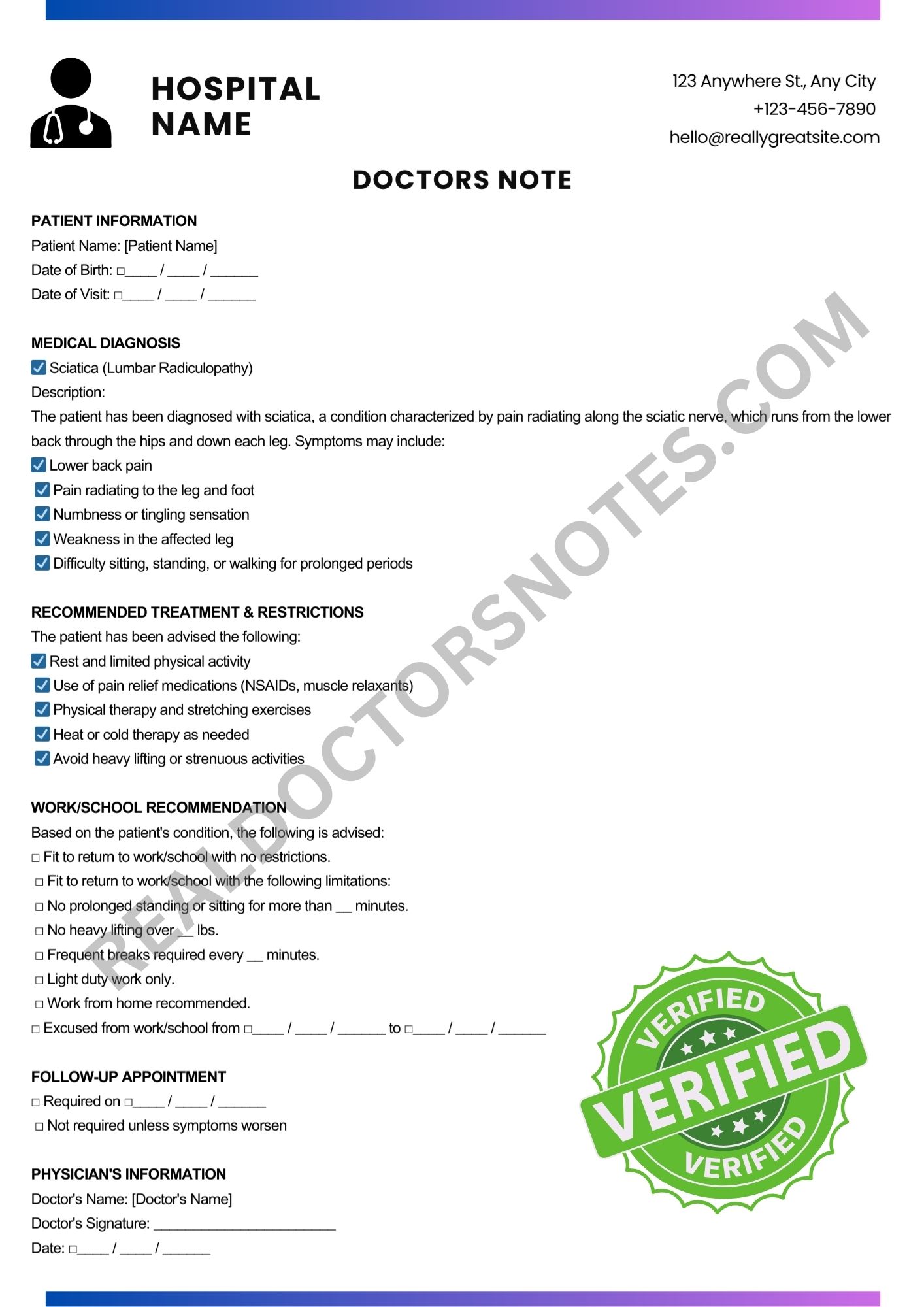
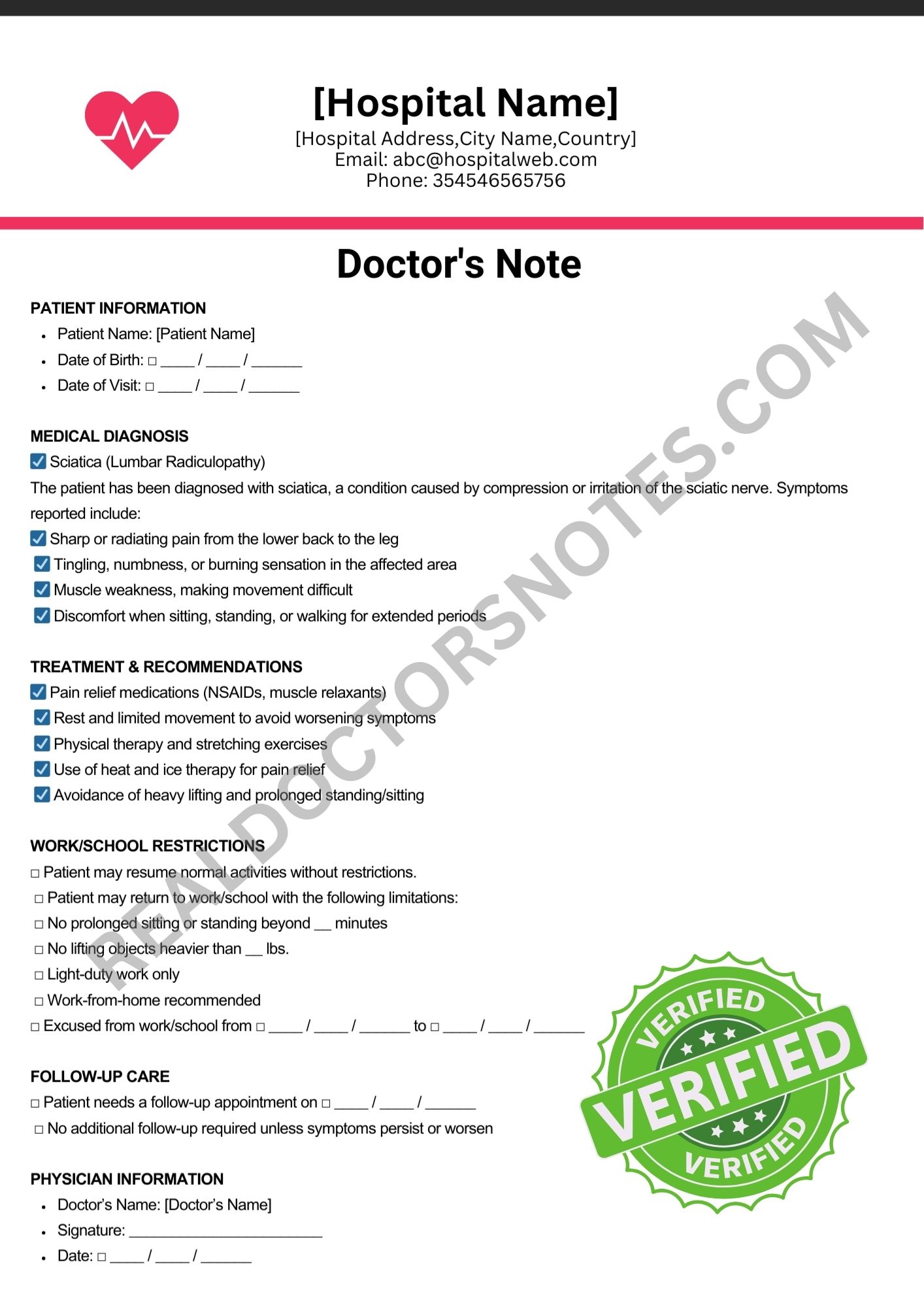
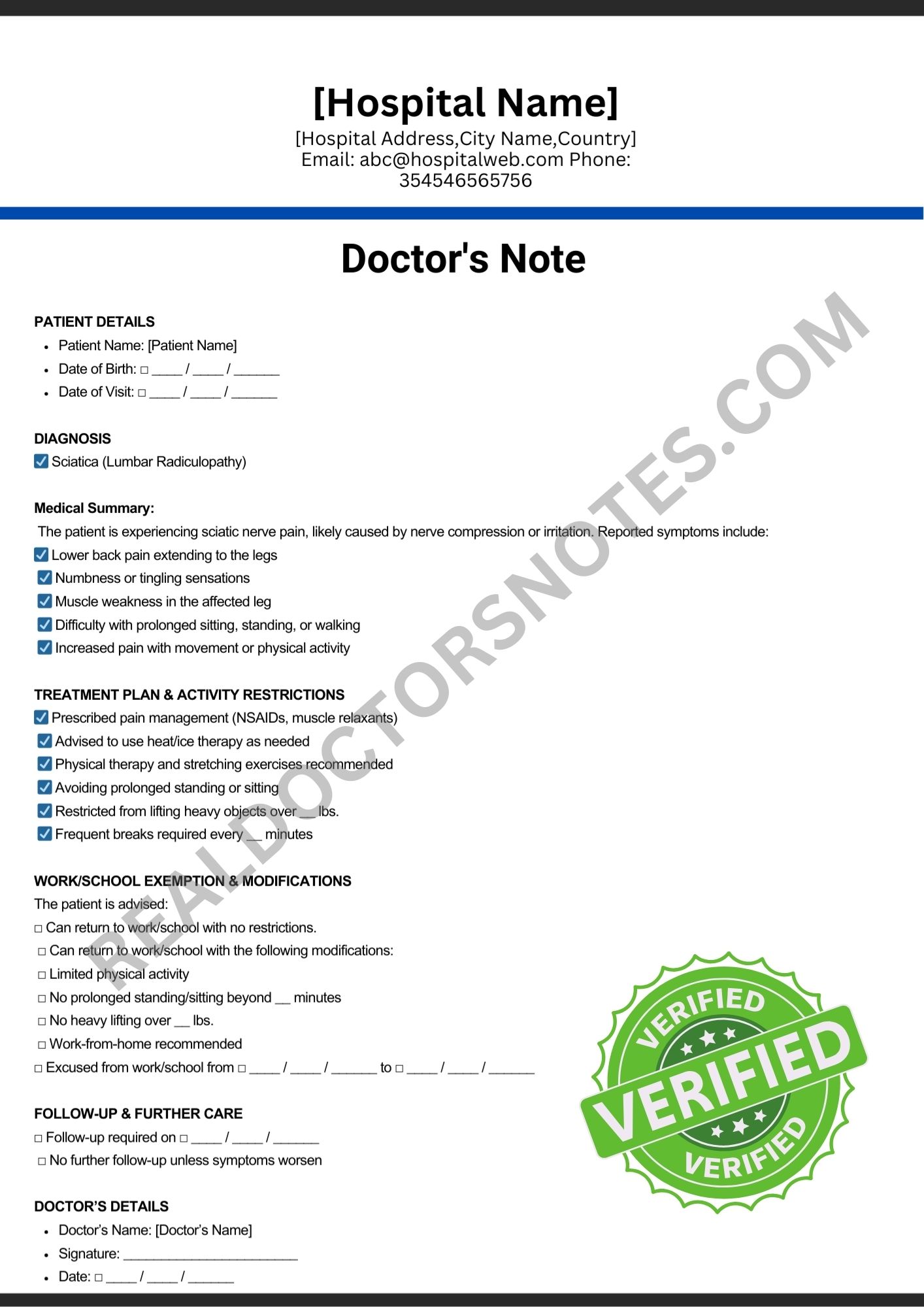






Sciatica is a condition caused by irritation, inflammation, or compression of the sciatic nerve, which is the longest nerve in the human body. The sciatic nerve begins in the lower back, travels through the hips and buttocks, and extends down each leg. When this nerve becomes compressed, it can cause pain that radiates from the lower back into one leg and, in some cases, all the way to the foot.
Sciatica can range from mild discomfort to severe nerve pain that affects mobility and daily activities. Many people experience difficulty sitting for long periods, standing, walking, driving, climbing stairs, or lifting heavy objects. The severity and duration of symptoms vary depending on the underlying cause, such as a herniated disc, spinal stenosis, or other spinal conditions. Following a medical evaluation, a healthcare provider may recommend treatment, temporary activity restrictions, or medical documentation when the condition significantly limits work or everyday responsibilities.
Sciatica Symptoms That May Limit Daily Activities
Sciatica symptoms can vary from person to person, depending on the degree of nerve irritation and the underlying spinal condition. Some individuals experience occasional discomfort, while others develop persistent nerve pain that interferes with normal movement and daily routines.
Common symptoms include:
- Sharp pain that radiates from the lower back into one leg
- Burning sensation along the nerve pathway
- Tingling or “pins and needles”
- Numbness in the leg or foot
- Muscle weakness
- Pain while sitting for extended periods
- Difficulty standing for long periods
- Pain when walking long distances
- Discomfort while bending or lifting objects
- Reduced flexibility and mobility
Symptoms often worsen with prolonged sitting, sudden twisting movements, coughing, or sneezing. Early medical evaluation may help identify the cause and prevent symptoms from becoming more severe.
Sciatica Causes and Risk Factors
Sciatica develops when the sciatic nerve is compressed or irritated. Several medical conditions and lifestyle factors can contribute to this problem.
Common causes include:
- Herniated or slipped disc
- Degenerative disc disease
- Spinal stenosis
- Bone spurs
- Piriformis syndrome
- Pregnancy-related pressure on the sciatic nerve
- Spinal injuries
- Tumors affecting the spine (rare)
Risk factors that may increase the likelihood of developing Sciatica include:
- Aging
- Obesity
- Physically demanding occupations
- Frequent heavy lifting
- Prolonged sitting
- Diabetes-related nerve damage
- Poor posture
- Lack of regular physical activity
Understanding these causes helps healthcare providers develop an appropriate treatment plan.
Sciatica Diagnosis and Medical Evaluation
Accurate diagnosis is important because several conditions can cause symptoms similar to Sciatica. Healthcare providers begin by reviewing the individual’s medical history and discussing the location, severity, and duration of symptoms.
Diagnostic evaluation may include:
- Physical examination
- Straight leg raise test
- Neurological assessment
- Muscle strength testing
- Reflex testing
- Magnetic Resonance Imaging (MRI)
- CT scan
- X-rays to evaluate spinal structures
- Electromyography (EMG) when nerve function requires further assessment
These evaluations help identify the underlying cause of nerve compression and guide the most appropriate treatment.
Sciatica Treatment Options
Treatment for Sciatica focuses on relieving pain, reducing inflammation, improving mobility, and addressing the underlying cause of nerve compression.
Treatment options may include:
- Short periods of rest
- Physical therapy
- Stretching and strengthening exercises
- Anti-inflammatory medications
- Muscle relaxants when appropriate
- Heat and cold therapy
- Epidural corticosteroid injections
- Lifestyle modifications
- Surgery for severe or persistent nerve compression that does not improve with conservative treatment
Most individuals improve with non-surgical treatment and consistent follow-up care.
Sciatica Sitting and Standing Recommendations
Many people with Sciatica notice that symptoms become worse after remaining in one position for too long. Proper body positioning and regular movement can help reduce discomfort during recovery.
Helpful recommendations include:
- Avoid sitting continuously for long periods.
- Stand and stretch every 30–60 minutes.
- Use a chair with good lumbar support.
- Maintain proper posture while sitting.
- Avoid prolonged standing when symptoms increase.
- Change positions frequently throughout the day.
- Keep both feet flat on the floor while sitting.
- Use ergonomic workplace equipment when available.
These adjustments may reduce pressure on the sciatic nerve and improve comfort during daily activities.
Sciatica Workplace Challenges
Sciatica can make many job-related tasks more difficult, especially for individuals whose work involves prolonged sitting, standing, driving, or lifting.
Common workplace challenges include:
- Difficulty sitting at a desk for extended periods
- Pain while driving
- Reduced lifting ability
- Difficulty climbing stairs
- Limited mobility
- Reduced productivity due to pain
- Frequent position changes
- Time away for physical therapy or medical appointments
Depending on the severity of symptoms, a healthcare provider may recommend temporary workplace accommodations such as modified duties, reduced lifting, ergonomic adjustments, or flexible scheduling.
Sciatica Recovery and Rehabilitation
Recovery from Sciatica varies depending on the cause of the condition and the individual’s response to treatment. Many people experience gradual improvement within several weeks, while others may require a longer rehabilitation period.
Recovery planning may include:
- Physical therapy
- Home exercise programs
- Core strengthening exercises
- Stretching routines
- Improving flexibility
- Gradually increasing physical activity
- Follow-up medical evaluations
- Monitoring nerve function
Following the recommended rehabilitation plan may improve mobility and reduce the likelihood of future flare-ups.
Sciatica Prevention Tips
Although not every case can be prevented, healthy lifestyle habits may reduce the risk of developing Sciatica or experiencing recurring symptoms.
Preventive measures include:
- Maintain a healthy body weight.
- Exercise regularly.
- Strengthen the core muscles.
- Practice proper lifting techniques.
- Maintain good posture.
- Avoid prolonged sitting.
- Stretch before physical activity.
- Use ergonomic workstations when possible.
These habits support spinal health and may reduce pressure on the sciatic nerve.
Sciatica Medical Documentation
When Sciatica significantly affects an individual’s ability to work, attend school, or perform normal daily activities, a healthcare provider may provide medical documentation following an appropriate evaluation. Depending on the individual’s symptoms and functional limitations, documentation may include temporary work restrictions, lifting limitations, sitting or standing restrictions, treatment recommendations, follow-up appointments, and an estimated recovery period. The specific information included is based on the healthcare provider’s clinical findings while protecting patient confidentiality.
Sciatica Documentation Validity
There is no universal validity period for medical documentation related to Sciatica. The duration depends on the individual’s medical condition, recovery progress, healthcare provider recommendations, and the requirements of the employer, school, or other requesting organization.
Factors that may influence documentation validity include:
- Severity of nerve compression
- Response to treatment
- Improvement in symptoms
- Physical therapy progress
- Follow-up evaluations
- Temporary work restrictions
- Employer documentation requirements
If symptoms persist or worsen, an updated medical evaluation may be necessary to determine whether revised documentation is appropriate.
Sciatica Compared With Other Back Conditions
| Condition | Key Difference |
|---|---|
| Sciatica | Pain caused by irritation or compression of the sciatic nerve that radiates down the leg |
| Muscle Strain | Injury to muscles or tendons without nerve involvement |
| Herniated Disc | A spinal disc problem that may compress the sciatic nerve and lead to Sciatica |
| Spinal Stenosis | Narrowing of the spinal canal that may place pressure on spinal nerves |
FAQs
Q. What causes sciatica?
Sciatica is most commonly caused by compression of the sciatic nerve due to a herniated disc, spinal stenosis, bone spurs, or other spinal conditions.
Q. Can sciatica go away on its own?
Some mild cases improve with rest, activity modification, and conservative treatment, while others require medical care or physical therapy.
Q. How long does sciatica usually last?
Recovery varies depending on the underlying cause. Many individuals improve within several weeks, while more severe cases may require longer treatment.
Q. Is walking helpful for sciatica?
Gentle walking may benefit some individuals, but activity should be guided by a healthcare provider based on symptom severity.
Q. Can sciatica affect both legs?
Sciatica usually affects one leg, although bilateral symptoms can occur in uncommon cases involving more extensive nerve compression.






Reviews
There are no reviews yet.