![Real Doctors Note For Work and School [Get in 5 Minutes]](https://realdoctorsnotes.com/wordpress/wp-content/webp-express/webp-images/uploads/2025/11/2.png.webp)


If panic disorder symptoms are interfering with your ability to work, attend school, travel, or complete everyday responsibilities, a Doctor’s Note for Panic Disorder may help document that you needed medical attention or time away from your usual activities. A legitimate note should be based on an evaluation by an appropriate healthcare professional and should contain only information that is medically appropriate to disclose.
Panic disorder involves recurrent, unexpected panic attacks and may include ongoing concern about having another attack or changes in behavior to avoid future attacks.
What Is Panic Disorder?
Panic disorder is a type of anxiety disorder characterized by repeated, unexpected panic attacks. A panic attack can involve a sudden wave of intense fear or discomfort, sometimes without an obvious trigger.
Common symptoms can include:
- Rapid or pounding heartbeat
- Shortness of breath
- Chest discomfort
- Sweating
- Trembling or shaking
- Dizziness or weakness
- Nausea or stomach discomfort
- Chills or hot sensations
- Tingling or numbness
- Feeling out of control
- Fear of dying or something terrible happening
Panic attacks can be frightening, and some people begin avoiding situations where they fear another attack might occur.
Panic Attack vs. Panic Disorder
Having one panic attack does not automatically mean someone has panic disorder. Panic disorder generally involves recurrent, unexpected attacks followed by persistent worry about additional attacks, concerns about what the attacks mean, or behavioral changes related to them.
A healthcare professional can determine whether symptoms are consistent with panic disorder and whether another medical condition could be contributing to them.
When Might You Need a Doctor’s Note for Panic Disorder?
A doctor’s note may be requested when panic disorder symptoms significantly affect your ability to meet work, school, or other responsibilities.
Depending on the circumstances, documentation may be relevant for:
- Missing work because of severe symptoms
- Requesting short-term rest or recovery time
- Missing classes or examinations
- Attending a mental health appointment
- Requesting temporary workplace accommodations
- Explaining a medically necessary absence
- Returning to work or school after an extended absence
Whether documentation is required depends on the employer, school, organization, or applicable policy. A healthcare provider—not the patient—determines whether medical documentation is appropriate.
What Can a Doctor’s Note for Panic Disorder Include?
The information included in medical documentation can vary depending on the purpose of the note and the provider’s assessment.
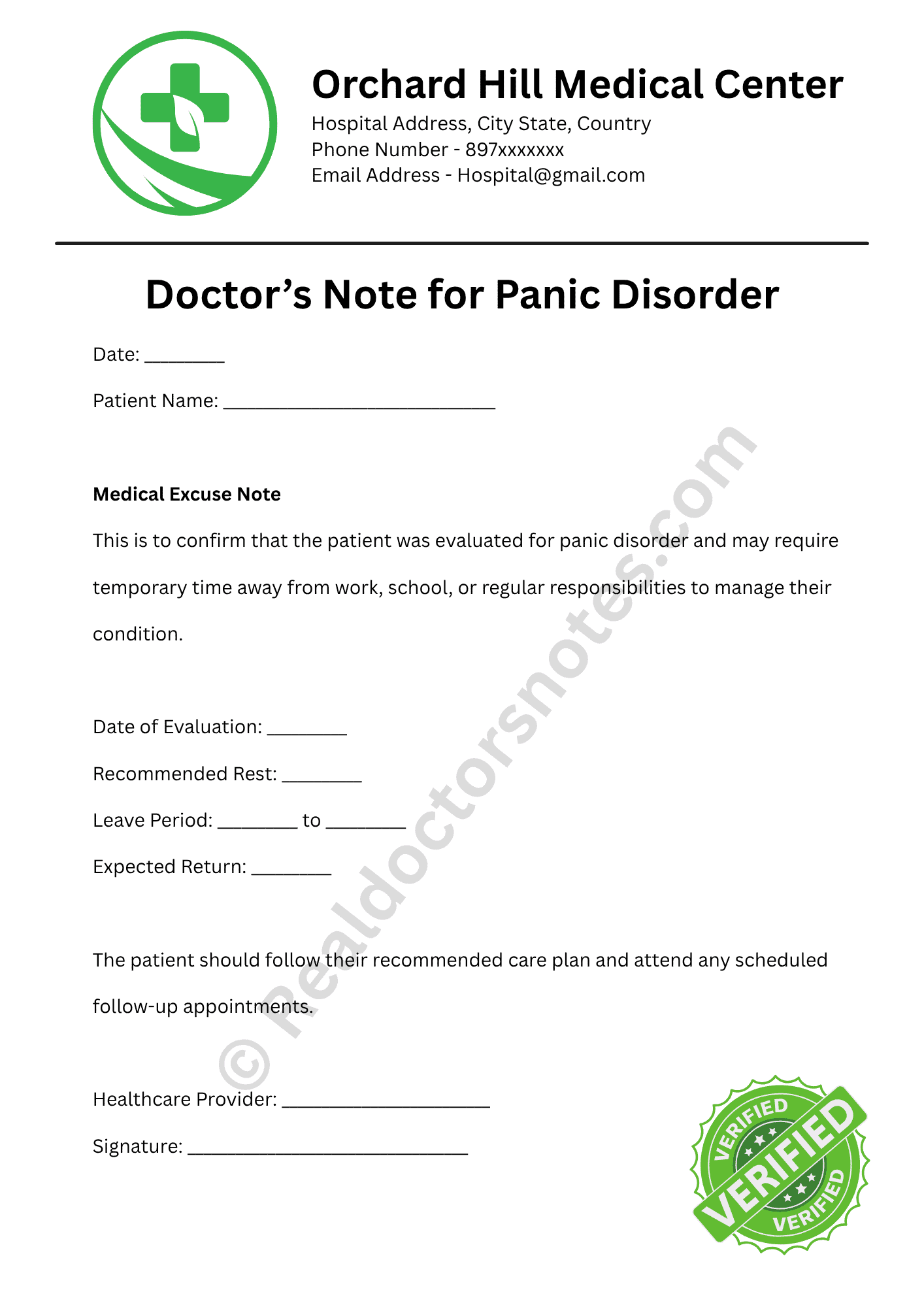
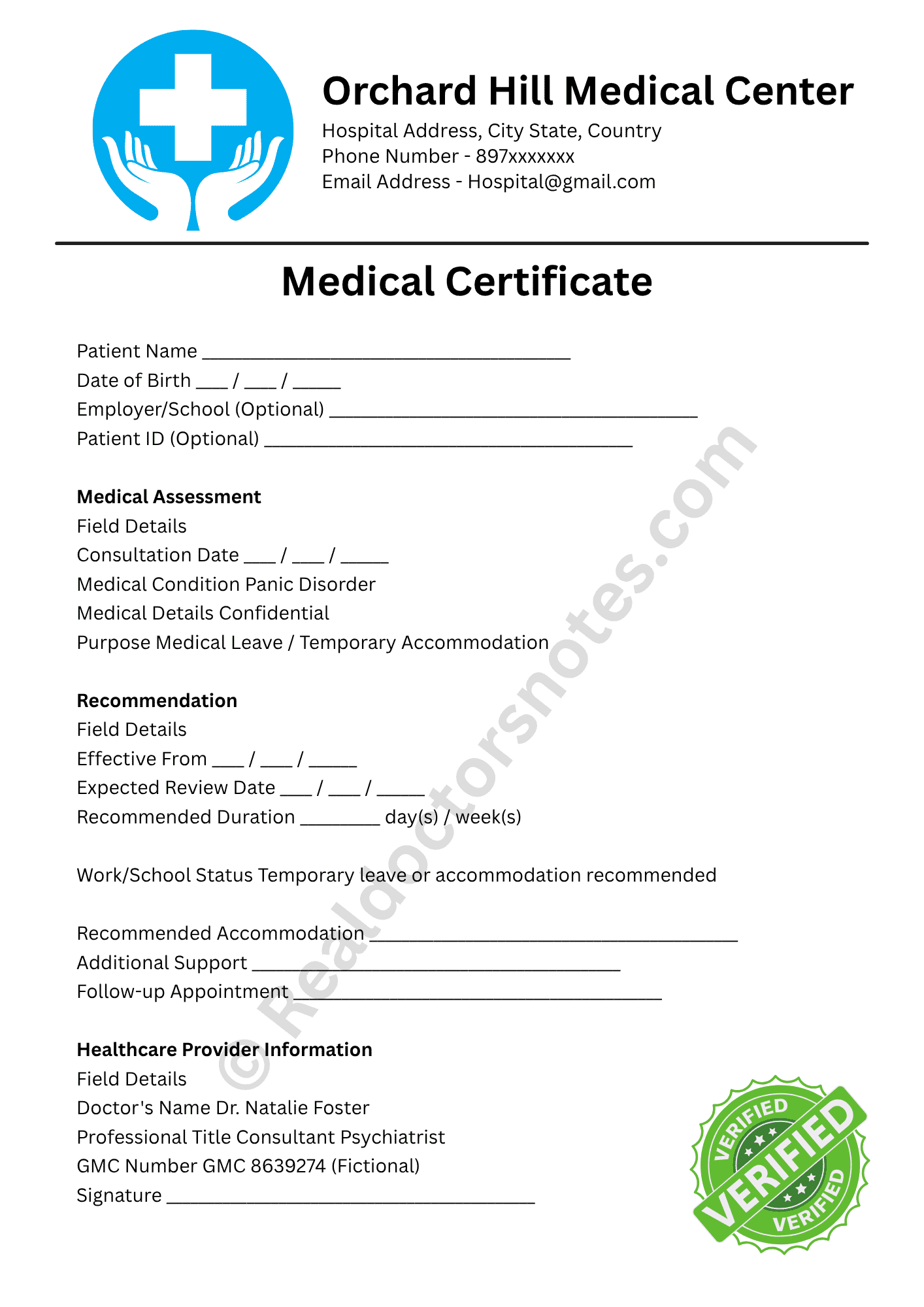
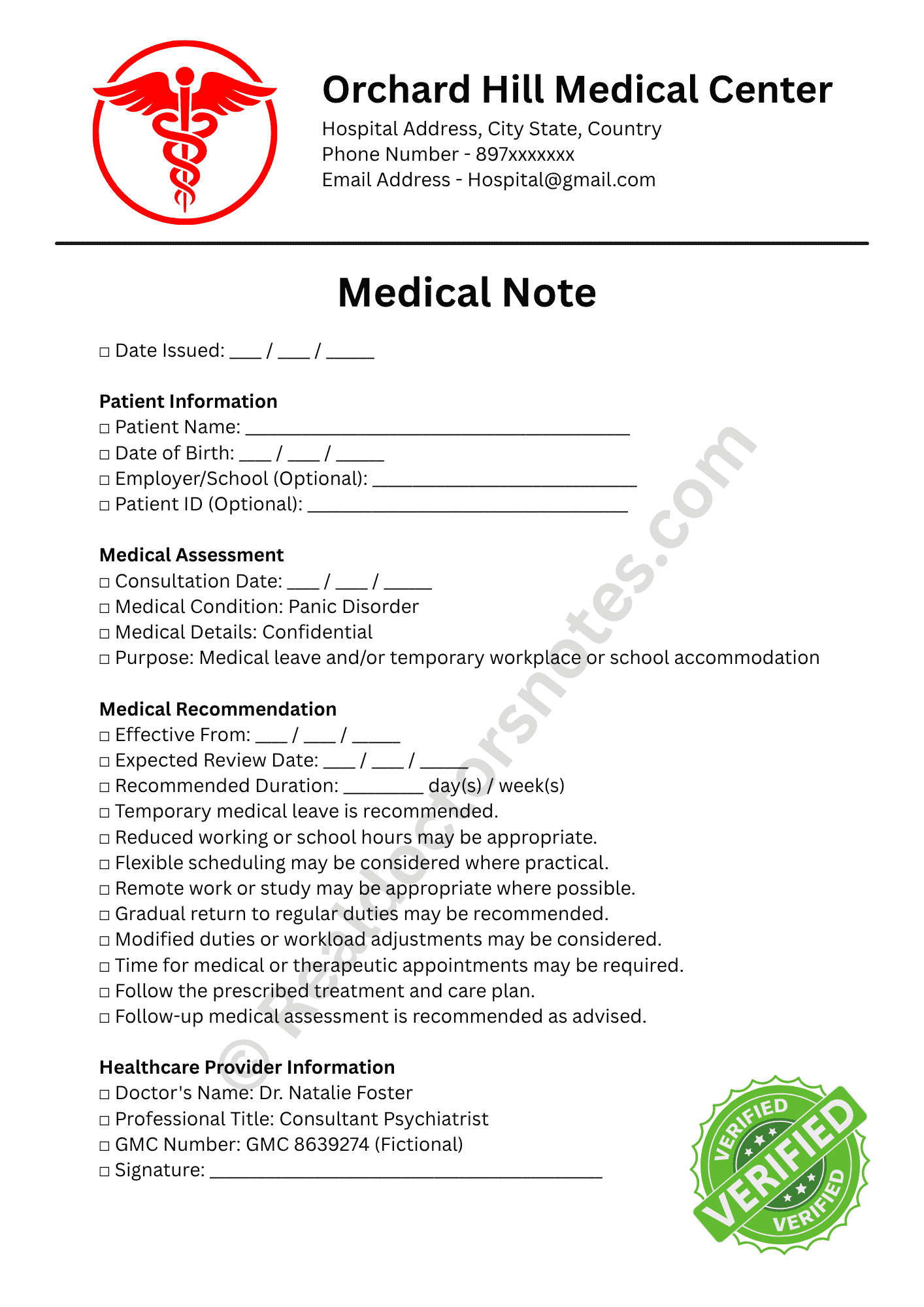
A legitimate note may include:
- Patient identification – The patient’s name or other appropriate identifier.
- Date of evaluation – When the patient was assessed.
- Medical reason – Appropriate documentation concerning the patient’s condition or symptoms.
- Recommended absence – If medically necessary, the dates during which the patient should be excused.
- Restrictions or accommodations – Any medically appropriate limitations.
- Return-to-work or school information – When applicable.
- Provider information – The healthcare professional’s name, credentials, and contact information.
- Signature or authentication – As required by the provider or organization.
The note should contain accurate information and should not disclose unnecessary private medical details.
How Does a Doctor Diagnose Panic Disorder?
Diagnosis generally begins with a conversation about symptoms and their effect on daily life. A healthcare provider may ask:
- When did the symptoms begin?
- How often do panic attacks occur?
- How long do they usually last?
- Do they happen unexpectedly?
- Are you worried about having another attack?
- Have you started avoiding particular places or activities?
- Are symptoms affecting work, school, relationships, or daily activities?
- Are you taking any medications or receiving therapy?
A provider may also perform a physical examination or recommend additional evaluation when necessary to rule out other possible causes of similar symptoms.
This evaluation is important because symptoms such as chest pain, dizziness, rapid heartbeat, and breathing difficulties can occur with conditions other than panic disorder.
Can Panic Disorder Affect Work or School?
Yes. Panic disorder can interfere with concentration, attendance, productivity, transportation, social interactions, and other everyday activities. Some individuals may avoid particular locations or situations because they are concerned about experiencing another panic attack.
If symptoms are affecting your ability to function at work or school, talking with a qualified healthcare professional can help identify appropriate treatment and whether documentation is medically justified.
A doctor’s note should not be viewed as a substitute for treatment. Its primary purpose is to document a medically evaluated situation when documentation is genuinely required.
Treatment Options for Panic Disorder
Panic disorder is treatable. Treatment may involve psychotherapy, medication, or a combination of approaches depending on the individual’s circumstances.
Cognitive Behavioral Therapy
Cognitive behavioral therapy (CBT) is a commonly used treatment for panic disorder. It can help people understand patterns involving anxious thoughts, physical sensations, and behaviors associated with panic attacks.
Exposure-based approaches may also be incorporated into CBT to help individuals gradually address situations or sensations they have been avoiding.
Medication
Healthcare professionals may prescribe medication when appropriate. Depending on the individual’s situation, options can include certain antidepressants or other medications used to manage anxiety symptoms. Medication choices should always be discussed with a qualified healthcare provider.
Lifestyle and Self-Care
Healthy habits can complement professional treatment. Helpful strategies may include:
- Maintaining a consistent sleep schedule
- Exercising regularly
- Eating regular, balanced meals
- Practicing relaxation or breathing techniques
- Staying connected with supportive people
- Reducing substances that may worsen anxiety symptoms
Self-care can support recovery, but it should not replace professional treatment when panic disorder is significantly affecting daily life.
What Should You Tell Your Doctor?
If you are seeking medical documentation because panic disorder is affecting your work or school attendance, be honest and specific about your symptoms.
Consider explaining:
- What symptoms you experience
- How frequently they occur
- Whether attacks happen unexpectedly
- How symptoms affect your ability to function
- Whether you have missed work or school
- Whether you are currently receiving treatment
- What responsibilities you are struggling to perform
This information helps the healthcare professional make an appropriate clinical assessment.
Can an Online Doctor Provide a Panic Disorder Note?
Telehealth may be an option for discussing mental health symptoms with a qualified healthcare professional. NIMH notes that psychotherapy for panic disorder can be delivered virtually through telehealth.
However, whether an online consultation can result in medical documentation depends on the provider, the clinical evaluation, applicable laws, and the requirements of the organization requesting the note.
An online service should not promise documentation regardless of the patient’s medical circumstances. A healthcare professional should make that decision after an appropriate evaluation.
Does a Doctor’s Note Guarantee an Excused Absence?
No. A doctor’s note documents a healthcare professional’s assessment or recommendation, but the organization receiving it may have its own documentation and attendance policies.
For example, an employer may have specific requirements concerning:
- How quickly documentation must be submitted
- What information the note must contain
- The number of days covered
- Return-to-work requirements
- Accommodation requests
- Verification procedures
It is therefore important to check the relevant workplace or school policy before assuming that a particular form of documentation will be accepted.
Privacy and Mental Health Documentation
Mental health information is personal. In many situations, you may not need to provide extensive details about your diagnosis to an employer or school.
A medical provider can determine what information is appropriate to include based on the purpose of the documentation and applicable requirements.
If you are concerned about privacy, ask the healthcare professional what information will appear on the note before it is issued.
When Should You Seek Professional Help?
Consider speaking with a healthcare professional if panic attacks are recurring, you are constantly worried about having another attack, or anxiety is interfering with your work, school, relationships, or everyday activities. NIMH recommends seeking professional help when anxiety begins causing problems in daily life.
If physical symptoms are new, severe, unusual, or could indicate another medical problem, seek appropriate medical evaluation rather than automatically assuming they are caused by panic.
Doctor’s Note for Panic Disorder for School or College
Panic disorder symptoms can sometimes make it difficult for students to attend school, college, classes, examinations, or other academic activities. If panic attacks or related symptoms interfere with attendance, a qualified healthcare professional can evaluate the situation and determine whether medical documentation is appropriate.
A Doctor’s Note for Panic Disorder for School or College may document that a student was medically evaluated and, when clinically appropriate, needed time away from academic activities. Depending on the institution’s policy, documentation may also support an absence, exam accommodation, assignment extension, or temporary adjustment to academic responsibilities.
Can a Doctor Excuse a Student From an Exam?
A healthcare professional may recommend that a student be excused from an examination or receive an appropriate accommodation when symptoms medically interfere with participation. However, the final process for approving a missed exam, rescheduling it, or granting an accommodation is generally determined by the school’s or college’s policies.
Students should contact their instructor, academic office, student services department, or disability/accommodation office as soon as possible when panic disorder affects academic participation.
FAQs
Q. Can panic disorder be a reason for missing work?
Yes, panic disorder symptoms can interfere with a person’s ability to work. Whether an absence is medically justified is determined by a healthcare professional after evaluating the individual’s circumstances.
Q. Can I request a doctor’s note for anxiety and panic attacks?
You can discuss your symptoms and documentation needs with a healthcare professional. The provider can determine whether a note is medically appropriate.
Q. How long can a panic disorder doctor’s note excuse you from work?
There is no universal duration. The appropriate period depends on the person’s symptoms, clinical assessment, treatment needs, and workplace requirements.
Q. Can a psychiatrist provide a doctor’s note for panic disorder?
A psychiatrist can evaluate and treat panic disorder and may provide appropriate medical documentation when clinically justified.
Q. Can a primary care doctor diagnose panic disorder?
A primary care professional may evaluate symptoms, rule out possible physical causes, provide treatment, and refer the patient to a mental health specialist when appropriate.


Reviews
There are no reviews yet.