![Real Doctors Note For Work and School [Get in 5 Minutes]](https://realdoctorsnotes.com/wordpress/wp-content/webp-express/webp-images/uploads/2025/11/2.png.webp)


Doctor’s Note for Dizziness can provide medical documentation when dizziness makes it difficult to work, attend school, drive, or safely perform regular activities. Dizziness may feel like lightheadedness, weakness, loss of balance, or a spinning sensation known as vertigo. Depending on the cause and severity, symptoms may also occur with nausea, headaches, blurred vision, fatigue, or difficulty concentrating. Persistent or severe dizziness can interfere with everyday responsibilities and may require medical evaluation. A healthcare professional can assess your symptoms, identify possible causes, recommend appropriate treatment or rest, and determine whether temporary work or activity restrictions are necessary. If documentation is medically appropriate, a doctor’s note may explain the recommended period of absence or restrictions without unnecessarily disclosing private medical information. This guide explains when you may need a doctor’s note for dizziness, what it can include, how dizziness is evaluated, and when symptoms require prompt medical attention.
What Is Dizziness?
Dizziness is a common symptom that can affect people in different ways. Some people describe it as feeling faint or lightheaded, while others feel unsteady, off-balance, weak, or as though the room is moving. When a person experiences a distinct spinning sensation, it is generally described as vertigo.
Although occasional dizziness may resolve on its own, repeated or severe episodes can interfere with work, school, travel, driving, exercise, and other daily activities. Dizziness can also increase the risk of falls or accidents, particularly when someone is walking, operating machinery, or performing tasks that require concentration and balance.
Symptoms That May Occur With Dizziness
Dizziness may occur by itself or alongside other symptoms. Depending on the underlying cause, a person may experience:
- Lightheadedness
- Feeling faint
- Spinning or vertigo
- Loss of balance
- Unsteadiness while walking
- Nausea or vomiting
- Headache
- Blurred or double vision
- Ringing in the ears
- Changes in hearing
- Weakness or fatigue
- Difficulty concentrating
- A feeling of disorientation
The combination of symptoms can provide useful information to a healthcare professional. It can be helpful to record when the dizziness started, how long an episode lasted, what you were doing beforehand, and whether anything made it better or worse.
When Do You Need a Doctor’s Note for Dizziness?
A doctor’s note for dizziness may be relevant when symptoms make it difficult or unsafe for someone to attend work, school, travel, participate in physical activities, or perform certain duties.
For example, dizziness may make some activities unsafe when a person’s job requires:
- Driving
- Operating heavy machinery
- Working at heights
- Standing for extended periods
- Physical exertion
- Working around hazardous equipment
- Maintaining constant balance or coordination
- Performing safety-sensitive responsibilities
A healthcare professional can determine whether temporary restrictions or time away from regular activities are medically appropriate.
A doctor’s note should be based on an actual medical assessment and should accurately reflect the healthcare professional’s recommendations. Employers, schools, airlines, insurance providers, and other organizations may have their own documentation requirements.
What Can a Doctor’s Note for Dizziness Include?
The exact information varies depending on the patient’s situation and the requirements of the organization requesting documentation.
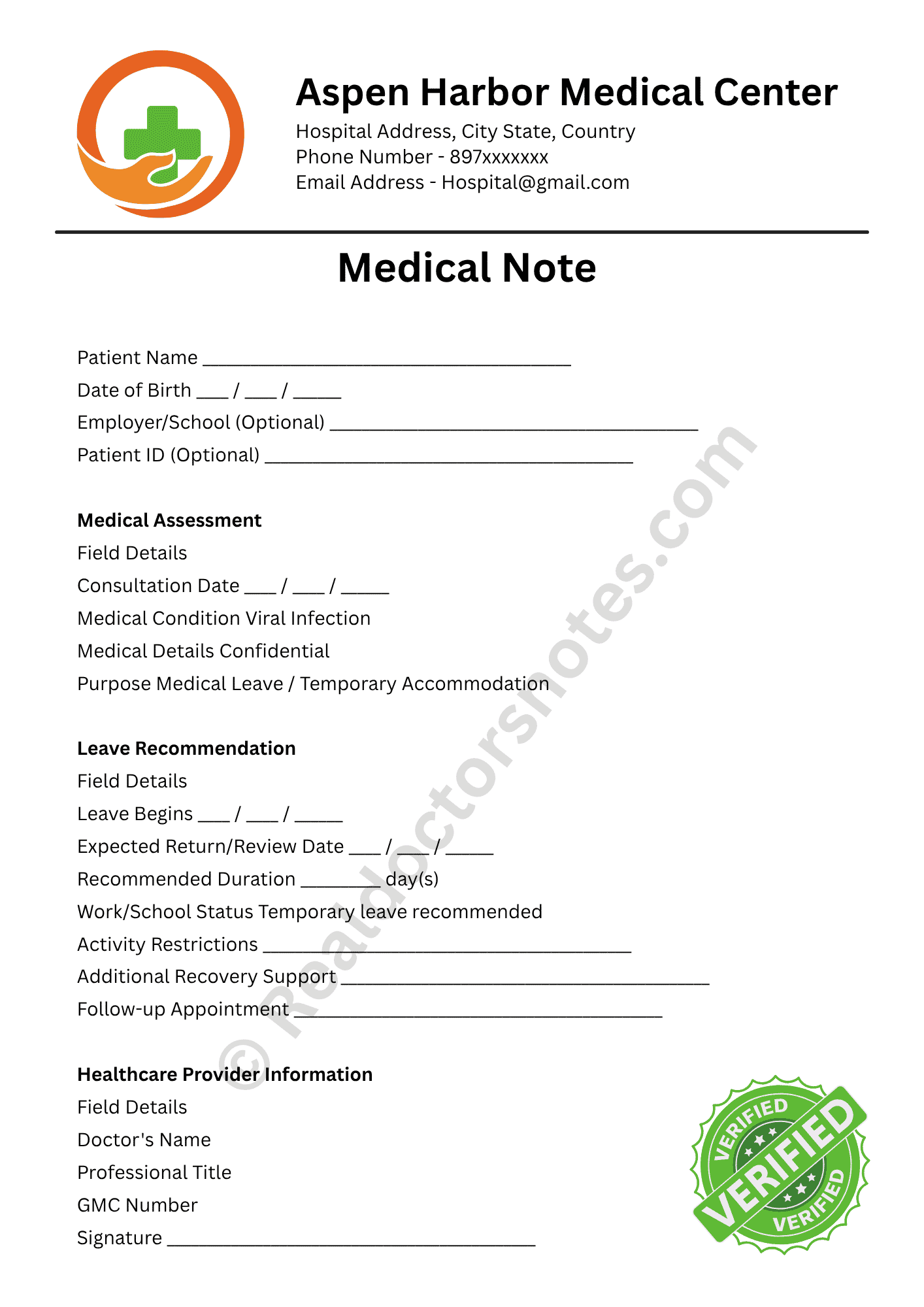
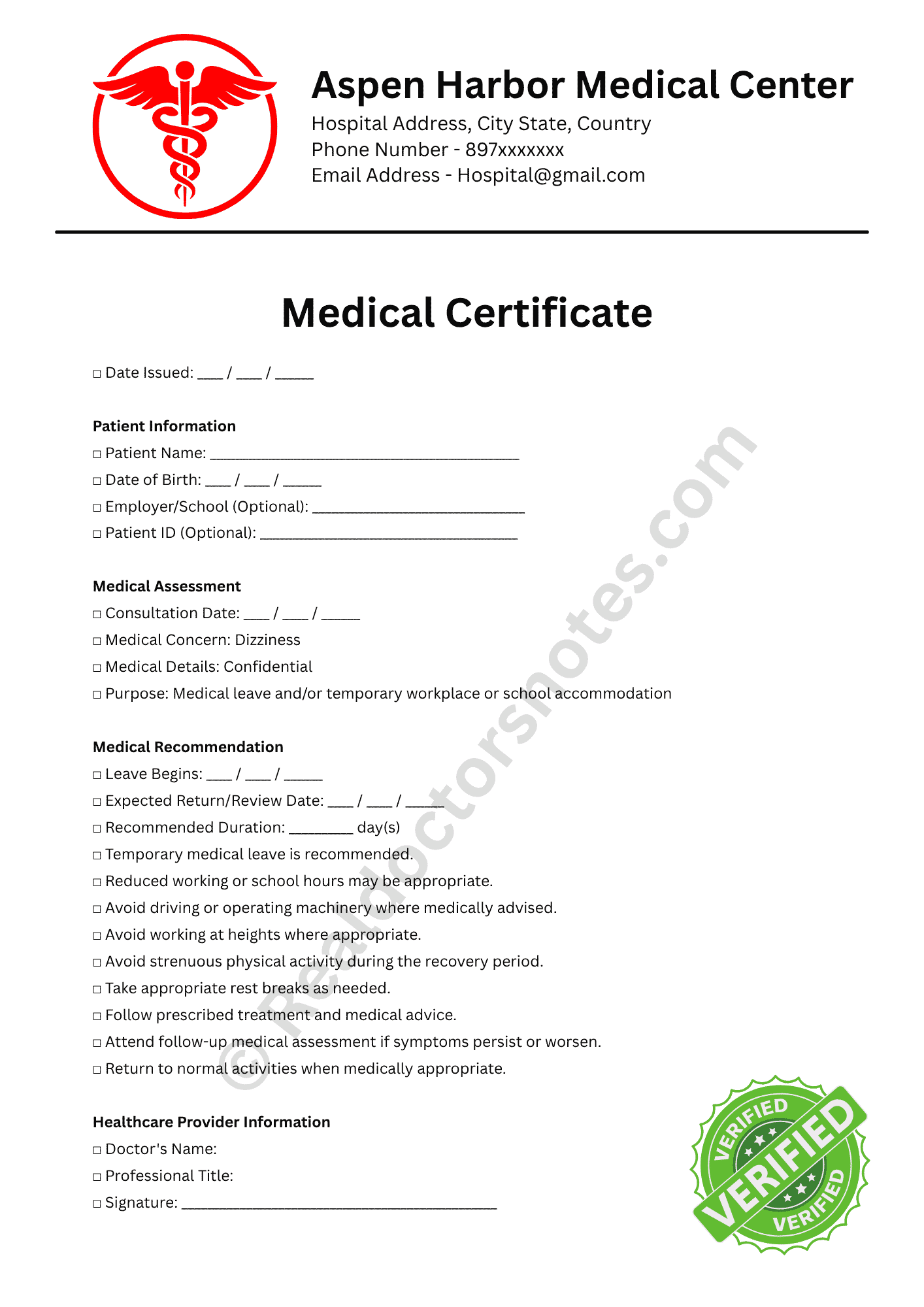
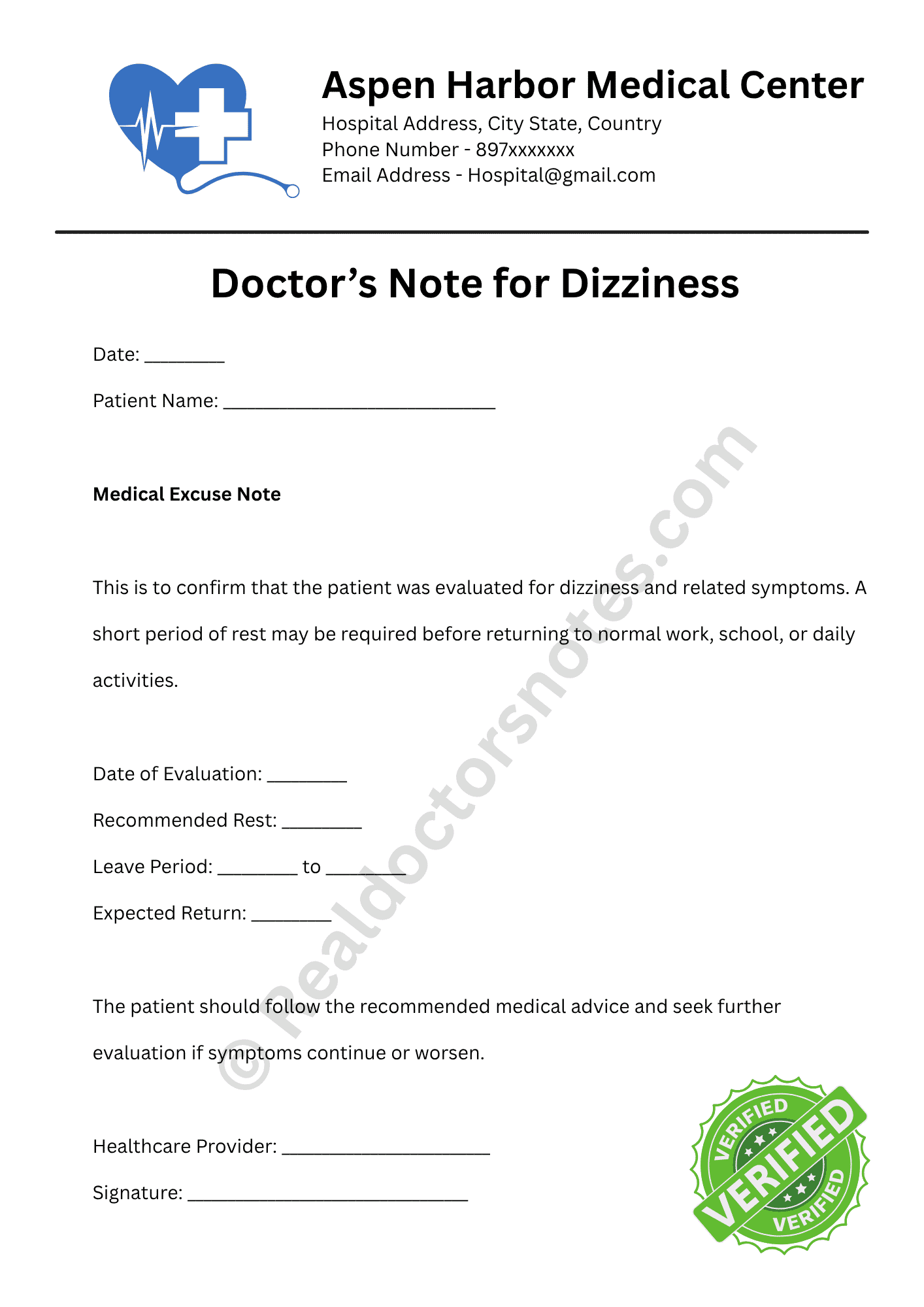
When medically appropriate, documentation may include:
- Patient identification
- Date of medical evaluation
- General reason for the visit
- Confirmation that the patient was evaluated
- Recommended period of rest or absence, when appropriate
- Work or activity restrictions, if necessary
- Expected return-to-work or return-to-school date, when appropriate
- Follow-up recommendations
- Healthcare professional’s name and credentials
- Appropriate professional contact or practice information
Medical documentation should contain only information that is appropriate and authorized for the intended purpose. A healthcare professional can determine what information should be disclosed.
Can Dizziness Be a Reason to Miss Work?
Yes. Depending on its severity and underlying cause, dizziness can temporarily interfere with a person’s ability to work safely or effectively.
Someone who feels dizzy may have difficulty concentrating, walking steadily, standing for long periods, or completing tasks that require coordination. Driving or operating machinery while dizzy may also create safety concerns.
Whether someone should stay home from work depends on the symptoms, their cause, the person’s job duties, and the healthcare professional’s assessment.
For example, a person with mild dizziness who works remotely may have different limitations from someone whose job requires driving, climbing, lifting, or operating machinery.
Can You Get a Doctor’s Note for Dizziness Online?
Some healthcare services offer telehealth appointments for appropriate symptoms. During an online consultation, a healthcare professional may ask about the dizziness, when it started, how frequently it occurs, possible triggers, medications, associated symptoms, and relevant medical history.
If the clinician determines that an in-person examination is necessary, they may recommend an office visit or urgent evaluation instead.
Whether a healthcare professional can provide documentation after a telehealth consultation depends on the provider, clinical circumstances, applicable laws and regulations, and the organization’s documentation requirements.
An online doctor’s note should never be based solely on a self-reported request for a specific diagnosis or predetermined period of leave. Medical documentation should reflect an actual professional assessment.
What Happens During a Dizziness Evaluation?
A healthcare professional may ask detailed questions about the symptom rather than simply asking whether you feel “dizzy.”
You may be asked:
- Do you feel faint or as though the room is spinning?
- When did the symptoms begin?
- How long does each episode last?
- Does moving your head trigger the symptoms?
- Does standing up make the dizziness worse?
- Have you recently been sick?
- Are you experiencing nausea or vomiting?
- Do you have headaches?
- Have you noticed hearing changes or ringing in your ears?
- Have you started or changed any medications?
- Have you experienced weakness, numbness, vision changes, or difficulty speaking?
Depending on the symptoms, the healthcare professional may perform an examination and decide whether additional testing or specialist evaluation is appropriate.
Providing accurate information about the timing, triggers, severity, and associated symptoms can make the evaluation more useful.
How Is Dizziness Treated?
Treatment depends on the underlying cause rather than dizziness alone. For example, treatment may involve addressing dehydration, reviewing medications, managing an underlying ear or vestibular condition, or treating another medical problem responsible for the symptoms. Some patients with balance-related conditions may benefit from vestibular rehabilitation.
While experiencing dizziness, basic safety measures can help reduce the chance of falling or injury. The NHS recommends lying down until the dizziness passes, getting up slowly, staying hydrated, and avoiding potentially dangerous activities such as driving, climbing ladders, or using heavy machinery while dizzy.
Do not stop or change prescription medication on your own simply because you suspect it is causing dizziness. Discuss medication-related symptoms with a healthcare professional.
When Should You Seek Medical Attention for Dizziness?
You should consider contacting a healthcare professional if dizziness:
- Keeps coming back
- Does not go away
- Starts suddenly
- Has no obvious cause
- Interferes with daily activities
- Is accompanied by hearing or vision changes
- Occurs with fainting or significant weakness
Repeated or unexplained dizziness deserves medical attention because the symptom can have many different causes.
When Is Dizziness an Emergency?
Severe or sudden dizziness can sometimes occur with serious medical conditions. Seek emergency medical care if dizziness occurs with symptoms such as sudden severe headache, chest pain, difficulty breathing, fainting, seizures, severe trouble walking, new weakness or numbness, confusion, slurred speech, double vision, sudden hearing changes, or ongoing vomiting.
Sudden dizziness or loss of balance can also be a warning sign of stroke when it occurs with other neurological symptoms such as sudden weakness or numbness, trouble speaking, vision problems, or difficulty walking. The CDC recommends calling emergency services immediately when stroke warning signs occur.
Dizziness and Workplace Safety
Dizziness does not only affect comfort; it can affect safety. A person who feels unsteady may have difficulty performing tasks that require balance, coordination, quick reactions, or sustained attention.
If dizziness affects your ability to safely perform your job, a healthcare professional can assess whether temporary restrictions or time away from work are appropriate.
This can be especially important for employees who:
- Drive as part of their job
- Operate machinery
- Work on ladders or elevated surfaces
- Work in construction or industrial environments
- Handle hazardous materials
- Perform physically demanding duties
- Have safety-sensitive responsibilities
The goal of medical documentation is not simply to excuse an absence. When appropriate, it can communicate medically recommended limitations while helping protect the patient’s health and workplace safety.
How Long Should You Stay Home With Dizziness?
There is no universal number of days that applies to everyone with dizziness.
The appropriate recovery period depends on the underlying cause, severity of symptoms, treatment, response to treatment, and type of work or activity involved.
Someone with a short episode of mild dizziness may recover quickly, while another person with persistent vertigo or an underlying condition may need additional evaluation and activity restrictions.
A healthcare professional can provide individualized guidance instead of relying on a fixed number of days.
What Information Should You Tell Your Doctor?
Before an appointment, consider writing down:
- When the dizziness started
- How often it happens
- How long episodes last
- Whether you feel spinning or lightheadedness
- What seems to trigger it
- Whether standing or moving your head makes it worse
- Other symptoms occurring at the same time
- Recent illnesses or injuries
- Current medications and recent medication changes
- Whether dizziness is affecting work, school, driving, or daily activities
These details can help your healthcare professional understand the pattern of symptoms and determine what evaluation may be appropriate.


Reviews
There are no reviews yet.