![Real Doctors Note For Work and School [Get in 5 Minutes]](https://realdoctorsnotes.com/wordpress/wp-content/uploads/2025/11/2.png)

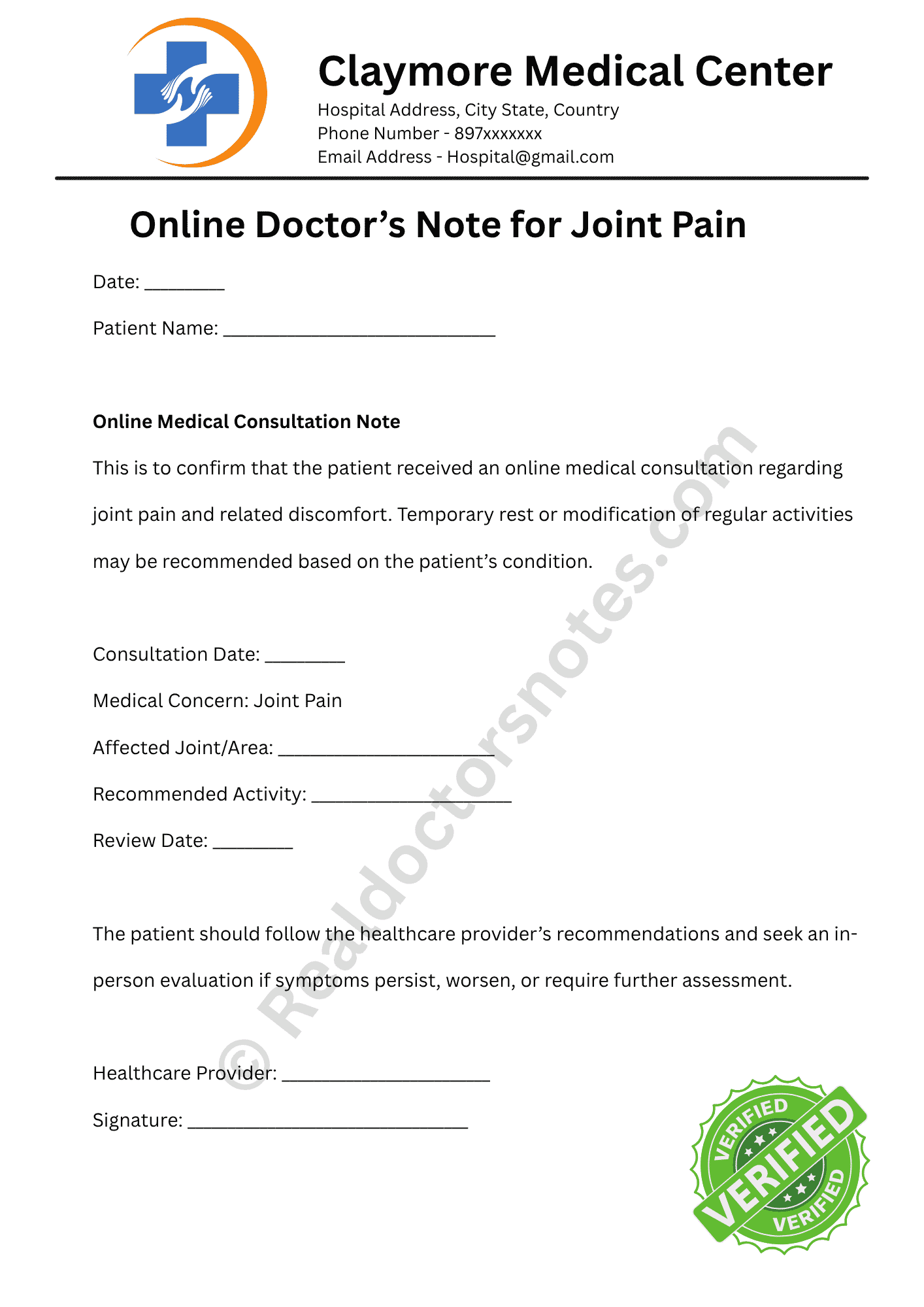
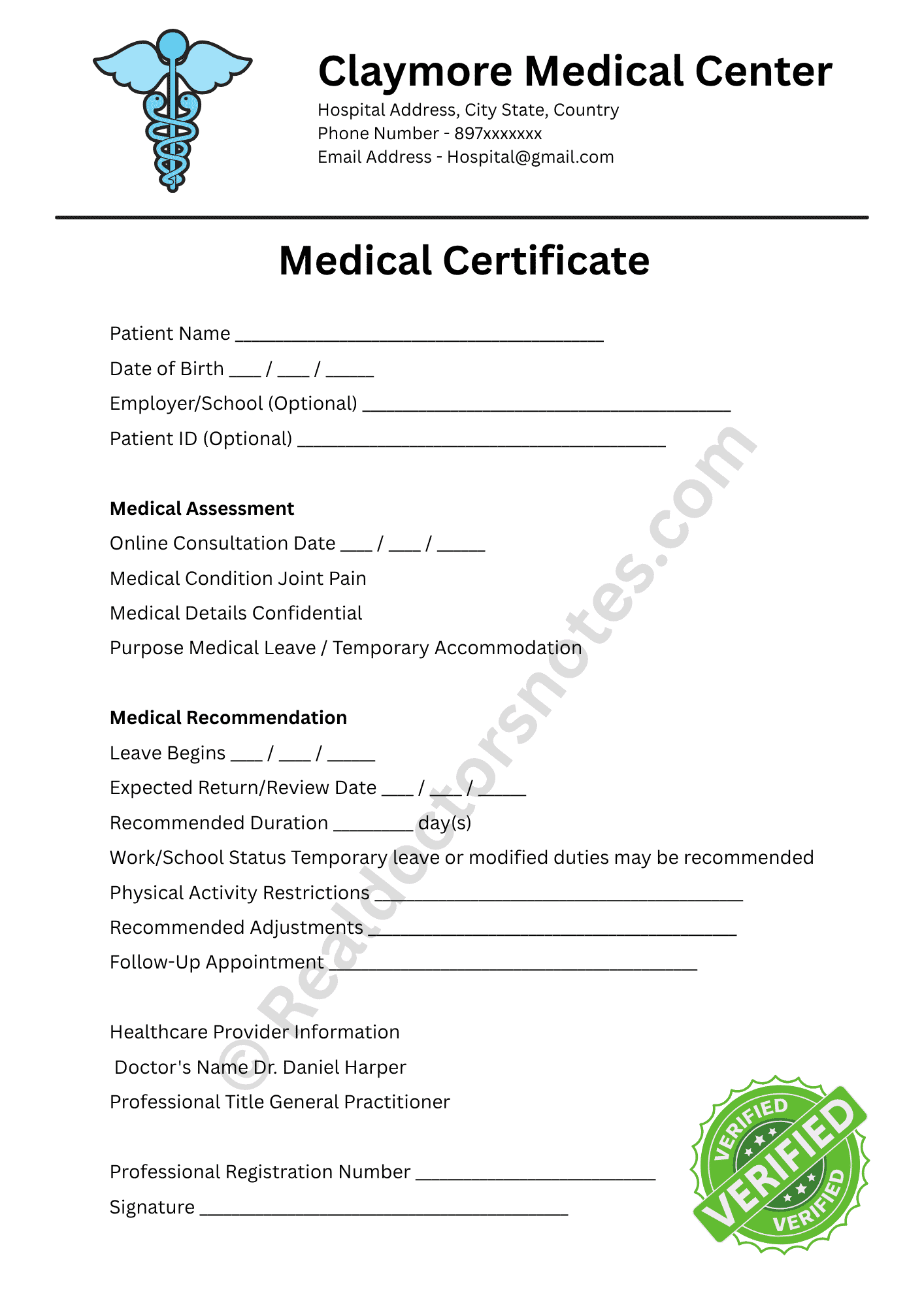
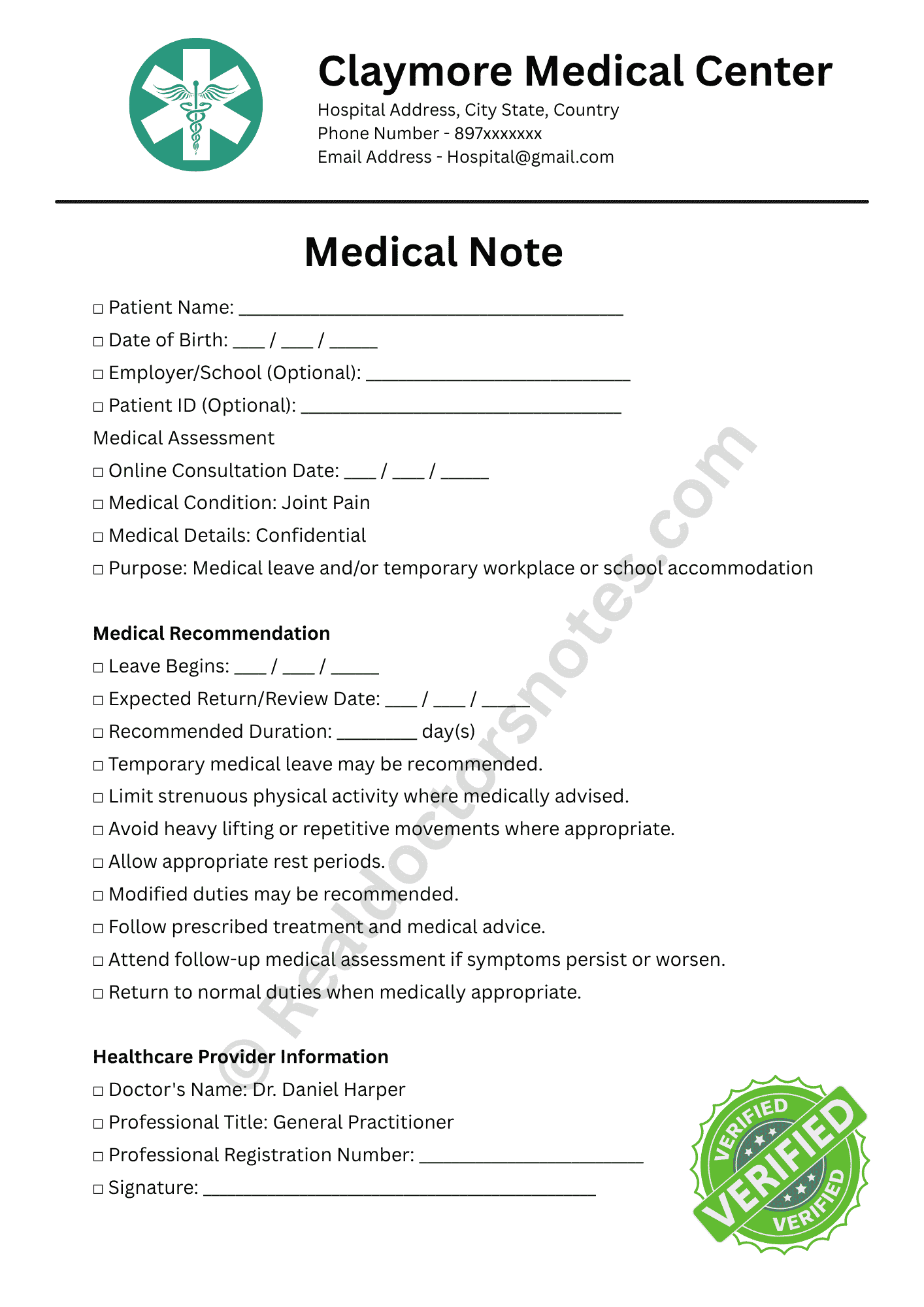



Online Doctor’s Note for Joint pain can make everyday activities such as walking, standing, typing, lifting, exercising, or working uncomfortable. It may affect one joint or several joints and can occur because of an injury, overuse, arthritis, gout, inflammation, infection, or another underlying condition.
If joint pain is affecting your ability to perform your normal work or school responsibilities, an online medical consultation may help determine whether you need evaluation, treatment, activity restrictions, or time away from your usual activities. A doctor’s note should be based on an appropriate clinical assessment rather than simply requested or purchased.
What Is Joint Pain?
Joint pain, medically referred to as arthralgia, is discomfort occurring in or around a joint. It can range from mild soreness to severe pain and may be temporary or persistent.
Common areas affected include:
- Knees
- Hips
- Shoulders
- Wrists
- Fingers
- Ankles
- Elbows
- Feet
Joint pain may occur with stiffness, swelling, warmth, tenderness, redness, or reduced movement. The symptoms and their combination can provide useful clues about the possible cause.
Common Causes of Joint Pain
Joint pain does not always mean that you have arthritis. Several different conditions can cause similar symptoms.
Arthritis
Osteoarthritis and rheumatoid arthritis are common causes of joint pain. Osteoarthritis frequently affects the knees, hips, hands, and spine, while rheumatoid arthritis can cause pain and stiffness in multiple joints.
Injury or Overuse
Sprains, strains, sports injuries, repetitive movements, and physically demanding activities can cause temporary joint discomfort. Overuse may also contribute to conditions such as bursitis and tendinitis.
Gout
Gout can cause sudden, intense pain, particularly in the big toe. The affected joint may become swollen, warm, and extremely tender.
Inflammation or Infection
A hot, swollen joint accompanied by fever or feeling generally unwell can sometimes indicate a joint infection and requires prompt medical attention.
Other Medical Conditions
Autoimmune conditions such as lupus, certain viral infections, and other musculoskeletal disorders can also produce joint pain. This is why persistent or unexplained symptoms should not be self-diagnosed.
Symptoms That May Accompany Joint Pain
Depending on the underlying cause, you may experience:
- Joint stiffness
- Swelling
- Redness
- Warmth around the joint
- Tenderness
- Reduced range of motion
- Pain when moving
- Difficulty walking or using the affected limb
- Morning stiffness
- Pain after physical activity
Keeping track of when the pain started, what makes it better or worse, and whether swelling or other symptoms are present can help a healthcare professional evaluate the problem.
When Should You Consider an Online Doctor’s Note for Joint Pain?
An online doctor’s note for joint pain may be appropriate when a healthcare professional evaluates your symptoms and determines that your condition temporarily affects your ability to work, attend school, exercise, or perform specific activities.
For example, joint pain may make it difficult to:
- Stand for long periods
- Walk or climb stairs
- Lift or carry objects
- Perform repetitive movements
- Sit comfortably for extended periods
- Complete physically demanding work
- Participate in sports or physical education
The appropriate documentation depends on your symptoms, medical assessment, workplace or school requirements, and applicable policies.
How an Online Consultation for Joint Pain Works
A legitimate online medical consultation generally begins with a review of your symptoms and medical history.
A healthcare professional may ask:
- Which joint is painful?
- When did the pain begin?
- Did an injury or unusual activity occur beforehand?
- Is the pain constant or intermittent?
- Is there swelling, redness, or warmth?
- Does movement make the pain worse?
- Are you experiencing fever or other symptoms?
- Have you experienced similar pain previously?
- Are you currently taking any medications?
- Is the pain affecting your ability to work or complete normal activities?
Depending on the situation, the clinician may recommend an in-person examination, imaging, laboratory testing, physical therapy, or another form of medical evaluation. Joint pain sometimes requires blood tests, X-rays, joint-fluid testing, or other investigations to identify its cause.
What Can a Doctor’s Note for Joint Pain Include?
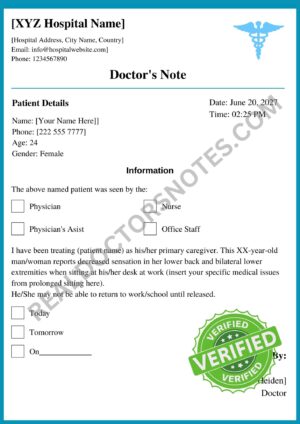
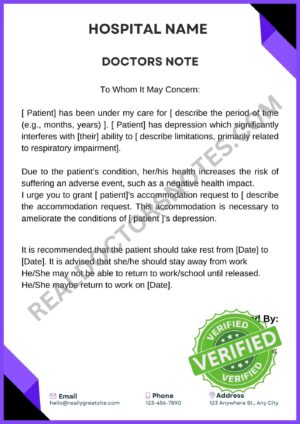
If medically appropriate, documentation may state that a patient was evaluated for a health condition and may include relevant work or activity recommendations.
Depending on the clinician’s assessment and applicable requirements, documentation could address:
- Date of medical evaluation
- General medical reason for absence
- Recommended period away from work or school
- Temporary activity restrictions
- Return-to-work recommendations
- Follow-up instructions
The exact information included should be determined by the healthcare professional and the requirements of the organization requesting the documentation.
Can Joint Pain Qualify You for Time Off Work?
Potentially, yes. The decision depends on the severity and cause of the symptoms and whether they interfere with essential job duties.
For example, someone whose job requires prolonged standing may have difficulty working with significant knee or ankle pain. Similarly, repetitive hand or wrist pain may interfere with typing, lifting, or manual work.
A medical professional can assess whether temporary rest, modified duties, or time away from work is medically reasonable.
Importantly, a doctor’s note does not automatically guarantee that an employer will approve leave. Workplace policies and applicable employment laws may determine what documentation is required.
Managing Mild Joint Pain at Home
For mild joint pain, appropriate self-care may help while you monitor your symptoms.
Depending on the cause, options can include:
- Resting the affected joint from activities that worsen symptoms
- Using an ice pack wrapped in a towel for short periods
- Gentle movement and stretching when appropriate
- Maintaining regular low-impact physical activity
- Using over-the-counter pain medication only when appropriate for you
- Discussing medication choices with a pharmacist or healthcare professional
Completely stopping movement for prolonged periods may not be helpful for many joint conditions. Gentle movement, stretching, strengthening, and low-impact activities can support mobility when medically appropriate.
When Is Joint Pain an Emergency?
Not all joint pain requires urgent care, but certain symptoms should not be managed solely through an online consultation.
Seek urgent medical attention if you have severe joint pain with significant swelling, fever, or a joint that is hot and red, because infection is one possible cause.
After an injury, seek immediate medical evaluation if:
- The joint appears deformed
- You cannot put weight on it
- You cannot use the affected joint
- There is severe pain or sudden swelling
- You develop numbness or tingling around the injured area
These symptoms can indicate a significant injury or dislocation requiring in-person care.
How Long Should Joint Pain Last?
The duration varies significantly depending on the cause. Pain from a minor strain may improve with appropriate care, while arthritis and other chronic conditions can cause recurring or long-lasting symptoms.
Consider speaking with a healthcare professional if the pain persists, repeatedly returns, becomes worse, interferes with sleep or daily activities, or is accompanied by significant swelling or stiffness. NHS guidance also recommends medical evaluation when joint pain has not improved after home treatment or when morning stiffness lasts more than 30 minutes.
Online Doctor’s Note for Joint Pain: What to Know
An online consultation can be convenient when joint pain makes traveling to a clinic difficult, but it cannot replace an in-person examination when physical examination, imaging, laboratory testing, or urgent treatment is necessary.
A responsible online medical service should focus first on evaluating your symptoms and determining appropriate care. If your symptoms suggest a serious injury, infection, or another condition requiring hands-on assessment, you may be directed to an in-person healthcare facility.
The goal should be appropriate medical care—not simply obtaining documentation.
FAQs
Q. Can I get an online doctor’s note for joint pain?
If an online clinician determines that your symptoms warrant medical documentation, they may provide appropriate documentation according to their clinical judgment and applicable requirements.
Q. Can joint pain be a reason to miss work?
Yes, significant joint pain can interfere with work, particularly when a person’s job involves standing, walking, lifting, repetitive movements, or other physical activities. A healthcare professional can determine whether restrictions or time away are medically appropriate.
Q. Can arthritis cause joint pain?
Yes. Arthritis is one of the most common causes of joint pain, although there are many different forms of arthritis and other conditions that can cause similar symptoms.
Q. Can joint pain happen without arthritis?
Yes. Injuries, overuse, bursitis, tendinitis, gout, infections, and several other conditions can cause joint pain without being caused by arthritis.
Q. Can an online doctor diagnose joint pain?
An online clinician may be able to assess symptoms and determine whether an uncomplicated condition can be managed remotely. However, some causes require a physical examination, imaging, blood tests, or joint-fluid testing.




Reviews
There are no reviews yet.