![Real Doctors Note For Work and School [Get in 5 Minutes]](https://realdoctorsnotes.com/wordpress/wp-content/uploads/2025/11/2.png)


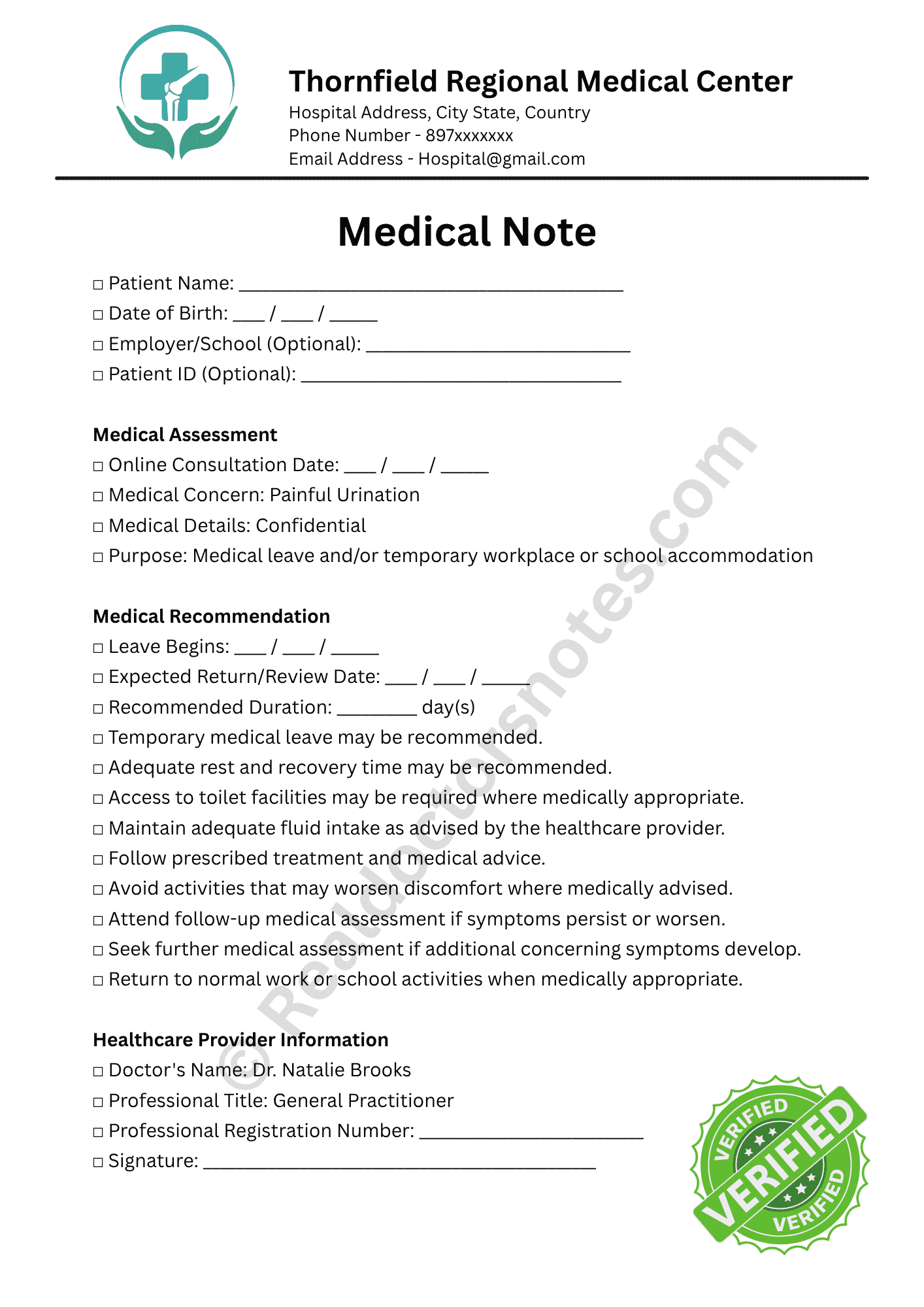
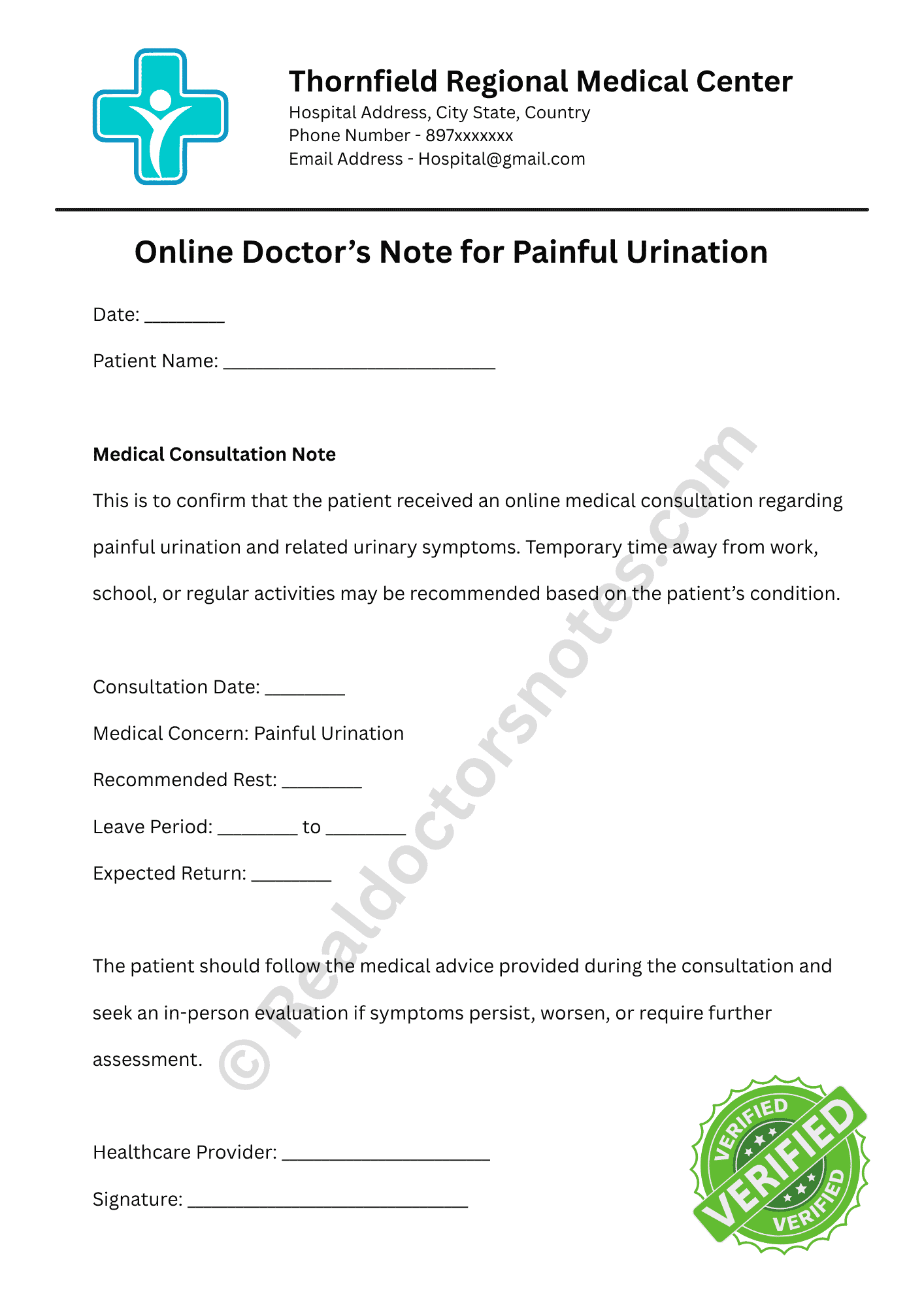




Painful urination, medically known as dysuria, can make everyday activities uncomfortable and may interfere with work, school, travel, or other responsibilities. A burning or painful sensation while urinating can have several possible causes, including a urinary tract infection (UTI), bladder inflammation, irritation, kidney stones, or certain sexually transmitted infections. Because the appropriate treatment depends on the underlying cause, persistent or severe symptoms should be evaluated by a qualified healthcare professional.
If painful urination is affecting your ability to work or attend school, an online doctor consultation may be a convenient way to discuss your symptoms. Depending on the medical assessment and the requirements of your employer or school, a healthcare provider may determine whether medical documentation is appropriate.
Related Post:
- Online Doctors Note for Urinary Tract Infection
- Doctors Note for UTI
- Doctors Note for Ulcerative Colitis
What Is Painful Urination?
Painful urination refers to discomfort, burning, stinging, or pain experienced while passing urine. The medical term for this symptom is dysuria.
The discomfort may occur at the beginning of urination, throughout the process, or immediately afterward. Some people may also experience other urinary symptoms, such as frequent urination, an urgent need to urinate, cloudy urine, or lower abdominal discomfort.
Painful urination is a symptom rather than a diagnosis. A healthcare professional may need to determine what is causing it before recommending treatment or providing medical documentation.
Common Causes of Painful Urination
Several conditions can cause dysuria. Common possibilities include:
- Urinary tract infection (UTI): A bacterial infection affecting part of the urinary system can cause burning, frequent urination, urgency, and pelvic discomfort.
- Bladder infection or cystitis: Inflammation or infection of the bladder may cause painful urination and increased urinary frequency.
- Kidney stones: Stones can cause significant pain and may sometimes be accompanied by blood in the urine.
- Urethral irritation: Certain personal-care products, soaps, lubricants, or other irritants may cause discomfort.
- Sexually transmitted infections (STIs): Some infections can cause burning during urination and genital symptoms.
- Vaginal infections: Conditions affecting the vagina can sometimes cause irritation that feels worse when urine passes over inflamed tissue.
- Prostate-related conditions: In men, prostate inflammation or other prostate problems may contribute to urinary discomfort.
Because different conditions can produce similar symptoms, self-diagnosing the cause may lead to inappropriate treatment.
Can You Get an Online Doctor’s Note for Painful Urination?
Potentially, yes. A licensed healthcare professional may provide medical documentation when they have evaluated your condition and determine that documentation is medically appropriate.
An online doctor’s note for painful urination is not automatically issued simply because someone reports urinary discomfort. A clinician may review your symptoms, medical history, medications, duration of symptoms, and other relevant information before deciding whether a note is appropriate.
The documentation may state that you were medically evaluated and, when clinically justified, may recommend time away from work or school. The exact information included depends on the provider and the requirements of the organization requesting the documentation.
When Might a Painful Urination Doctor’s Note Be Helpful?
A painful urination medical certificate may be relevant when symptoms make it difficult to perform normal responsibilities.
For example, a healthcare provider may consider documentation when urinary symptoms are causing:
- Frequent trips to the bathroom
- Significant burning or discomfort
- Difficulty concentrating at work or school
- Pelvic or lower abdominal discomfort
- Fatigue associated with an infection
- A need to attend a medical appointment or testing
- A medically recommended period of rest
Whether an employer, school, airline, insurer, or another organization accepts the documentation depends on its own policies.
Online Doctor Consultation for Dysuria
An online consultation can be useful for discussing uncomplicated urinary symptoms with a healthcare professional. During a telehealth appointment, the clinician may ask about:
- When the painful urination started
- Whether the discomfort is burning, stabbing, aching, or another sensation
- How frequently you are urinating
- Whether you have urinary urgency
- Whether you have noticed blood in your urine
- Whether you have fever or chills
- Whether you have back, side, or pelvic pain
- Any previous urinary infections
- Current medications and relevant medical history
Depending on the symptoms, the provider may recommend an in-person examination, urine testing, or another form of evaluation.
Painful Urination and a UTI Doctor’s Note
A UTI doctor’s note may be appropriate when a healthcare professional evaluates a patient and determines that a urinary tract infection is present or strongly suspected.
Typical UTI symptoms can include burning while urinating, frequent urination, urinary urgency, and lower abdominal discomfort. However, these symptoms can occur with other conditions as well.
A clinician may recommend urine testing when necessary. If a UTI is diagnosed, treatment may depend on the patient’s symptoms, medical history, test results, and other clinical factors.
A doctor’s note should document a genuine medical evaluation rather than simply being used as proof of an illness that has not been assessed.
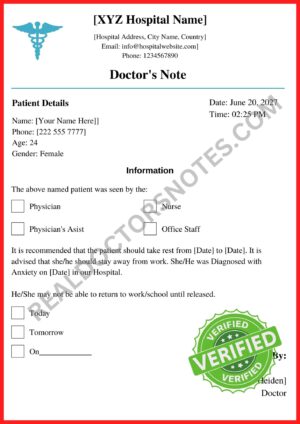
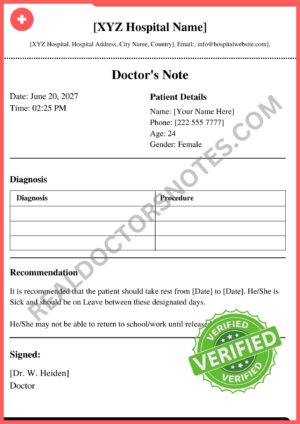
What Can a Medical Certificate for Urinary Infection Include?
The exact format varies between healthcare providers and organizations. Depending on the situation, legitimate medical documentation may include:
- Patient’s name
- Date of medical evaluation
- General statement that the patient was evaluated
- Relevant medical condition or reason for the visit, when appropriate
- Recommended period of absence or restriction, if medically necessary
- Date of expected return, when appropriate
- Healthcare professional’s name and credentials
- Provider or clinic information
- Signature or other applicable authentication
Some workplaces and schools may require specific information while others may have their own forms.
Burning Urination Excuse Note for Work
If burning urination is interfering with your ability to work, consider speaking with a healthcare professional rather than relying on an informal excuse.
A clinician can assess whether the symptoms are consistent with a condition that may require treatment or temporary activity restrictions. If medically justified, the provider may issue documentation supporting an absence or recommending appropriate workplace accommodations.
Employers may have different policies regarding when a doctor’s note is required, so it is important to check your workplace’s requirements.
Doctor’s Note for Painful Urination and School Absence
Students experiencing painful urination may also need medical documentation if symptoms prevent them from attending school.
A healthcare professional can evaluate the symptoms and determine whether staying home is medically appropriate. If documentation is warranted, the provider can explain the relevant dates or restrictions according to the school’s requirements.
Parents or guardians should seek prompt medical care for children with urinary symptoms, particularly when symptoms are severe or accompanied by fever, vomiting, or significant pain.
What to Expect During an Online Medical Evaluation
An online consultation generally begins with questions about your symptoms and medical history. The provider may ask additional questions to determine whether the condition can reasonably be assessed remotely.
The clinician may then:
- Review your reported symptoms.
- Ask about relevant medical and medication history.
- Assess whether urgent in-person care is necessary.
- Recommend testing if the symptoms require confirmation.
- Discuss appropriate next steps.
- Determine whether medical documentation is appropriate based on the evaluation.
An online consultation does not replace emergency medical care when serious symptoms are present.
When Painful Urination Requires Urgent Medical Care
Painful urination can sometimes be associated with a more serious infection or another condition requiring prompt evaluation.
Seek urgent medical attention if painful urination occurs with symptoms such as:
- High fever or chills
- Severe back or side pain
- Significant abdominal or pelvic pain
- Vomiting or inability to keep fluids down
- Blood in the urine
- Confusion, severe weakness, or feeling seriously unwell
- Difficulty passing urine
- Rapidly worsening symptoms
People who are pregnant, have significant underlying medical conditions, or have recurrent urinary problems may also require more individualized medical assessment.
How to Prepare for an Online Doctor Appointment
Before your appointment, write down when the symptoms began and how they have changed. It can also help to note how frequently you urinate, whether you have urgency, whether your urine appears unusual, and whether you have experienced fever or pain elsewhere.
Have a list of current medications and relevant medical conditions available. If you have previously been diagnosed with urinary infections or have recent test results, share that information with your healthcare provider when appropriate.
Good preparation can help the clinician understand your symptoms more efficiently.
Is an Online Doctor’s Note Legitimate?
An online doctor’s note can be legitimate when it is issued by a qualified healthcare professional following an appropriate medical evaluation.
However, legitimacy depends on factors such as the provider’s credentials, the quality of the medical assessment, and whether the documentation accurately reflects the patient’s situation.
A medical certificate should never falsely claim that a person was examined, diagnosed, or treated when that did not happen. Employers, schools, insurers, and other organizations may also independently determine whether they will accept telehealth documentation.
What If Your Symptoms Are Not From a UTI?
Not every case of painful urination is caused by a UTI. If symptoms continue despite an initial evaluation or treatment, further assessment may be necessary.
A clinician may consider other possibilities, including kidney stones, urethral irritation, sexually transmitted infections, vaginal conditions, or prostate-related problems.
This is why obtaining an accurate medical assessment is more useful than simply requesting a dysuria doctor’s note without determining the underlying cause.
FAQs
Q. Can I get a doctor’s note for painful urination online?
A licensed healthcare professional may provide medical documentation after an appropriate online evaluation if they determine that a doctor’s note is medically justified. The provider’s decision depends on your symptoms and clinical circumstances.
Q. Can a UTI qualify for a doctor’s note?
A diagnosed or clinically evaluated UTI may qualify for medical documentation when symptoms interfere with work, school, or other responsibilities. Acceptance depends on the organization’s policy.
Q. What is dysuria?
Dysuria is the medical term for painful or uncomfortable urination. It may feel like burning, stinging, or pain and can have several different causes.
Q. Can painful urination be treated through telehealth?
Some urinary symptoms can initially be evaluated through telehealth. However, a clinician may recommend urine testing or an in-person examination when the symptoms cannot be safely assessed remotely.
Q. How long should painful urination last?
The duration depends on the underlying cause. Symptoms that persist, worsen, or occur with other concerning symptoms should be medically evaluated rather than ignored.





Reviews
There are no reviews yet.