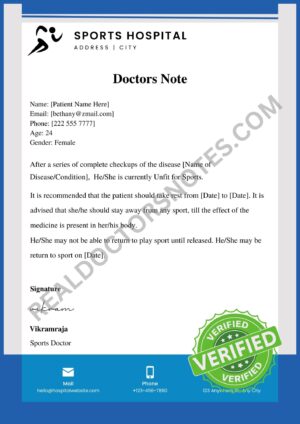
Doctors Note for Weight Watchers
Doctors Note for Weight Watchers Template [Printable]
$21.00 Original price was: $21.00.$19.00Current price is: $19.00. Add to cart
Sale!

Doctors Note for Weight Watchers Template [Printable]

Original price was: $21.00.Current price is: $19.00.

-10%

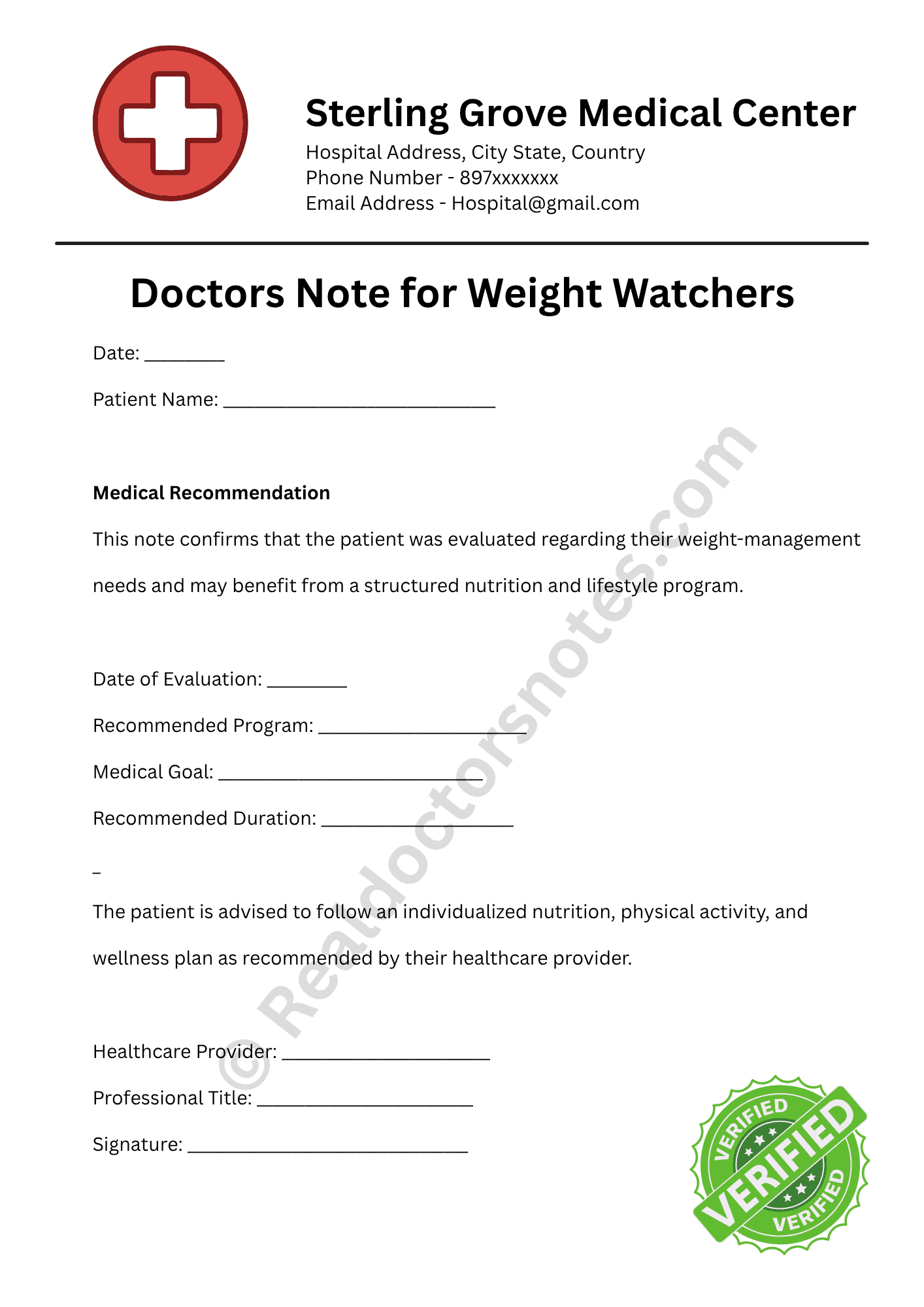
A doctors note for weight watchers is a formal letter from a healthcare provider that confirms an individual is actively engaging in a weight management program under medical supervision.  

Fast, Secure & Doctor Verified

  • 🔒 Secure SSL Checkout
  • 📧 Instant Appointment Confirmation
  • 👨‍⚕️ Licensed Doctor Consultation
  • ⭐ Trusted by Thousands of Patients
  • 📞 Customer Support Available
Guaranteed Safe Checkout

This Doctors Note for weight watchers is typically used to validate the person’s participation in a structured program like Weight Watchers, where dietary and lifestyle changes are made to promote healthy weight loss. It may outline specific health concerns, such as obesity, high blood pressure, or diabetes, that require the individual to follow a weight loss plan.  

The Doctors Note for weight watchers can also include recommendations or guidelines from the doctor regarding physical activity, diet, and other health-related factors. It may be used to justify time off for medical appointments, participation in weight management classes, or accommodations in a workplace or school environment to support the individual’s health goals. This type of documentation helps ensure that the person receives the necessary support and understanding in their efforts to improve their health. 

Printable Doctors Note for weight watchers Template

A doctor’s note for Weight Watchers plays a crucial role in supporting individuals who are part of this structured weight management program.  

Medical Validation for Weight Loss: 

The note provides a professional endorsement that weight loss is necessary for the individual’s health, especially for those dealing with obesity-related conditions like diabetes, hypertension, or high cholesterol.  

Access to Insurance Benefits: 

Some health insurance plans offer coverage or discounts for weight management programs, but they may require a doctor’s note as proof of medical necessity. 

Supports Workplace Health Programs: 

Employers who offer wellness programs may require a doctor’s note to allow employees to participate in weight management initiatives during work hours.  

Encourages Commitment and Accountability: 

Having a doctor’s note adds an extra layer of commitment to the weight loss journey. Knowing that a healthcare professional is monitoring their progress can motivate individuals to stay dedicated to their health goals. 

Secures Dietary Accommodations: 

For individuals attending events, schools, or workplaces where food is provided, a doctor’s note can request specific dietary accommodations.  

Provides Support for Physical Limitations: 

Those with medical conditions that limit physical activity may need modifications to their exercise routine.  

Protects Against Medical Risks: 

By confirming that the weight loss program is supervised, the note ensures that the individual’s health is safeguarded.  

Promotes Mental Health and Well-being: 

The support of a healthcare professional can alleviate anxiety or self-doubt related to weight loss, providing reassurance that the individual is making safe and healthy choices.  

Helps with Time Off for Health Reasons: 

The note can justify time off for attending Weight Watchers meetings, workshops, or medical check-ups, ensuring that individuals are not penalized for prioritizing their health. 

Encourages a Holistic Approach to Health: 

It emphasizes that weight management is part of a broader healthcare plan, promoting a balanced approach to physical and mental well-being, rather than just focusing on the numbers on the scale. 

A doctor’s note for Weight Watchers is not just a formality; it plays a vital role in supporting individuals’ weight loss journeys by providing medical validation, access to resources, and tailored accommodations. It helps bridge the gap between health goals and practical support, ensuring that participants can safely and effectively manage their weight under professional guidance. 

Who May Need a Weight Watchers Doctor’s Note?

A Doctors Note for Weight Watchers may be helpful for individuals whose healthcare provider believes that structured weight management could improve their overall health. While not everyone needs medical documentation to join a weight loss program, certain employers, insurance plans, or reimbursement programs may request proof that participation has been recommended by a licensed healthcare professional.

Individuals with Obesity

People living with obesity often benefit from medically supervised weight management. A physician may recommend a structured program to support gradual, sustainable weight loss while monitoring overall health.

People with Type 2 Diabetes

Weight management may improve blood sugar control and support diabetes management. Healthcare providers sometimes recommend supervised lifestyle changes alongside other treatments.

Patients with High Blood Pressure

Excess weight can contribute to hypertension. A physician may recommend a structured weight management program as part of an overall heart-healthy treatment plan.

Individuals with High Cholesterol

Healthy weight loss may help improve cholesterol levels when combined with balanced nutrition, regular physical activity, and medical care.

Women with PCOS

Many women with polycystic ovary syndrome (PCOS) benefit from weight management strategies that may help support hormonal balance and metabolic health.

People with Sleep Apnea

Weight reduction may help decrease the severity of obstructive sleep apnea in some individuals. A physician may recommend supervised weight management as part of a broader treatment approach.

Individuals with Joint Pain

Carrying excess body weight can increase stress on the knees, hips, and lower back. Weight management may help reduce discomfort and improve mobility.

Patients with Heart Disease Risk Factors

Individuals at risk for cardiovascular disease may receive recommendations for medically supervised weight management to support overall heart health.

Individuals Seeking Employer Wellness Benefits

Some workplace wellness programs require documentation from a healthcare provider before employees can receive incentives or reimbursement for participating in an approved weight management program.

When Is a Doctor’s Note Required?

Although many people can participate in weight management programs without documentation, there are situations where a Doctors Note for Weight Watchers may be requested.

Employer Wellness Programs

Some employers offer wellness incentives or reimburse employees who participate in approved weight management programs. Medical documentation may be required to verify eligibility.

Insurance Reimbursement

Certain health insurance plans may request documentation from a licensed healthcare provider before covering eligible weight management services or related expenses.

Flexible Spending Accounts (FSA) and Health Savings Accounts (HSA)

Depending on the plan and applicable rules, participants may need a physician’s recommendation or letter of medical necessity to support reimbursement for qualified expenses.

Medical Weight Management Programs

Clinics offering physician-supervised weight loss services may require documentation before enrolling patients in specialized treatment plans.

Workplace Health Accommodations

Employees who need scheduling flexibility or other accommodations to attend medically recommended appointments may be asked to provide supporting documentation.

School or University Health Programs

Some educational institutions may request medical documentation when a healthcare provider recommends specific dietary or wellness accommodations.

Ongoing Medical Care

A physician may issue documentation as part of a comprehensive treatment plan for patients managing obesity or related chronic health conditions.

What Information Is Included in a Doctors Note for Weight Watchers?

A professional Doctors Note for Weight Watchers generally contains clear, factual medical information while protecting the patient’s privacy.

Patient Information

  • Full name
  • Date of birth (if applicable)
  • Date of evaluation

Healthcare Provider Information

  • Physician’s name
  • Medical practice or clinic
  • Contact information
  • License information (when appropriate)

Medical Assessment

The note may state that the patient has been evaluated and that participation in a structured weight management program has been recommended based on the provider’s clinical judgment.

Medical Recommendation

The physician may indicate that the patient would benefit from participating in a medically supervised weight management program to support their overall health.

Duration (If Applicable)

Some notes specify the recommended duration of participation or include follow-up appointment recommendations.

Date of Issue

The document includes the date it was issued to establish when the medical recommendation was made.

Physician Signature

A licensed healthcare provider signs the document to confirm its authenticity.

Optional Supporting Information

Depending on the patient’s situation, the note may also include:

  • Body Mass Index (BMI), if clinically relevant
  • Weight management goals
  • Follow-up care recommendations
  • Lifestyle modification guidance
  • Referral to a nutrition or wellness program

A well-prepared Weight Watchers Doctor Note should contain only the information necessary for its intended purpose while respecting patient privacy and applicable healthcare regulations.

How the Online Process Works

Obtaining a Doctors Note for Weight Watchers through an online consultation is designed to be simple and convenient. Every request should be reviewed by a licensed healthcare provider, who determines whether issuing documentation is medically appropriate based on the patient’s health information and consultation.

Step 1: Complete a Secure Health Questionnaire

The process usually begins with a confidential online health form. Patients provide information about:

  • Current weight and height
  • Medical history
  • Existing health conditions
  • Current medications
  • Weight management goals
  • Lifestyle habits

Providing accurate information helps the healthcare provider perform a proper evaluation.

Step 2: Medical Review

A licensed healthcare provider carefully reviews the submitted information. Depending on the service, additional questions or a virtual consultation may be required to better understand the patient’s health status.

The physician evaluates whether participation in a structured weight management program is medically appropriate.

Step 3: Physician Evaluation

During the evaluation, the healthcare provider may consider factors such as:

  • Body Mass Index (BMI)
  • Obesity risk factors
  • Diabetes
  • Hypertension
  • High cholesterol
  • Heart health
  • Previous weight loss attempts
  • Overall medical history

This individualized assessment helps ensure that recommendations are based on the patient’s specific healthcare needs.

Step 4: Medical Recommendation

If medically appropriate, the healthcare provider may recommend participation in a structured weight management program and prepare the necessary medical documentation.

The recommendation is based on professional clinical judgment rather than simply requesting a note.

Step 5: Secure Delivery

After approval, the documentation may be securely delivered electronically, allowing patients to access it conveniently for its intended purpose, such as employer wellness programs or eligible reimbursement requests.

Benefits of Medical Weight Management

A medically supervised weight management program offers more than simply reducing body weight. It focuses on improving long-term health through evidence-based lifestyle changes and ongoing medical guidance.

Personalized Treatment Plan

Every individual has different health needs. A healthcare provider develops recommendations based on medical history, lifestyle, current conditions, and overall wellness goals.

Professional Medical Supervision

Working with a healthcare provider helps ensure that weight loss strategies are appropriate for the patient’s health condition while reducing the risk of unsafe dieting practices.

Improved Chronic Disease Management

Weight management may help support treatment for conditions such as:

  • Type 2 Diabetes
  • High Blood Pressure
  • High Cholesterol
  • Sleep Apnea
  • PCOS
  • Fatty Liver Disease

Although outcomes vary, healthy weight loss can improve overall health in many individuals.

Better Mobility

Reducing excess weight may decrease pressure on joints, helping improve movement and physical activity.

Increased Energy Levels

Many patients report feeling more energetic after adopting healthier eating habits, regular exercise, and improved sleep routines.

Long-Term Healthy Habits

Unlike crash diets, structured weight management programs encourage sustainable lifestyle changes, including:

  • Balanced nutrition
  • Portion control
  • Regular physical activity
  • Healthy sleep habits
  • Stress management

These habits support lasting health improvements.

Can Weight Watchers Be Medically Necessary?

In some situations, participation in a structured weight management program may be considered medically appropriate when recommended by a licensed healthcare provider as part of a broader treatment plan.

A physician may recommend weight management for patients who have:

  • Obesity
  • Type 2 Diabetes
  • Prediabetes
  • High Blood Pressure
  • High Cholesterol
  • Heart Disease Risk
  • Sleep Apnea
  • PCOS
  • Fatty Liver Disease
  • Joint Pain related to excess weight

The recommendation depends on the individual’s medical condition and healthcare needs.

For certain employer wellness initiatives, insurance plans, or reimbursement programs, additional documentation—such as a physician’s recommendation or a letter of medical necessity—may be requested to verify that participation is medically appropriate.

It’s important to note that not every patient requires a doctor’s note, and eligibility requirements vary by employer, insurer, or benefit program.

Lifestyle Tips During Weight Loss

Successful weight management involves healthy daily habits that can be maintained over time. A structured program works best when combined with consistent lifestyle improvements.

Eat a Balanced Diet

Choose a variety of nutrient-rich foods, including:

  • Lean proteins
  • Whole grains
  • Fresh fruits
  • Vegetables
  • Healthy fats
  • Low-fat dairy products

Avoid relying on highly processed foods or sugary beverages whenever possible.

Control Portion Sizes

Even nutritious foods should be eaten in appropriate portions. Mindful eating can help prevent overeating while supporting steady progress.

Stay Hydrated

Drinking enough water throughout the day supports normal body functions and may help reduce unnecessary snacking caused by thirst.

Aim for adequate hydration based on your activity level and healthcare provider’s recommendations.

Exercise Regularly

Physical activity supports overall health and complements healthy eating.

Examples include:

  • Walking
  • Cycling
  • Swimming
  • Strength training
  • Yoga
  • Low-impact aerobic exercise

Always choose activities appropriate for your fitness level and consult a healthcare provider if you have underlying medical conditions.

Get Enough Sleep

Poor sleep may affect appetite, energy levels, and overall wellness.

Most adults benefit from 7–9 hours of quality sleep each night as part of a healthy lifestyle.

Manage Stress

Chronic stress may contribute to unhealthy eating habits. Helpful stress-management techniques include:

  • Meditation
  • Deep breathing
  • Journaling
  • Spending time outdoors
  • Relaxation exercises
  • Talking with supportive friends or family

FAQs

1. Can I get a Doctors Note for Weight Watchers?

Yes. If a licensed healthcare provider determines that participation in a structured weight management program is medically appropriate based on your health evaluation, they may provide a Doctors Note for Weight Watchers. The decision depends on your medical history, current health condition, and clinical assessment.

2. Is Weight Watchers medically recommended?

Weight management programs may be recommended by healthcare providers for individuals with obesity or weight-related health conditions such as Type 2 diabetes, hypertension, or high cholesterol. Whether a specific program is appropriate depends on an individual’s medical needs and should be determined by a licensed healthcare professional.

3. Can a doctor recommend Weight Watchers for obesity?

Yes. A physician may recommend a structured weight management program for patients with obesity as part of a broader treatment plan that includes healthy eating, physical activity, and regular medical follow-up.

4. Is a doctor’s note required to join Weight Watchers?

In most cases, no. Individuals can generally enroll in a weight management program without a doctor’s note. However, some employer wellness programs, insurance reimbursement requests, or benefit plans may require medical documentation.

5. Can I use a doctor’s note for insurance reimbursement?

Some insurance providers or reimbursement programs may request documentation showing that participation in a weight management program has been medically recommended. Coverage requirements vary by insurer and plan, so it’s important to verify your benefits.

Reviews

There are no reviews yet.

Be the first to review “Doctors Note for Weight Watchers Template [Printable]”

Your email address will not be published. Required fields are marked *