![Real Doctors Note For Work and School [Get in 5 Minutes]](https://realdoctorsnotes.com/wordpress/wp-content/webp-express/webp-images/uploads/2025/11/2.png.webp)


A Doctor’s Note for Viral Infection can provide formal documentation that you were evaluated or treated for an illness and may need time away from work, school, or other responsibilities. Viral infections are common and can cause symptoms such as fever, fatigue, cough, sore throat, congestion, headache, body aches, vomiting, or diarrhea, depending on the virus involved.
If your symptoms make it difficult to work or attend school, a healthcare professional can assess your condition and determine whether you need rest or temporary restrictions. Documentation requirements vary between employers, schools, airlines, and other organizations, so it is important to check the policy that applies to your situation.
What Is a Doctor’s Note for a Viral Infection?
A doctor’s note for a viral infection is medical documentation provided by a qualified healthcare professional after an appropriate medical evaluation. Depending on the circumstances, it may confirm that a patient was evaluated for an illness and may recommend temporary absence, reduced duties, or other appropriate restrictions.
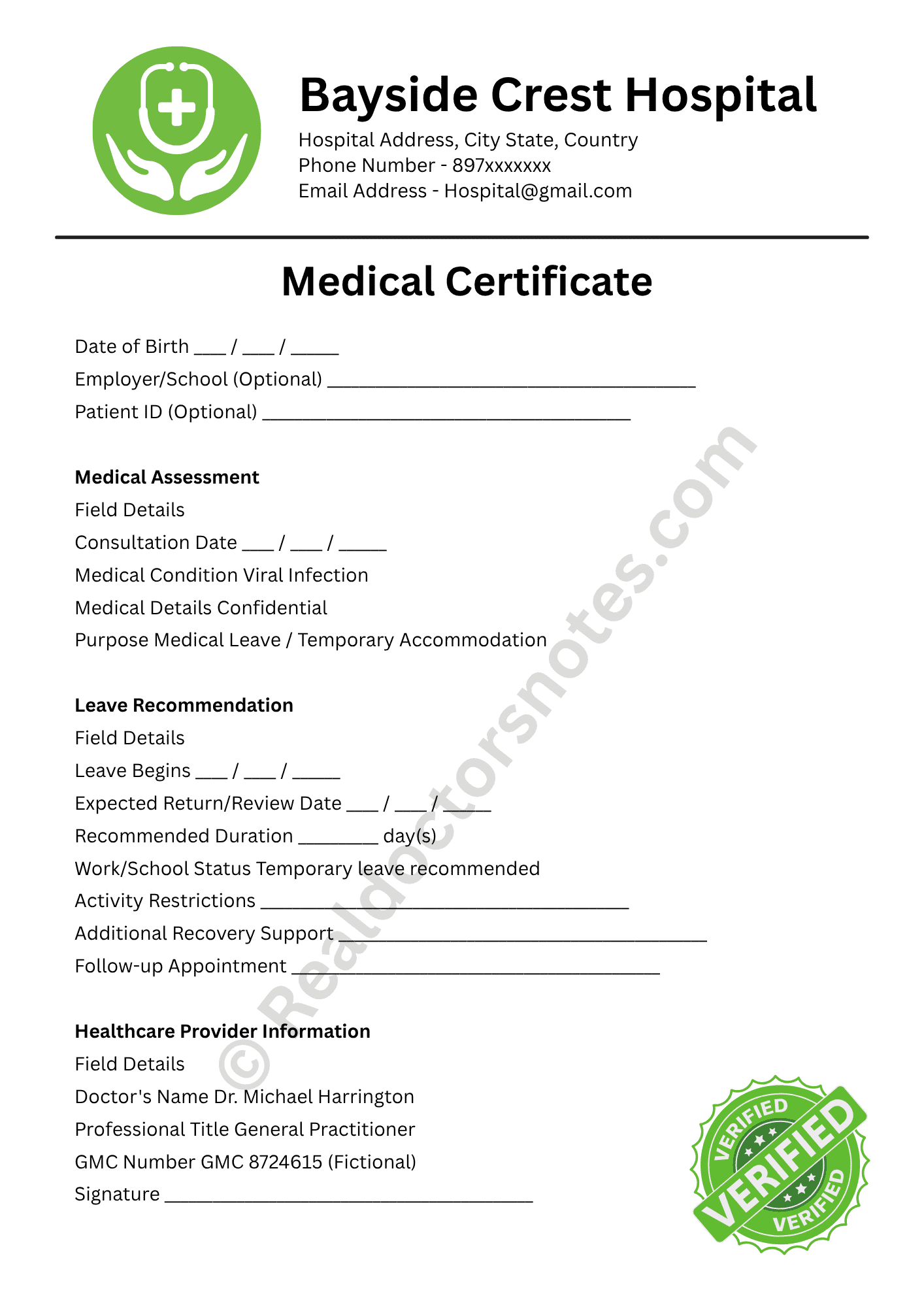
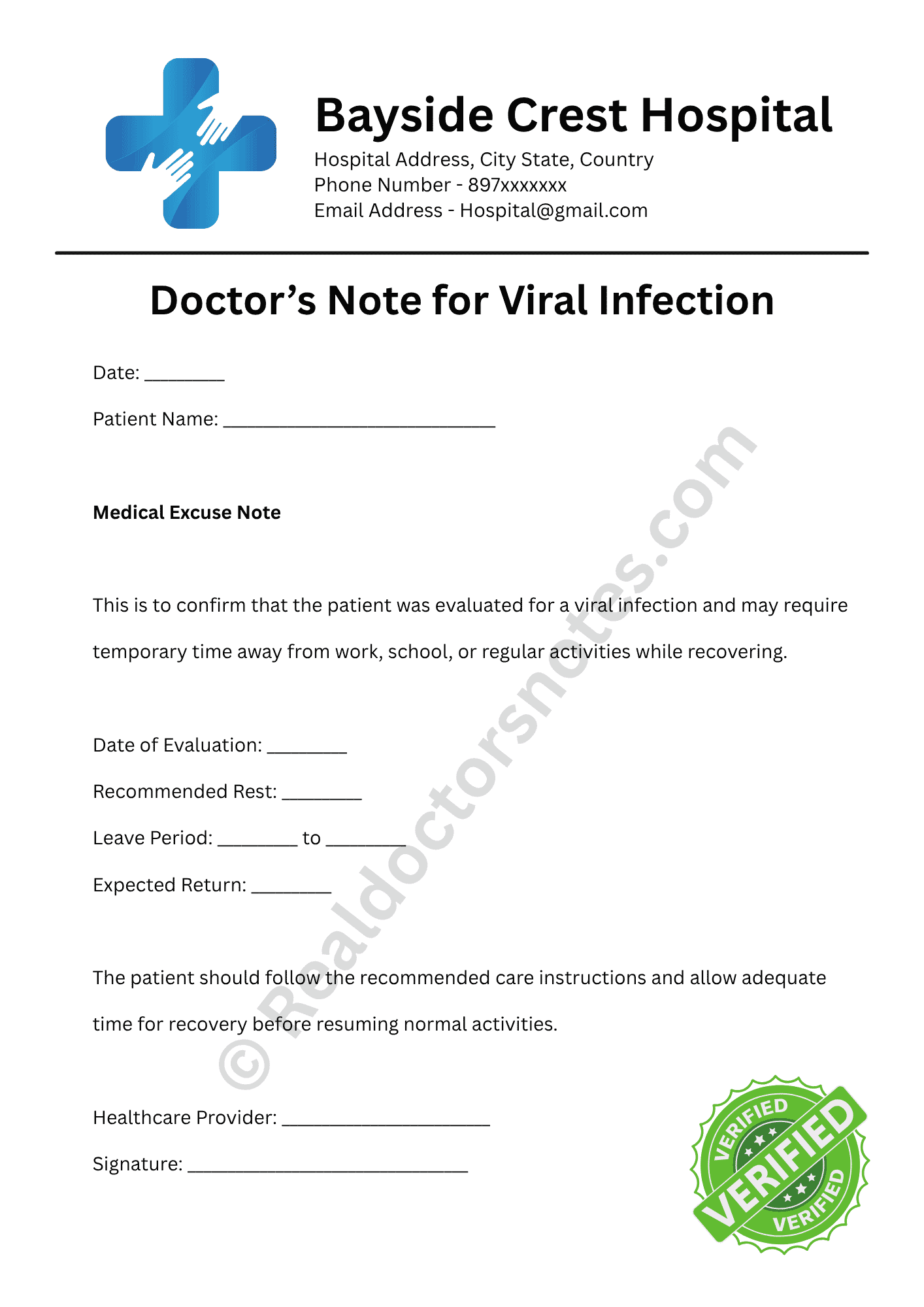
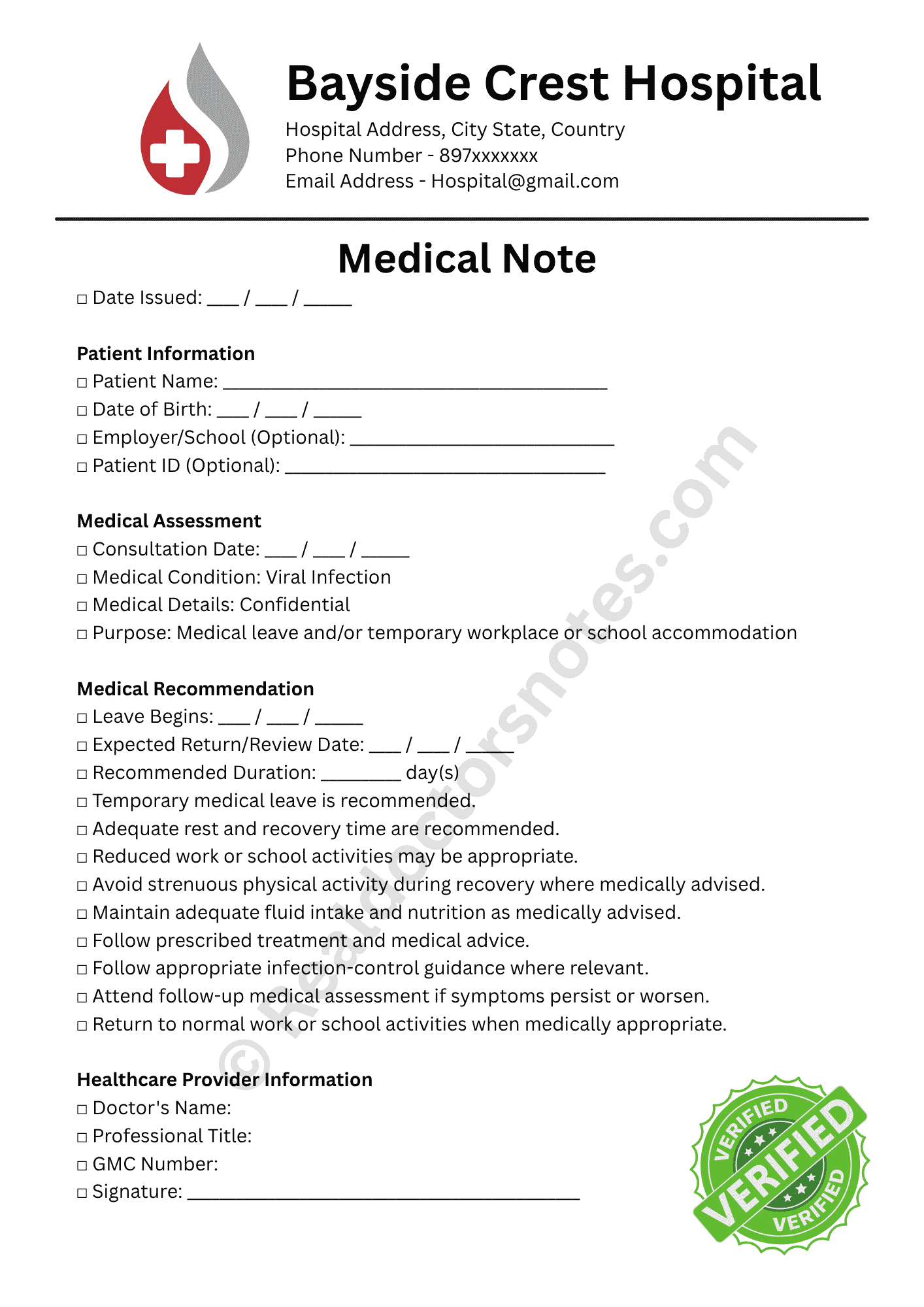
A note may contain information such as:
- Patient’s name
- Date of medical evaluation
- General medical reason for the visit
- Recommended period of absence or restriction
- Expected return-to-work or return-to-school date, when appropriate
- Healthcare professional’s information
- Signature or other required authentication
The exact information included should depend on the patient’s circumstances and the requirements of the organization requesting documentation. A medical note does not necessarily need to disclose detailed private medical information.
Why Might You Need a Doctor’s Note for a Viral Infection?
Viral illnesses can affect your ability to perform normal responsibilities. For example, significant fatigue, fever, dizziness, persistent coughing, gastrointestinal symptoms, or weakness may make working or attending school impractical.
A doctor’s note may be requested for:
Work Absence
An employer may request medical documentation when an employee misses work because of illness. Whether a note is required depends on company policy, applicable leave rules, and the length or circumstances of the absence.
School or College Absence
Students may need documentation when a viral infection causes them to miss classes, examinations, clinical rotations, or other academic activities. Schools and colleges can have their own requirements for medical documentation.
Return-to-Work Documentation
Some workplaces may ask employees to provide documentation before returning after an illness, particularly when the employee works around vulnerable individuals or performs safety-sensitive duties.
Activity or Event Cancellation
Certain organizations may request medical documentation when an illness prevents someone from participating in an activity, appointment, event, or scheduled commitment.
Common Symptoms Associated With Viral Infections
The symptoms of a viral infection depend on the virus and the part of the body affected. Respiratory viral infections commonly produce symptoms such as cough, sore throat, runny or stuffy nose, fatigue, fever, chills, headache, and body aches. Some infections can also cause vomiting or diarrhea.
Common symptoms can include:
- Fever or feeling feverish
- Chills
- Fatigue
- Headache
- Muscle or body aches
- Sore throat
- Cough
- Nasal congestion
- Runny nose
- Weakness
- Reduced appetite
- Nausea
- Vomiting
- Diarrhea
Not everyone with a viral infection develops the same symptoms. Some viral illnesses are mild, while others can become serious.
How Is a Viral Infection Diagnosed?
Diagnosis depends on the symptoms, medical history, physical examination, and sometimes testing. A healthcare professional may determine whether testing is appropriate based on the suspected infection and the patient’s risk factors.
For example, tests may be available for respiratory viruses such as influenza and COVID-19. Testing can help healthcare professionals determine whether specific treatment or additional precautions may be appropriate.
A viral infection should not be diagnosed solely from a generic list of symptoms because many illnesses can produce similar symptoms.
Treatment for a Viral Infection
Treatment depends on the specific virus and how severe the illness is. Many common viral respiratory infections improve with supportive care rather than antibiotics.
General supportive measures may include:
- Getting adequate rest
- Drinking sufficient fluids
- Eating nutritious foods as tolerated
- Using appropriate symptom-relief measures
- Monitoring symptoms
- Following medical advice
The CDC notes that antibiotics do not work against viruses. They treat certain bacterial infections, so taking antibiotics unnecessarily for a viral illness will not cure the viral infection or make recovery faster.
Some viral infections do have specific antiviral treatments. For example, antiviral medications are available for influenza and COVID-19, and treatment can be particularly important for people at higher risk of severe illness. Flu antivirals work best when started early, ideally within two days of symptom onset, although treatment may still be beneficial later in certain situations.
How Long Should You Stay Home With a Viral Infection?
There is no single number of days that applies to every viral infection. The appropriate absence period depends on the illness, symptoms, contagiousness, workplace or school requirements, and medical advice.
For respiratory viral illnesses, current CDC guidance recommends staying home and away from others while symptoms are not improving. People can generally return to normal activities when, for at least 24 hours, their symptoms are improving overall and they have not had a fever without using fever-reducing medication. Additional precautions are recommended for the following five days because transmission may still be possible.
Your healthcare professional may recommend a different timeframe based on your specific diagnosis and circumstances.
Can a Doctor’s Note Excuse You From Work?
A healthcare professional may provide documentation recommending time away from work when medically appropriate. However, a doctor’s note does not automatically override an employer’s attendance policy, leave requirements, or applicable laws.
If you are too sick to work, seek medical evaluation and explain your symptoms, job duties, and expected absence. The healthcare professional can determine whether you need temporary work restrictions or time away from work.
For employees with respiratory symptoms, staying home while sick can also help reduce transmission to coworkers and other people.
Doctor’s Note for Viral Infection and School Absence
A viral infection can sometimes make attending school difficult or increase the risk of spreading illness to other students and staff.
Schools may have specific rules about when students should remain home and when documentation is required. CDC school guidance indicates that students with worsening or unimproving respiratory virus symptoms may need to stay home, while returning students should generally be well enough to participate in school activities.
Parents or students should check the school’s attendance policy before requesting medical documentation.
What Should a Viral Infection Doctor’s Note Include?
A professional medical note should contain accurate information based on an actual medical evaluation. Depending on the purpose, it may include:
Patient information:
The patient’s identifying information required by the organization.
Date of evaluation:
The date on which the patient was assessed.
Medical statement:
A concise statement indicating that the patient was evaluated for an illness.
Recommended restriction:
If medically appropriate, the healthcare professional may recommend absence from work, school, or certain activities.
Duration:
The recommended period of absence or restriction.
Return date:
An expected return date may be provided when it can reasonably be determined.
Provider information:
The healthcare professional’s name, credentials, and contact or practice information as appropriate.
Medical documentation should be truthful and issued by an appropriately qualified healthcare professional.
Can You Get a Doctor’s Note Online for a Viral Infection?
In some situations, telehealth may be an option for evaluating symptoms and determining whether medical documentation is appropriate. Whether an online healthcare professional can issue a note depends on the provider, the patient’s condition, the applicable medical requirements, and the organization’s documentation policy.
A virtual appointment may be useful when symptoms can be appropriately assessed remotely. However, some situations require an in-person examination or diagnostic testing.
Patients should not assume that every online medical note will be accepted by an employer or school. Before obtaining documentation, check whether the organization accepts telehealth documentation and what information it requires.
What Information Should You Give the Healthcare Provider?
When discussing a possible viral infection, provide accurate information about your condition. Useful details include:
- When your symptoms started
- Which symptoms you currently have
- Whether symptoms are improving or worsening
- Whether you have had a fever
- Whether you have been exposed to someone who was sick
- Any relevant test results
- Medications you are currently taking
- Whether you have missed work or school
- Your job or school requirements
- The date you expect to return
This information can help the healthcare professional determine the appropriate course of care and whether medical documentation is justified.
When Should You Seek Medical Care?
Most mild viral respiratory illnesses can be managed with supportive care, but some symptoms require professional evaluation.
The CDC recommends seeking medical care for respiratory-virus symptoms when there is difficulty breathing, dehydration, a fever lasting more than four days, symptoms lasting more than ten days without improvement, or symptoms that improve and then return or worsen.
Emergency warning signs can include difficulty breathing, persistent chest pain or pressure, severe weakness, confusion, seizures, inability to wake, or signs of severe dehydration.
Do not delay emergency medical care when severe or concerning symptoms occur.
Viral Infection vs. Bacterial Infection
One common question is whether a viral infection requires antibiotics. The answer is generally no.
Viruses and bacteria are different types of microorganisms. Antibiotics target certain bacteria and do not treat viruses. Common viral illnesses such as colds and influenza are not cured by antibiotics.
However, a person can sometimes develop a bacterial infection after a viral illness. A healthcare professional can evaluate persistent or worsening symptoms and determine whether additional testing or treatment is necessary.
How to Prevent Spreading a Viral Infection
If you have a respiratory viral illness, reducing contact with others can help limit transmission.
Helpful precautions include:
- Stay home when you are sick
- Improve indoor air circulation
- Practice good hand hygiene
- Cover coughs and sneezes
- Avoid close contact with people at higher risk of severe illness
- Consider wearing a well-fitted mask around others when appropriate
- Follow applicable workplace or school health policies
CDC guidance recommends additional precautions for five days after returning to normal activities because you may still be able to spread a respiratory virus even when you are feeling better.
Does Every Viral Infection Require a Doctor’s Note?
No. Whether you need documentation depends on the organization requesting it.
Some employers allow employees to report short-term illnesses without medical documentation, while others may require a doctor’s note after a certain number of missed days. Schools and colleges can have separate attendance policies.
Before scheduling an appointment solely to obtain documentation, review the applicable policy. If medical evaluation is appropriate because of your symptoms, tell the healthcare professional that you also need documentation for your absence.
What If Your Symptoms Continue After the Recommended Rest Period?
If your symptoms are not improving within the expected timeframe, contact a healthcare professional rather than simply extending your absence without evaluation.
Persistent symptoms may require additional assessment, especially if you develop new symptoms, become significantly worse, or initially improve and then deteriorate. The CDC specifically recommends medical evaluation when respiratory symptoms last more than ten days without improvement or improve and then return or worsen.
FAQs
Q. Can I get a doctor’s note for a viral infection?
Yes, a healthcare professional may provide medical documentation when they evaluate you and determine that documentation is medically appropriate. The note should accurately reflect your medical situation.
Q. How many days can a doctor give you off for a viral infection?
There is no universal number of days. The recommended absence depends on your symptoms, diagnosis, recovery, occupation, and the healthcare professional’s clinical judgment.
Q. Can a doctor’s note say I need bed rest?
If medically appropriate, a healthcare professional can document a recommendation for rest or temporary activity restrictions. The recommendation should be based on the patient’s condition.
Q. Do I need antibiotics for a viral infection?
Usually not. Antibiotics do not treat viral infections. They are used for certain bacterial infections.
Q. Can a viral infection make you miss work?
Yes. Symptoms such as fever, significant fatigue, coughing, weakness, vomiting, or diarrhea may interfere with normal work activities. A healthcare professional can assess whether time away from work is appropriate.


Reviews
There are no reviews yet.