![Real Doctors Note For Work and School [Get in 5 Minutes]](https://realdoctorsnotes.com/wordpress/wp-content/webp-express/webp-images/uploads/2025/11/2.png.webp)


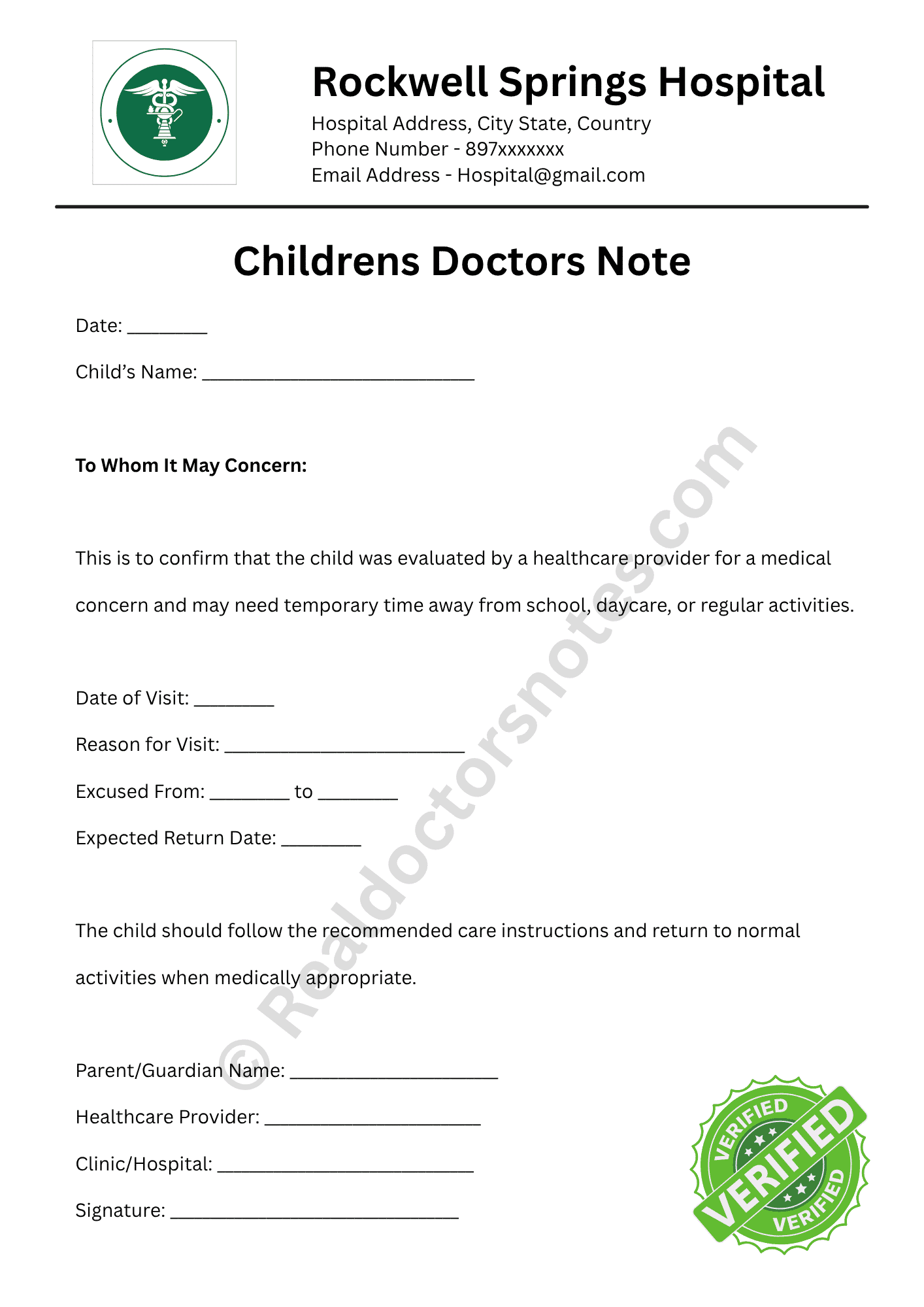




A children’s doctor’s note may be required when a school, daycare, or activity organizer needs medical confirmation that a child was absent due to illness or injury. While every institution has its own attendance policy, a note is commonly requested after multiple missed days or before a child returns following a contagious condition. Having proper documentation helps verify the reason for the absence and supports a smooth return to regular activities.
Common situations include:
- Fever lasting more than 24 hours
- Flu or viral infections
- Strep throat
- Ear infections
- Pink eye (conjunctivitis)
- Minor injuries requiring rest
- Follow-up after surgery
- Hospital discharge
- Medical appointments during school hours
- Return after a contagious illness
What Information Is Included in a Children’s Doctor’s Note?
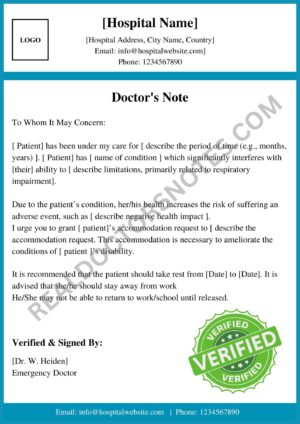
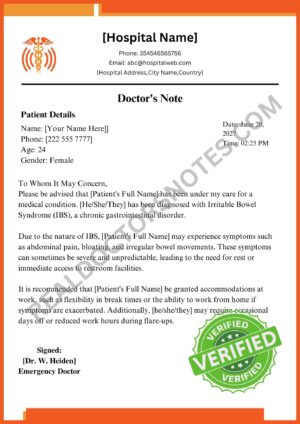
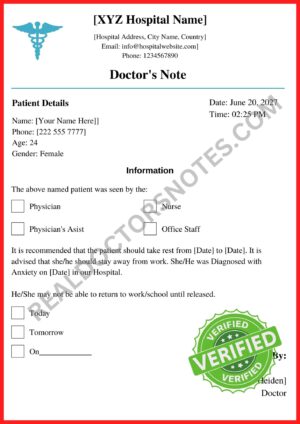
A well-prepared children’s doctor’s note contains essential details that verify a medical visit while maintaining patient privacy. The document confirms that a licensed healthcare provider evaluated the child and outlines any recommendations related to school attendance or physical activities.
| Information | Purpose |
|---|---|
| Child’s Full Name | Identifies the patient |
| Appointment Date | Confirms the medical visit |
| Excused Absence Dates | Specifies approved leave |
| Return-to-School Date | Indicates when the child may return |
| Activity Restrictions | Notes limitations for sports or physical education |
| Physician’s Name | Identifies the healthcare provider |
| Signature & Clinic Details | Verifies authenticity |
Doctor’s Notes for Different Situations
Doctor’s Note for School
Schools often request a doctor’s note when a student misses several consecutive days or returns after recovering from a contagious illness. The note confirms that the absence was medically necessary and provides guidance on the child’s return date or any classroom restrictions.
Doctor’s Note for Daycare
Daycare centers prioritize preventing the spread of illness among young children. A doctor’s note may be required to confirm that a child has recovered and is safe to return after illnesses such as hand, foot, and mouth disease, pink eye, or influenza.
Doctor’s Note for Sports
If a child experiences an injury or illness that affects physical activity, a healthcare provider may recommend temporary restrictions. A sports doctor’s note outlines when the child can safely resume physical education classes or team practices.
Doctor’s Note for Summer Camp
Summer camps may request medical documentation if a child misses scheduled activities due to illness or requires clearance before participating again. The note may also mention medication instructions or activity limitations.
Doctor’s Note for Travel
Families traveling shortly after a child’s illness may need medical documentation confirming that the child is fit to travel. Airlines, travel insurers, or schools may request this information in certain situations.
Common Childhood Illnesses That May Require a Doctor’s Note
| Illness | Doctor’s Note Commonly Needed |
|---|---|
| Influenza (Flu) | Yes |
| COVID-19 | Often |
| Strep Throat | Yes |
| Pink Eye | Frequently |
| Ear Infection | Sometimes |
| Chickenpox | Yes |
| RSV | Often |
| Hand, Foot & Mouth Disease | Yes |
| Bronchitis | Sometimes |
| Pneumonia | Yes |
How Long Should a Child Stay Home?
Recovery time depends on the child’s illness and the healthcare provider’s recommendations. Returning too early may delay healing or increase the risk of spreading infections to classmates.
| Condition | Recommended Home Stay |
|---|---|
| Fever | Until fever-free for 24 hours without medication |
| Flu | Usually 3–7 days |
| Vomiting | 24 hours after symptoms stop |
| Diarrhea | 24–48 hours after recovery |
| Strep Throat | At least 24 hours after starting antibiotics |
| Pink Eye | As advised by the healthcare provider |
| Chickenpox | Until all blisters have crusted over |
Can Schools Ask for a Doctor’s Note?
Yes. Many schools have attendance policies that allow administrators to request medical documentation after repeated absences or illnesses. Requirements vary by school district, grade level, and local regulations. Some schools also accept electronic doctor’s notes from licensed telehealth providers.
Telehealth Doctor’s Notes for Children
Many healthcare providers now offer virtual consultations for common childhood illnesses. After evaluating the child’s condition, eligible providers may issue a digital doctor’s note that parents can print or email directly to the school or daycare.
Benefits include:
- Same-day appointments
- Less exposure to contagious illnesses
- Secure digital documentation
- Convenient for busy parents
- Faster communication with schools
Tips for Parents Before Requesting a Doctor’s Note
To make the process easier, parents should prepare accurate information before contacting a healthcare provider.
- Schedule the appointment as soon as symptoms appear.
- Keep a record of missed school days.
- Describe symptoms clearly.
- Follow the prescribed treatment plan.
- Save both printed and digital copies of the note.
- Inform the school promptly if additional recovery time is needed.
Return-to-School Checklist
Before sending your child back to school, make sure they are ready to participate safely.
- Fever-free for at least 24 hours
- Eating and drinking normally
- Energy levels have improved
- Prescribed medications have been started if required
- No longer contagious, if applicable
- Cleared by a healthcare provider when necessary
- Able to participate comfortably in classroom activities
Children’s Doctor’s Note vs. Adult Doctor’s Note
| Children’s Doctor’s Note | Adult Doctor’s Note |
|---|---|
| Used for school absences | Used for workplace absences |
| Parent or guardian involved | Employee handles documentation |
| Includes school return guidance | Includes work return guidance |
| May include PE restrictions | May include work-duty restrictions |
| Issued by pediatric or family physician | Issued by general physician or specialist |
Why Schools Request Medical Documentation
Schools request medical documentation to maintain accurate attendance records and support a healthy learning environment. Proper documentation also helps staff determine whether a child requires temporary accommodations or additional recovery time before returning to normal classroom activities.
Reasons include:
- Verify excused absences
- Reduce the spread of contagious illnesses
- Support student health and safety
- Meet attendance policy requirements
- Document extended medical leave
Mistakes Parents Should Avoid
Parents can avoid unnecessary delays by paying attention to common documentation errors.
- Waiting too long to request a doctor’s note
- Providing incorrect absence dates
- Losing the original document
- Ignoring school submission deadlines
- Returning the child before recovery
- Forgetting to mention activity restrictions
FAQs
Q. Can I get a children’s doctor’s note online?
Yes. Many licensed healthcare providers offer virtual consultations and may provide a digital doctor’s note when appropriate.
Q. Do schools accept digital doctor’s notes?
Many schools accept electronically signed doctor’s notes, but acceptance depends on the school’s attendance policy.
Q. Does every school absence require a doctor’s note?
No. Most schools only request medical documentation after extended absences or under specific attendance policies.
Q. Can a daycare request a doctor’s note?
Yes. Daycare centers may ask for medical clearance before allowing a child to return after certain illnesses.
Q. Does the doctor’s note include the child’s diagnosis?
Not always. Many notes simply confirm that the child was evaluated and specify the recommended absence period without revealing detailed medical information.

Reviews
There are no reviews yet.