![Real Doctors Note For Work and School [Get in 5 Minutes]](https://realdoctorsnotes.com/wordpress/wp-content/webp-express/webp-images/uploads/2025/11/2.png.webp)
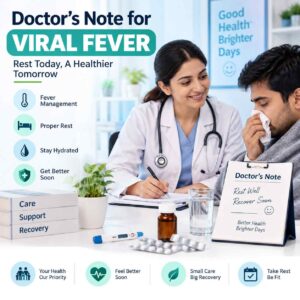
Yes, you may be able to get a doctor’s note for fever if a healthcare professional evaluates your symptoms and determines that you are medically unable to work, attend school, travel, or participate in your usual activities. A doctor’s note for fever may document that you were evaluated for an illness and, when appropriate, recommend time away from work or school.
A fever is commonly associated with infections and can occur along with symptoms such as chills, sweating, headache, muscle aches, weakness, cough, sore throat, nausea, or loss of appetite. A temperature of around 38°C (100.4°F) or higher is commonly considered a fever, although the exact interpretation can depend on how and where the temperature is measured.
If you are searching for “Can I get a doctor’s note for fever?”, you may also be wondering whether you need to see a doctor, whether an online doctor can provide a medical note, what information the note should contain, and whether your employer or school will accept it. This guide explains these questions in simple terms.
What Is a Doctor’s Note for Fever?
A doctor’s note for fever is a medical document provided by a healthcare professional after evaluating a person’s health condition. Depending on the situation, it may confirm that you were medically evaluated and may recommend that you stay home and rest for a certain period.
A fever itself is not a diagnosis. It is a symptom that can occur with many different illnesses, including respiratory infections and other infections. A healthcare professional may consider your fever together with your other symptoms, medical history, temperature, and examination findings before deciding what medical advice is appropriate.
A medical note may be useful when you need documentation for:
- Missing work because of fever
- Missing school because of illness
- Taking sick leave
- Returning to work or school after an illness
- Explaining an absence to an employer or school
- Requesting temporary time away from regular activities
The exact information and acceptance requirements can vary between employers, schools, workplaces, and other organizations.
Can I Get a Doctor’s Note for a Fever?
In many situations, yes. If you have a fever and need medical documentation, you can contact a healthcare professional for an evaluation.
The healthcare professional may ask questions such as:
- What is your current temperature?
- When did the fever begin?
- How often have you checked your temperature?
- Do you have chills or sweating?
- Do you have a cough or sore throat?
- Are you experiencing headaches or body aches?
- Are you vomiting or having diarrhea?
- Do you have difficulty breathing?
- Are you taking any medications?
- Have your symptoms improved or become worse?
The provider may then decide whether you need further evaluation, testing, treatment, or rest.
A fever medical note should be based on an actual healthcare evaluation. It should not be used to falsely claim that a medical professional evaluated you when they did not.
Can a Doctor Give You a Sick Note for Fever?
Yes, a doctor or other qualified healthcare professional may provide documentation when medically appropriate.
For example, if you have a fever along with significant fatigue, chills, body aches, respiratory symptoms, or another illness that makes your normal activities difficult, a healthcare professional may recommend that you stay home and recover.
The note may state that you were evaluated and may include a recommended period away from work or school when clinically appropriate.
However, a healthcare professional does not automatically provide a sick note simply because someone requests one. The decision depends on the medical assessment and the requirements of the organization requesting the documentation.
What Does a Doctor’s Note for Fever Usually Include?
The exact format differs by provider and situation. A medical note for fever may contain information such as:
- Patient identification information
- Date of medical evaluation
- General reason for the visit
- Confirmation that the patient was evaluated
- Recommended rest or time away from work or school, when appropriate
- Expected return date, if clinically appropriate
- Healthcare provider information
- Provider signature or other verification
Not every medical note needs to disclose a detailed diagnosis. In many situations, only the information necessary for the employer, school, or organization is included.
Patients should also check what their employer or school actually requires before requesting documentation.
Can I Get an Online Doctor’s Note for Fever?
An online healthcare appointment may be an option for some people with fever, depending on the healthcare service, the patient’s symptoms, and the laws and regulations where the patient is located.
During a virtual consultation, a healthcare professional may ask about:
- Temperature
- Duration of fever
- Other symptoms
- Medical history
- Current medications
- Possible exposure to illness
- Any warning signs
The provider then determines whether virtual care is appropriate.
If the healthcare professional believes you need an in-person examination or testing, they may recommend visiting a clinic or urgent care center instead.
An online doctor’s note for fever should only be issued when the healthcare professional has actually evaluated the patient through an appropriate telehealth process and determines that documentation is medically appropriate.
How Does an Online Fever Consultation Work?
For someone who is feeling too unwell to travel to a clinic, an online consultation may be convenient.
A typical process may look like this:
1. Schedule a consultation
Choose an appropriate healthcare service and provide basic information about your symptoms.
2. Explain your fever
Tell the healthcare professional when your fever started, your highest measured temperature, how you measured it, and whether it is improving or getting worse.
3. Discuss other symptoms
Mention symptoms such as cough, sore throat, chills, headache, body aches, vomiting, diarrhea, weakness, or breathing problems.
4. Answer medical questions
The provider may ask about your health history, medications, recent illnesses, and possible exposure to infections.
5. Follow the provider’s recommendation
The healthcare professional may recommend home care, testing, an in-person examination, medication, or another form of medical care.
6. Request documentation if appropriate
If you need documentation for work or school, tell the healthcare professional during the consultation. If they determine that a note is appropriate, they can explain what documentation they can provide.
What Temperature Is Considered a Fever?
A commonly used threshold for fever is 38°C (100.4°F) or higher, although readings can vary depending on the measurement method. NHS guidance considers 38°C or above a high temperature in adults, while Mayo Clinic notes that temperature interpretation can vary depending on where it is measured.
For this reason, when speaking with a healthcare professional, it is helpful to provide:
- Your temperature
- The temperature unit (°F or °C)
- The type of thermometer used
- Where the temperature was taken
- The time you measured it
Can Fever Be a Reason to Miss Work?
Yes. Fever can make it difficult to perform normal work activities, especially when it occurs with weakness, chills, body aches, headaches, respiratory symptoms, vomiting, or dehydration.
Whether you should stay home depends on your symptoms and medical advice. NHS guidance recommends rest and fluids for adults with a high temperature and advises staying home and avoiding contact with others until the high temperature has resolved.
Your employer may also have its own sick-leave and documentation requirements.
If your workplace requires a doctor’s note for fever, check whether it specifies:
- Whether a medical note is required
- How soon you need to submit it
- Whether telehealth documentation is accepted
- Whether the note must include a diagnosis
- Whether a return-to-work date is required
- Whether the note must come from a specific type of healthcare provider
Can I Get a Doctor’s Note for Fever Without Going to the Hospital?
A hospital visit is not always necessary for a mild illness. Depending on your symptoms and location, you may be able to receive medical advice through a primary care provider, urgent care clinic, or legitimate telehealth service.
The appropriate option depends on the severity of your symptoms.
For mild symptoms, a healthcare professional may recommend rest, fluids, monitoring your temperature, and other appropriate self-care. More serious symptoms may require an in-person examination or urgent medical attention.
You should not avoid medical care simply because you only need a doctor’s note. If your symptoms are serious, getting appropriate medical evaluation is more important than obtaining documentation.
How Long Should You Stay Home With a Fever?
There is no single number of days that applies to everyone. The appropriate amount of time depends on the underlying illness, symptoms, recovery, and the recommendations of your healthcare professional.
Some fevers resolve within a few days, while persistent or worsening fever may require further medical evaluation. Mayo Clinic advises adults to seek medical care when a fever is 103°F (39.4°C) or higher and identifies several symptoms that warrant prompt attention.
If your employer has a specific sick-leave policy, follow that policy as well as medical advice.
What Can Cause a Fever?
Fever can occur for many reasons. Infection is a common cause, but it is not the only possible explanation.
Possible causes include:
- Viral infections
- Respiratory infections
- Influenza
- COVID-19
- Certain bacterial infections
- Urinary tract infections
- Gastrointestinal infections
- Other medical conditions
- Some medications
- Other inflammatory or medical causes
A fever by itself does not tell you exactly what illness you have. The cause needs to be considered alongside other symptoms and medical information.
Common Symptoms That Can Occur With Fever
Depending on the underlying cause, fever may occur with:
- Chills
- Shivering
- Sweating
- Headache
- Muscle aches
- Weakness
- Fatigue
- Loss of appetite
- Cough
- Sore throat
- Nausea
- Dehydration
Mayo Clinic lists symptoms such as sweating, chills, headache, muscle aches, loss of appetite, dehydration, and weakness among possible symptoms associated with fever.
Knowing your additional symptoms can help a healthcare professional determine what type of evaluation you may need.
When Should You See a Doctor for a Fever?
Many mild fevers can improve with rest and fluids, but certain situations require medical attention.
For adults, Mayo Clinic recommends contacting a healthcare professional when the temperature reaches 103°F (39.4°C) or higher. Immediate medical attention may be needed when fever occurs with symptoms such as severe headache, stiff neck, confusion, persistent vomiting, difficulty breathing, chest pain, abdominal pain, pain during urination, rash, or seizures.
You should also seek medical advice if your fever is persistent, worsening, or accompanied by symptoms that concern you.
The goal of a doctor visit should not simply be to obtain a doctor’s note for fever. It should also be to make sure that any potentially serious cause of the fever is identified and treated appropriately.
Fever and Dehydration
Fever can sometimes occur alongside dehydration, particularly when a person is not drinking enough fluids or also has vomiting or diarrhea.
Possible signs of dehydration in adults include:
- Excessive thirst
- Less frequent urination
- Dark-colored urine
- Dizziness
- Tiredness
- Confusion
- Dry mouth
Mayo Clinic recommends medical attention when dehydration is significant or a person cannot keep fluids down.
If you have a fever and are struggling to drink enough fluids, tell your healthcare professional.
What Can I Do at Home for a Mild Fever?
If your symptoms are mild and you do not have warning signs, basic supportive care may help you feel more comfortable.
Common measures include:
- Getting adequate rest
- Drinking plenty of fluids
- Wearing comfortable, light clothing
- Monitoring your temperature
- Avoiding strenuous activity
- Following appropriate medication instructions when needed
NHS guidance recommends rest and plenty of fluids for adults with a high temperature. Mayo Clinic also recommends fluids and appropriate fever-reducing medication for adults when needed for comfort, while advising people to follow medication directions and consider their other health conditions and medicines.
If you take medication for fever, follow the package directions or your healthcare professional’s instructions. If you have other medical conditions or take other medicines, ask a healthcare professional or pharmacist whether a particular medicine is appropriate for you.
Do You Need a Doctor’s Note for One Day Off With Fever?
That depends on your employer or school’s policy.
Some organizations may allow an employee or student to report a short illness without medical documentation. Others may require a doctor’s note for one day off or documentation after a particular number of missed days.
Before requesting a note, check your organization’s sick-leave policy.
If documentation is required, tell the healthcare professional that you need a medical note for the specific absence. The provider can determine whether a note is appropriate based on the evaluation.
Can a Doctor’s Note Say You Had a Fever?
A healthcare professional can document information that is supported by their evaluation. If you reported a measured fever and the provider assessed you, the documentation may describe the relevant medical findings or reason for the visit according to the provider’s documentation practices.
However, patients should not ask a healthcare professional to document information that is untrue.
A legitimate fever doctor’s note should reflect the medical encounter and the provider’s professional assessment.
Does a Doctor’s Note Guarantee That My Employer Will Accept It?
No. A medical note does not automatically guarantee acceptance by every employer, school, or organization.
Acceptance depends on the organization’s policies and the documentation requirements that apply to you.
Before submitting a doctor’s note for fever, check whether your employer or school requires a particular format, provider type, date, signature, or other information.
If you are unsure, ask the HR department, manager, school administration, or other appropriate office what documentation is required.
Can I Get a Doctor’s Note for Fever for School?
A doctor’s note for fever for school may be available when a student has been evaluated by a healthcare professional and the provider determines that the illness warrants staying home.
Schools can have different attendance policies. Some may require documentation after a certain number of missed days, while others may have specific rules for illness-related absences.
Parents, guardians, college students, or adult students should check the school’s policy to understand what documentation is required.
If a medical note is needed, provide the healthcare professional with:
- The student’s symptoms
- Temperature readings
- The date symptoms started
- The dates school was missed
- Any other relevant symptoms
- The school’s documentation requirements
A provider can determine what information can appropriately be included.
Can a Pediatrician Provide a School Excuse for Fever?
For children, a pediatrician or another qualified healthcare professional may evaluate the child and provide appropriate medical documentation when warranted.
Parents should describe the child’s symptoms accurately, including the child’s temperature and behavior.
Children may sometimes require different medical assessment than adults. If a child appears seriously ill, has difficulty breathing, is unusually difficult to wake, has a seizure, develops concerning symptoms, or appears significantly dehydrated, medical attention should be sought promptly rather than focusing only on obtaining a school note.
Can I Get a Fever Doctor’s Note Online?
In some situations, yes. Telehealth allows patients to speak with healthcare professionals without physically traveling to a clinic.
Whether an online consultation is appropriate depends on the person’s symptoms, medical history, location, and the healthcare professional’s assessment.
An online consultation may be useful when:
- Your symptoms are mild
- You are able to communicate clearly with the provider
- You do not have emergency warning signs
- You need medical advice from home
- Traveling to a clinic is difficult
- You need to discuss documentation for work or school
However, online healthcare is not appropriate for every medical situation.
A healthcare professional may tell you to seek an in-person evaluation if your symptoms cannot be adequately assessed remotely or if your condition appears more serious.
How Can an Online Doctor Evaluate a Fever?
A healthcare professional can collect a significant amount of information through a virtual consultation.
The provider may ask:
Temperature
You may be asked for your current temperature and the highest temperature you have recorded.
Duration
The provider may want to know whether the fever started today, yesterday, or several days ago.
Associated symptoms
You may be asked about:
- Cough
- Congestion
- Sore throat
- Headache
- Muscle aches
- Chills
- Fatigue
- Nausea
- Vomiting
- Diarrhea
- Abdominal pain
- Urinary symptoms
- Rash
- Breathing difficulties
Medical history
The provider may ask about existing medical conditions, allergies, medications, recent illnesses, and other factors that could affect your care.
Exposure
You may be asked whether you have recently been around someone who was sick or traveled somewhere relevant to your symptoms.
Based on this information, the healthcare professional can decide whether virtual care is suitable or whether you need an in-person assessment.
Is an Online Doctor’s Note for Fever Legitimate?
A medical note is legitimate when it comes from a qualified healthcare professional following an appropriate healthcare evaluation and accurately reflects the medical encounter.
The fact that a consultation happens online does not automatically make the resulting documentation invalid. However, acceptance depends on the organization requesting the note and applicable rules.
Before relying on an online doctor’s note for fever, check:
- Whether your employer accepts telehealth documentation
- Whether your school accepts online medical notes
- Whether the provider is appropriately licensed
- Whether the service performs a real medical evaluation
- Whether the documentation meets your organization’s requirements
Avoid services that offer documentation without a healthcare evaluation or encourage people to provide false medical information.
Can You Get a Doctor’s Note Without Seeing a Doctor in Person?
You may not need to physically visit a clinic if an appropriate healthcare professional can evaluate you through telehealth.
However, you still need a legitimate healthcare evaluation.
There is an important difference between:
Not visiting a physical clinic:
You have a real video, phone, or other appropriate telehealth consultation with a qualified provider.
Not receiving medical evaluation:
You simply obtain a document claiming that you were sick without being evaluated.
The first may be a legitimate form of healthcare depending on the circumstances. The second does not provide a reliable medical basis for a doctor’s note.
Can Urgent Care Give You a Doctor’s Note for Fever?
An urgent care clinic may provide medical documentation when you are evaluated there and the healthcare professional determines that documentation is appropriate.
Urgent care can be an option when you need medical attention but your situation does not appear to require emergency services.
For example, you might consider urgent care if you have:
- A persistent fever
- Symptoms that are getting worse
- Significant sore throat
- Persistent cough
- Moderate dehydration
- Symptoms suggesting an infection
- A fever that concerns you and you cannot reach your regular provider
The urgent care provider can evaluate your symptoms and determine whether you need testing, treatment, additional care, or documentation for work or school.
If you have emergency symptoms, an emergency department or emergency medical service may be more appropriate than urgent care.
Can a Primary Care Doctor Give a Fever Sick Note?
Yes, a primary care provider may provide a sick note when medically appropriate.
Primary care providers can evaluate fever in the context of your overall health and medical history.
During the appointment, tell the provider:
- Your temperature
- How long you have been sick
- Your other symptoms
- Whether you have taken any medication
- Whether symptoms are improving
- Whether you need documentation for work or school
If you regularly see the same provider, your medical history may also help them understand your situation.
Can a Doctor’s Note Cover Multiple Days of Fever?
It can, when a healthcare professional determines that multiple days away from work or school are medically appropriate.
The appropriate period depends on the illness, symptoms, recovery, and professional assessment.
A doctor should not automatically provide a specific number of days simply because a patient requests it.
For example, if a person has a fever and significant symptoms that make normal activities difficult, the provider may recommend a period of rest. The provider can determine what dates are medically appropriate.
Your employer or school may also have separate attendance requirements.
Can I Get a Doctor’s Note for Fever After I Recover?
This depends on the circumstances and the healthcare provider’s documentation policies.
If you were previously evaluated by a healthcare professional, there may already be documentation of the encounter.
If you were never evaluated while you were sick, a provider may have limited ability to verify what your condition was at an earlier date.
This is why it is helpful to seek medical advice when you are actually experiencing symptoms if you believe documentation may be required.
Always describe the timeline honestly.
Can I Use a Fever Doctor’s Note for Paid Sick Leave?
A doctor’s note and paid sick leave are two different things.
A medical note may document an illness or medical evaluation, while whether you receive paid leave depends on applicable law, your employment agreement, company policy, and eligibility requirements.
Before requesting documentation, check your employer’s leave policy to understand whether a note is needed and what type of documentation is accepted.
Fever and Returning to Work or School
Returning to work or school should depend on your recovery, the underlying illness, applicable workplace or school rules, and medical advice.
If you still have a fever or feel significantly unwell, contact a healthcare professional for guidance.
Your employer or school may also have specific requirements about when someone can return after an infectious illness.
A doctor’s note may provide a recommended return date, but the organization may have additional policies.
Can I Get a Return-to-Work Note After Fever?
Depending on your healthcare provider and workplace requirements, you may be able to receive documentation concerning your ability to return to work after an illness.
Some workplaces may require a return-to-work note after certain illnesses or absences.
If your employer specifically requests one, tell the healthcare professional what the workplace requires.
A provider can determine whether an evaluation is needed and what documentation is appropriate.
FAQs
1. Can I get a doctor’s note for fever?
Yes, a healthcare professional may provide a doctor’s note when you are medically evaluated and documentation is appropriate. The provider determines what can be documented based on the actual consultation.
2. Can I get a doctor’s note for fever online?
Depending on your symptoms, location, and the healthcare service, you may be able to have a telehealth consultation. If the provider determines that documentation is appropriate, they may provide it according to their policies.
3. Can I get a fever sick note for work?
A healthcare professional may provide documentation supporting time away from work when medically appropriate. Whether your employer accepts it depends on its policies and applicable requirements.
4. Can I get a fever doctor’s note for school?
Yes, a healthcare professional may provide school-related medical documentation after evaluating the student when appropriate. Check the school’s attendance policy first.
5. Do I need a high fever to get a doctor’s note?
Not necessarily. The need for medical documentation depends on the overall medical situation, symptoms, and the organization’s requirements, not simply one temperature number.