![Real Doctors Note For Work and School [Get in 5 Minutes]](https://realdoctorsnotes.com/wordpress/wp-content/uploads/2025/11/2.png)



Dermatitis can cause itching, redness, dryness, swelling, burning, cracking, or blistering that may make normal work or school activities uncomfortable. Depending on the type and severity, symptoms can affect the hands, face, neck, arms, legs, or other areas of the body. Dermatitis is a broad term that includes conditions such as atopic dermatitis, contact dermatitis, seborrheic dermatitis, and other forms of eczema.
If your symptoms are interfering with your ability to work, attend school, travel, or perform regular responsibilities, an online medical consultation may be a convenient way to discuss your symptoms with a licensed healthcare professional and determine whether documentation is medically appropriate.
What Is Dermatitis?
Dermatitis refers to inflammation or irritation of the skin. It may develop because of an allergic reaction, contact with an irritating substance, a weakened skin barrier, or other underlying factors.
Common symptoms include:
- Itchy or irritated skin
- Red or discolored patches
- Dry, flaky, or scaly skin
- Burning or stinging
- Swelling or tenderness
- Cracked skin
- Small bumps or blisters
- Oozing or crusting in more severe cases
Contact dermatitis, for example, can occur when the skin reacts to an irritant or allergen. Common triggers can include fragrances, cosmetics, cleaning products, metals such as nickel, and certain workplace substances.
When Might You Need an Online Doctor’s Note for Dermatitis?
A dermatitis flare-up can sometimes make it difficult to complete normal responsibilities. For example, severe hand dermatitis may make typing, handling equipment, washing frequently, or performing manual work uncomfortable.
You may consider seeking medical documentation when dermatitis:
- Causes significant pain or persistent itching
- Makes it difficult to perform your regular job duties
- Requires you to rest or remain at home
- Interferes with school attendance
- Requires a medical appointment or treatment
- Is aggravated by workplace exposure
- Requires temporary changes to your duties
- Causes a flare-up that affects normal daily activities
Whether a doctor’s note is appropriate depends on your symptoms, medical assessment, and the requirements of your employer, school, or other organization.
How Does an Online Dermatitis Consultation Work?
An online consultation generally begins with a healthcare professional asking about your symptoms, when they started, where the rash is located, possible triggers, previous episodes, medications, allergies, and how the condition is affecting your daily activities.
If appropriate, you may also be asked to provide clear photographs of the affected skin. However, an online consultation cannot always replace an in-person examination.
A healthcare professional may determine whether your symptoms are consistent with dermatitis or whether another skin condition should be considered. For contact dermatitis, diagnosis may involve examining the rash and asking about personal-care products, work exposures, hobbies, and other substances that come into contact with your skin. Patch testing may sometimes be recommended to identify an allergy.
If medical documentation is warranted, the clinician can determine what type of documentation is appropriate based on the evaluation.
What Can a Dermatitis Doctor’s Note Include?
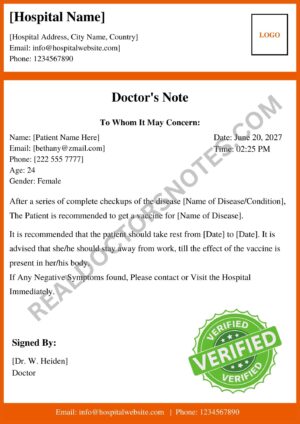
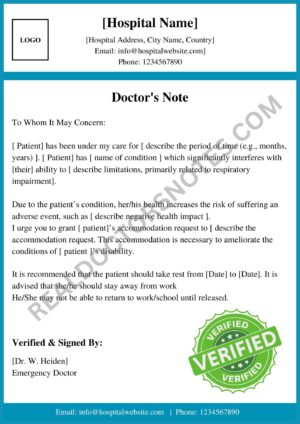
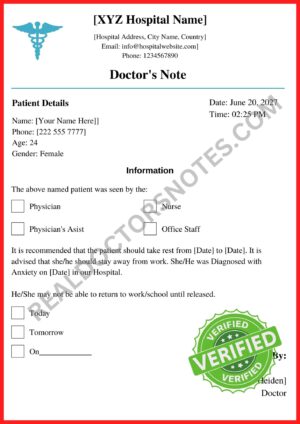
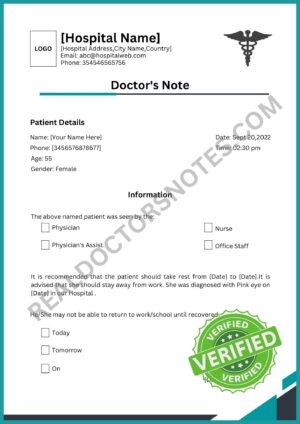
The exact information depends on the healthcare provider and the purpose of the documentation. A legitimate medical note may include information such as:
- Date of the medical evaluation
- Confirmation that the patient was evaluated
- Relevant medical recommendation
- Recommended period of absence, when medically necessary
- Return-to-work or return-to-school guidance
- Restrictions or accommodations, if appropriate
- Healthcare professional’s identifying information and credentials
A medical note should reflect an actual healthcare evaluation. It should not contain false information or claim that a person was examined when they were not.
Dermatitis Treatment and Symptom Management
Treatment depends on the type and severity of dermatitis and its underlying trigger.
For contact dermatitis, avoiding the substance responsible for the reaction is one of the most important steps. However, identifying the trigger can sometimes require careful investigation.
Healthcare professionals may recommend treatments such as:
- Fragrance-free moisturizers
- Barrier-repair creams
- Cool compresses
- Anti-itch treatments
- Prescription topical medications
- Other treatments for persistent or severe cases
Moisturizing is particularly important for many forms of eczema because maintaining the skin barrier can help reduce dryness, cracking, and irritation.
Do not start, stop, or change prescription medication without discussing it with a qualified healthcare professional.
Tips for Managing a Dermatitis Flare-Up
Simple skin-care measures may help reduce irritation while you seek appropriate medical advice:
- Identify potential triggers: Think about new soaps, detergents, cosmetics, fragrances, jewelry, gloves, chemicals, or workplace exposures.
- Avoid known irritants: Continuing exposure can make contact dermatitis harder to control.
- Moisturize regularly: Use a suitable fragrance-free moisturizer, particularly after washing.
- Avoid scratching: Scratching can worsen irritation and may damage the skin or increase the risk of infection.
- Use cool compresses: A cool, damp cloth may temporarily reduce itching and discomfort.
- Choose gentle skin products: Avoid products that consistently trigger burning or irritation.
The American Academy of Dermatology recommends avoiding the cause when possible, minimizing scratching, using appropriate itch-relief measures, and applying fragrance-free moisturizer or barrier-repair cream to help manage contact dermatitis.
Can Dermatitis Affect Your Ability to Work?
Yes. The impact depends on the severity of the condition and the type of work you perform.
For example, dermatitis affecting the hands could be particularly disruptive for people who frequently wash their hands, work with chemicals, handle food, wear gloves, or perform repetitive manual tasks. Workplace exposure can also contribute to contact dermatitis in certain occupations.
If your symptoms are affecting your ability to perform your duties safely or comfortably, discuss your situation with a healthcare professional. They can determine whether time away from work or temporary workplace adjustments are medically appropriate.
When Should You Seek In-Person Medical Care?
An online consultation may not be appropriate for every rash. You should seek prompt in-person medical evaluation if you have rapidly worsening symptoms, extensive blistering, significant swelling, severe pain, signs of infection, or other concerning symptoms.
You should also consider seeing a dermatologist if the rash keeps returning, the cause is unclear, or treatment is not improving your symptoms. A dermatologist can investigate potential triggers and, when appropriate, use testing such as patch testing for suspected allergic contact dermatitis.
Online Doctor’s Note for Dermatitis: What to Know
An Online Doctor’s Note for Dermatitis can be relevant when a medically evaluated flare-up interferes with work, school, or other responsibilities. The key is that documentation should be based on a genuine clinical assessment and should accurately reflect the healthcare professional’s recommendation.
Online healthcare can provide convenient access to medical advice, but it should not be used to obtain documentation without an actual medical evaluation. Requirements for accepting a doctor’s note can also vary between employers, schools, airlines, and other organizations.
FAQs
Q. Can I get an online doctor’s note for dermatitis?
If an online healthcare provider determines that your symptoms warrant medical documentation, they may provide appropriate documentation following an evaluation. Whether you qualify depends on your individual circumstances and the provider’s clinical judgment.
Q. Can dermatitis be a reason to miss work?
A significant dermatitis flare-up can interfere with work, particularly when symptoms affect your hands, face, or other areas involved in your job. A healthcare professional can determine whether time away from work is medically appropriate.
Q. Can dermatitis be caused by something at work?
Yes. Contact with chemicals, cleaning products, metals, gloves, cosmetics, or other workplace substances can contribute to contact dermatitis. Identifying the specific trigger may require reviewing your occupational exposures.
Q. Is dermatitis contagious?
Common forms of dermatitis, including contact dermatitis and atopic dermatitis, are not contagious. Contact dermatitis develops because of irritation or an allergic reaction rather than being transmitted from one person to another.
Q. Does dermatitis always require prescription treatment?
No. Treatment depends on the type and severity of dermatitis. Some cases improve after avoiding the trigger and using appropriate skin care, while persistent or severe cases may require prescription treatment.


Reviews
There are no reviews yet.