![Real Doctors Note For Work and School [Get in 5 Minutes]](https://realdoctorsnotes.com/wordpress/wp-content/uploads/2025/11/2.png)
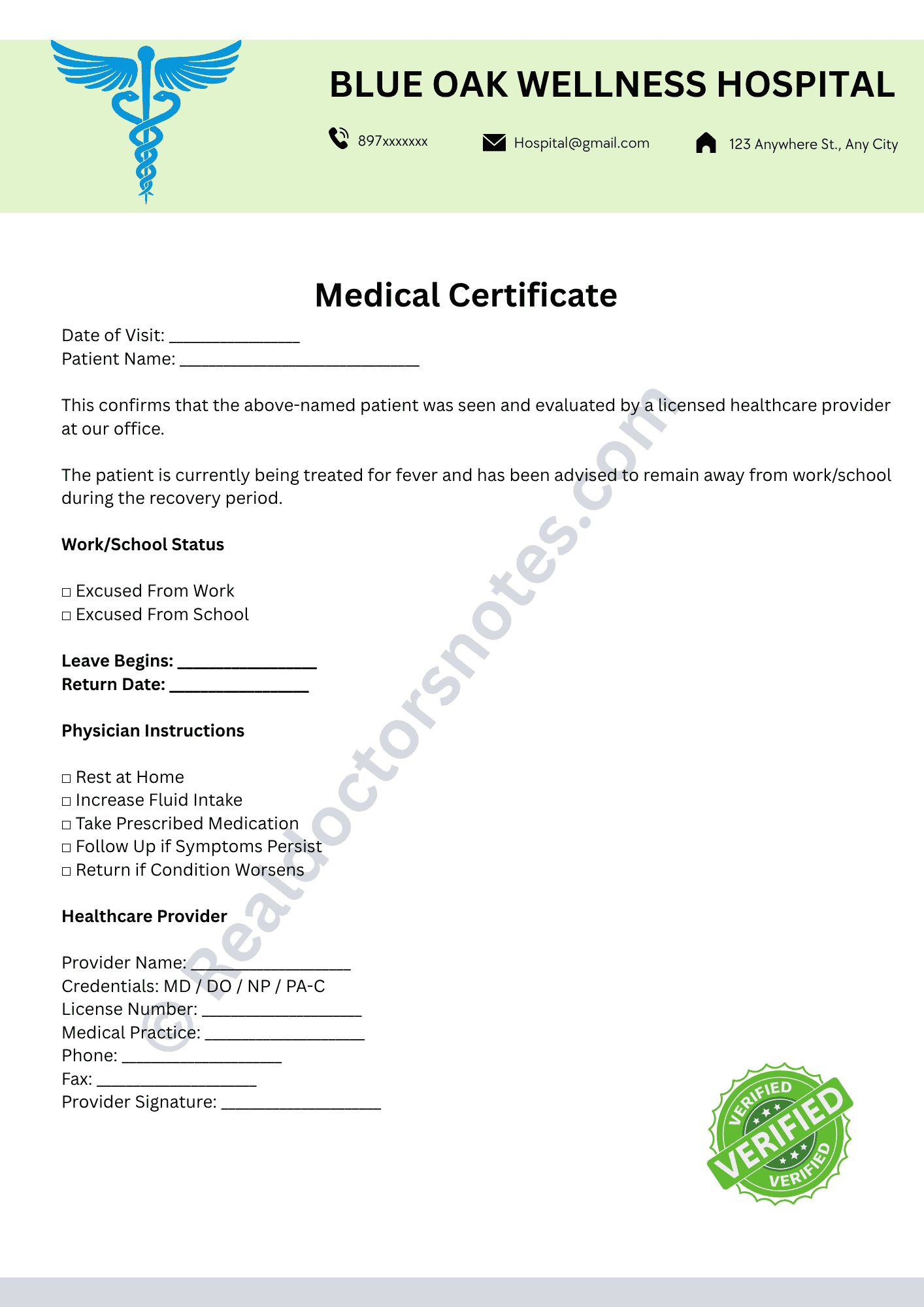
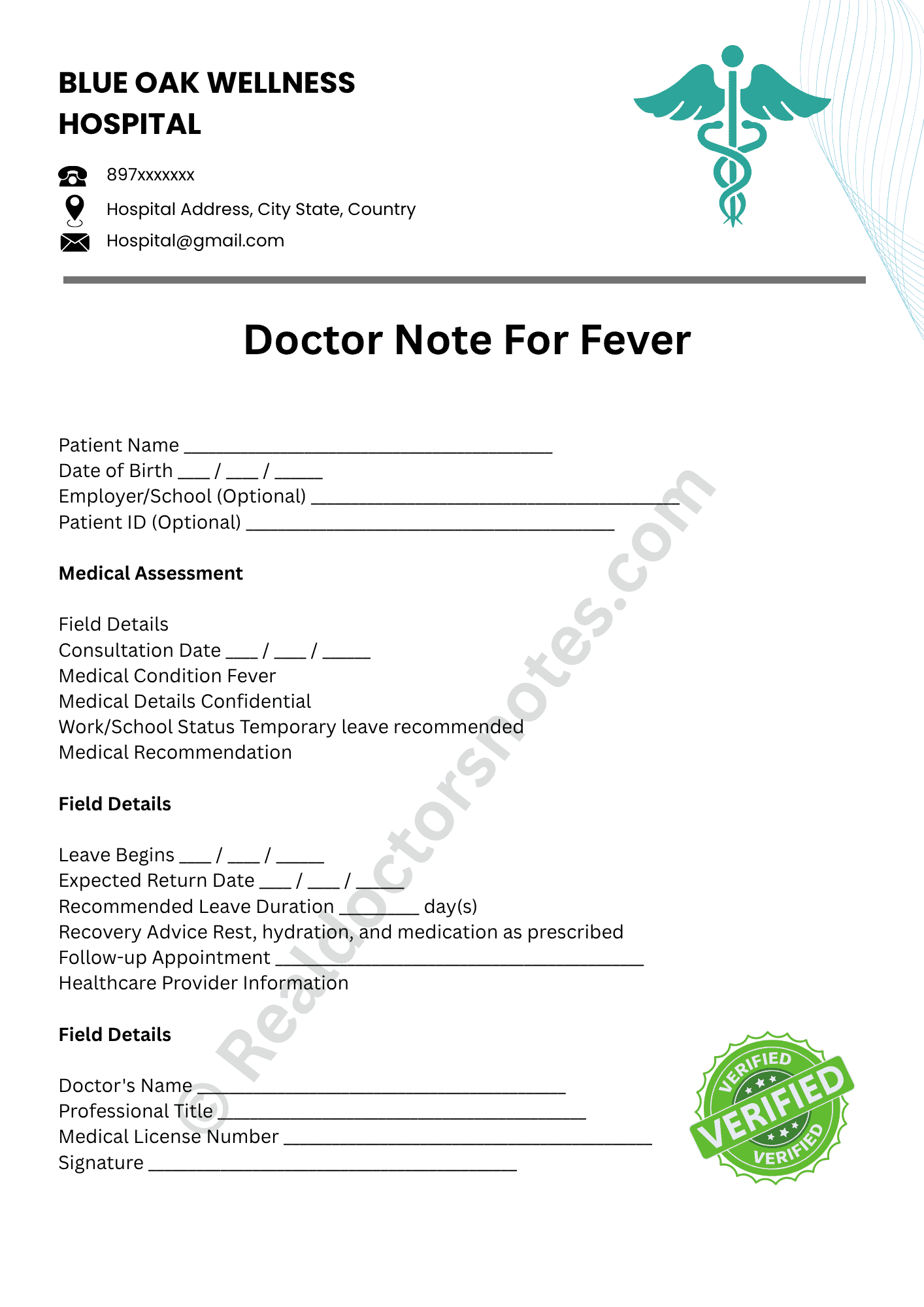
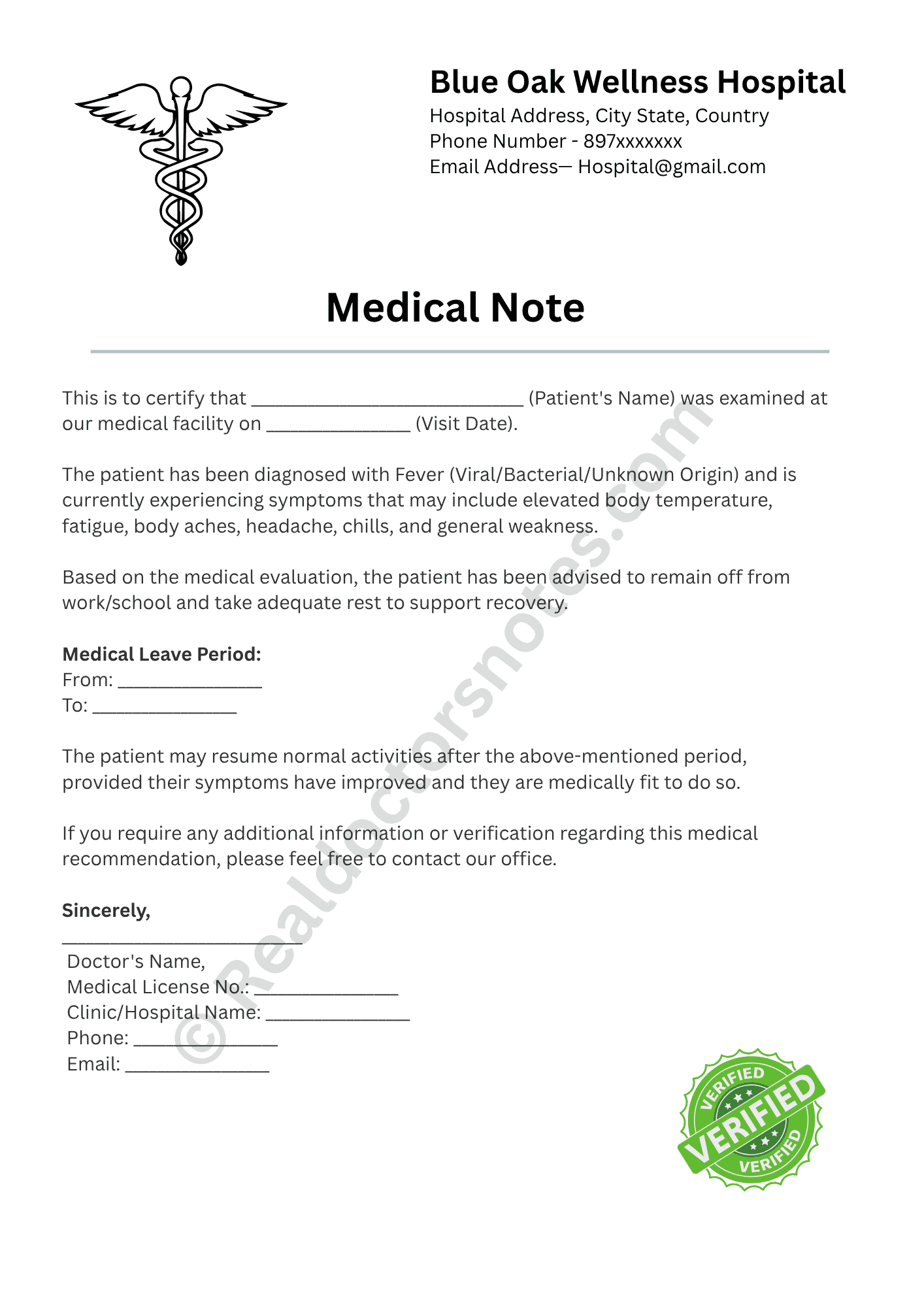



A Doctors Note for Fever is a medical document provided by a licensed healthcare professional to confirm that a patient was evaluated for a fever-related illness and may need time away from work, school, or other responsibilities. Whether your fever is caused by a viral infection, bacterial illness, flu, COVID-19, or another medical condition, a doctor’s note serves as official proof of your health status and recommended recovery period.
Many employers and educational institutions require a doctor’s note if you’ve missed multiple days due to illness. Understanding when you need one, what it includes, and how to obtain it can help you avoid unnecessary stress while focusing on recovery.
Related Post:
- Doctors Note for Cold
- Online Doctors Note for Cough
- Doctors Note for Viral Infection
- Doctors Note for Flu
What Is a Doctors Note for Fever?
A Doctors Note for Fever is an official medical certificate issued after a healthcare provider evaluates your condition. It verifies that you were experiencing symptoms consistent with a fever and may recommend rest, medication, or temporary leave from work or school.
A fever is generally considered a body temperature of 100.4°F (38°C) or higher and is often a symptom rather than a disease itself. Since fever can accompany many illnesses, a medical evaluation helps determine the underlying cause and the appropriate treatment.
When Do You Need a Doctors Note for Fever?
You may need a doctor’s note in several situations, including:
- Missing work because of a high fever
- Returning to work after recovering from an infectious illness
- School or college attendance requirements
- Extended sick leave documentation
- Family Medical Leave (when applicable)
- Workplace attendance verification
- Sports participation clearance
- Travel cancellations or insurance claims
Many employers request documentation if you’re absent for two or more consecutive days, although policies vary.
Common Causes of Fever
A fever can result from many medical conditions, including:
- Viral infections
- Influenza (Flu)
- Common cold
- COVID-19
- Strep throat
- Ear infections
- Urinary tract infections
- Pneumonia
- Sinus infections
- Gastrointestinal infections
- Heat exhaustion
- Certain inflammatory conditions
Because fever is a symptom of many illnesses, healthcare providers assess additional symptoms before making recommendations.
Symptoms That Often Accompany Fever
People experiencing fever may also have:
- Chills
- Sweating
- Body aches
- Fatigue
- Headache
- Sore throat
- Cough
- Nasal congestion
- Nausea
- Vomiting
- Diarrhea
- Muscle pain
- Weakness
- Loss of appetite
If symptoms become severe or persist for several days, medical evaluation is recommended.
What Information Is Included in a Doctors Note for Fever?
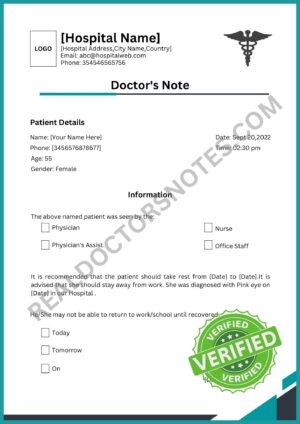
A legitimate doctor’s note typically includes:
- Patient’s name
- Date of medical evaluation
- Healthcare provider’s name
- Clinic or hospital information
- Confirmation that the patient was evaluated
- Diagnosis (when appropriate)
- Recommended rest period
- Return-to-work or school date
- Medical restrictions (if necessary)
- Provider’s signature
- Contact information
Medical privacy laws generally prevent unnecessary disclosure of detailed health information unless the patient authorizes it.
Can You Get a Doctors Note for Fever Online?
Yes. Many telehealth providers allow patients to consult with licensed healthcare professionals through secure online appointments. If the provider determines that your symptoms warrant medical leave, they may issue a valid Doctors Note for Fever according to local laws and medical guidelines.
Online consultations are often suitable for:
- Mild viral illnesses
- Flu-like symptoms
- Minor infections
- Follow-up evaluations
- Return-to-work documentation
However, severe symptoms may require an in-person examination or emergency care.
How to Get a Doctors Note for Fever
Getting a doctor’s note is usually straightforward.
Step 1: Schedule a Medical Appointment
Visit a healthcare provider in person or book an online consultation.
Step 2: Describe Your Symptoms
Explain:
- Temperature readings
- Duration of fever
- Additional symptoms
- Existing medical conditions
- Current medications
Step 3: Undergo Medical Evaluation
The provider may perform:
- Physical examination
- Temperature check
- Blood pressure
- Oxygen level assessment
- Laboratory tests (if needed)
Step 4: Receive Treatment Recommendations
Depending on the cause, treatment may include:
- Rest
- Hydration
- Fever-reducing medication
- Antibiotics (if bacterial infection is diagnosed)
- Antiviral medication (when appropriate)
Step 5: Obtain Your Doctors Note
If medically appropriate, your provider will issue documentation recommending time away from work or school.
How Long Should You Stay Home with a Fever?
Recovery depends on the underlying illness.
General guidance includes:
| Condition | Typical Recovery Time |
|---|---|
| Common cold | 2–5 days |
| Influenza | 5–7 days |
| Viral infection | 3–7 days |
| COVID-19 | Depends on current medical guidance |
| Bacterial infection | Varies after antibiotics |
Most healthcare providers recommend returning only after being fever-free for at least 24 hours without fever-reducing medication, unless advised otherwise.
Does Every Fever Require a Doctors Note?
Not always.
Many mild fevers resolve within a day or two with:
- Rest
- Fluids
- Over-the-counter medications
- Adequate sleep
However, you should seek medical care if:
- Fever exceeds 103°F (39.4°C)
- Fever lasts more than 3 days
- Difficulty breathing develops
- Severe dehydration occurs
- Persistent vomiting
- Confusion
- Chest pain
- Seizures
- Rash with fever
These symptoms may indicate a more serious condition.
Can Your Employer Verify a Doctors Note?
In many workplaces, employers may verify:
- Whether the note was issued
- The healthcare provider’s office
- Dates of recommended leave
They generally cannot request confidential medical details without your permission, depending on applicable privacy laws.
How Long Is a Doctors Note for Fever Valid?
The validity of a Doctors Note for Fever depends on the recovery period recommended by your healthcare provider.
For example:
- One-day illness: 1 day of leave
- Mild viral infection: 2–3 days
- Influenza: 5–7 days
- Pneumonia or severe infection: Longer, based on medical evaluation
If your symptoms continue beyond the expected recovery period, your provider may issue an updated note after re-evaluating your condition.
Tips for Recovering from a Fever
While recovering:
- Drink plenty of fluids
- Get adequate rest
- Monitor your temperature
- Eat nutritious foods
- Take medications only as directed
- Avoid strenuous activity
- Stay home if you’re contagious
- Follow your healthcare provider’s advice
Proper recovery helps reduce complications and lowers the risk of spreading illness to others.
FAQs
Q. Can I get a Doctors Note for Fever online?
Yes. Many licensed telehealth providers can evaluate your symptoms virtually and issue a doctor’s note when medically appropriate.
Q. How long is a doctor’s note valid?
It remains valid for the leave period specified by the healthcare provider.
Q. Can I return to work while I still have a fever?
Generally, no. It is recommended to return only after being fever-free for at least 24 hours without fever-reducing medication, unless your healthcare provider advises otherwise.
Q. Will my doctor’s note mention my diagnosis?
Not necessarily. Many notes simply confirm that you were evaluated and medically advised to take leave while protecting your privacy.
Q. Can schools accept a doctor’s note for fever?
Yes. Most schools and colleges accept a legitimate doctor’s note as proof of illness, subject to their attendance policies.



Reviews
There are no reviews yet.