![Real Doctors Note For Work and School [Get in 5 Minutes]](https://realdoctorsnotes.com/wordpress/wp-content/uploads/2025/11/2.png)
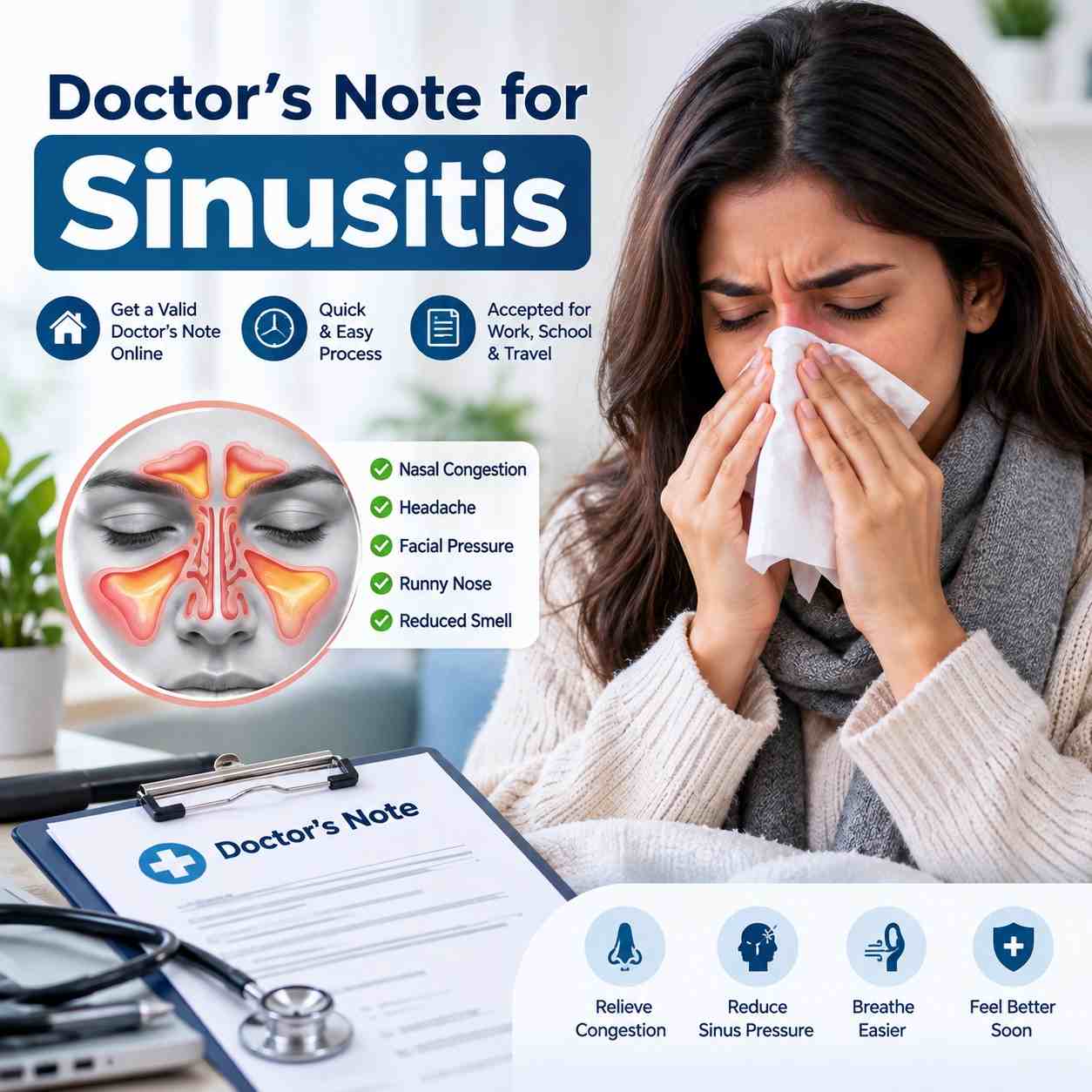
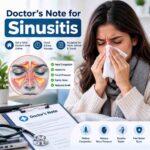
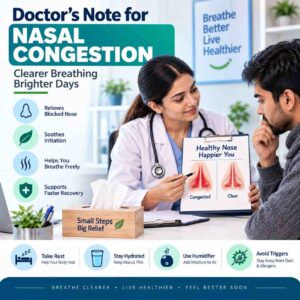
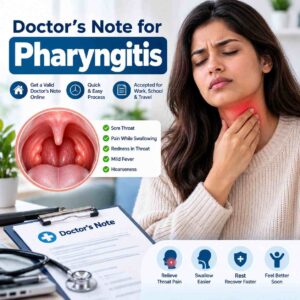
Sinusitis can cause nasal congestion, facial pressure, headaches, post-nasal drip, cough, tiredness, and difficulty breathing through the nose. When these symptoms make it difficult to attend work, school, or other responsibilities, a healthcare professional may determine that you need time to rest and recover.
A doctor’s note for sinusitis is a medical document issued by a qualified healthcare professional after an appropriate evaluation. Depending on your condition, the note may confirm that you were assessed for sinusitis and may recommend a period of absence or temporary restrictions when medically appropriate.
What Is Sinusitis?
Sinusitis, also called a sinus infection or rhinosinusitis, occurs when the tissues lining the sinuses become inflamed. This can interfere with normal drainage and lead to congestion, mucus buildup, facial pressure, and other symptoms. Viral infections, particularly common colds, are a frequent cause, although some cases involve bacteria or other factors such as allergies.
Sinusitis may be acute or chronic. Acute sinusitis generally develops over a shorter period, while chronic sinusitis involves symptoms lasting at least 12 weeks.
Common Symptoms of Sinusitis
People with sinusitis may experience different combinations of symptoms. Common symptoms include:
- Stuffy or blocked nose
- Runny nose
- Facial pressure or pain
- Headache
- Thick nasal mucus
- Post-nasal drip
- Sore throat
- Cough
- Bad breath
- Reduced sense of smell
- Tooth discomfort
- Ear pressure
- Tiredness
- Fever in some cases
Facial pressure may become more noticeable when bending forward.
Can Sinusitis Qualify for a Doctor’s Note?
Yes, sinusitis can qualify for a doctor’s note when a healthcare professional determines that your symptoms or condition justify time away from work, school, or another activity.
Whether you receive a note depends on your individual symptoms, clinical assessment, the requirements of the organization requesting the document, and the healthcare professional’s judgment.
A doctor’s note should not be issued simply because someone requests one. The healthcare professional should evaluate the person’s reported symptoms and relevant medical information before deciding whether documentation is appropriate.
Why Might Someone Need a Doctor’s Note for Sinusitis?
Sinusitis symptoms can sometimes interfere with normal daily activities. A person may need medical documentation when they are unable to perform their usual responsibilities because of symptoms.
Common reasons include:
- Missing work because of sinusitis symptoms
- Taking sick leave
- Missing school or college
- Needing additional recovery time
- Attending a medical appointment
- Returning to work after an illness
- Requesting temporary workplace accommodations
- Documenting a medically necessary absence
The exact requirements vary between employers, schools, and other organizations.
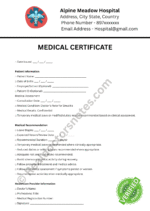
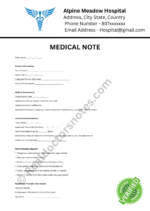
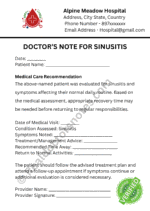
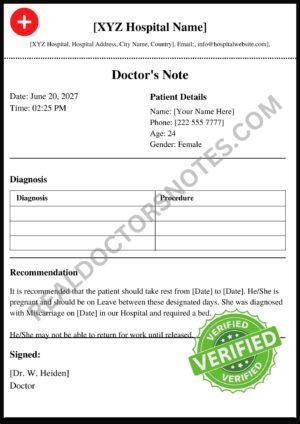
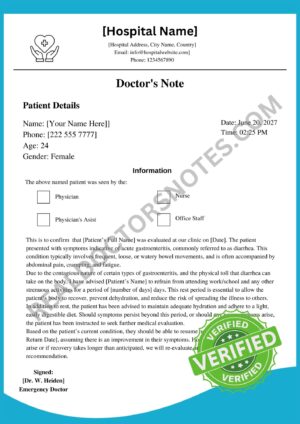
What Can a Sinusitis Doctor’s Note Include?
A legitimate medical note for sinusitis may contain information such as:
- Patient’s name
- Date of medical evaluation
- Healthcare professional’s name
- Medical practice or clinic information
- General medical reason for the absence, when appropriate
- Recommended period of rest or absence
- Expected return date, if clinically appropriate
- Work or school restrictions, if necessary
- Healthcare professional’s signature or authentication
The amount of medical information included should be appropriate for the purpose of the document and consistent with applicable privacy requirements.
Some employers or schools may only need confirmation that the person was medically evaluated and should be absent for a specified period.
How Do You Get a Doctor’s Note for Sinusitis?
The appropriate way to get a doctor’s note for sinusitis is to have your symptoms evaluated by a qualified healthcare professional.
Depending on your situation, this may involve:
1. Book a Medical Appointment
You can schedule an appointment with a primary care doctor, family physician, urgent care provider, or another appropriate healthcare professional.
2. Explain Your Symptoms
Tell the healthcare professional when your symptoms started and how they affect your daily activities.
You may be asked about:
- Nasal congestion
- Facial pain or pressure
- Headache
- Nasal discharge
- Cough
- Fever
- Post-nasal drip
- Changes in smell
- Previous sinus problems
- Allergies
- Medicines you are taking
3. Complete the Evaluation
The healthcare professional may ask questions and examine your nose, face, and other relevant areas. Additional testing is not always necessary for uncomplicated acute sinusitis.
4. Discuss Your Work or School Needs
If your symptoms are interfering with work or school, explain this during the consultation. The healthcare professional can determine whether medical documentation or temporary restrictions are appropriate.
5. Receive Documentation When Appropriate
If the healthcare professional determines that you need an absence or restriction, they may provide a medical note stating the relevant information.
Can You Get a Doctor’s Note for Sinus Infection?
A sinus infection may also be referred to as sinusitis. If a healthcare professional evaluates you and determines that your condition warrants time away from work or school, they may provide appropriate medical documentation.
However, having nasal congestion or facial pressure does not automatically mean that a doctor’s note is required. The need for documentation depends on your condition and the rules of the organization requesting it.
Can You Get a Sick Note for Sinusitis?
A sick note for sinusitis may be available after a medical evaluation when the healthcare professional believes that you are unable to work or attend school safely or effectively.
The length of recommended absence can vary. Mild symptoms may not require time away, while more significant symptoms may interfere with concentration, sleep, physical activity, or normal responsibilities.
Doctor’s Note for Sinusitis for Work
If sinusitis symptoms make it difficult to work, you can discuss your situation with a healthcare professional.
A work doctor’s note for sinusitis may indicate:
- That you were medically evaluated
- The date of evaluation
- The recommended period of absence
- Your expected return date
- Any temporary work restrictions, when medically necessary
For example, a healthcare professional may recommend rest for a specific period based on the person’s symptoms and clinical situation.
Your employer may have its own rules regarding when medical documentation is required, so check your workplace policy as well.
Doctor’s Note for Sinusitis for School or College
Students may also need medical documentation when sinusitis causes them to miss classes, exams, clinical training, or other academic activities.
A healthcare professional may provide documentation when appropriate after evaluating the student’s condition.
Schools and colleges can have different requirements for:
- Sick leave
- Missed examinations
- Attendance
- Assignment extensions
- Return to class
- Medical accommodations
Always check the institution’s policy before requesting documentation.
Can You Get an Online Doctor’s Note for Sinusitis?
An online medical consultation may be an option for some people with sinusitis symptoms.
During a telehealth appointment, a healthcare professional may ask about your symptoms, their duration, medical history, medications, and any concerning changes. Based on the information available and the limitations of remote assessment, the clinician can determine whether an online consultation is appropriate.
If medical documentation is justified, the healthcare professional may provide it according to applicable rules and their clinical judgment.
However, an online consultation is not a guarantee that you will receive a doctor’s note.
What Should You Tell an Online Doctor About Sinusitis?
Before an online appointment, it can be useful to prepare information about:
- When symptoms started
- Whether symptoms are improving or worsening
- Nasal congestion
- Facial pressure or pain
- Headache
- Nasal discharge
- Fever
- Cough
- Post-nasal drip
- Previous sinus infections
- Allergies
- Current medications
- Any relevant medical conditions
Being accurate about your symptoms helps the healthcare professional make a more informed assessment.
How Long Can a Doctor’s Note for Sinusitis Cover?
There is no universal number of days that applies to every person with sinusitis.
The recommended absence depends on factors such as:
- Severity of symptoms
- Duration of illness
- Type of work or school activity
- Clinical findings
- Response to treatment
- Any underlying health conditions
A healthcare professional should determine the appropriate period based on the individual situation rather than using a fixed number of days for everyone.
Does Sinusitis Always Require Antibiotics?
No. Many sinus infections are caused by viruses, and antibiotics do not treat viral infections. CDC guidance notes that many sinus infections improve without antibiotics. A healthcare professional can determine whether antibiotics are appropriate based on the clinical picture.
Treatment may instead focus on relieving symptoms. Depending on the person’s circumstances, healthcare professionals may recommend measures such as saline nasal spray, appropriate over-the-counter medicines, rest, fluids, or other treatments.
Do not start antibiotics simply because you have colored nasal mucus or believe you have a sinus infection. Medical evaluation is important when symptoms are persistent, severe, or worsening.
How Can Sinusitis Symptoms Be Managed at Home?
For uncomplicated cases, several measures may help relieve symptoms.
Stay Hydrated
Drinking fluids can help maintain hydration and may make mucus easier to clear.
Use Saline Nasal Spray
Saline sprays or rinses may help clear mucus and improve nasal comfort.
Try a Warm Compress
A warm compress over the nose and forehead may help relieve facial pressure.
Get Adequate Rest
Rest can be useful while your body recovers from an infection.
Use Medicines Correctly
Some over-the-counter medicines may help with congestion or pain. Use them according to the product directions and ask a healthcare professional or pharmacist if you are unsure whether a medicine is appropriate for you.
When Should You See a Doctor for Sinusitis?
You should consider medical evaluation if symptoms are severe, persist without improvement, or become worse after initially improving.
CDC recommends seeking medical care for severe symptoms, symptoms that worsen after improving, symptoms lasting more than 10 days without getting better, fever lasting more than 3–4 days, or repeated sinus infections.
Urgent medical attention may be appropriate for symptoms such as swelling or redness around the eyes, significant vision changes, confusion, a stiff neck, or other severe symptoms.
Acute vs. Chronic Sinusitis
Understanding the difference can help when discussing your symptoms with a healthcare professional.
| Feature | Acute Sinusitis | Chronic Sinusitis |
|---|---|---|
| Duration | Short-term | At least 12 weeks |
| Common symptoms | Congestion, facial pressure, mucus, headache | Congestion, post-nasal drip, facial pressure, reduced smell |
| Common causes | Often follows a cold or respiratory infection | May involve inflammation, allergies, nasal polyps, or other factors |
| Medical evaluation | Often based on symptoms and examination | May require a more detailed evaluation |
Chronic sinusitis symptoms can continue for at least 12 weeks and may require assessment for contributing conditions.
Can Allergies Cause Sinus Problems?
Allergies can contribute to nasal inflammation and may worsen sinus symptoms. People with recurrent sinus problems may benefit from discussing allergies and other possible triggers with a healthcare professional.
If symptoms repeatedly return, identifying contributing factors can be more useful than repeatedly treating each episode as an isolated infection.
Can Sinusitis Make You Too Sick to Work?
It can, depending on the severity of symptoms and the type of work you do.
For example, significant facial pressure, headache, congestion, fatigue, coughing, or fever may make normal work activities difficult for some people.
A healthcare professional can assess your individual condition and determine whether rest, absence, or temporary restrictions are medically appropriate.
Can Sinusitis Make You Miss School?
Yes. Severe symptoms may interfere with attendance, concentration, sleep, or participation in school activities.
If your school requires medical documentation, you can ask a healthcare professional about obtaining a note after an appropriate evaluation.
Can a Doctor’s Note Say “Sinus Infection”?
The wording depends on the healthcare professional and the purpose of the document.
If the clinician determines that you have sinusitis, the documentation may identify the condition in appropriate medical terms. In some situations, the note may simply confirm that you were evaluated and require a period of absence without providing extensive diagnostic information.
The final wording should come from the healthcare professional rather than being altered by the patient.
Is a Doctor’s Note for Sinusitis Private?
Medical information is generally subject to privacy rules, but the exact requirements vary by location and situation.
For many work or school absences, the organization may only need limited information rather than a complete medical history.
Avoid providing unnecessary sensitive medical information when a simple confirmation of medical absence is sufficient.
Can an Employer Reject a Doctor’s Note for Sinusitis?
An employer may have specific requirements for medical documentation, such as the healthcare professional’s credentials, date of consultation, recommended absence period, or other information.
Whether a particular note is accepted depends on the employer’s policy and applicable employment rules.
Before requesting documentation, check what your employer specifically requires.
What If the Doctor Does Not Give You a Sick Note?
A healthcare professional may decide that a medical absence is not necessary after evaluating your symptoms.
If this happens, you can ask:
- Why is a medical absence not recommended?
- What can I do to manage my symptoms?
- When should I seek further care?
- What symptoms would require another consultation?
A doctor’s note should reflect the clinician’s actual assessment rather than being issued simply to satisfy a request.
FAQs
Q. Can I get a doctor’s note for sinusitis?
Yes, a healthcare professional may provide medical documentation for sinusitis when an evaluation supports the need for absence or restrictions.
Q. Can sinusitis be a reason for sick leave?
Yes. If symptoms significantly interfere with your ability to work, a healthcare professional may recommend sick leave based on your individual condition.
Q. Can I get a doctor’s note for a sinus infection?
A healthcare professional may provide a note after evaluating your symptoms and determining that medical documentation is appropriate.
Q. Can I get an online doctor’s note for sinusitis?
A telehealth consultation may be suitable for some sinusitis cases. If the clinician determines that a note is medically justified, documentation may be provided according to applicable requirements.
Q. How long should I stay home with sinusitis?
There is no standard number of days for everyone. The appropriate period depends on symptom severity, recovery, work or school requirements, and clinical assessment.


Reviews
There are no reviews yet.