![Real Doctors Note For Work and School [Get in 5 Minutes]](https://realdoctorsnotes.com/wordpress/wp-content/uploads/2025/11/2.png)
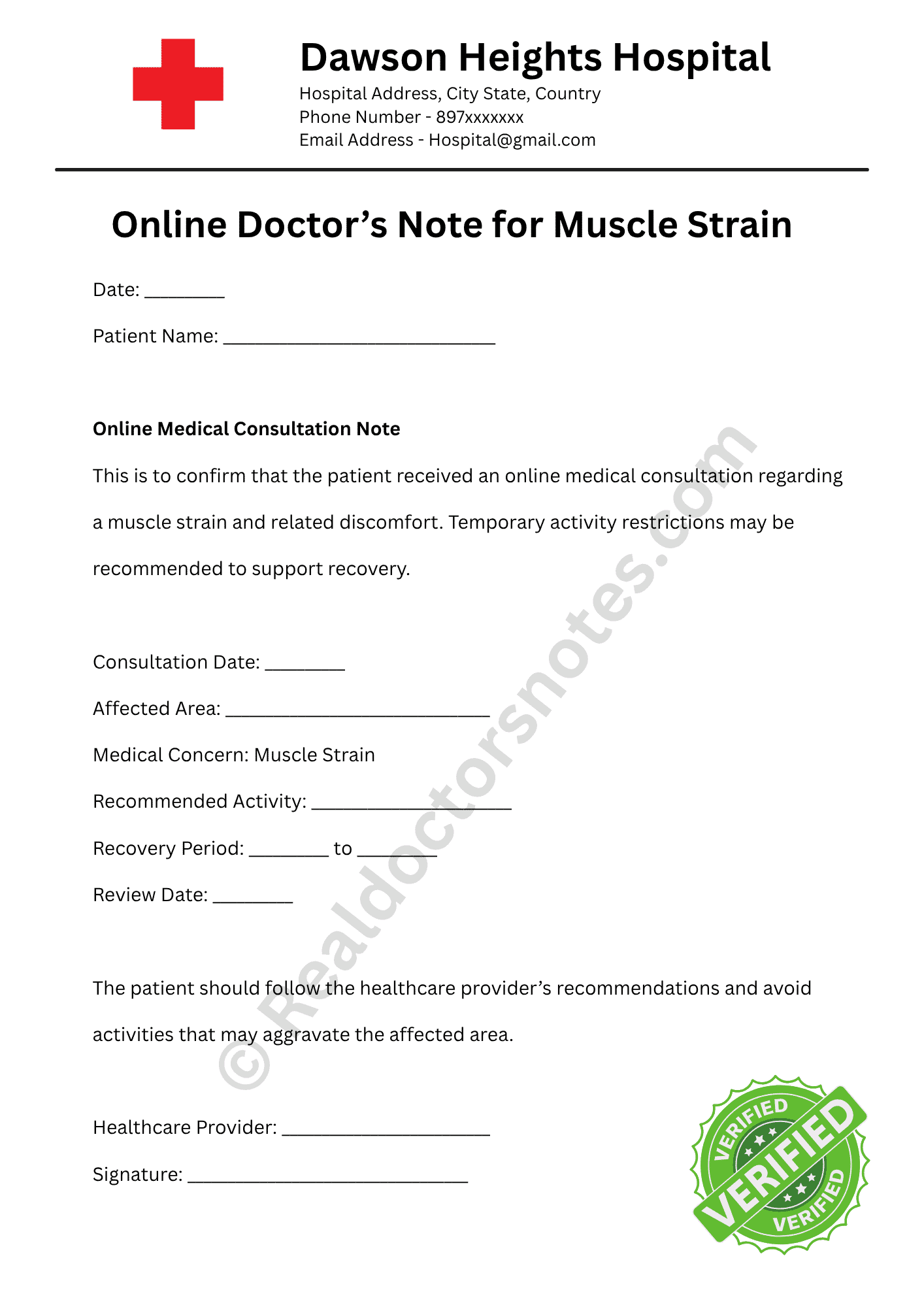
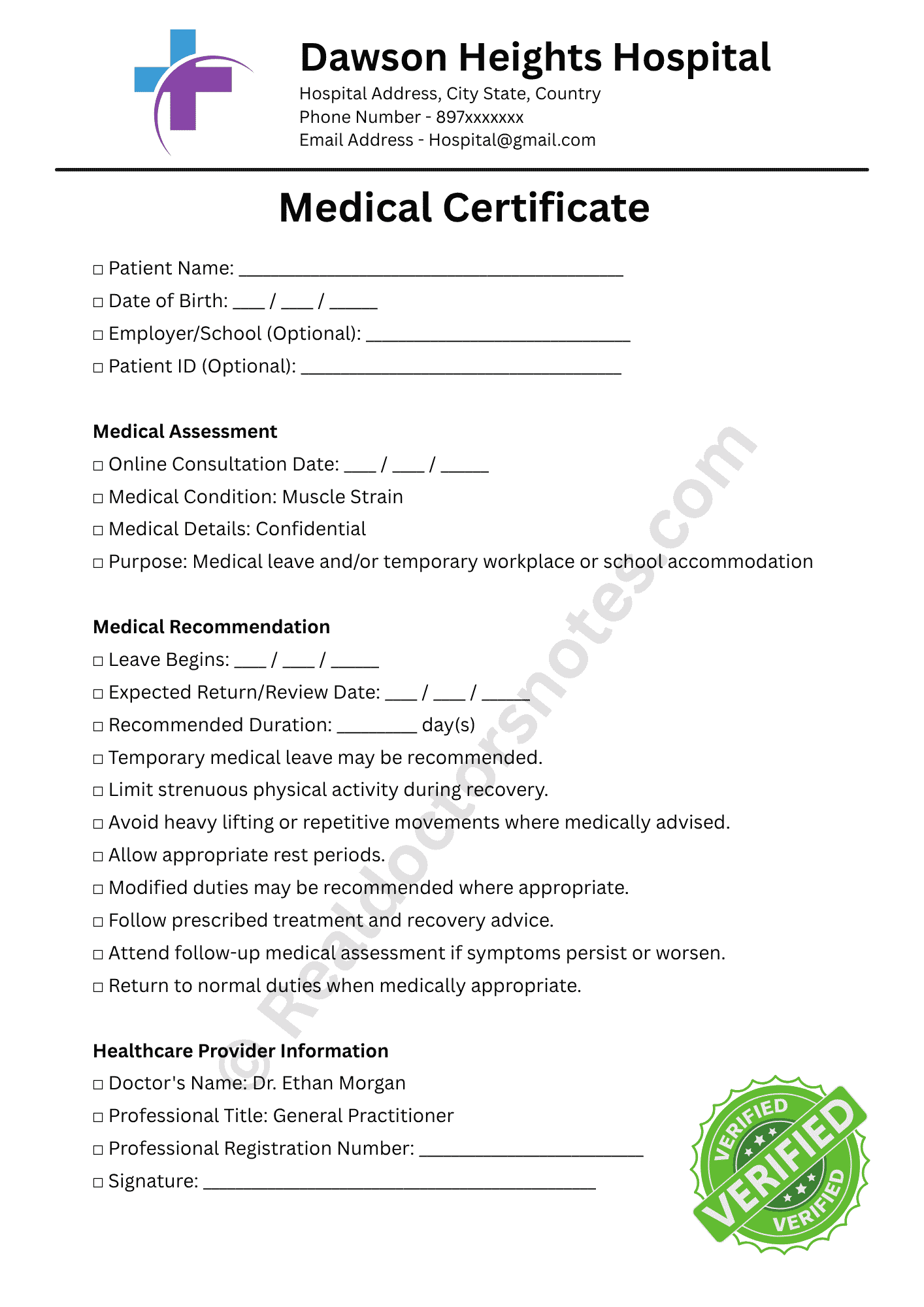
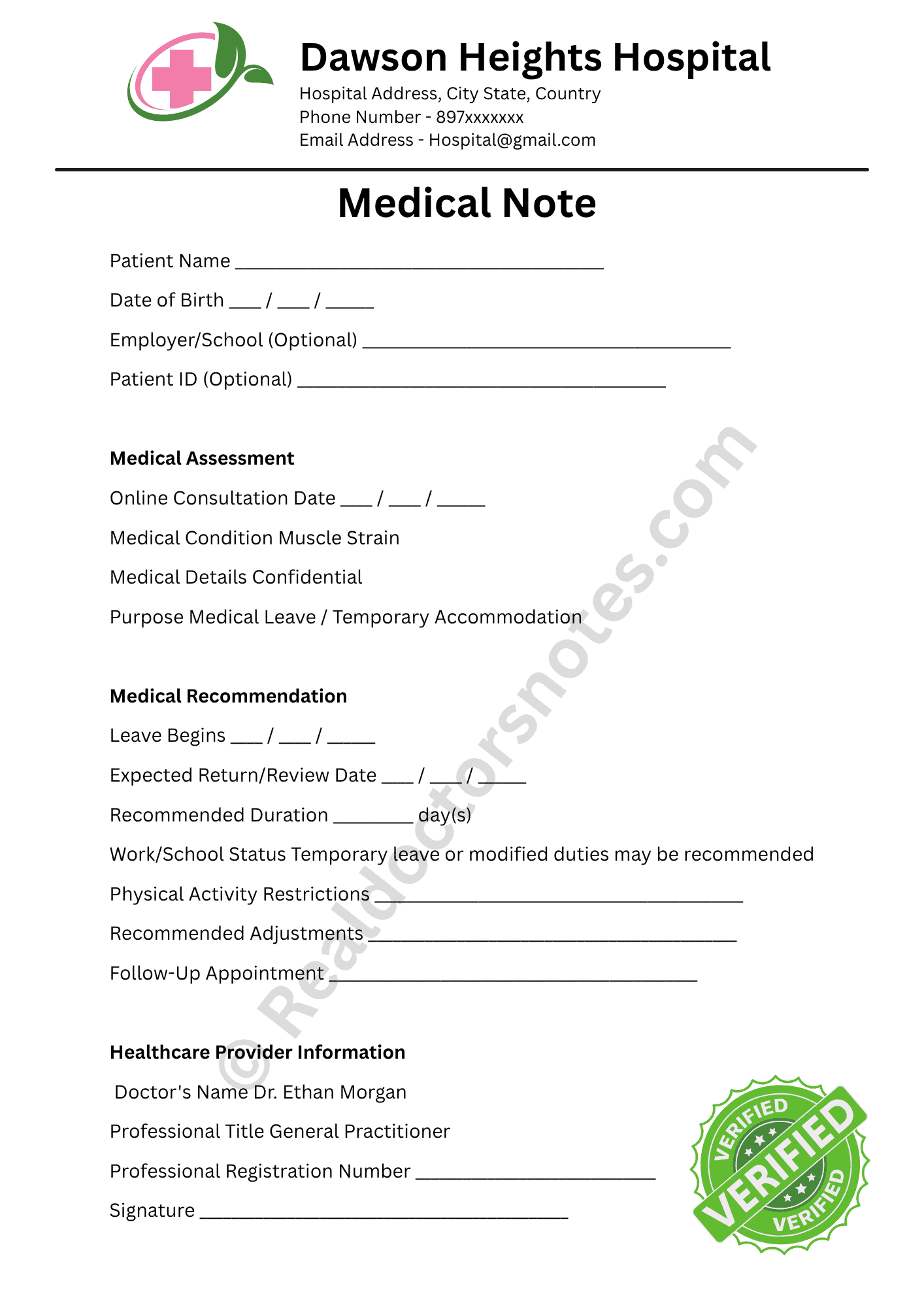


A Online Doctor’s Note for muscle strain, sometimes called a pulled muscle, happens when muscle fibers or the tendon connected to a muscle are overstretched or torn. It can occur suddenly during exercise, lifting, running, twisting, or other physical activity, or develop gradually because of repetitive overuse. Common symptoms include pain, tenderness, swelling, bruising, muscle spasms, weakness, and reduced movement.
If a muscle strain is making it difficult to work, attend school, exercise, or perform normal activities, speaking with a healthcare professional can help determine the appropriate treatment and whether you need temporary activity restrictions or time away from your usual responsibilities.
What Is an Online Doctor’s Note for Muscle Strain?
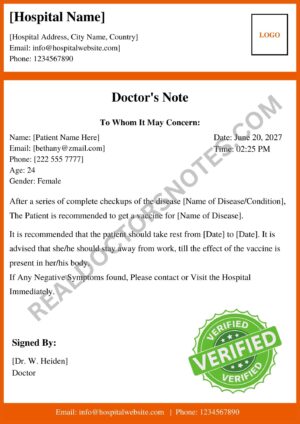
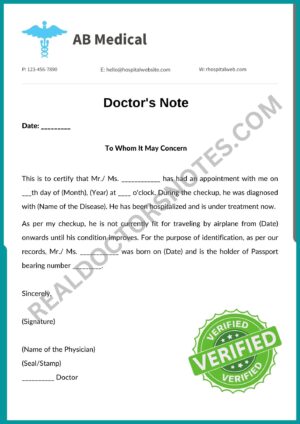
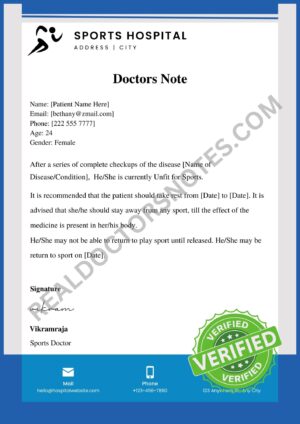
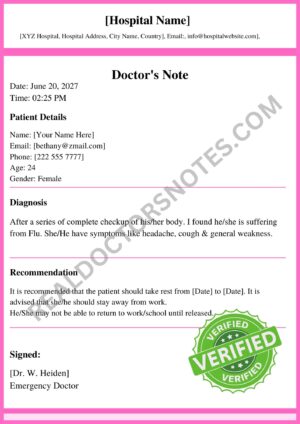
An Online Doctor’s Note for Muscle Strain is documentation that may be provided after an appropriate medical evaluation confirms that your symptoms and condition warrant restrictions, rest, or absence from work, school, or another activity.
During an online consultation, a healthcare professional may ask about:
- When the injury happened
- Which muscle is affected
- How the injury occurred
- Your pain level and other symptoms
- Whether you have swelling or bruising
- Whether you can walk or move normally
- Whether you heard or felt a popping or tearing sensation
- How the injury is affecting your daily activities
A virtual evaluation can be useful for straightforward muscle injuries, but an in-person assessment may be necessary when symptoms suggest a significant tear or another injury requiring physical examination or imaging.
Common Symptoms of a Pulled or Strained Muscle
Muscle strain symptoms can vary according to the severity and location of the injury. Common symptoms include:
- Localized muscle pain or tenderness
- Swelling
- Bruising or skin discoloration
- Muscle weakness
- Muscle spasms
- Reduced range of motion
- Pain that becomes worse when using the affected muscle
- Difficulty walking or bearing weight when the lower body is affected
A mild strain may cause discomfort without significantly limiting movement, while a more serious injury can cause substantial weakness or loss of function.
Muscle Strain vs. Muscle Sprain
These terms are sometimes confused. A muscle strain affects a muscle or tendon, whereas a sprain affects a ligament that connects bones at a joint.
Knowing the difference can be important because treatment and recovery recommendations depend on the tissue involved and the severity of the injury.
What Causes Muscle Strains?
Muscle strains can happen from either a sudden injury or repeated stress. Common causes include:
- Lifting something heavy
- Running or sprinting
- Jumping
- Sudden twisting movements
- Sports activities
- Exercising without adequate conditioning
- Repetitive physical work
- Overusing a muscle without sufficient recovery
- Returning to exercise too quickly after an earlier injury
Acute strains generally happen suddenly, while chronic strains can develop gradually from repeated stress on the same muscle.
Common Areas Affected by Muscle Strain
A strain can affect many parts of the body. Frequently affected areas include:
Back Muscle Strain
Back strains can cause localized pain, stiffness, muscle spasms, and difficulty with bending or lifting. Physical work and improper lifting techniques can increase the risk.
Hamstring Strain
Hamstring strains affect the muscles at the back of the thigh and are common in running and sports involving sudden acceleration.
Calf Muscle Strain
A calf strain can cause pain and swelling in the lower leg and may make walking or pushing off with the foot uncomfortable.
Groin Muscle Strain
Groin strains can occur during sudden changes of direction, jumping, or sports activities.
Neck Muscle Strain
Neck muscle strain may develop after awkward positioning, sudden movement, prolonged posture, or physical activity.
Shoulder or Upper-Body Strain
Lifting, repetitive movements, or exercise can place excessive stress on the shoulder and surrounding muscles.
How Is a Muscle Strain Diagnosed?
A healthcare professional typically evaluates the injury by discussing your symptoms and examining the affected area. The location of pain, tenderness, swelling, strength, and range of motion can help determine the likely severity.
For more significant injuries, imaging such as ultrasound or MRI may be considered to identify the extent of muscle or tendon damage.
Muscle strains may be broadly classified as:
- Grade I: Mild damage involving a small number of muscle fibers.
- Grade II: More substantial damage with partial tearing and reduced strength or movement.
- Grade III: Severe injury involving a complete tear, which may require specialist treatment and sometimes surgery.
What Should You Do for a Muscle Strain?
For a recent strain, early care commonly involves protecting the injured area, resting from painful activities, applying ice, compression, and elevation. Mayo Clinic recommends protecting the area, using ice for about 15–20 minutes at a time during the first few days, applying appropriate compression, and elevating the injured area when possible.
Avoid activities that increase pain, swelling, or discomfort. However, prolonged complete inactivity is not always necessary. Once symptoms allow, healthcare professionals may recommend gradually returning to gentle movement.
Depending on the injury, treatment may also include pain medication, physical therapy, a brace, or temporary protected weight-bearing.
When Might You Need a Doctor’s Note for Muscle Strain?
You may need medical documentation when a muscle injury prevents you from safely performing your usual responsibilities.
For example, a healthcare professional may recommend temporary restrictions if your job requires:
- Heavy lifting
- Frequent walking or standing
- Repetitive physical movement
- Climbing stairs
- Manual labor
- Sports or strenuous activity
A doctor’s note may also be relevant when a muscle strain causes you to miss work, school, training, or another scheduled activity. The actual restrictions or absence period should be based on the healthcare professional’s assessment rather than a predetermined number of days.
Can You Get a Muscle Strain Doctor’s Note Online?
In some situations, an online consultation may be appropriate for evaluating symptoms associated with a straightforward muscle strain. The healthcare professional can review your symptoms, discuss self-care, assess whether the condition appears suitable for virtual management, and determine whether documentation is medically appropriate.
However, an online consultation should not be used to bypass an examination when the injury may be serious. If there is severe pain, major swelling or bruising, inability to use the affected muscle, numbness or tingling, or a suspected complete tear, an in-person medical assessment may be necessary.
How Long Does a Muscle Strain Take to Heal?
Recovery depends on the severity and location of the injury.
A mild Grade I strain may improve within a few weeks. Moderate injuries can take several weeks to months, while severe Grade III injuries may require substantially longer rehabilitation and, in some cases, surgery.
Returning to strenuous exercise or physical work too quickly can increase the risk of reinjury. A gradual return to activity is generally preferable, particularly after a more significant strain.
When Should You See a Doctor for a Muscle Strain?
You should seek medical evaluation if:
- Pain is severe or getting worse.
- You cannot properly use the affected muscle.
- You cannot walk or bear weight because of the injury.
- There is substantial swelling or bruising.
- You felt or heard a pop or tearing sensation.
- You notice significant weakness.
- You experience numbness or tingling.
- Symptoms are not improving after several days of appropriate care.
These symptoms can indicate a more serious muscle injury or another condition that needs professional assessment.
Seek urgent medical attention when an injury causes severe loss of function, significant deformity, or other concerning symptoms rather than relying solely on an online consultation.
Muscle Strain Recovery and Return to Work
Returning to work depends on the type of work you perform and the severity of your injury. Someone with a desk-based job may be able to continue working with temporary adjustments, while someone whose job involves lifting, climbing, running, or prolonged standing may need different restrictions.
A healthcare professional can help determine whether you should:
- Take temporary time away from work
- Avoid heavy lifting
- Limit repetitive movements
- Reduce standing or walking
- Perform modified duties
- Gradually return to normal activities
The goal is to allow the injured tissue to recover while avoiding unnecessary inactivity.
How to Prevent Another Muscle Strain
Once you’ve recovered, prevention can help reduce the likelihood of another injury. Helpful measures include:
- Warm up before strenuous activity.
- Increase exercise intensity gradually.
- Strengthen muscles regularly.
- Maintain flexibility.
- Use appropriate technique when lifting.
- Avoid suddenly increasing training volume.
- Give your body adequate recovery time.
- Use appropriate footwear and sports equipment.
- Follow rehabilitation recommendations after an injury.
Previous muscle injuries can increase the risk of reinjury, particularly when rehabilitation is incomplete.
FAQs
Q. Can I get an online doctor’s note for a pulled muscle?
An online healthcare consultation may be appropriate for some uncomplicated muscle injuries. Whether a doctor’s note is provided depends on the clinician’s evaluation and whether documentation is medically justified.
Q. Can a muscle strain make you miss work?
Yes. A significant strain can interfere with lifting, walking, standing, bending, or other job duties. A healthcare professional can determine whether temporary absence or modified duties are appropriate.
Q. What is the fastest way to recover from a muscle strain?
There is no single treatment that guarantees faster recovery. Early protection, appropriate rest, ice, compression and elevation can help manage symptoms, followed by a gradual return to movement and rehabilitation when appropriate.
Q. Should I exercise with a strained muscle?
Avoid activities that worsen pain or swelling. As symptoms improve, gentle movement and a gradual return to activity may be recommended. A healthcare professional or physical therapist can provide individualized guidance.
Q. Can a severe muscle strain require surgery?
Yes. A complete muscle tear can sometimes require surgical repair, although many muscle strains recover without surgery.




Reviews
There are no reviews yet.