![Real Doctors Note For Work and School [Get in 5 Minutes]](https://realdoctorsnotes.com/wordpress/wp-content/uploads/2025/11/2.png)

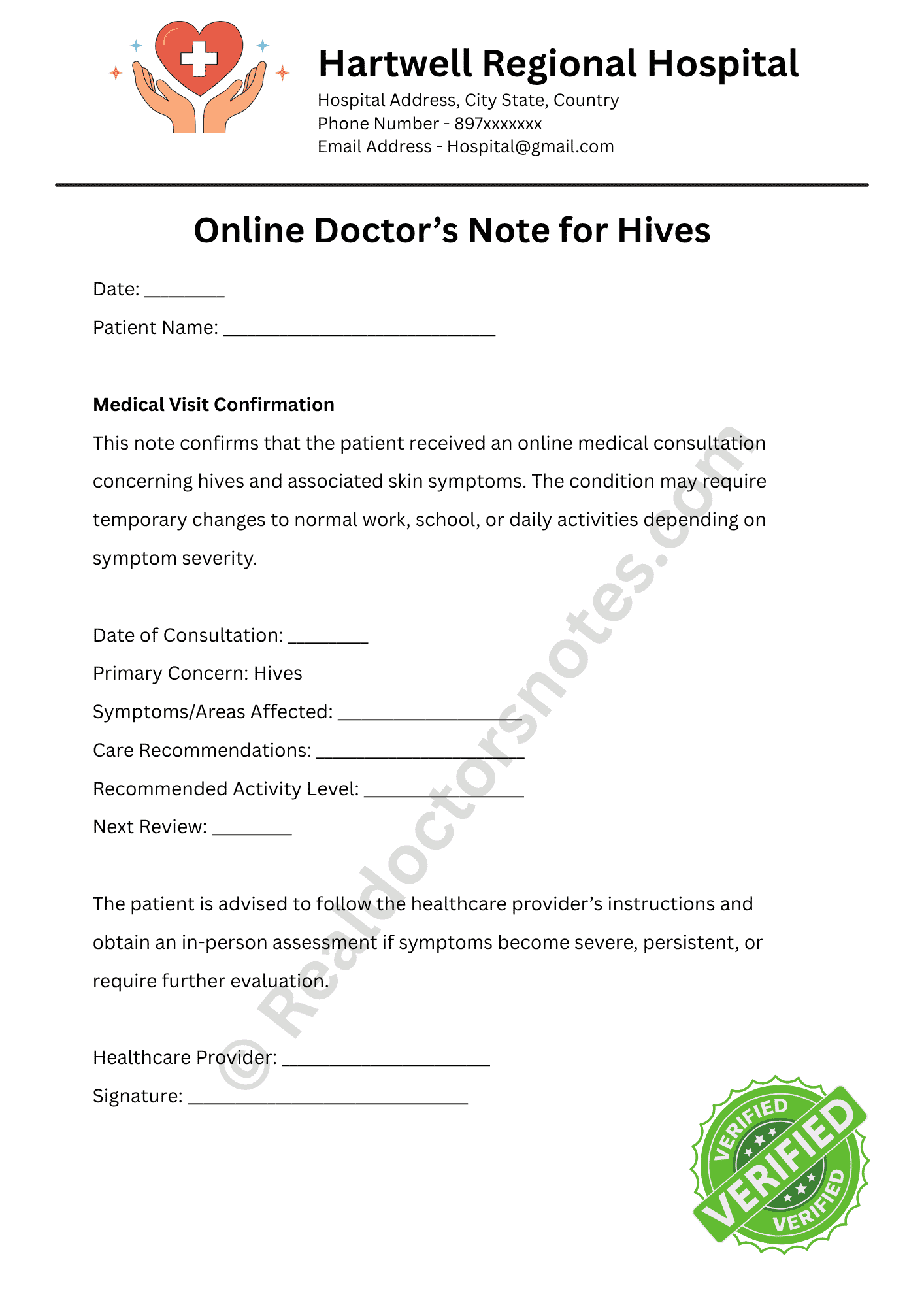
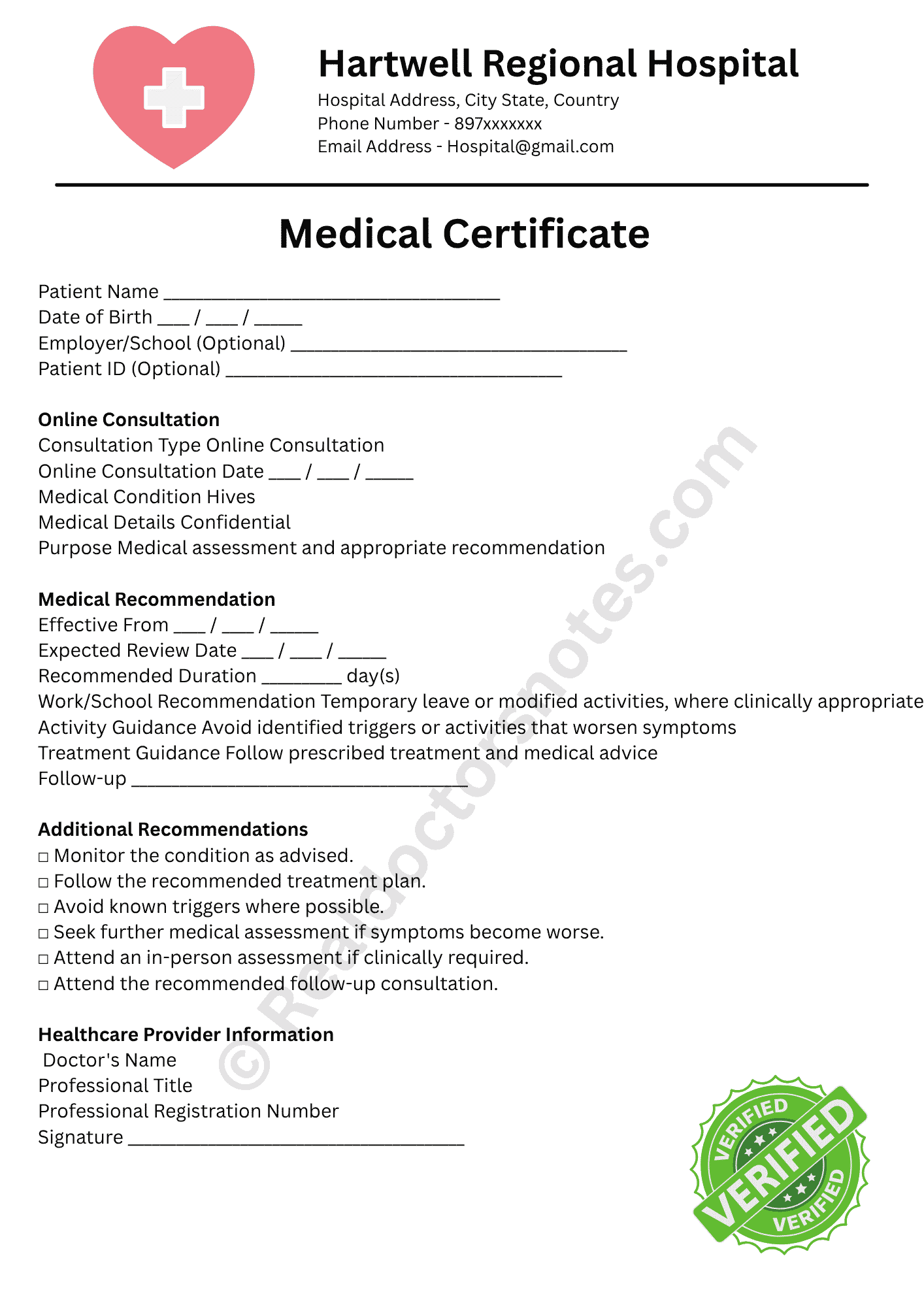
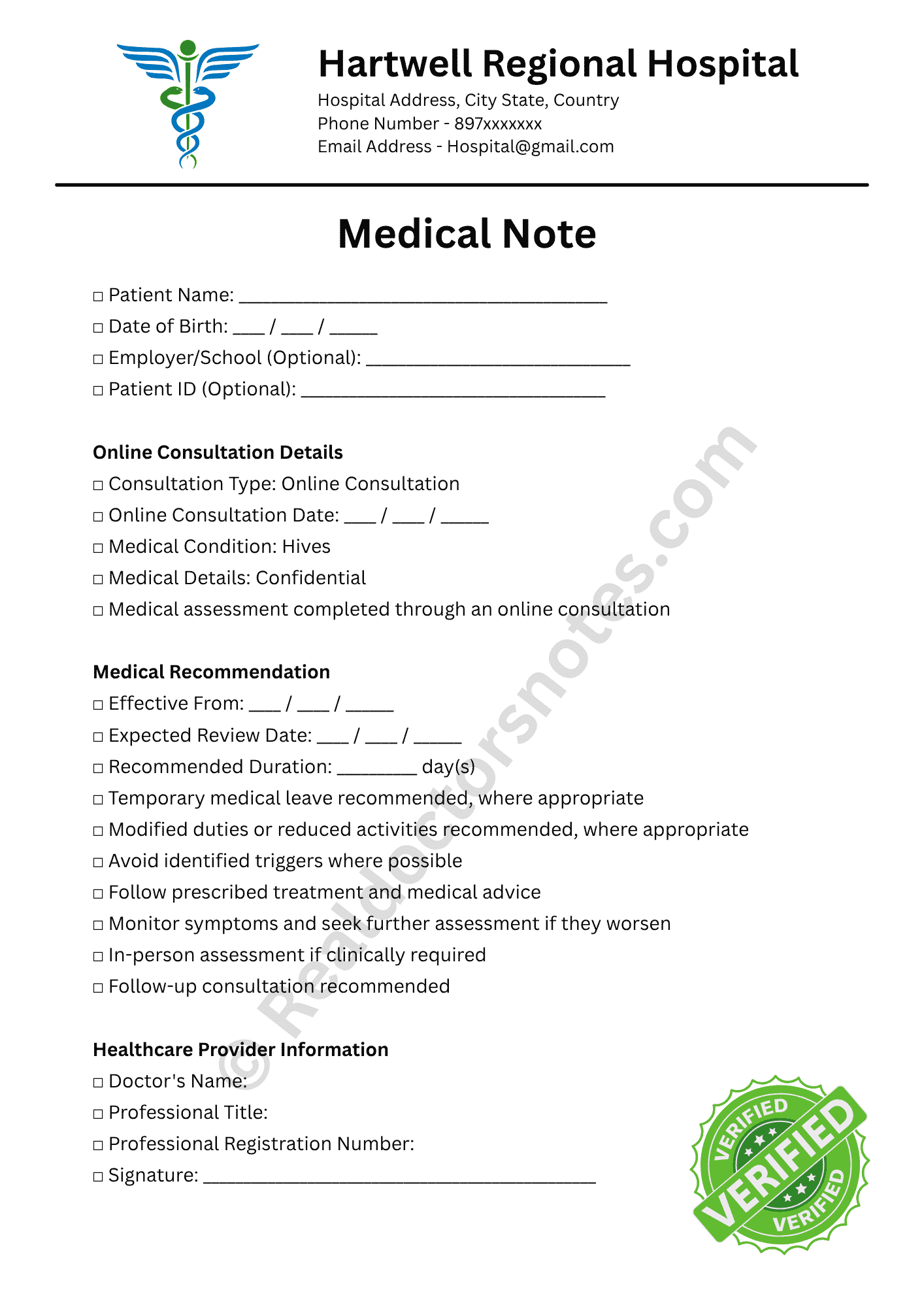

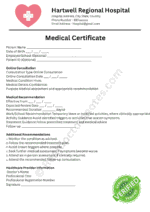
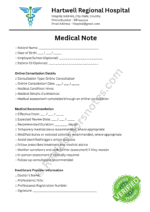


Hives can appear suddenly as itchy, raised welts and may be caused by allergies, medications, infections, insect bites, heat, cold, stress, or other triggers. While mild hives often improve on their own, persistent or severe symptoms may require medical evaluation.
If hives are making it difficult to work, attend school, travel, or perform normal activities, an online doctor’s note for hives may be appropriate when a licensed healthcare professional evaluates your symptoms and determines that documentation is medically justified. The note should reflect a genuine clinical assessment rather than simply being purchased without evaluation.
Related Post:
What Are Hives?
Hives, medically known as urticaria, are raised, itchy welts that can appear anywhere on the skin. They may be skin-colored, red, purple, or otherwise noticeable depending on a person’s skin tone. Individual hives often change shape, appear suddenly, and disappear within 24 hours, although new welts can continue to develop.
Hives can occur as:
- Acute hives: Usually last less than six weeks.
- Chronic hives: Continue or recur for more than six weeks.
- Physical or inducible hives: Triggered by factors such as cold, heat, pressure, exercise, or other physical stimuli.
- Hives with angioedema: Deeper swelling can occur around the lips, eyes, cheeks, hands, feet, or other areas.
Chronic hives can interfere with sleep, work, concentration, and everyday activities.
Common Symptoms of Hives
Recognizing the symptoms can help you explain your condition accurately during an online medical consultation.
Common hives symptoms include:
- Raised or swollen welts
- Intense itching
- Welts that change size or shape
- Red, pink, purple, or skin-colored areas
- Hives that appear and disappear quickly
- Burning or stinging sensations
- Swelling associated with angioedema
- Recurring outbreaks
Hives may occur on the arms, legs, chest, back, face, stomach, or other parts of the body.
What Causes Hives?
There is not always an identifiable cause. Some people develop hives after exposure to an allergen, while others experience them without an obvious trigger.
Possible hives causes include:
- Food allergies
- Medication reactions
- Insect bites or stings
- Viral or other infections
- Pollen and environmental allergens
- Pet dander
- Latex
- Heat or cold
- Exercise
- Pressure or friction on the skin
- Stress or fatigue
- Certain underlying medical conditions
Common medication triggers can include some antibiotics, aspirin, ibuprofen, naproxen, and other medicines. If you suspect a medication is causing hives, speak with a healthcare professional rather than changing prescribed treatment on your own.
When Should You See a Doctor for Hives?
Mild hives may disappear without treatment, but medical advice is appropriate when symptoms are severe, persistent, recurring, or interfering with normal activities.
Consider an evaluation if:
- Hives continue for several days.
- They repeatedly return.
- The itching is interfering with sleep.
- You are unable to comfortably perform your normal work duties.
- You develop significant swelling.
- You suspect a medication or food allergy.
- You have frequent episodes without an obvious cause.
- Over-the-counter measures are not providing adequate relief.
A healthcare professional may diagnose hives based on the appearance of the welts and your medical history. Depending on the situation, blood tests or allergy testing may also be considered.
Can You Get an Online Doctor’s Note for Hives?
Yes, an online doctor’s note for hives may be available after a legitimate telehealth evaluation. A licensed healthcare professional can review your symptoms, medical history, photographs when appropriate, medications, possible triggers, and how the condition is affecting your daily activities.
If the clinician determines that you need time away from work or school, they may provide appropriate medical documentation according to their professional judgment and applicable rules.
An online consultation can be convenient when:
- Your symptoms make traveling uncomfortable.
- You need medical advice from home.
- Your hives are visible and can be appropriately described or photographed.
- You need documentation for a legitimate absence.
- You want follow-up guidance after an initial evaluation.
However, an online consultation does not guarantee that a doctor will issue a note. The healthcare professional must decide whether documentation is medically appropriate.
What Can an Online Hives Doctor Evaluate?
During a virtual appointment, a clinician may ask about:
- When the hives started
- Where they appear
- How long individual welts last
- How severe the itching is
- Whether the rash moves to different areas
- Recent foods or medications
- New soaps, detergents, cosmetics, or products
- Recent infections
- Insect exposure
- Previous allergic reactions
- Swelling of the face, lips, tongue, or throat
- Breathing or swallowing problems
- Previous episodes of hives
Providing clear information can make the consultation more useful. If appropriate, photographs of the rash may also help the clinician understand what you are experiencing.
What Information May Be Included in a Doctor’s Note for Hives?
A legitimate medical excuse for hives generally contains only the information necessary for the intended purpose. Depending on the clinician, employer, school, and applicable privacy requirements, documentation may include:
- Patient identification
- Date of medical evaluation
- Confirmation that the patient was evaluated
- Relevant dates of absence or recommended rest
- Return-to-work or return-to-school date, when appropriate
- Activity restrictions, if medically necessary
- Healthcare professional information
- Signature or electronic authentication where applicable
A doctor’s note does not necessarily need to disclose detailed medical information. Employers and schools may have their own documentation requirements, so it is important to check the applicable policy.
Doctor’s Note for Hives and Work Absence
Severe itching, widespread welts, swelling, medication side effects, sleep disruption, or treatment needs may make normal work activities difficult for some people.
A doctor’s note for hives for work can document that you were medically evaluated and, when clinically justified, that you needed time away from work or temporary restrictions.
Whether your employer accepts an online doctor’s note depends on the company’s sick-leave policy and local requirements. Some workplaces may request specific information or documentation from a healthcare provider.
Before requesting documentation, check:
- Your company’s sick-leave policy.
- Whether telehealth documentation is accepted.
- How many days of absence require documentation.
- Whether a return-to-work date is required.
- Whether restrictions need to be listed.
Doctor’s Note for Hives for School
Children, teenagers, and college students may also experience hives. If symptoms are significant enough to prevent attendance, a healthcare professional may determine whether a school excuse for hives is medically appropriate.
School policies vary, so parents or students should check whether the institution requires:
- A medical certificate
- A doctor’s note
- Dates of absence
- A return-to-school recommendation
- Activity restrictions
- Additional information for contagious illnesses
Hives themselves are not automatically proof of a contagious illness. The cause matters, particularly if the rash occurs alongside fever or other symptoms.
Hives Treatment and Medical Advice
Treatment depends on the cause, severity, and whether the condition is acute or chronic.
For uncomplicated hives, healthcare professionals commonly recommend antihistamines to reduce itching and other symptoms. Depending on the situation, additional prescription treatment may be considered. Severe hives or angioedema may require urgent treatment.
For mild symptoms, supportive measures can include:
- Avoiding known triggers
- Applying a cool compress
- Taking a cool shower or bath
- Wearing loose, comfortable clothing
- Avoiding scratching
- Keeping track of possible triggers
- Using appropriate over-the-counter medication as directed
If you are pregnant, breastfeeding, taking other medicines, or have an underlying medical condition, ask a healthcare professional or pharmacist before starting a medication.
How Long Do Hives Last?
The duration varies.
Many individual hives disappear within 24 hours, although additional welts may develop. Acute hives generally resolve within six weeks, while hives that continue or recur for more than six weeks are considered chronic hives.
If hives keep returning, maintaining a symptom diary can be helpful. Record what you ate, medications you took, activities you performed, environmental exposures, and when the welts appeared. This information may help a healthcare professional identify patterns.
When Hives Are a Medical Emergency
Not every case of hives is an emergency. However, hives can occur as part of anaphylaxis, a potentially life-threatening allergic reaction.
Seek emergency medical care immediately if hives occur with:
- Difficulty breathing
- Wheezing
- Trouble swallowing
- Tightness in the throat
- Swelling of the tongue, mouth, or throat
- Severe dizziness or fainting
- A weak or rapid pulse
- Significant breathing difficulty
These symptoms can indicate a severe allergic reaction. If someone has a prescribed epinephrine autoinjector for anaphylaxis, it should be used according to their emergency action plan, followed by emergency medical care.
Do not wait for an online doctor’s note when emergency symptoms are present. Your immediate priority should be emergency medical treatment.
What Is the Difference Between Hives and Angioedema?
Hives affect the more superficial layers of the skin and typically appear as raised, itchy welts. Angioedema involves deeper swelling beneath the skin and can occur alongside hives or independently.
Angioedema commonly affects areas such as the:
- Lips
- Eyelids
- Cheeks
- Face
- Hands
- Feet
Swelling involving the tongue or throat can obstruct the airway and requires emergency attention.
Online Hives Consultation: What Should You Prepare?
Before your appointment, prepare a short description of your symptoms. This can help the healthcare professional make a more informed assessment.
Consider having:
- Photos of the hives, particularly if they come and go quickly
- The date and time symptoms began
- A list of current medications
- Recent foods you consumed
- New personal-care or household products
- Recent illnesses
- Known allergies
- Possible insect exposures
- Information about previous hives episodes
- Details about how symptoms affect work or school
Healthcare professionals commonly ask when symptoms started, what the welts look like, what makes them better or worse, whether they disappear without marks, and what medications or supplements you take.
Are Online Doctor’s Notes for Hives Legitimate?
An online doctor’s note can be legitimate when it is issued following a genuine evaluation by an appropriately licensed healthcare professional.
The important distinction is between telehealth medical documentation and a document created without medical assessment.
A legitimate service should involve an actual clinical review and should not promise documentation regardless of symptoms or medical necessity.
For an online doctor’s note for hives, look for:
- Licensed healthcare professionals
- A real medical consultation
- Secure handling of health information
- Clear documentation policies
- Transparent pricing
- No guarantee of approval before evaluation
- Documentation based on clinical judgment
You should also verify whether your employer, school, airline, or other organization accepts telehealth documentation.
Can a Doctor Prescribe Medicine for Hives Online?
In some circumstances, a healthcare professional may prescribe medication through telehealth after evaluating the patient. However, whether medication is appropriate depends on the individual’s symptoms, medical history, allergies, current medications, and applicable prescribing regulations.
Antihistamines are commonly used for hives, while more severe or persistent cases may require additional treatment.
Never use someone else’s prescription medication or take medication solely because it worked for another person.
Hives vs. Other Skin Conditions
Not every itchy rash is hives. Conditions such as eczema, contact dermatitis, drug reactions, insect-bite reactions, and other skin disorders can have overlapping symptoms.
Hives are particularly characterized by raised welts that can change shape and often disappear within 24 hours. If a rash remains in exactly the same location for an extended period, becomes painful, leaves bruising, or has unusual features, a healthcare professional should evaluate it rather than assuming it is urticaria.
FAQs
Q. Can I get a doctor’s note for hives online?
You may be able to receive medical documentation after an online evaluation if a licensed healthcare professional determines that a note is medically appropriate.
Q. Can hives be a reason to miss work?
Yes. If hives are severe enough to interfere with work, sleep, treatment, or normal activities, a healthcare professional may determine that time away from work is appropriate.
Q. Can I get a work excuse for an allergic reaction?
A clinician may provide appropriate documentation after evaluating the allergic reaction and determining that an absence or restriction is medically justified.
Q. Do hives require a doctor’s visit?
Mild hives often resolve without medical treatment. However, persistent, recurrent, severe, or unexplained hives should be discussed with a healthcare professional.
Q. How long can hives last?
Individual hives commonly disappear within 24 hours, but new welts can appear. Hives lasting or recurring for more than six weeks are considered chronic hives.




Reviews
There are no reviews yet.