![Real Doctors Note For Work and School [Get in 5 Minutes]](https://realdoctorsnotes.com/wordpress/wp-content/webp-express/webp-images/uploads/2025/11/2.png.webp)
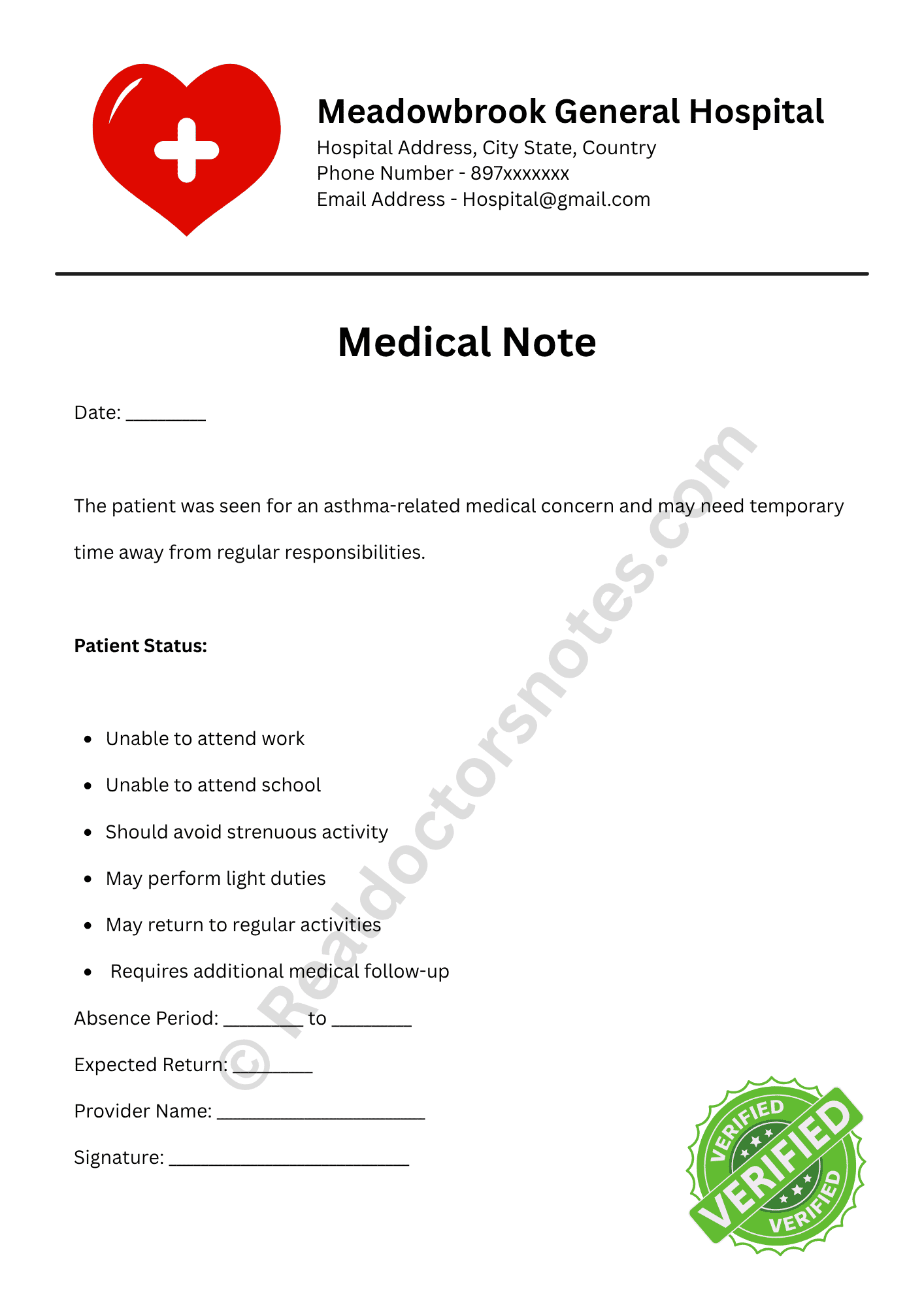
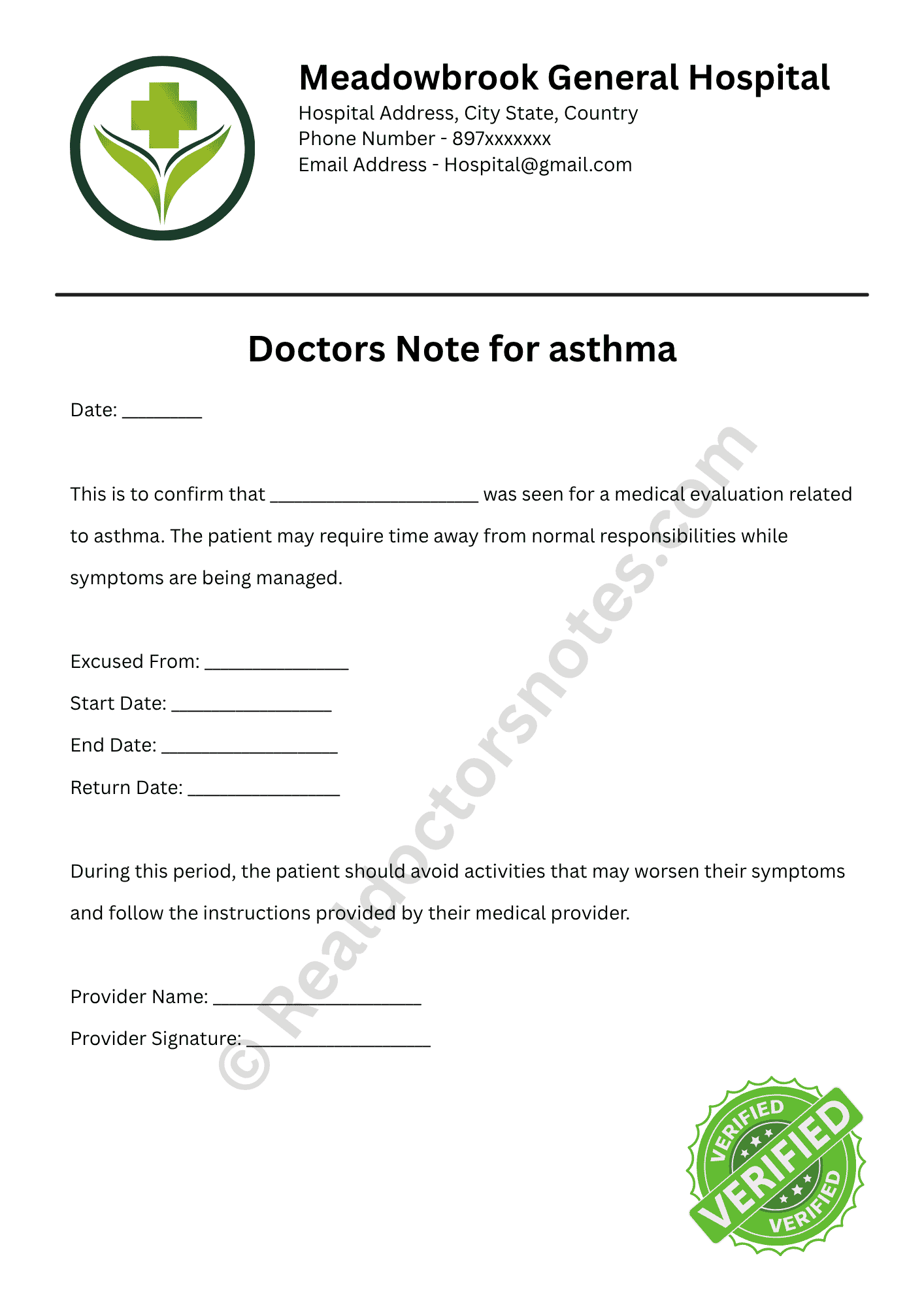
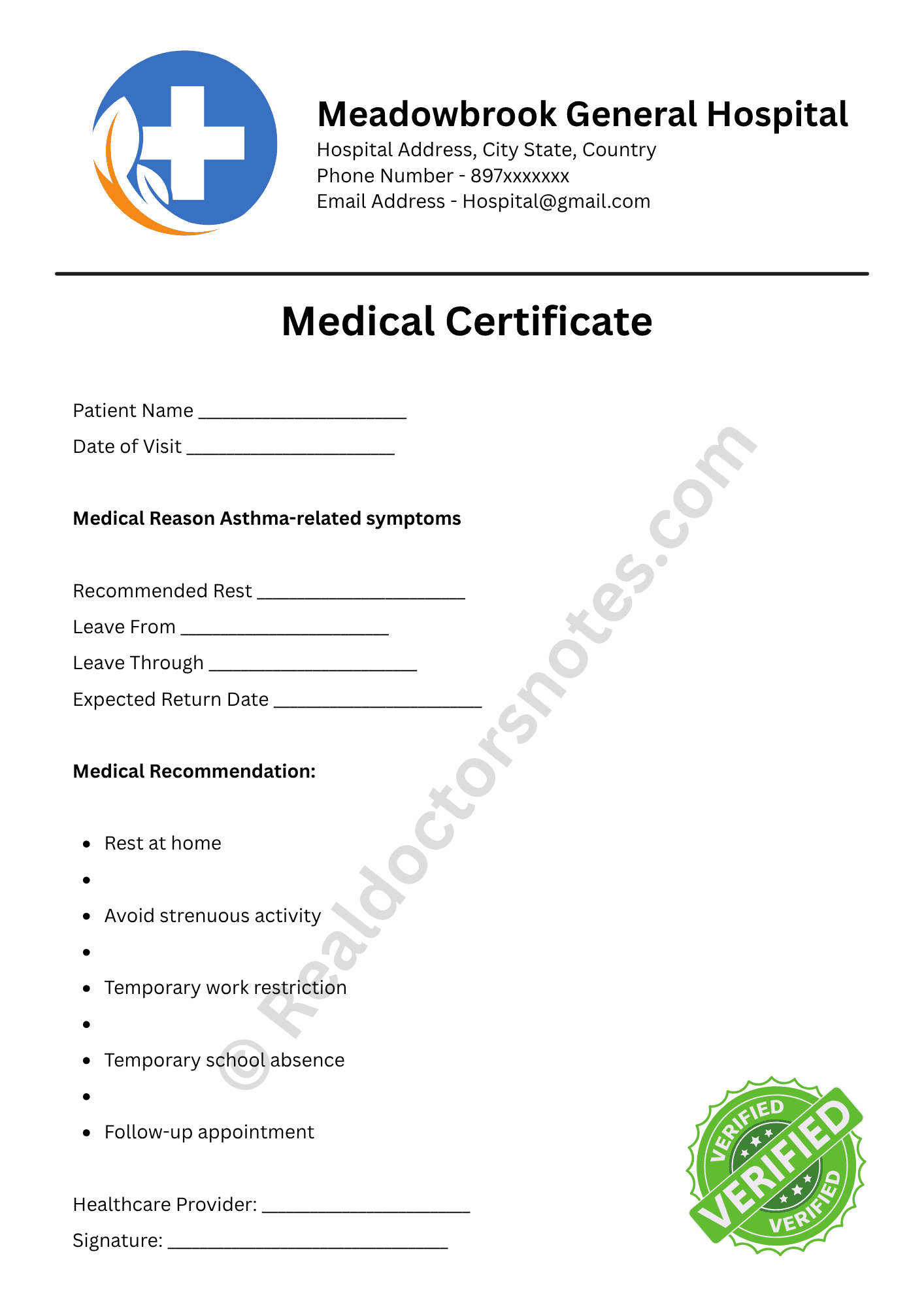


Doctors Note for Asthma may be recommended when a healthcare provider advises temporary time away from work or school due to asthma symptoms or a flare-up. Asthma is a long-term condition that affects the airways in the lungs, making them inflamed and sensitive to certain triggers. During an asthma flare-up, the airways can become narrower, making breathing more difficult. Symptoms may vary from mild to severe and often come and go over time. While many people successfully manage asthma with medication and lifestyle adjustments, some flare-ups may temporarily interfere with work, school, or daily activities. In these situations, a healthcare provider may recommend rest, treatment, or temporary activity restrictions based on the individual’s condition.
What Can Trigger an Asthma Flare-Up?
Asthma symptoms often become worse after exposure to specific triggers. Identifying and avoiding these triggers can help reduce flare-ups and improve symptom control.
- Dust Mites – Tiny dust mites commonly found in bedding, carpets, and furniture can trigger asthma symptoms in sensitive individuals.
- Pollen – Seasonal pollen from trees, grasses, and weeds may increase airway inflammation during allergy seasons.
- Pet Dander – Proteins found in animal skin flakes, saliva, and fur can trigger allergic asthma.
- Mold – Indoor and outdoor mold spores may worsen asthma, especially in damp environments.
- Cigarette Smoke – Tobacco smoke is a common asthma trigger that can irritate the airways even in people who do not smoke.
- Air Pollution – Vehicle exhaust, industrial pollution, and poor air quality may contribute to breathing difficulties.
- Strong Odors – Perfumes, cleaning products, paint fumes, and air fresheners can irritate sensitive airways.
- Cold Air – Cold, dry air may trigger coughing, wheezing, or shortness of breath.
- Exercise – Physical activity can sometimes trigger breathing symptoms, particularly without proper asthma control.
- Respiratory Infections – Colds, influenza, COVID-19, and other respiratory infections often worsen asthma symptoms.
- Emotional Stress – Stress and anxiety may contribute to breathing difficulties in some individuals.
- Weather Changes – Sudden changes in temperature or humidity can increase asthma symptoms.
Types of Asthma
Allergic Asthma
Allergic asthma is triggered by allergens such as pollen, pet dander, dust mites, or mold. Managing allergies can help reduce asthma flare-ups.
Common Symptoms
- Wheezing
- Sneezing
- Coughing
- Chest tightness
- Shortness of breath
Non-Allergic Asthma
This type of asthma develops without allergy triggers and may be caused by infections, stress, weather changes, or strong odors.
Common Symptoms
- Persistent cough
- Wheezing
- Chest tightness
- Breathing difficulty
- Fatigue
Exercise-Induced Bronchoconstriction
Some people develop asthma symptoms during or shortly after physical activity.
Common Symptoms
- Coughing after exercise
- Wheezing
- Chest tightness
- Shortness of breath
- Reduced exercise tolerance
Occupational Asthma
Occupational asthma develops after repeated exposure to workplace irritants such as chemicals, dust, or fumes.
Common Triggers
- Construction dust
- Cleaning chemicals
- Paint fumes
- Flour dust
- Industrial chemicals
Childhood Asthma
Children may experience asthma differently from adults. Symptoms can interfere with school attendance, sports, and sleep.
Common Symptoms
- Nighttime coughing
- Wheezing
- Frequent respiratory infections
- Shortness of breath
- Fatigue during play
Severe Asthma
Severe asthma requires close medical management because symptoms may continue despite regular treatment.
Common Symptoms
- Frequent flare-ups
- Daily breathing difficulty
- Repeated emergency visits
- Persistent wheezing
- Reduced lung function
Signs That Asthma Symptoms Are Worsening
Recognizing worsening asthma early can help prevent severe attacks.
Warning signs include:
- Wheezing becomes more frequent.
- Shortness of breath increases.
- Coughing continues throughout the night.
- Chest tightness becomes more severe.
- Rescue inhaler is needed more often.
- Difficulty speaking full sentences.
- Normal activities become harder to complete.
- Peak flow readings decrease (if monitored).
Common Asthma Triggers at Work or School
Certain environments may increase asthma symptoms.
Examples include:
- Dusty classrooms
- Construction sites
- Chemical cleaning products
- Laboratory fumes
- Paint or varnish
- Strong perfumes
- Chalk dust
- Poor indoor ventilation
- Cold storage facilities
- Animal exposure
Reducing exposure to these triggers may help improve symptom control.
How Asthma Is Diagnosed
Healthcare providers use several tests to confirm asthma and evaluate lung function.
Diagnostic methods may include:
- Medical history review
- Physical examination
- Spirometry (lung function test)
- Peak flow measurement
- Bronchodilator response testing
- Allergy testing
- Chest X-ray (when necessary)
- Fractional exhaled nitric oxide (FeNO) testing in some cases
Understanding an Asthma Action Plan
An asthma action plan is a personalized guide developed with a healthcare provider to help manage asthma effectively.
A typical action plan may include:
- Daily controller medication instructions
- When to use a rescue inhaler
- Early warning signs of worsening asthma
- Steps to take during a flare-up
- When to seek emergency medical care
- Follow-up appointment recommendations
Following an asthma action plan can help reduce emergency visits and improve long-term asthma control.
Returning to Work or School After an Asthma Flare-Up
Returning to normal activities depends on symptom improvement and medical advice.
Healthcare providers may consider:
- Breathing has improved.
- Wheezing is under control.
- Rescue inhaler use has decreased.
- Daily activities can be completed comfortably.
- Workplace or school triggers are managed.
- Medications are working effectively.
Long-Term Asthma Management
Successful asthma management focuses on preventing flare-ups and maintaining healthy lung function.
Helpful strategies include:
- Take prescribed medications regularly.
- Attend routine medical checkups.
- Avoid known triggers.
- Use inhalers correctly.
- Monitor symptoms.
- Receive recommended vaccinations.
- Exercise safely with medical guidance.
- Keep rescue medication available.
Possible Asthma Complications
Without proper management, asthma may lead to complications such as:
- Severe asthma attacks
- Emergency room visits
- Hospitalization
- Reduced lung function
- Sleep disturbances
- Limited physical activity
- Missed work or school
- Frequent respiratory infections
Lifestyle Tips for People with Asthma
Healthy habits can support asthma control.
- Avoid smoking and secondhand smoke.
- Keep your rescue inhaler accessible.
- Reduce dust inside your home.
- Wash bedding regularly.
- Maintain a healthy weight.
- Stay physically active as recommended.
- Manage stress through relaxation techniques.
- Follow your asthma action plan.
- Get enough sleep.
- Stay up to date with routine healthcare visits.
FAQs
1. Can asthma require time off work?
Yes. During a significant asthma flare-up, a healthcare provider may recommend temporary leave until symptoms improve.
2. Can asthma worsen suddenly?
Yes. Exposure to triggers or respiratory infections may cause symptoms to worsen quickly.
3. Can I exercise if I have asthma?
Many people with asthma can exercise safely when their condition is well controlled and they follow their healthcare provider’s recommendations.
4. What is an asthma action plan?
It is a personalized plan that explains daily treatment, symptom monitoring, and what to do if symptoms worsen.
5. Can stress trigger asthma?
Yes. Emotional stress may contribute to asthma symptoms in some individuals.
6. Can allergies worsen asthma?
Yes. Allergens such as pollen, pet dander, and dust mites commonly trigger allergic asthma.
7. Can asthma improve with treatment?
Many individuals achieve good symptom control with appropriate medications and trigger management.
8. Can children receive an asthma doctor’s note?
Yes. A healthcare provider may provide documentation for school absences or activity restrictions when medically appropriate.
9. How often should asthma be reviewed?
Regular follow-up appointments help ensure medications remain effective and symptoms stay under control.
10. What is occupational asthma?
Occupational asthma develops after repeated exposure to substances in the workplace that irritate the airways.





Reviews
There are no reviews yet.